Indonesia Tyres Market: Import Trend Analysis
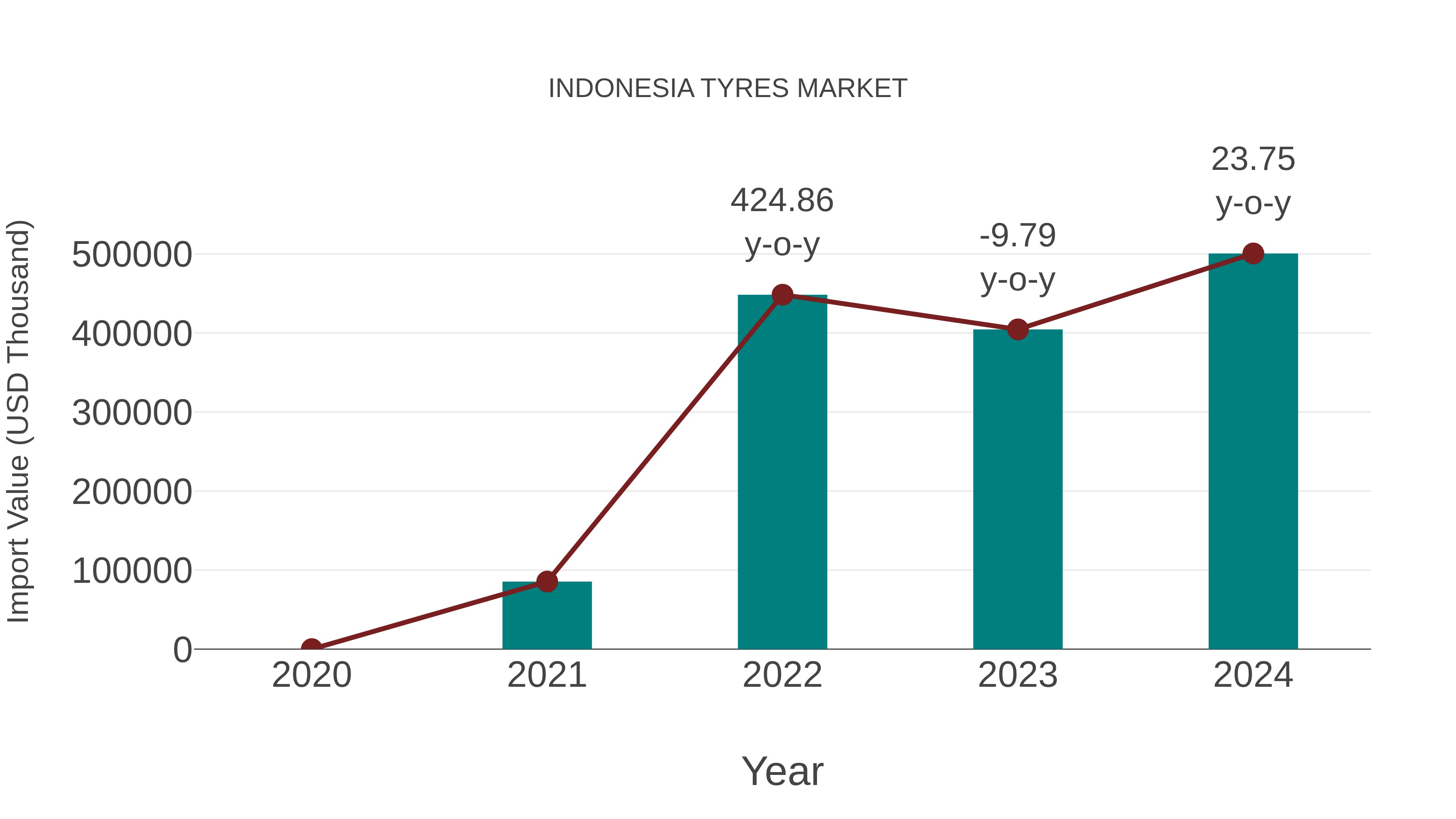
In the Indonesia tires market, the import trend showed significant growth from 2023 to 2024, with a growth rate of 23.75%. The compound annual growth rate (CAGR) from 2020 to 2024 stood at 80.28%. This substantial increase in imports can be attributed to the rising demand for tires in Indonesia due to increased vehicle ownership and infrastructure development, driving the market`s import momentum during this period.
Indonesia Tyres Market Overview
The Indonesia Tyres Market is experiencing steady growth driven by increasing vehicle sales, infrastructure development, and a growing middle-class population. The market is highly competitive with both domestic and international players offering a wide range of products catering to different segments such as passenger cars, commercial vehicles, and motorcycles. Key trends in the market include a shift towards radial tyres for better performance and fuel efficiency, as well as increasing demand for eco-friendly and durable tyres. Government initiatives to improve road safety and regulations mandating the use of quality tyres are also influencing market dynamics. Overall, the Indonesia Tyres Market presents opportunities for manufacturers to innovate and expand their product offerings to meet the evolving needs of consumers in this dynamic market.
Indonesia Tyres Market Trends
The Indonesia Tyres Market is experiencing several key trends. One major trend is the increasing demand for eco-friendly and sustainable tires, driven by growing environmental awareness among consumers. Another trend is the rise of online tire sales and digital platforms for purchasing tires, providing convenience and a wider selection for customers. Additionally, there is a shift towards premium and high-performance tires, particularly in urban areas where consumers are willing to pay more for better quality and longer-lasting products. Manufacturers are also focusing on developing tires with advanced technology and features to enhance safety, durability, and performance. Overall, the Indonesia Tyres Market is seeing a shift towards sustainability, digitalization, premium products, and innovation to meet the evolving needs of consumers.
Indonesia Tyres Market Challenges
The Indonesia Tyres Market faces several challenges, including intense competition from both domestic and international brands, price volatility due to fluctuating raw material costs, and a lack of consumer awareness about the importance of quality tires. Additionally, the country`s infrastructure limitations and road conditions contribute to increased wear and tear on tires, leading to higher replacement frequency for consumers. Regulatory issues, such as import restrictions and tariffs, also impact the market dynamics. Furthermore, the presence of counterfeit products in the market poses a significant threat to both consumer safety and the reputation of legitimate tire manufacturers. Overall, addressing these challenges will require strategic marketing efforts, investment in R&D for innovative tire technologies, and collaboration with government entities to improve regulations and enforcement in the industry.
Indonesia Tyres Market Investment Opportunities
The Indonesia Tyres Market presents promising investment opportunities due to the country`s growing automotive industry and rising demand for vehicles. With a large population and increasing disposable income levels, there is a steady demand for replacement tires as well as original equipment tires from automakers. Additionally, the government`s focus on infrastructure development and the expansion of the transportation sector further boost the demand for tires. Investors can consider opportunities in manufacturing and distributing tires, investing in technology for tire production, developing sustainable and eco-friendly tire solutions, or entering the retreading market. Collaborations with local players, strategic partnerships, and innovative marketing strategies can help investors capitalize on the potential growth of the Indonesia Tyres Market.
Indonesia Tyres Market Government Policy
The Indonesian government has implemented various policies to regulate the tyres market in the country. This includes imposing import restrictions and tariffs to protect local tyre manufacturers and promote domestic production. Additionally, there are regulations in place to ensure tyre safety standards are met, with periodic inspections and certifications required for all tyres sold in the market. The government also encourages the use of environmentally friendly and fuel-efficient tyres through incentives and awareness campaigns. Overall, the policies aim to promote a competitive and sustainable tyres market in Indonesia while ensuring consumer safety and environmental protection.
Indonesia Tyres Market Future Outlook
The Indonesia Tyres Market is expected to show steady growth in the coming years due to the increasing demand for automobiles and a growing focus on infrastructure development in the country. The market is likely to be driven by factors such as rising disposable income, urbanization, and the expansion of the automotive industry. Additionally, the government`s initiatives to improve road networks and transportation systems are anticipated to boost the demand for tires in Indonesia. With a growing awareness of the importance of road safety and sustainability, there is also a shift towards eco-friendly and fuel-efficient tires. Overall, the Indonesia Tyres Market is poised for expansion, with opportunities for both domestic and international tire manufacturers to capitalize on the country`s burgeoning automotive sector.
Key Highlights of the Report:
- Indonesia Tyres Market Outlook
- Market Size of Indonesia Tyres Market,2025
- Forecast of Indonesia Tyres Market, 2032
- Historical Data and Forecast of Indonesia Tyres Revenues & Volume for the Period 2022-2032F
- Indonesia Tyres Market Trend Evolution
- Indonesia Tyres Market Drivers and Challenges
- Indonesia Tyres Price Trends
- Indonesia Tyres Porter's Five Forces
- Indonesia Tyres Industry Life Cycle
- Historical Data and Forecast of Indonesia Tyres Market Revenues & Volume By Type for the Period 2022-2032F
- Historical Data and Forecast of Indonesia Tyres Market Revenues & Volume By Radial for the Period 2022-2032F
- Historical Data and Forecast of Indonesia Tyres Market Revenues & Volume By Bias Ply for the Period 2022-2032F
- Historical Data and Forecast of Indonesia Tyres Market Revenues & Volume By Tubeless for the Period 2022-2032F
- Historical Data and Forecast of Indonesia Tyres Market Revenues & Volume By Tube Type for the Period 2022-2032F
- Historical Data and Forecast of Indonesia Tyres Market Revenues & Volume By Material for the Period 2022-2032F
- Historical Data and Forecast of Indonesia Tyres Market Revenues & Volume By Natural Rubber for the Period 2022-2032F
- Historical Data and Forecast of Indonesia Tyres Market Revenues & Volume By Synthetic Rubber for the Period 2022-2032F
- Historical Data and Forecast of Indonesia Tyres Market Revenues & Volume By Recycled Material for the Period 2022-2032F
- Historical Data and Forecast of Indonesia Tyres Market Revenues & Volume By Carbon-Based for the Period 2022-2032F
- Historical Data and Forecast of Indonesia Tyres Market Revenues & Volume By Vehicle Type for the Period 2022-2032F
- Historical Data and Forecast of Indonesia Tyres Market Revenues & Volume By Passenger Cars for the Period 2022-2032F
- Historical Data and Forecast of Indonesia Tyres Market Revenues & Volume By Commercial Vehicles for the Period 2022-2032F
- Historical Data and Forecast of Indonesia Tyres Market Revenues & Volume By Two-Wheelers for the Period 2022-2032F
- Historical Data and Forecast of Indonesia Tyres Market Revenues & Volume By Off-Road Vehicles for the Period 2022-2032F
- Historical Data and Forecast of Indonesia Tyres Market Revenues & Volume By End Use for the Period 2022-2032F
- Historical Data and Forecast of Indonesia Tyres Market Revenues & Volume By OEMs for the Period 2022-2032F
- Historical Data and Forecast of Indonesia Tyres Market Revenues & Volume By Aftermarket for the Period 2022-2032F
- Historical Data and Forecast of Indonesia Tyres Market Revenues & Volume By Fleet Operators for the Period 2022-2032F
- Historical Data and Forecast of Indonesia Tyres Market Revenues & Volume By Agriculture and Construction for the Period 2022-2032F
- Historical Data and Forecast of Indonesia Tyres Market Revenues & Volume By End Use for the Period 2022-2032F
- Historical Data and Forecast of Indonesia Tyres Market Revenues & Volume By Professional Tattooing for the Period 2022-2032F
- Historical Data and Forecast of Indonesia Tyres Market Revenues & Volume By Tattoo Studios for the Period 2022-2032F
- Indonesia Tyres Import Export Trade Statistics
- Market Opportunity Assessment By Type
- Market Opportunity Assessment By Material
- Market Opportunity Assessment By Vehicle Type
- Market Opportunity Assessment By End Use
- Market Opportunity Assessment By End Use
- Indonesia Tyres Top Companies Market Share
- Indonesia Tyres Competitive Benchmarking By Technical and Operational Parameters
- Indonesia Tyres Company Profiles
- Indonesia Tyres Key Strategic Recommendations






































