Indonesia Virtual Mobile Infrastructure Market Size & Growth Rate (2026-2032)
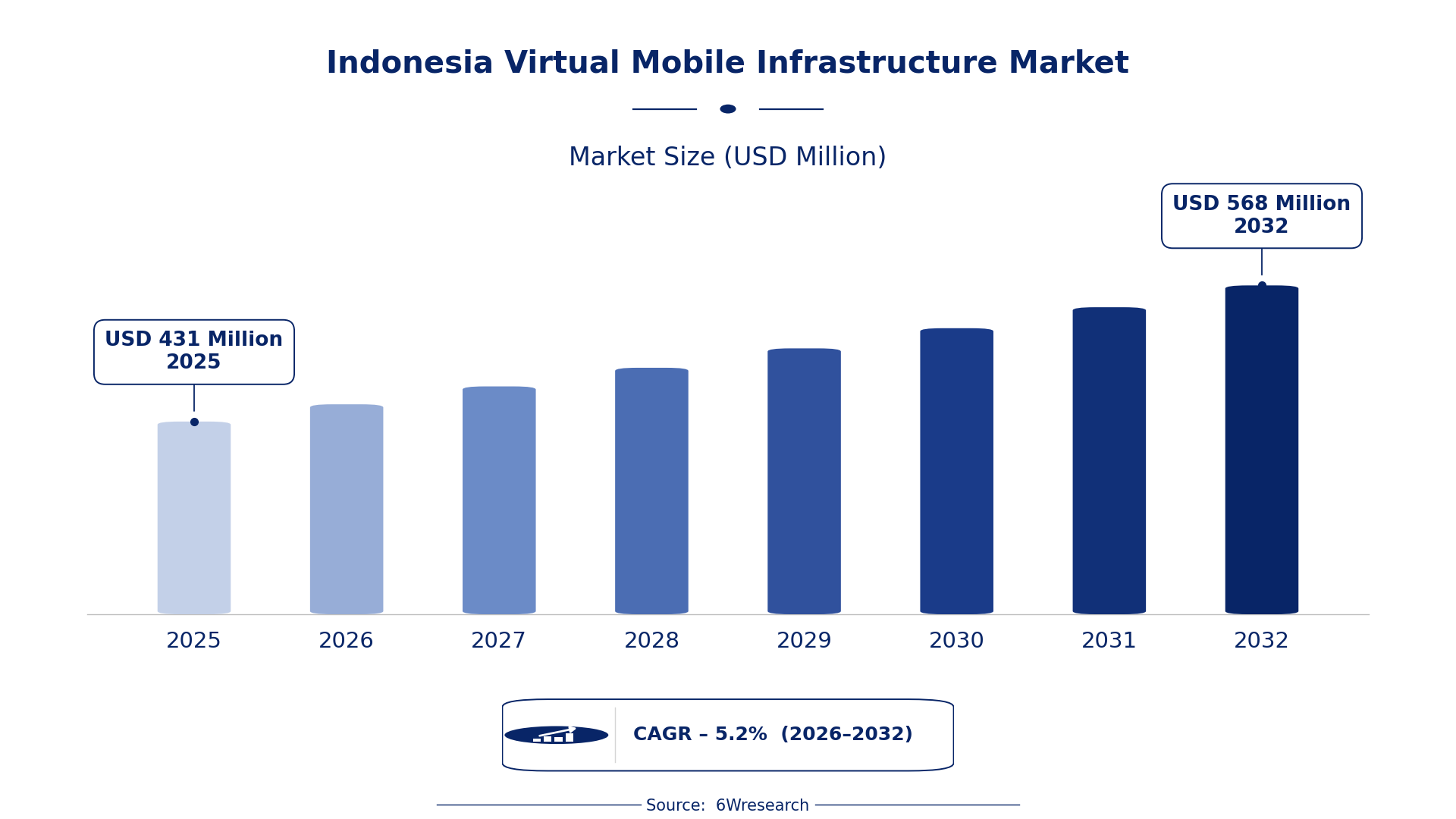
The Indonesia Virtual Mobile Infrastructure Market was estimated at USD 431 Million in 2025 and is projected to reach USD 568 Million by 2032, growing at a CAGR of 5.2% from 2026 to 2032.
Indonesia Virtual Mobile Infrastructure Market Synopsis
In Indonesia, the adoption of Virtual Mobile Infrastructure (VMI) is gaining traction as organizations increasingly recognize the need for secure mobile application delivery. With a rising remote workforce and heightened focus on data security, VMI solutions are becoming essential tools for businesses navigating these challenges.
This market is characterized by a blend of local demand and international technology influences. As enterprises look for cost-effective solutions for mobile device management, VMI serves as a strategic enabler, allowing for the secure distribution of applications without the overhead of traditional infrastructure.
Indonesia Virtual Mobile Infrastructure Market Year-wise Growth Rate and Key Drivers
This graph illustrates the annual growth rates of the Indonesia Virtual Mobile Infrastructure Market from 2021 to 2032, highlighting a steady upward trajectory and projected expansion over the forecast period.
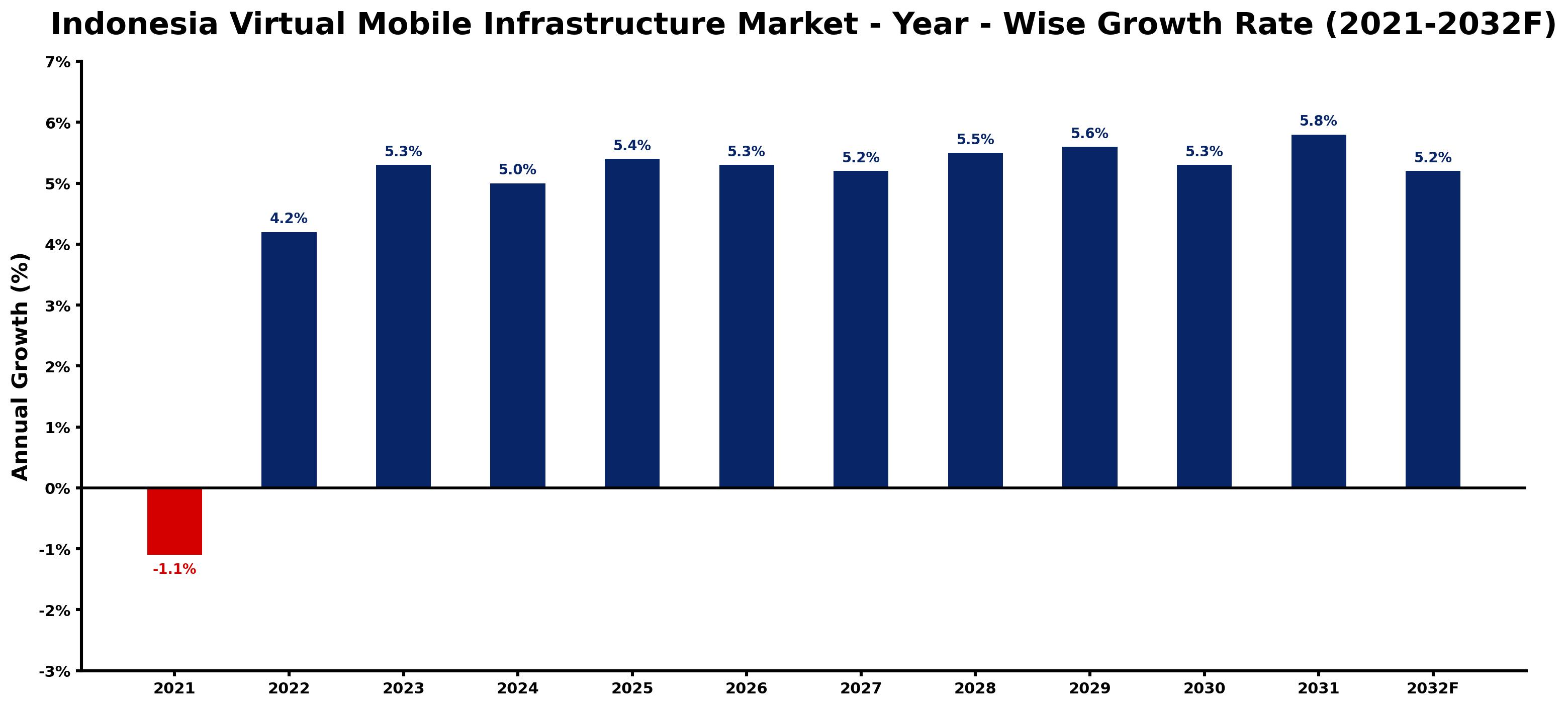
The table below presents the year‑wise growth rates along with the key drivers influencing the market
| Year | Growth Rate | Major Drivers |
| 2021 | -1.1% | Government restrictions hindered cloud service expansion. |
| 2022 | 4.2% | Government support for digital economy initiatives boosting adoption |
| 2023 | 5.3% | Rise in remote working driving virtual infrastructure demand |
| 2024 | 5.0% | Increased smartphone penetration among urban populations |
| 2025 | 5.4% | Regulatory push for data privacy enhancing cybersecurity solutions |
| 2026 | 5.3% | Partnerships with local tech firms accelerating service deployment |
| 2027 | 5.2% | Young population seeking digital engagement and connectivity |
| 2028 | 5.5% | Rising e-commerce trends driving virtual mobile infrastructure needs |
| 2029 | 5.6% | Local startups leveraging virtual solutions for innovation |
| 2030 | 5.3% | Investment in telecommunications infrastructure improving access |
| 2031 | 5.8% | Educational institutions adopting virtual tools for remote learning |
| 2032 | 5.2% | Incentives for tech companies adopting green virtual solutions |
Note: Market size estimations and growth projections presented in this report are based on 6Wresearch's proprietary forecasting methodology, utilizing the latest available industry data, government publications, and primary research inputs.
Indonesia Virtual Mobile Infrastructure Market Key Takeaways
Below are some of the specific key takeaways from the market, including:
- The market is experiencing steady growth fueled by the demand for enhanced mobile security and operational efficiency.
- Cloud-based VMI solutions are particularly gaining popularity among enterprises looking to optimize costs and streamline operations.
- The post-pandemic environment has accelerated the shift towards remote working, making VMI a priority for many organizations.
- Challenges such as network latency continue to affect user experience and market growth potential.
- Key players are focusing on innovation to improve VMI technology and address the market's growing demands.
Evaluation of Restraints in Indonesia Virtual Mobile Infrastructure Market
Several factors are impeding the adoption of virtual mobile infrastructure in Indonesia. High network latency poses a significant barrier, negatively impacting user experience and slowing deployment. Furthermore, the need for substantial backend infrastructure deters smaller companies from embracing this technology. Addressing these issues is crucial for maximizing the potential of VMI in the Indonesian market, particularly as businesses strive for efficiency and enhanced security.
Indonesia Virtual Mobile Infrastructure Market Trends
A notable trend shaping the Indonesia Virtual Mobile Infrastructure Market is the increasing reliance on cloud-based solutions. Many companies are transitioning from traditional infrastructures to VMI to benefit from cost efficiencies and scalability. Additionally, the heightened focus on cybersecurity is driving firms to adopt VMI to safeguard sensitive data.
Mobile application security remains a key concern, pushing enterprises to invest in technologies that enhance their defenses. The trend towards remote work is also driving demand for flexible, secure access to mobile applications, further solidifying the role of VMI.
Indonesia Virtual Mobile Infrastructure Market Opportunities
Opportunities abound in the Indonesia Virtual Mobile Infrastructure Market, particularly as companies continue to adopt digital transformation strategies. Firms seeking to enhance security protocols and reduce operational costs can benefit greatly from VMI solutions. Additionally, as the government promotes digital initiatives, partnerships with local service providers could present avenues for growth.
Startups and tech innovators are also entering this space, providing fresh perspectives and solutions that address specific challenges in mobile application delivery. This new blood in the market is set to drive further advancements and adoption of VMI technologies.
Government Initiatives in the Indonesia Virtual Mobile Infrastructure Market
The Indonesian government plays a crucial role in shaping the Virtual Mobile Infrastructure Market through various initiatives aimed at bolstering digital security and infrastructure. Emphasizing the need for secure mobile access, recent policy changes are facilitating a more favorable environment for VMI adoption. These public-sector priorities reflect a commitment to enhancing the country's digital landscape.
- A regulatory framework established in 2025 mandates the adoption of secure mobile solutions for all government contractors, encouraging adherence to VMI principles.
- A national digital infrastructure upgrade programme is currently underway, aimed at enhancing connectivity and access to advanced technologies, including VMI.
- A public-private initiative planned for 2027 focuses on expanding mobile broadband access, indirectly supporting VMI growth by improving overall network performance.
- A digital skills training program for employees across various sectors launched recently, aiming to equip the workforce with skills necessary for managing VMI solutions.
Future Insights of the Indonesia Virtual Mobile Infrastructure Market
Looking ahead to 2026-2032, the Indonesia Virtual Mobile Infrastructure Market is set for continued growth driven by an increasing emphasis on mobile security. As businesses adapt to a more remote working model, the need for reliable, efficient mobile application delivery will remain a top priority. With government backing and a growing pool of innovative technology providers, the market is likely to expand, offering enhanced solutions tailored to local needs.
Indonesia Virtual Mobile Infrastructure Market Latest Developments
In the past year, the Indonesia Virtual Mobile Infrastructure Market has witnessed notable advancements as companies explore innovative solutions to enhance application delivery. The push for more secure mobile access has led to increased partnerships and technology rollouts across the industry. This trend suggests a proactive approach to addressing market demands and challenges.
- A major technology vendor launched a new suite of VMI solutions in Q2 2025, focused on enhancing security measures for mobile applications.
- An ongoing initiative by a leading regional operator aims to expand VMI offerings in response to growing demand for secure mobile access across various sectors.
- A public-private partnership expected to be finalized by late 2026 will invest in infrastructure upgrades to support VMI adoption among small and medium enterprises.
- In early 2025, a consortium of tech firms initiated a pilot program testing advanced VMI solutions across various industries, with results expected by mid-2025.
Indonesia Virtual Mobile Infrastructure Market - Key Attractiveness of the Report
- 10 Years of Market Numbers
- Historical Data Starting from 2022 to 2025
- Base Year: 2025
- Forecast Data until 2032
- Key Performance Indicators Impacting the Market
- Major Upcoming Developments and Projects
Key Highlights of the Report:
- Indonesia Virtual Mobile Infrastructure Market Outlook
- Market Size of Indonesia Virtual Mobile Infrastructure Market, 2025
- Forecast of Indonesia Virtual Mobile Infrastructure Market, 2032
- Historical Data and Forecast of Indonesia Virtual Mobile Infrastructure Revenues & Volume for the Period 2022-2032F
- Indonesia Virtual Mobile Infrastructure Market Trend Evolution
- Indonesia Virtual Mobile Infrastructure Market Drivers and Challenges
- Indonesia Virtual Mobile Infrastructure Price Trends
- Indonesia Virtual Mobile Infrastructure Porter's Five Forces
- Indonesia Virtual Mobile Infrastructure Industry Life Cycle
- Historical Data and Forecast of Indonesia Virtual Mobile Infrastructure Market Revenues & Volume By Component for the Period 2022-2032F
- Historical Data and Forecast of Indonesia Virtual Mobile Infrastructure Market Revenues & Volume By Platforms for the Period 2022-2032F
- Historical Data and Forecast of Indonesia Virtual Mobile Infrastructure Market Revenues & Volume By Services for the Period 2022-2032F
- Historical Data and Forecast of Indonesia Virtual Mobile Infrastructure Market Revenues & Volume By Deployment Type for the Period 2022-2032F
- Historical Data and Forecast of Indonesia Virtual Mobile Infrastructure Market Revenues & Volume By Cloud for the Period 2022-2032F
- Historical Data and Forecast of Indonesia Virtual Mobile Infrastructure Market Revenues & Volume By On-premises for the Period 2022-2032F
- Historical Data and Forecast of Indonesia Virtual Mobile Infrastructure Market Revenues & Volume By Vertical for the Period 2022-2032F
- Historical Data and Forecast of Indonesia Virtual Mobile Infrastructure Market Revenues & Volume By BFSI for the Period 2022-2032F
- Historical Data and Forecast of Indonesia Virtual Mobile Infrastructure Market Revenues & Volume By Healthcare for the Period 2022-2032F
- Historical Data and Forecast of Indonesia Virtual Mobile Infrastructure Market Revenues & Volume By Manufacturing for the Period 2022-2032F
- Historical Data and Forecast of Indonesia Virtual Mobile Infrastructure Market Revenues & Volume By IT and Telecom for the Period 2022-2032F
- Historical Data and Forecast of Indonesia Virtual Mobile Infrastructure Market Revenues & Volume By Government for the Period 2022-2032F
- Historical Data and Forecast of Indonesia Virtual Mobile Infrastructure Market Revenues & Volume By Others (defense, travel and hospitality, education, and retail) for the Period 2022-2032F
- Indonesia Virtual Mobile Infrastructure Import Export Trade Statistics
- Market Opportunity Assessment By Component
- Market Opportunity Assessment By Deployment Type
- Market Opportunity Assessment By Vertical
- Indonesia Virtual Mobile Infrastructure Top Companies Market Share
- Indonesia Virtual Mobile Infrastructure Competitive Benchmarking By Technical and Operational Parameters
- Indonesia Virtual Mobile Infrastructure Company Profiles
- Indonesia Virtual Mobile Infrastructure Key Strategic Recommendations






































