Italy Content Delivery Market: Import Trend Analysis
In 2024, Italy content delivery Market: Import Trend Analysis saw a notable increase in imports, driven by rising demand for digital content services. This trend reflects the Market: Import Trend Analysis reliance on foreign suppliers to meet consumer needs and enhance service offerings.
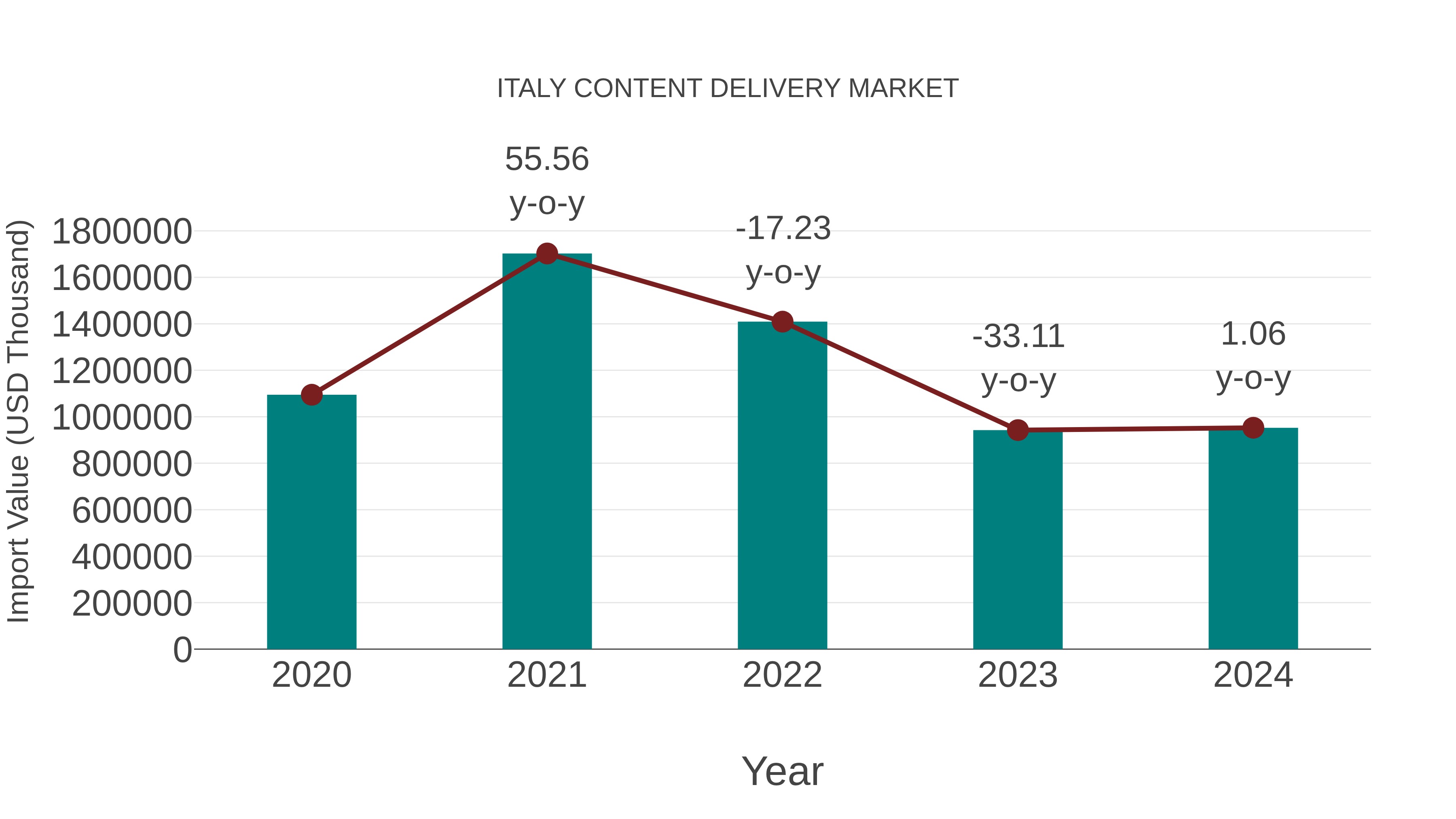
Italy Content Delivery Market Overview
The content delivery market in Italy is characterized by a growing demand for high-quality digital content across various industries such as media, entertainment, e-commerce, and gaming. With the increasing popularity of online streaming services, the need for efficient content delivery networks (CDNs) has surged. Italian businesses are focusing on enhancing their online presence and user experience through faster and reliable content delivery. Key players in the Italian market include international CDN providers like Akamai, Cloudflare, and Amazon CloudFront, as well as local providers such as Fastweb and Telecom Italia. As the digital landscape continues to evolve, Italian companies are investing in advanced CDN solutions to ensure seamless content distribution, reduce latency, and enhance overall performance for their customers.
Italy Content Delivery Market Trends
Currently, the content delivery market in Italy is experiencing a shift towards personalized and localized content to cater to the diverse preferences of consumers. There is a growing demand for high-quality streaming services, particularly in the video-on-demand sector, as Italian consumers seek convenient access to a wide range of content. The market is also witnessing an increase in the adoption of mobile devices for content consumption, driving the need for seamless and efficient content delivery solutions. Furthermore, there is a rise in partnerships between content providers and telecommunications companies to enhance content delivery infrastructure and offer bundled services to customers. Overall, the Italy content delivery market is evolving to meet the evolving needs and preferences of consumers in an increasingly digital and connected landscape.
Italy Content Delivery Market Challenges
The content delivery market in Italy faces several challenges, including increasing competition from global players, regulatory hurdles, and the need for infrastructure development to support high-quality services. Global content delivery networks (CDNs) are expanding their presence in Italy, creating intense competition for local providers. Additionally, regulatory complexities related to data protection and copyright laws can pose challenges for content delivery companies operating in the country. Moreover, the demand for faster and more reliable content delivery requires continuous investment in digital infrastructure, such as data centers and network capacity, which can be a barrier for smaller players in the market. Overall, navigating these challenges while maintaining a competitive edge in the evolving landscape of content delivery in Italy remains a significant task for industry players.
Italy Content Delivery Market Investment Opportunities
The Italy content delivery market presents several promising investment opportunities due to the increasing demand for high-quality digital content delivery services. With the rise of online streaming platforms, e-commerce websites, and digital marketing initiatives, there is a growing need for reliable content delivery networks (CDNs) to ensure seamless user experiences. Investing in Italian CDN providers or technology firms focused on improving content delivery efficiency and speed could be lucrative. Additionally, considering the country`s strong presence in the media and entertainment industry, investing in companies that specialize in delivering video content, gaming, or live events could also be a strategic move to capitalize on the expanding digital landscape in Italy. Overall, the Italy content delivery market offers potential for growth and innovation, making it an attractive sector for investors to explore.
Italy Content Delivery Market Government Policy
In Italy, the content delivery market is regulated by various government policies aimed at promoting competition and consumer protection. The Italian Communications Authority (AGCOM) oversees the sector and ensures compliance with regulations that require equal treatment of all content providers and prohibit discriminatory practices by internet service providers. Additionally, Italy has implemented net neutrality laws to safeguard the open internet and prevent blocking, throttling, or paid prioritization of online content. These regulations aim to create a level playing field for all players in the content delivery market and ensure that consumers have access to a diverse range of digital services without interference from ISPs.
Italy Content Delivery Market Future Outlook
The future outlook for the Italy content delivery market appears promising, fueled by the increasing demand for digital content consumption across various industries such as media, entertainment, e-commerce, and gaming. With the growing adoption of cloud-based services, IoT devices, and streaming platforms, there is a rising need for efficient content delivery networks (CDNs) to ensure seamless and high-quality content distribution to end-users. Additionally, the shift towards online shopping, video streaming, and remote work practices post-pandemic is expected to further drive the demand for CDN services in Italy. As businesses continue to prioritize digital transformation initiatives and customer experience enhancement, the Italy content delivery market is likely to witness steady growth and innovation in the coming years.
Key Highlights of the Report:
- Italy Content Delivery Market Outlook
- Market Size of Italy Content Delivery Market,2025
- Forecast of Italy Content Delivery Market, 2032
- Historical Data and Forecast of Italy Content Delivery Revenues & Volume for the Period 2022-2032F
- Italy Content Delivery Market Trend Evolution
- Italy Content Delivery Market Drivers and Challenges
- Italy Content Delivery Price Trends
- Italy Content Delivery Porter's Five Forces
- Italy Content Delivery Industry Life Cycle
- Historical Data and Forecast of Italy Content Delivery Market Revenues & Volume By Product Type for the Period 2022-2032F
- Historical Data and Forecast of Italy Content Delivery Market Revenues & Volume By CDN (Content Delivery Network) for the Period 2022-2032F
- Historical Data and Forecast of Italy Content Delivery Market Revenues & Volume By Edge Delivery for the Period 2022-2032F
- Historical Data and Forecast of Italy Content Delivery Market Revenues & Volume By Web Delivery for the Period 2022-2032F
- Historical Data and Forecast of Italy Content Delivery Market Revenues & Volume By Others for the Period 2022-2032F
- Historical Data and Forecast of Italy Content Delivery Market Revenues & Volume By Delivery Method for the Period 2022-2032F
- Historical Data and Forecast of Italy Content Delivery Market Revenues & Volume By Cloud-Based for the Period 2022-2032F
- Historical Data and Forecast of Italy Content Delivery Market Revenues & Volume By On-Premises for the Period 2022-2032F
- Historical Data and Forecast of Italy Content Delivery Market Revenues & Volume By Hybrid for the Period 2022-2032F
- Historical Data and Forecast of Italy Content Delivery Market Revenues & Volume By End User for the Period 2022-2032F
- Historical Data and Forecast of Italy Content Delivery Market Revenues & Volume By Media & Entertainment for the Period 2022-2032F
- Historical Data and Forecast of Italy Content Delivery Market Revenues & Volume By E-commerce for the Period 2022-2032F
- Historical Data and Forecast of Italy Content Delivery Market Revenues & Volume By IT & Telecom for the Period 2022-2032F
- Historical Data and Forecast of Italy Content Delivery Market Revenues & Volume By Retail for the Period 2022-2032F
- Historical Data and Forecast of Italy Content Delivery Market Revenues & Volume By Technology for the Period 2022-2032F
- Historical Data and Forecast of Italy Content Delivery Market Revenues & Volume By Cloud for the Period 2022-2032F
- Historical Data and Forecast of Italy Content Delivery Market Revenues & Volume By Hybrid for the Period 2022-2032F
- Historical Data and Forecast of Italy Content Delivery Market Revenues & Volume By SaaS for the Period 2022-2032F
- Historical Data and Forecast of Italy Content Delivery Market Revenues & Volume By P2P for the Period 2022-2032F
- Italy Content Delivery Import Export Trade Statistics
- Market Opportunity Assessment By Product Type
- Market Opportunity Assessment By Delivery Method
- Market Opportunity Assessment By End User
- Market Opportunity Assessment By Technology
- Italy Content Delivery Top Companies Market Share
- Italy Content Delivery Competitive Benchmarking By Technical and Operational Parameters
- Italy Content Delivery Company Profiles
- Italy Content Delivery Key Strategic Recommendations






































