Japan Bakeware Market Summary
The japan bakeware market was estimated at USD 176 Million in 2025 and is projected to reach USD 189 Million by 2032, growing at a CAGR of 1.9% from 2026 to 2032.
Japan Bakeware Market Year-wise Growth Rate and Key Drivers
This graph highlights how the Japan Bakeware Market has steadily grown over the past five years, supported by major growth factors.
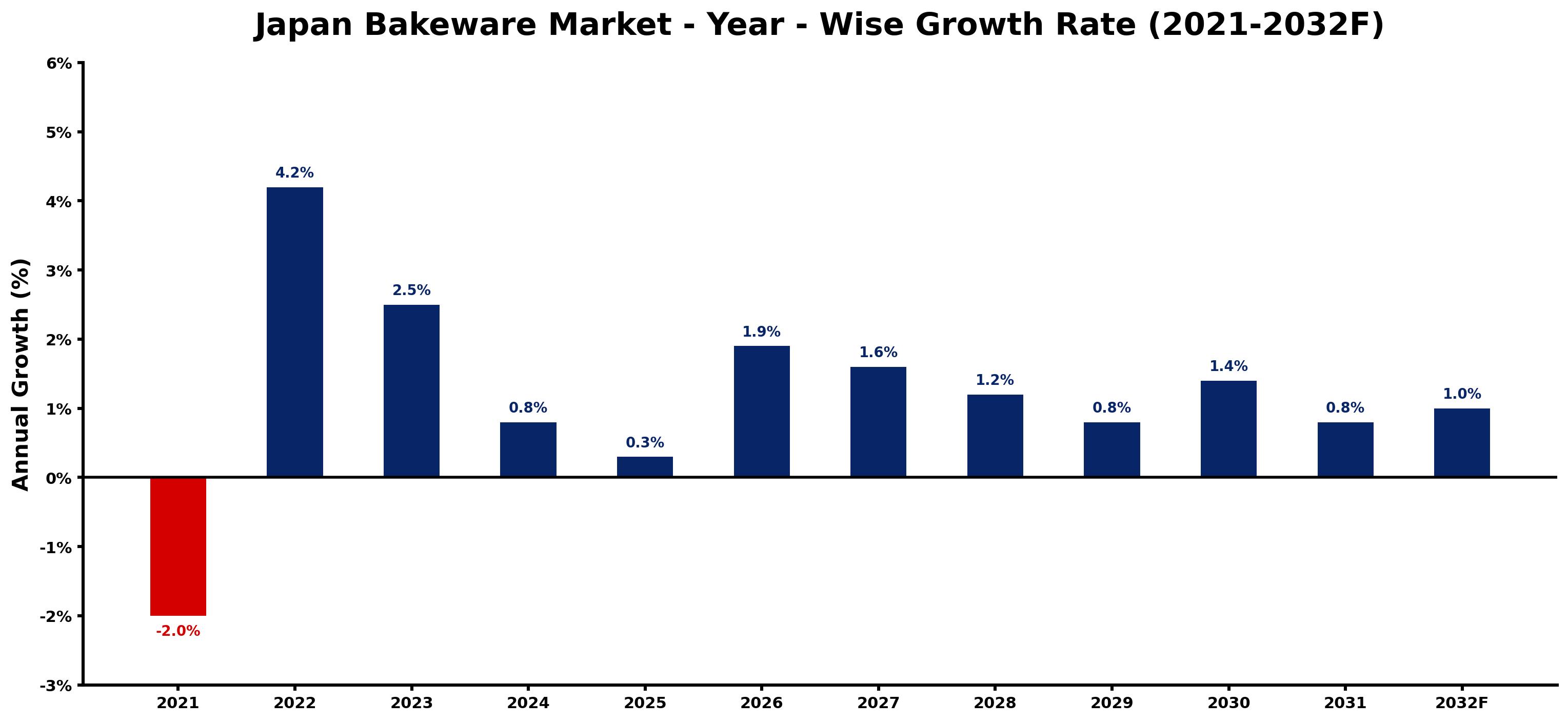
The table below presents the year wise growth rates along with the key drivers influencing the market
| Year | Growth Rate | Major Drivers |
| 2021 | -2.0% | Shifts in consumer preferences toward alternative cooking methods diminished demand for traditional bakeware products. |
| 2022 | 4.2% | E-commerce platforms became vital, reshaping how consumers purchased bakeware products. |
| 2023 | 2.5% | Innovations in materials led to non-stick coatings gaining popularity among bakers. |
| 2024 | 0.8% | Social media influencers showcased baking trends, inspiring new consumer purchases. |
| 2025 | 0.3% | Sustainable bakeware options attracted eco-conscious consumers aiming to reduce waste. |
| 2026 | 1.9% | Culinary classes began incorporating bakeware education, boosting demand for high-quality tools. |
| 2027 | 1.6% | Home renovation trends prompted consumers to invest in aesthetically pleasing bakeware. |
| 2028 | 1.2% | Collaborations between bakeware brands and celebrity chefs enhanced brand visibility and appeal. |
| 2029 | 0.8% | Premium bakeware brands emerged, catering to serious baking enthusiasts and professionals. |
| 2030 | 1.4% | Diversity in baking styles encouraged niche market segments, like gluten-free and vegan bakeware. |
| 2031 | 0.8% | Technological advancements enabled smart bakeware, appealing to tech-savvy home bakers. |
| 2032 | 1.0% | Increased disposable income allowed consumers to prioritize quality over cost in purchases. |
Note - Market size estimations and growth projections presented in this report are based on 6Wresearch's advanced forecasting approach, validated with industry datasets as of June 2026.
Japan Bakeware Market Synopsis
The Japan Bakeware Market is projected to reach 1.9% and witness significant growth during the forecast period (2026-2032). This surge can be attributed to the deep-rooted culinary traditions in Japan and the rising inclination towards home baking as a popular pastime. Consumers are increasingly favoring high-quality, durable bakeware products that not only enhance their baking experience but also reflect their personality and aesthetic preferences.
Japan Bakeware Market Growth Drivers
The growth of the Japan Bakeware Market is influenced by several key factors. Firstly, Japan is seeing a notable increase in home baking activities, driven by social media influences and popular cooking shows that encourage individuals to engage in baking as a creative outlet. Secondly, there is a heightened awareness regarding health and well-being among consumers, prompting a demand for eco-friendly and non-toxic bakeware options. Moreover, the market is benefiting from innovations in product design, with manufacturers incorporating versatility and multifunctionality into bakeware items.
- The popularity of baking as a hobby among younger demographics, which is gradually shifting traditional baking practices towards modern methods.
- Increasing online retail opportunities that provide consumers with easy access to a wide range of bakeware products, enhancing convenience and choice.
- Rising disposable incomes that enable consumers to invest in high-quality baking tools and equipment, reflecting a willingness to spend more for better performance.
- Educational initiatives and workshops focusing on baking skills that are further fueling consumer interest, leading to an uptick in participation.
- A flourishing café culture, where the presentation of baked goods is key, is pushing consumers to invest in aesthetically appealing bakeware.
Japan Bakeware Market Trends and Opportunities
The Japan Bakeware Market is currently witnessing several compelling trends. One major trend is the increasing demand for innovative bakeware products designed with functionality in mind. For instance, silicone molds and adjustable cake pans are gaining traction due to their user-friendly characteristics. In tandem, sustainability continues to play a critical role in consumer decision-making, with eco-friendly materials now favored for their reduced environmental impact. Aesthetic appeal is also paramount, as visually striking bakeware designs featuring vibrant colors and contemporary patterns are becoming a staple in many kitchens.
- Shifting consumer preferences towards sustainable materials are driving the popularity of bakeware made from recycled or biodegradable components.
- Heightened interest in specialized bakeware that caters to specific baking needs, such as gluten-free or vegan baking, reflects the diversification of dietary preferences.
- Online platforms are increasingly being leveraged for marketing and sales, capitalizing on growing consumer habits of online grocery shopping.
- Engagement with local artisans is fostering unique designs that resonate with cultural elements, appealing to a consumer base that values authenticity and tradition.
- Integration of smart technologies into bakeware products, such as temperature sensors and timers, is anticipated to shape the future of baking efficiency.
Japan Bakeware Market Challenges and Restraints
Despite the favorable growth trajectory, the Japan Bakeware Market faces notable challenges. A significant hurdle is the intensifying competition posed by imported bakeware products, which often come from countries with lower production costs. This can create a pricing imbalance that local manufacturers find difficult to navigate. Additionally, changing consumer preferences necessitate that companies continuously innovate their product lines to remain relevant. The high cost of raw materials and complex manufacturing processes prevalent in Japan also pose significant financial challenges for bakeware production, affecting pricing strategies and profitability.
- Local manufacturers must prioritize product differentiation to combat the allure of cheaper foreign imports.
- The need for ongoing research and development to align with consumer health trends is crucial for sustaining relevance.
- Fiscal pressures from rising raw material prices can limit manufacturers' ability to absorb costs, leading to potential price increases.
- Consumer demand for unique, culturally relevant designs may challenge companies to innovate rapidly, often requiring substantial investments in design and marketing.
- Balancing profitability with sustainability practices could strain resources, but is essential in a market increasingly oriented towards eco-awareness.
Japan Bakeware Market Government Investment and Initiatives
The Japanese government plays a vital role in shaping the landscape of the Japan Bakeware Market through various initiatives and regulations. A key area of focus is the enforcement of robust food safety standards, which mandates that all bakeware products adhere to stringent safety protocols to protect consumer health. The government also promotes sustainable manufacturing practices, encouraging companies to utilize eco-friendly materials and reduce waste in production processes. Financial support is provided to small and medium-sized enterprises (SMEs) in the bakeware sector, empowering them to innovate and expand their businesses to compete effectively in both domestic and international markets. Furthermore, public campaigns aimed at increasing consumer awareness about the importance of quality bakeware are encouraging more informed purchasing decisions.
Japan Bakeware Market Latest Developments (May 2025 - June 2026)
In the period from May 2025 to June 2026, the Japan Bakeware Market has observed a series of notable developments that are reshaping its dynamics. Manufacturers are increasingly focusing on multi-functional product innovations that cater to diverse baking needs, tapping into the trend of convenience among consumers. There has been a heightened interest in e-commerce, with various companies enhancing their online presence to meet the demand for easy accessibility to bakeware. Additionally, sustainability initiatives are gaining momentum, as more brands commit to using recycled materials and environmentally friendly packaging. The launch of limited-edition bakeware collections highlighting seasonal themes has also captured consumer interest, driving sales and engagement across various retail channels.
Japan Bakeware Market - Key Attractiveness of the Report
- 10 Years of Market Numbers
- Historical Data Starting from 2022 to 2025
- Base Year: 2025
- Forecast Data until 2032
- Key Performance Indicators Impacting the Market
- Major Upcoming Developments and Projects
Key Highlights of the Report:
- Japan Bakeware Market Outlook
- Market Size of Japan Bakeware Market, 2025
- Forecast of Japan Bakeware Market, 2032F
- Historical Data and Forecast of Japan Bakeware Revenues & Volume for the Period 2022-2032F
- Japan Bakeware Market Trend Evolution
- Japan Bakeware Market Drivers and Challenges
- Japan Bakeware Price Trends
- Japan Bakeware Porter's Five Forces
- Japan Bakeware Industry Life Cycle
- Historical Data and Forecast of Japan Bakeware Market Revenues & Volume By Product Type for the Period 2022-2032F
- Historical Data and Forecast of Japan Bakeware Market Revenues & Volume By Ceramic for the Period 2022-2032F
- Historical Data and Forecast of Japan Bakeware Market Revenues & Volume By Aluminium for the Period 2022-2032F
- Historical Data and Forecast of Japan Bakeware Market Revenues & Volume By Cast Iron for the Period 2022-2032F
- Historical Data and Forecast of Japan Bakeware Market Revenues & Volume By Stainless Steel for the Period 2022-2032F
- Historical Data and Forecast of Japan Bakeware Market Revenues & Volume By Glass for the Period 2022-2032F
- Historical Data and Forecast of Japan Bakeware Market Revenues & Volume By Others for the Period 2022-2032F
- Historical Data and Forecast of Japan Bakeware Market Revenues & Volume By Applications for the Period 2022-2032F
- Historical Data and Forecast of Japan Bakeware Market Revenues & Volume By Commercial for the Period 2022-2032F
- Historical Data and Forecast of Japan Bakeware Market Revenues & Volume By Household for the Period 2022-2032F
- Japan Bakeware Import Export Trade Statistics
- Market Opportunity Assessment By Product Type
- Market Opportunity Assessment By Applications
- Japan Bakeware Top Companies Market Share
- Japan Bakeware Competitive Benchmarking By Technical and Operational Parameters
- Japan Bakeware Company Profiles
- Japan Bakeware Key Strategic Recommendations






































