Japan Beverage Packaging Market Size & Growth Rate
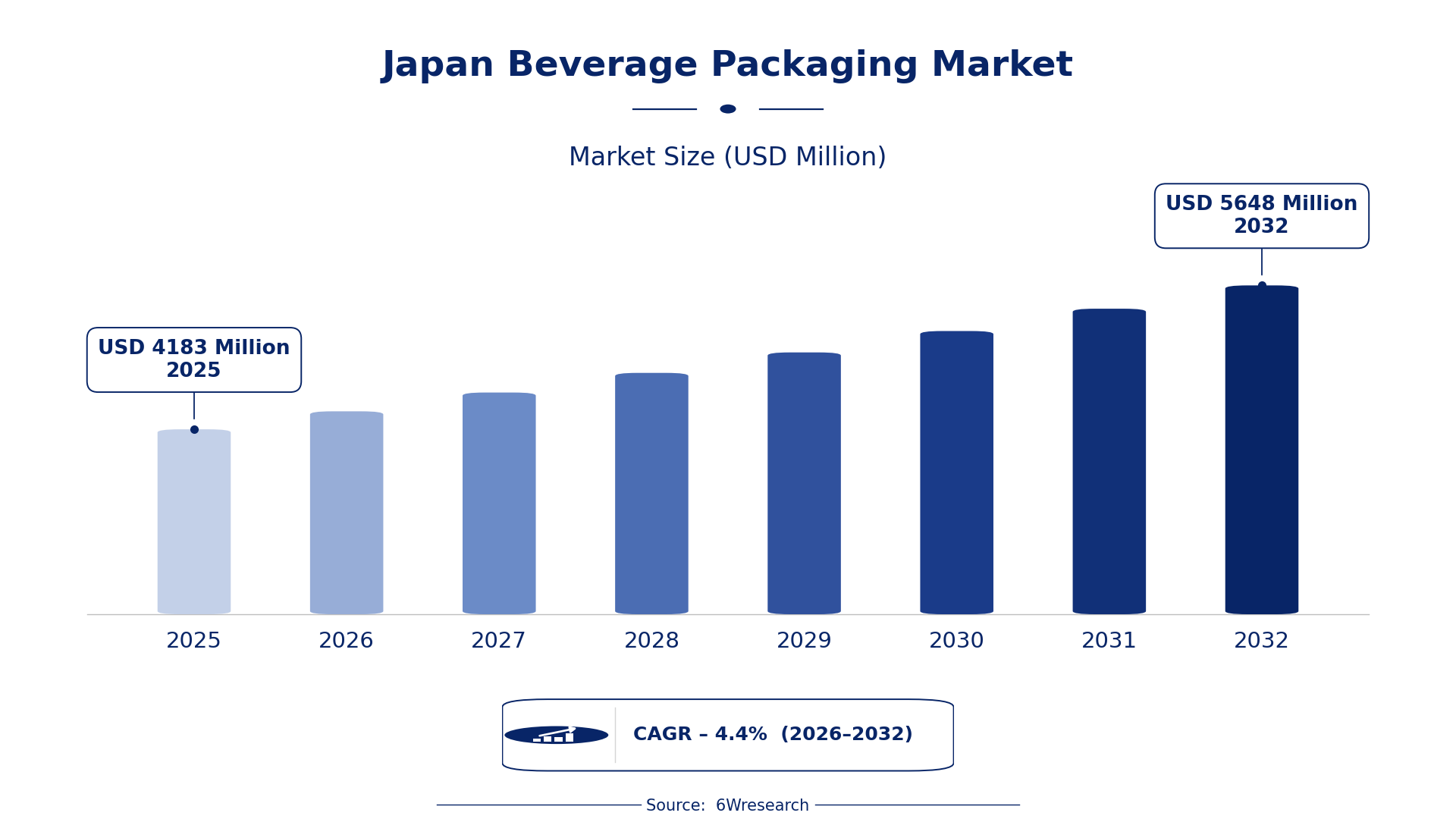
According to 6Wresearch internal database and industry insights, the Japan Beverage Packaging Market was valued at USD 4,183 Million in 2025 and is projected to reach USD 5,648 Million by 2032, growing at a CAGR of approximately 4.4% during 2026–2032.
Japan Beverage Packaging Market Highlights
| Report Metric | Details |
| Report Name | Japan Beverage Packaging Market (2026-2032) |
| Market Size 2025 | USD 4,183 Million |
| Market Size 2032 | USD 5,648 Million |
| Absolute Growth 2025–2032 | USD 1,465 Million |
| CAGR 2026–2032 | 4.4% |
| Peak Annual Growth | 5.4% in 2032 |
| Forecast Period | 2026–2032 |
| Historical Data | 2022–2025 |
| Base Year | 2025 |
| Leading Packaging Type, 2025 | Bottle (39% share) |
| Leading Material Type, 2025 | Plastic (44% share) |
| Leading Product Type, 2025 | Non-Alcoholic Beverages (42% share) |
| Fastest-Growing Packaging Type | Pouch (6.2% CAGR) |
| Fastest-Growing Material Type | Paper & Paperboard (6.3% CAGR) |
| Fastest-Growing Product Type | Dairy Beverages (6.1% CAGR) |
| Growing Sector | Non-Alcoholic Beverages |
| Key End Users | Beverage manufacturers, packaging suppliers, recycling facilities |
Japan Beverage Packaging Market Year-wise Growth Rate and Key Drivers (2022–2032)
This graph illustrates the annual growth rates of the market from 2022 to 2032, highlighting a steady upward trajectory and projected market expansion over the forecast period.
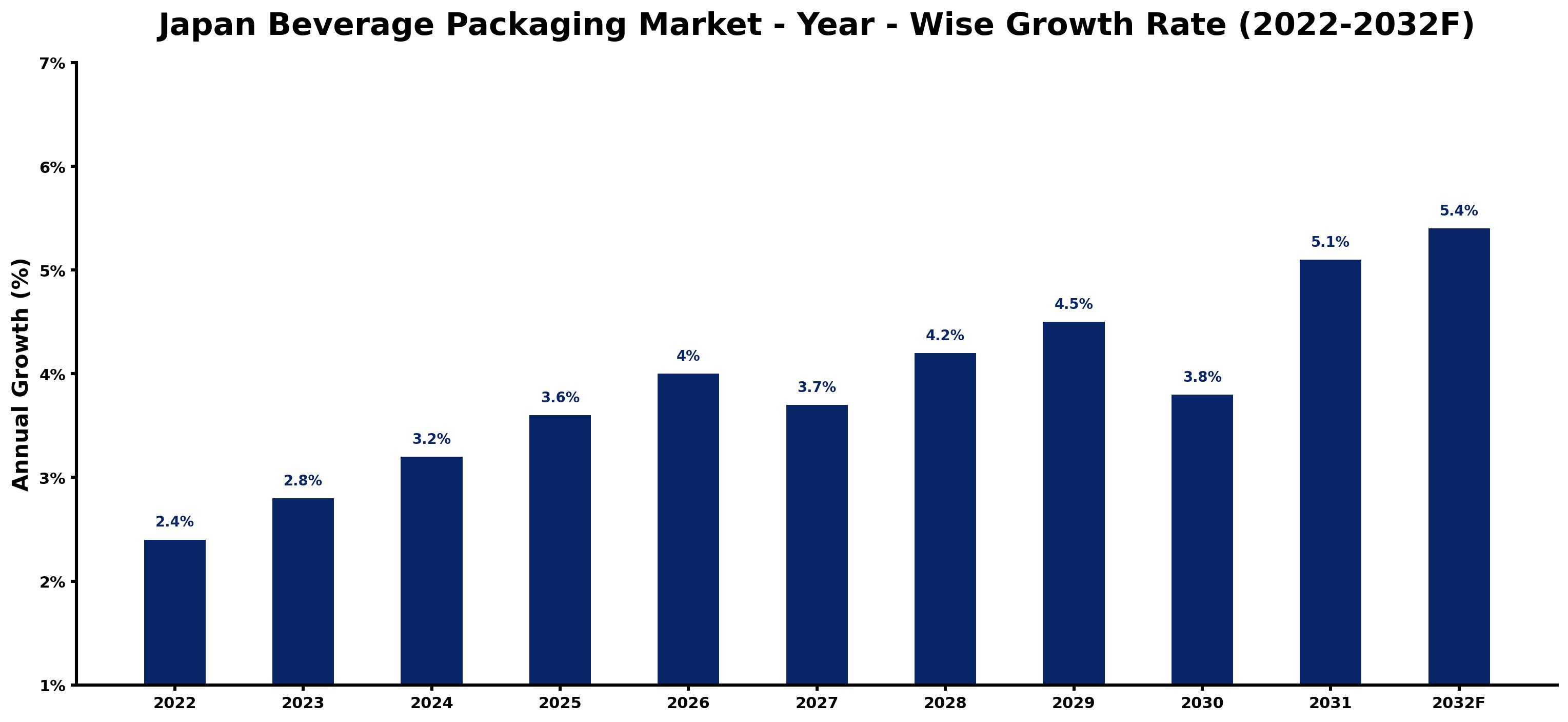
Each row of the following table gives one year's estimated growth and the event or demand shift that explains it.
| Year | Estimated Annual Growth (%) | Market Rationale |
| 2022 | 2.4 | The market was stable, reflecting consistent demand from local manufacturers and international brands. |
| 2023 | 2.8 | Growth accelerated due to increased investments in sustainable packaging solutions and consumer preferences for eco-friendly options. |
| 2024 | 3.2 | Demand continued to rise as eco-friendly initiatives gained traction among beverage producers, leading to higher production rates. |
| 2025 | 3.6 | The market peaked historically, driven by heightened consumer awareness and recycling efforts, particularly in urban areas. |
| 2026 | 4.0 | Investment in sustainable packaging technologies is expected to create new demand from various sectors, enhancing market dynamics. |
| 2027 | 3.7 | Growth is projected to slow slightly as the market adjusts to previous high levels of activity and consumer expectations. |
| 2028 | 4.2 | Demand is expected to increase again, supported by ongoing consumer shifts towards sustainable options and innovations in materials. |
| 2029 | 4.5 | The market is projected to maintain momentum due to rising environmental concerns and packaging innovations, particularly in urban settings. |
| 2030 | 3.8 | Growth is anticipated to slow again as the market stabilises after several years of rapid expansion and increasing competition. |
| 2031 | 5.1 | Investment in new materials and technologies is expected to spur increased demand across segments, particularly in eco-friendly packaging. |
| 2032 | 5.4 | The market is projected to peak, driven by advancements in sustainable packaging and consumer preferences for recyclable materials. |
Note: Market size estimations and growth projections presented in this report are based on 6Wresearch's proprietary forecasting methodology, utilizing the latest available industry data, government publications, and primary research inputs.
Japan Beverage Packaging Market Synopsis
Beverage packaging includes various materials such as glass, plastic, metal, and paperboard, designed to protect and preserve beverages. In Japan, the Beverage Packaging Market is valued at approximately 1 trillion JPY, with plastic bottles accounting for over 50% of the packaging. Growth is driven by rising consumer demand for sustainable packaging solutions, supported by government initiatives promoting eco-friendly practices and recycling. The Tokyo region serves as a key production hub, encouraging investment in new packaging technologies and practices.
Market Dynamics Impact Analysis (2026–2032)
| Factor | Type | Impact | Primary Segment Affected |
| Investment in sustainable packaging technologies | Driver | High | Plastic |
| Consumer preference for eco-friendly packaging | Driver | High | Glass |
| Growing demand for recyclable materials | Opportunity | High | Paper & Paperboard |
| Expansion of the beverage market in urban areas | Opportunity | Medium | Non-Alcoholic Beverages |
| Regulatory compliance costs for packaging materials | Restraint | High | Metal |
| Limited availability of eco-friendly raw materials | Restraint | Medium | Pouch |
| High production costs for sustainable packaging | Challenge | High | Carton |
| Capacity constraints in recycling facilities | Challenge | Medium | Bottle |
Evaluation of Drivers in Japan Beverage Packaging Market (2026–2032)
Key forces behind demand, with the segment each one moves most, are listed below.
| Drivers | Primary Segment Affected | Why It Matters (Evidence) |
| Increased investment in sustainable packaging solutions | Plastic | This investment is projected to improve production efficiency, with plastic bottles making up over 50% of beverage packaging. |
| Rising consumer demand for eco-friendly options | Glass | This demand has shifted packaging preferences towards glass, particularly for premium beverages, enhancing market appeal. |
| Government initiatives promoting recycling | Paper & Paperboard | The Japan Beverage Association reported a 70% recycling rate for beverage containers, encouraging the use of recyclable materials. |
| Urbanisation driving beverage consumption | Non-Alcoholic Beverages | As urban areas expand, demand for non-alcoholic beverages is increasing, boosting packaging needs and market growth. |
| Technological advancements in packaging | Metal | Innovations in metal can production are projected to increase their market share to 30% by 2025, reflecting consumer preferences. |
A wider customer base explains much of the growth, as increased investment in sustainable packaging solutions is reshaping the market. In 2022, over 50% of beverage packaging was made from plastic, reflecting consumer preferences for convenience and cost-effectiveness. The Tokyo region has seen advancements in recycling technologies, contributing to a 70% recycling rate for beverage containers. Increased consumer awareness of environmental issues is driving demand for eco-friendly options, particularly in urban areas. The beverage packaging industry employs over 100,000 people in Japan, underscoring its importance in the economy and the ongoing shift towards sustainability.
Evaluation of Restraints in Japan Beverage Packaging Market
These are the pressures that could keep growth below its potential.
| Market Restraint | Primary Segment Affected | Why It Matters (Evidence) |
| High production costs due to compliance with the JIS Z 1601 standard increase expenses for beverage manufacturers. | Bottle | This standard raises production costs by approximately 15%, impacting profitability. |
| Regulatory changes aimed at reducing single-use plastics complicate operations for suppliers. | Plastic | These changes lead to delays in product launches, averaging three months for suppliers. |
| A shortage of skilled workers in advanced packaging technologies hampers innovation. | Metal | This shortage causes suppliers to miss valuable market opportunities in a competitive landscape. |
| Increasing prices for eco-friendly materials impact buyers' costs. | Paper & Paperboard | Buyers may pay up to 20% more for sustainable packaging options compared to conventional materials. |
| Limited recycling infrastructure in certain regions affects material recovery rates. | Carton | This limitation hinders the overall recycling rate, impacting sustainability efforts. |
Japan Beverage Packaging Market Challenges
Producers face high costs due to compliance with the JIS Z 1601 standard, which raises production expenses by approximately 15% for beverage manufacturers. Regulatory changes aimed at reducing single-use plastics complicate operations, leading to delays in product launches for suppliers by an average of three months. A shortage of skilled workers in advanced packaging technologies hampers innovation, causing suppliers to miss valuable market opportunities. Buyers encounter rising prices as eco-friendly packaging initiatives expand, forcing them to pay up to 20% more for sustainable materials compared to conventional options.
Trends in the Japan Beverage Packaging Market
Several trends are reshaping the Japan Beverage Packaging Market; the most important are set out below.
- Shift from Plastic to Eco-Friendly Materials: In 2023, the beverage packaging industry is increasingly adopting eco-friendly materials, with initiatives promoting sustainable practices. For example, the Japan Beverage Association reported a rise in eco-friendly packaging initiatives, reflecting a growing consumer preference for sustainability.
- Transition from Single-Use to Reusable Packaging: The 2023 campaign launched by the Ministry of the Environment is encouraging a shift towards reusable packaging options. This initiative aims to reduce single-use plastics, with a target of increasing the use of reusable containers by 25% by 2025.
- Emergence of Advanced Recycling Technologies: The Tokyo region is experiencing advancements in recycling technologies, which are expected to improve material recovery rates. In 2023, new recycling facilities are projected to enhance the recycling rate for beverage containers to 75% by 2030.
- Prioritisation of Sustainable Packaging Solutions: The Dairy Products Association of Japan is actively promoting carton packaging for milk products as a sustainable alternative. This initiative is expected to increase carton usage by 15% by 2025, aligning with consumer demand for eco-friendly options.
Investment Opportunities in the Japan Beverage Packaging Market
Several openings in the Japan Beverage Packaging Market merit attention from investors.
- Expansion of Sustainable Packaging Facilities: The Tokyo region is seeing a rise in sustainable packaging facilities, creating opportunities for local manufacturers to innovate and meet consumer demand for eco-friendly options.
- Investment in Biodegradable Materials: Producers can invest in biodegradable packaging solutions as demand for eco-friendly options rises, particularly among non-alcoholic beverage manufacturers, enhancing market competitiveness.
- Partnerships for Eco-Friendly Packaging Development: Local manufacturers are encouraged to form joint ventures focused on sustainable packaging, particularly in regions with high beverage consumption, fostering innovation and collaboration.
- Focus on Recycling Technology Innovations: Investing in advanced recycling technologies presents an opportunity for companies aiming to improve sustainability in beverage packaging, increasing efficiency and reducing costs.
Government Initiatives in the Japan Beverage Packaging Market
The Food Sanitation Act amendment of 2018 introduced a system ensuring that only safe materials are used in food packaging, which has been in effect since June 2020. This measure benefits producers by streamlining compliance processes and building consumer trust, ultimately enhancing product safety and market access.
The Plastic Resource Circulation Act, overseen by the Ministry of the Environment and the Ministry of Economy, Trade and Industry, promotes the reduction, reuse, and recycling of plastics. This initiative encourages manufacturers to adopt sustainable practices, supporting the transition to eco-friendly materials and enhancing overall industry sustainability.
Future Insight of the Japan Beverage Packaging Market
Investment in sustainable packaging solutions will increase by 2032, driving demand for new materials and processes. The shift towards metal cans is expected to achieve a 30% market share by 2025, reflecting consumer preference for recyclable options. Enhanced recycling initiatives aim for 70% of beverage containers to be recycled by 2032, promoting sustainability in the industry. Technological advancements in packaging processes will streamline production, allowing suppliers to lower costs and improve efficiency for buyers.
Market Segmentation Analysis
Japan Beverage Packaging Market report covers a detailed analysis of the following market segments:
By Packaging Type – Bottle Leads, Pouch Expected to Grow Fastest
According to Ravi Bhandari, Research Head at 6Wresearch, the largest packaging type category in 2025 was Bottle, at 39% of revenue. Bottles lead the market due to their versatility and widespread use for various beverages, including soft drinks and water. The Tokyo region's strong production capabilities ensure a reliable supply of bottles that meet consumer needs. Pouch is set to record the highest CAGR in this split, 6.2% over 2026–2032. Pouches are experiencing rapid growth as consumers increasingly prefer convenient packaging solutions, particularly for non-carbonated drinks like smoothies. This trend highlights a shift towards portable and easy-to-use formats among buyers. Suppliers should consider expanding their pouch product lines to cater to the rising demand for convenience in beverage packaging.
By Material Type – Plastic Leads, Paper & Paperboard Expected to Grow Fastest
Plastic held 44% of the Japan Beverage Packaging Market by material type in 2025. Plastic is the predominant material in beverage packaging, chosen for its convenience and cost-effectiveness. The average Japanese consumer's use of 150 plastic bottles annually illustrates its extensive adoption across the market. The quickest growth will come from Paper & Paperboard, forecast to expand at a CAGR of 6.3% between 2026 and 2032. Paper and paperboard are witnessing significant growth, driven by increasing eco-friendly initiatives and consumer preference for sustainable packaging solutions. The Japan Beverage Association's promotion of these materials has further accelerated this trend. Buyers will increasingly prioritise sustainable packaging options, prompting suppliers to diversify their material offerings.
By Product Type – Non-Alcoholic Beverages Lead, Dairy Beverages Expected to Grow Fastest
Non-Alcoholic Beverages took 42% of product type revenue in 2025, more than any other category. Non-alcoholic beverages represent the largest segment of the beverage packaging market, supported by high consumption levels in Japan. This category includes popular drinks such as soft drinks and bottled water, ensuring steady demand for packaging solutions. Dairy Beverages are projected to grow fastest, at a CAGR of 6.1% during 2026–2032. Dairy beverages are the fastest-growing segment, reflecting a shift towards health-conscious products that require specialised packaging. Advocacy from relevant associations for specific packaging types has contributed to this growth. Suppliers should focus on creating tailored packaging solutions for the expanding dairy beverage market to capitalise on emerging opportunities.
Key Attractiveness of the Report
- 10 Years of Market Numbers
- Historical Data Starting from 2022 to 2025
- Base Year 2025
- Forecast Data until 2032
- Key Performance Indicators Impacting the Market
- Major Upcoming Developments and Projects
Key Highlights of the Report:
- Japan Beverage Packaging Market Outlook
- Market Size of Japan Beverage Packaging Market, 2025
- Forecast of Japan Beverage Packaging Market, 2032
- Historical Data and Forecast of Japan Beverage Packaging Revenues & Volume for the Period 2022-2032
- Japan Beverage Packaging Market Trend Evolution
- Japan Beverage Packaging Market Drivers and Challenges
- Japan Beverage Packaging Price Trends
- Japan Beverage Packaging Porter's Five Forces
- Japan Beverage Packaging Industry Life Cycle
- Historical Data and Forecast of Japan Beverage Packaging Market Revenues & Volume By Packaging Type for the Period 2022-2032
- Historical Data and Forecast of Japan Beverage Packaging Market Revenues & Volume By Bottle for the Period 2022-2032
- Historical Data and Forecast of Japan Beverage Packaging Market Revenues & Volume By Can for the Period 2022-2032
- Historical Data and Forecast of Japan Beverage Packaging Market Revenues & Volume By Pouch for the Period 2022-2032
- Historical Data and Forecast of Japan Beverage Packaging Market Revenues & Volume By Carton for the Period 2022-2032
- Historical Data and Forecast of Japan Beverage Packaging Market Revenues & Volume By Material Type for the Period 2022-2032
- Historical Data and Forecast of Japan Beverage Packaging Market Revenues & Volume By Glass for the Period 2022-2032
- Historical Data and Forecast of Japan Beverage Packaging Market Revenues & Volume By Plastic for the Period 2022-2032
- Historical Data and Forecast of Japan Beverage Packaging Market Revenues & Volume By Metal for the Period 2022-2032
- Historical Data and Forecast of Japan Beverage Packaging Market Revenues & Volume By Paper & Paperboard for the Period 2022-2032
- Historical Data and Forecast of Japan Beverage Packaging Market Revenues & Volume By Product Type for the Period 2022-2032
- Historical Data and Forecast of Japan Beverage Packaging Market Revenues & Volume By Alcoholic Beverages for the Period 2022-2032
- Historical Data and Forecast of Japan Beverage Packaging Market Revenues & Volume By Non-Alcoholic Beverages for the Period 2022-2032
- Historical Data and Forecast of Japan Beverage Packaging Market Revenues & Volume By Dairy Beverages for the Period 2022-2032
- Japan Beverage Packaging Import Export Trade Statistics
- Market Opportunity Assessment By Packaging Type
- Market Opportunity Assessment By Material Type
- Market Opportunity Assessment By Product Type
- Japan Beverage Packaging Top Companies Market Share
- Japan Beverage Packaging Competitive Benchmarking By Technical and Operational Parameters
- Japan Beverage Packaging Company Profiles
- Japan Beverage Packaging Key Strategic Recommendations
Market Covered
The study includes the following segmentation.
By Packaging Type
- Bottle
- Can
- Pouch
- Carton
By Material Type
- Glass
- Plastic
- Metal
- Paper & Paperboard
By Product Type
- Alcoholic Beverages
- Non-Alcoholic Beverages
- Dairy Beverages































