Japan Managed Mobility Services Market Size & Growth Rate (2026-2032)
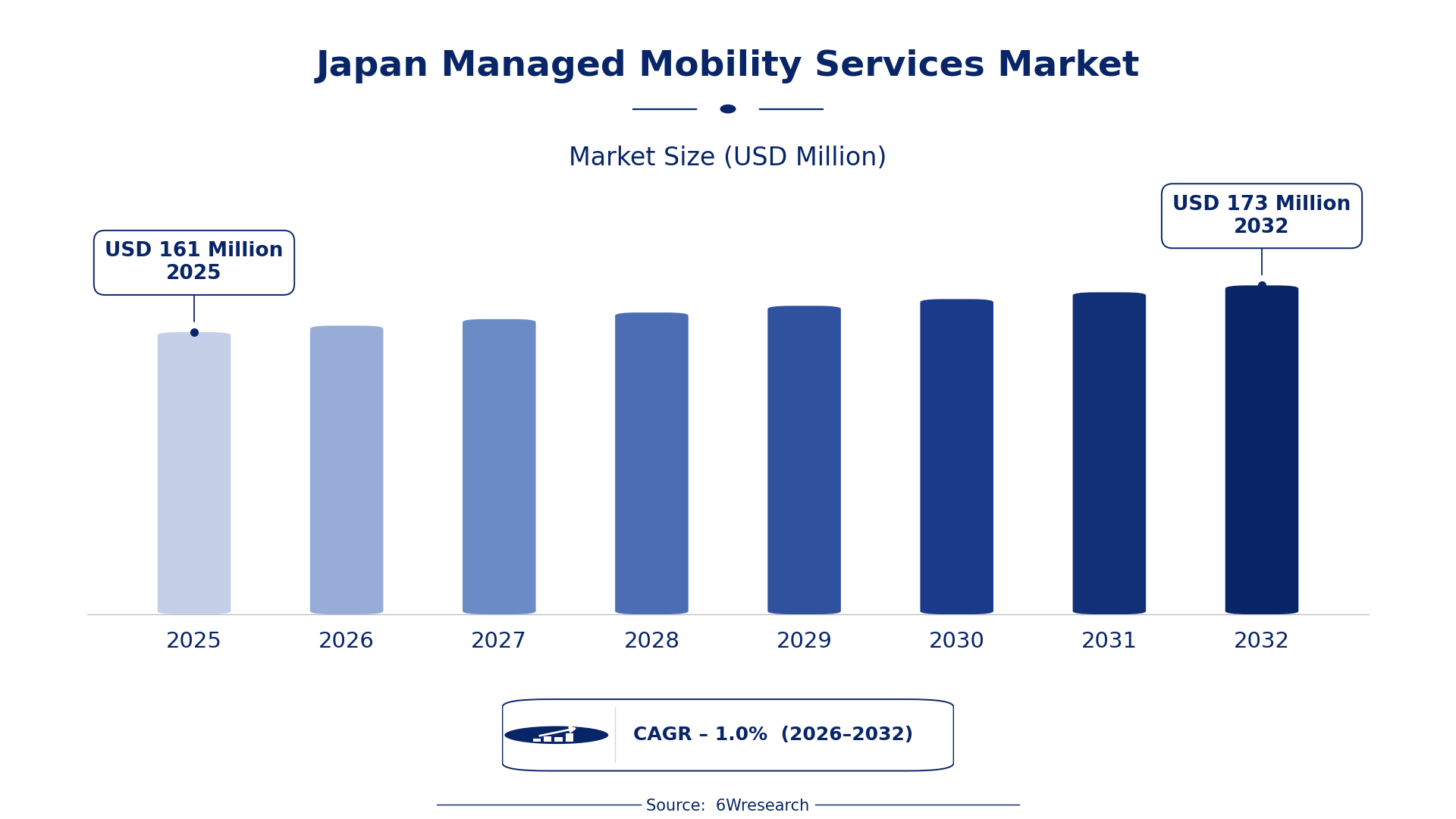
The Japan Managed Mobility Services Market was estimated at USD 161 Million in 2025 and is projected to reach USD 173 Million by 2032, growing at a CAGR of 1.0% from 2026 to 2032.
Japan Managed Mobility Services Market Synopsis
In Japan, the rising prevalence of mobile devices among the workforce has compelled organizations to rethink their mobile management strategies. Businesses now demand services that not only manage devices but also ensure the security and efficiency of mobile operations.
As remote working becomes a norm, the need for integrated managed mobility services has surged. Companies are increasingly seeking solutions that encompass mobile device management, application management, and security to support their mobile-enabled workforce effectively.
Japan Managed Mobility Services Market Year-wise Growth Rate and Key Drivers
This graph illustrates the annual growth rates of the Japan Managed Mobility Services Market from 2021 to 2032, highlighting a steady upward trajectory and projected expansion over the forecast period.
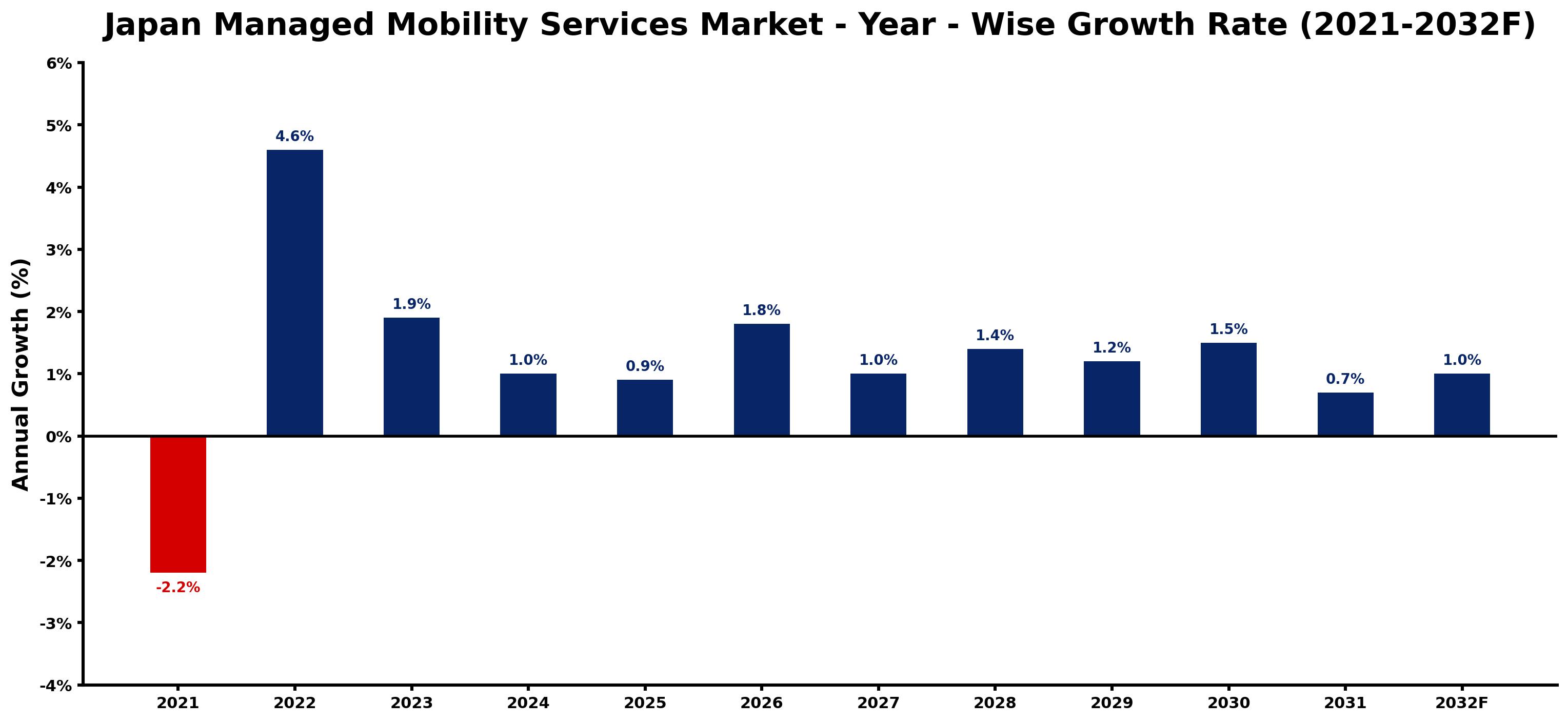
The table below presents the year‑wise growth rates along with the key drivers influencing the market
| Year | Growth Rate | Major Drivers |
| 2021 | -2.2% | Remote work policies reduced demand for managed services. |
| 2022 | 4.6% | Increased adoption of AI for mobile service optimization. |
| 2023 | 1.9% | Rising need for tailored logistics solutions in urban areas. |
| 2024 | 1.0% | Growing interest in corporate wellness programs supporting mobility. |
| 2025 | 0.9% | Shift towards flexible work arrangements boosting service demand. |
| 2026 | 1.8% | Improvements in mobile cybersecurity regulations enhancing trust. |
| 2027 | 1.0% | Heightened focus on operational efficiency in Japanese enterprises. |
| 2028 | 1.4% | Emergence of electric vehicles increasing mobility service needs. |
| 2029 | 1.2% | Growing smartphone penetration among senior demographics in Japan. |
| 2030 | 1.5% | Investments in next-gen mobile infrastructure to boost services. |
| 2031 | 0.7% | Local regulations promoting telematics in fleet management. |
| 2032 | 1.0% | Enhanced customer service requirements driving managed mobility uptake. |
Note: Market size estimations and growth projections presented in this report are based on 6Wresearch's proprietary forecasting methodology, utilizing the latest available industry data, government publications, and primary research inputs.
Japan Managed Mobility Services Market Key Takeaways
Below are some of the specific key takeaways from the market, including:
- Growth driven by remote work and mobile device adoption in enterprises.
- Increasing focus on data security and compliance among businesses.
- Emergence of AI and automation to enhance service delivery.
- Significant investment opportunities in mobile device management solutions.
- Government regulations and initiatives fostering digital transformation.
Evaluation of Restraints in Japan Managed Mobility Services Market
Despite its promising outlook, the Japan Managed Mobility Services Market faces several restraints. Intense competition among service providers complicates the differentiation of offerings, making it challenging to capture market share. Data security and privacy concerns remain critical, as companies must safeguard sensitive information against emerging cyber threats. Furthermore, the diverse range of mobile technologies complicates service integration and requires providers to stay abreast of rapid technological advancements.
Japan Managed Mobility Services Market Trends
The trend towards remote working is reshaping the demand for managed mobility services. Companies prioritize streamlined operations and efficient device management, often turning to cloud-based solutions. Additionally, as organizations increasingly embrace digital transformation, the integration of advanced technologies like artificial intelligence and the Internet of Things (IoT) is becoming more prevalent. These advancements enhance the functionality and security of mobile management services, further influencing market growth.
Japan Managed Mobility Services Market Opportunities
Investment opportunities abound in the Japan Managed Mobility Services Market. Firms can capitalize on the growing demand for mobile device management and security solutions, particularly those that comply with local regulations. There is also a pressing need for services that facilitate seamless remote access, supporting the increasing trend of flexible work arrangements. As organizations seek tailored solutions to enhance productivity and security, this market offers fertile ground for innovative service offerings.
Government Initiatives in the Japan Managed Mobility Services Market
Government initiatives play a crucial role in shaping the Japan Managed Mobility Services Market. The Japanese administration is actively promoting digital transformation and enhancing cybersecurity through various policies. These regulations create a favorable environment for businesses to adopt managed mobility services, driving market growth.
- A recently completed Cybersecurity Strategy aimed at bolstering national resilience against cyber threats.
- Current initiatives under the Act on the Protection of Personal Information (APPI) to strengthen data privacy measures for businesses.
- Ongoing support through the Japan IT Week program, encouraging innovation and adoption of digital technologies.
- A planned Digital Transformation Promotion Act to further stimulate the integration of advanced technology solutions in enterprises.
- Recent updates to compliance guidelines for managed mobility services to ensure alignment with international standards.
Future Insights of the Japan Managed Mobility Services Market
Looking ahead to 2026-2032, the Japan Managed Mobility Services Market is set for gradual yet steady growth. The continual rise of mobile technologies and remote work requirements will keep demand strong for efficient mobile management solutions. Firms are likely to focus on enhancing operational efficiency while investing in advanced technologies to optimize performance. As the market matures, innovative service offerings will be crucial to meet evolving customer needs.
Japan Managed Mobility Services Market Latest Developments
The past year has seen various industry activities that reflect the dynamic nature of the Japan Managed Mobility Services Market. Providers are actively enhancing their service offerings, with an emphasis on security and efficiency to cater to the growing mobile workforce.
- A leading regional operator launched a comprehensive mobile device management service in early 2025, aimed at enterprises adapting to remote work.
- An ongoing collaboration between technology vendors to integrate AI solutions into mobile management systems, enhancing user experience and efficiency.
- A planned service upgrade expected to roll out in late 2025, introducing advanced data security features to safeguard sensitive business information.
- Completion of a pilot program focusing on cloud-based mobility solutions by mid-2025, with results indicating a significant improvement in operational efficiency.
- Recent partnerships formed between managed mobility service providers and telecom companies, aimed at expanding mobile device offerings for corporate clients.
Japan Managed Mobility Services Market - Key Attractiveness of the Report
- 10 Years of Market Numbers
- Historical Data Starting from 2022 to 2025
- Base Year: 2025
- Forecast Data until 2032
- Key Performance Indicators Impacting the Market
- Major Upcoming Developments and Projects
Key Highlights of the Report:
- Japan Managed Mobility Services Market Outlook
- Market Size of Japan Managed Mobility Services Market, 2025
- Forecast of Japan Managed Mobility Services Market, 2032
- Historical Data and Forecast of Japan Managed Mobility Services Revenues & Volume for the Period 2022-2032F
- Japan Managed Mobility Services Market Trend Evolution
- Japan Managed Mobility Services Market Drivers and Challenges
- Japan Managed Mobility Services Price Trends
- Japan Managed Mobility Services Porter's Five Forces
- Japan Managed Mobility Services Industry Life Cycle
- Historical Data and Forecast of Japan Managed Mobility Services Market Revenues & Volume By Function for the Period 2022-2032F
- Historical Data and Forecast of Japan Managed Mobility Services Market Revenues & Volume By Device Management for the Period 2022-2032F
- Historical Data and Forecast of Japan Managed Mobility Services Market Revenues & Volume By Application Management for the Period 2022-2032F
- Historical Data and Forecast of Japan Managed Mobility Services Market Revenues & Volume By Security Management for the Period 2022-2032F
- Historical Data and Forecast of Japan Managed Mobility Services Market Revenues & Volume By Maintenance & Support for the Period 2022-2032F
- Historical Data and Forecast of Japan Managed Mobility Services Market Revenues & Volume By Organization Size for the Period 2022-2032F
- Historical Data and Forecast of Japan Managed Mobility Services Market Revenues & Volume By SMEs for the Period 2022-2032F
- Historical Data and Forecast of Japan Managed Mobility Services Market Revenues & Volume By Large Enterprises for the Period 2022-2032F
- Historical Data and Forecast of Japan Managed Mobility Services Market Revenues & Volume By Industry Vertical for the Period 2022-2032F
- Historical Data and Forecast of Japan Managed Mobility Services Market Revenues & Volume By Healthcare for the Period 2022-2032F
- Historical Data and Forecast of Japan Managed Mobility Services Market Revenues & Volume By Manufacturing for the Period 2022-2032F
- Historical Data and Forecast of Japan Managed Mobility Services Market Revenues & Volume By Logistics and Transportation for the Period 2022-2032F
- Historical Data and Forecast of Japan Managed Mobility Services Market Revenues & Volume By Retail for the Period 2022-2032F
- Historical Data and Forecast of Japan Managed Mobility Services Market Revenues & Volume By Financial Services for the Period 2022-2032F
- Historical Data and Forecast of Japan Managed Mobility Services Market Revenues & Volume By Telecom and IT for the Period 2022-2032F
- Historical Data and Forecast of Japan Managed Mobility Services Market Revenues & Volume By Media and Entertainment for the Period 2022-2032F
- Historical Data and Forecast of Japan Managed Mobility Services Market Revenues & Volume By Travel and Hospitality for the Period 2022-2032F
- Japan Managed Mobility Services Import Export Trade Statistics
- Market Opportunity Assessment By Function
- Market Opportunity Assessment By Organization Size
- Market Opportunity Assessment By Industry Vertical
- Japan Managed Mobility Services Top Companies Market Share
- Japan Managed Mobility Services Competitive Benchmarking By Technical and Operational Parameters
- Japan Managed Mobility Services Company Profiles
- Japan Managed Mobility Services Key Strategic Recommendations






































