Japan Ozempic Market Size & Growth Rate
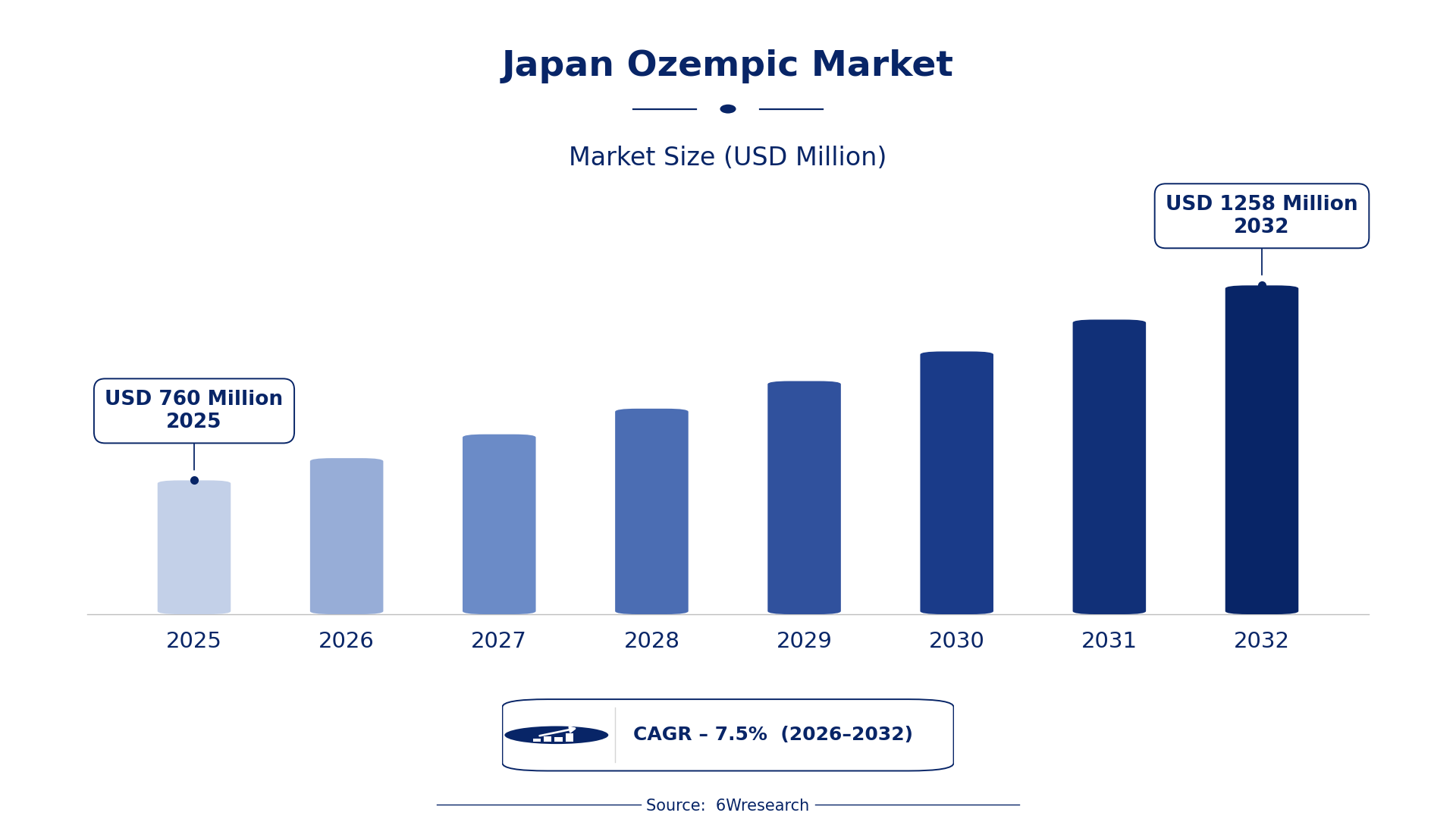
According to 6Wresearch internal database and industry insights, the Japan Ozempic Market was valued at USD 760 Million in 2025 and is projected to reach USD 1,258 Million by 2032, growing at a CAGR of approximately 7.5% during 2026–2032.
Japan Ozempic Market Highlights
| Report Metric | Details |
| Report Name | Japan Ozempic Market (2026-2032) |
| Market Size 2025 | USD 760 Million |
| Market Size 2032 | USD 1,258 Million |
| Absolute Growth 2025–2032 | USD 498 Million |
| CAGR 2026–2032 | 7.5% |
| Peak Annual Growth | 10.6% in 2026 |
| Forecast Period | 2026–2032 |
| Historical Data | 2022–2025 |
| Base Year | 2025 |
| Leading Type, 2025 | Injectable Solution (43% share) |
| Leading Dosage Form, 2025 | 0.25mg (37% share) |
| Leading Application, 2025 | Type 2 Diabetes Treatment (58% share) |
| Leading Distribution Channel, 2025 | Hospital Pharmacies (43% share) |
| Fastest-Growing Type | Pre-Filled Pens (9.7% CAGR) |
| Fastest-Growing Dosage Form | 0.5mg (10.0% CAGR) |
| Fastest-Growing Application | Weight Management (9.3% CAGR) |
| Fastest-Growing Distribution Channel | Retail Pharmacies (9.4% CAGR) |
| Growing Sector | diabetes management |
| Key End Users | healthcare providers, patients, pharmacies, insurance companies |
Japan Ozempic Market Year-wise Growth Rate and Key Drivers (2022–2032)
This graph illustrates the annual growth rates of the market from 2022 to 2032, highlighting a steady upward trajectory and projected market expansion over the forecast period.
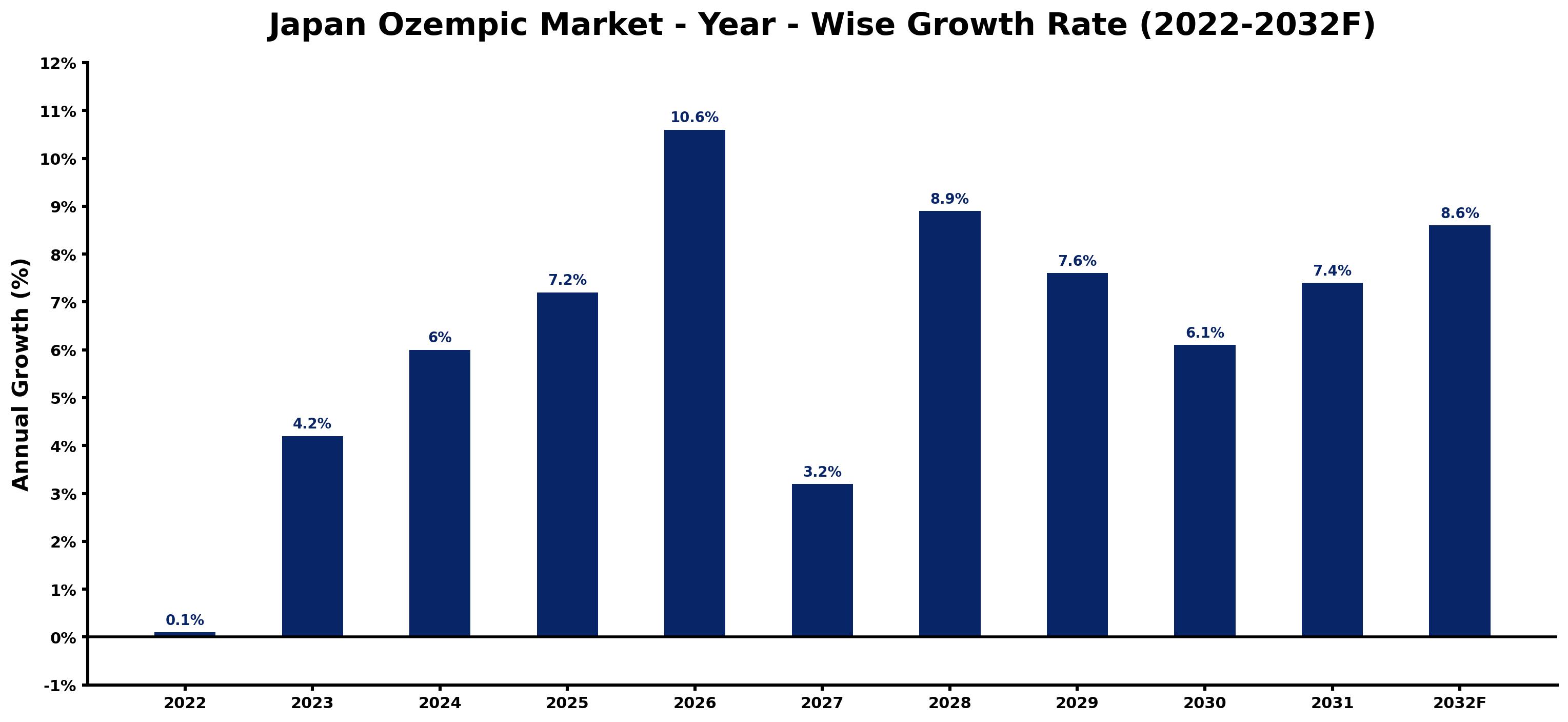
Annual growth estimates for each year appear below with the principal reason behind them, explaining the shifts that set the pace of the market.
| Year | Estimated Annual Growth (%) | Market Rationale |
| 2022 | 0.1 | The market showed minimal growth as awareness of Ozempic was still developing among healthcare providers. |
| 2023 | 4.2 | Increased patient numbers seeking diabetes management led to faster growth compared to the previous year. |
| 2024 | 6.0 | Demand surged as more patients were introduced to GLP-1 agonists for diabetes treatment. |
| 2025 | 7.2 | The market reached a historical peak due to heightened awareness and acceptance of Ozempic among patients. |
| 2026 | 10.6 | The introduction of new marketing strategies and educational campaigns spurred growth. |
| 2027 | 3.2 | Growth slowed as market saturation began to impact new patient acquisitions. |
| 2028 | 8.9 | Increased focus on weight management among healthcare providers revitalised interest in Ozempic. |
| 2029 | 7.6 | The market continued to grow as more patients sought effective diabetes management solutions. |
| 2030 | 6.1 | Growth slowed slightly as competition among diabetes medications intensified. |
| 2031 | 7.4 | A renewed emphasis on diabetes education led to increased patient engagement and demand. |
| 2032 | 8.6 | The market is expected to grow as the prevalence of diabetes continues to rise. |
Note: Market size estimations and growth projections presented in this report are based on 6Wresearch's proprietary forecasting methodology, utilizing the latest available industry data, government publications, and primary research inputs.
Japan Ozempic Market Synopsis
Ozempic is a GLP-1 receptor agonist used primarily for managing type 2 diabetes and aiding weight loss. It is produced using recombinant DNA technology, ensuring effective glycemic control for patients. The Japan Ozempic Market is expanding due to the rising prevalence of diabetes, affecting approximately 7.4 million individuals. The increasing acceptance of GLP-1 medications, alongside government campaigns promoting diabetes awareness, is driving demand. In 2023, the government initiated initiatives to improve diabetes management, stimulating further market growth.
Market Dynamics Impact Analysis (2026–2032)
| Factor | Type | Impact | Primary Segment Affected |
| Rising prevalence of diabetes in Japan | Driver | High | Type 2 Diabetes Treatment |
| Growing interest in weight management solutions | Driver | High | Weight Management |
| Increasing patient access to GLP-1 medications | Opportunity | High | Retail Pharmacies |
| Expansion of distribution channels for Ozempic | Opportunity | High | Online Pharmacies |
| Limited awareness among healthcare providers | Restraint | Medium | Type 2 Diabetes Treatment |
| High cost of diabetes treatment for patients | Restraint | High | Weight Management |
| Competition from alternative diabetes medications | Challenge | High | Type 2 Diabetes Treatment |
| Regulatory hurdles for new drug approvals | Challenge | Medium | Pre-Filled Pens |
Evaluation of Drivers in Japan Ozempic Market (2026–2032)
These are the developments adding the most demand over the forecast period.
| Drivers | Primary Segment Affected | Why It Matters (Evidence) |
| Increasing number of diabetes patients seeking treatment | Type 2 Diabetes Treatment | Approximately 7.4 million people in Japan have diabetes, driving demand for effective medications. |
| Heightened awareness of weight management benefits | Weight Management | With 30% of adults affected by obesity, there is a growing market for effective weight loss solutions. |
| Government campaigns promoting diabetes awareness | Retail Pharmacies | In 2023, the government launched initiatives to improve diabetes management, increasing patient access. |
| Expansion of online pharmacies for convenience | Online Pharmacies | The trend towards online shopping is increasing access to medications like Ozempic for patients. |
| Inclusion of GLP-1 medications in health insurance reimbursements | Pre-Filled Pens | In 2021, GLP-1 medications were included in the National Health Insurance System, making them more accessible. |
Spending rises because the number of diabetes patients in Japan has reached approximately 7.4 million, creating a strong demand for effective treatments. The average cost of diabetes treatment is estimated at ¥300,000 per year per patient, prompting many to seek affordable options. In 2023, campaigns aimed at diabetes awareness have increased patient engagement with healthcare providers. The inclusion of GLP-1 medications in health insurance reimbursement has made treatments more accessible, leading to higher patient adoption rates. Technological advancements in drug delivery systems are improving user experience and efficiency, further boosting demand.
Evaluation of Restraints in Japan Ozempic Market
The table below lists the restraints and the evidence behind each.
| Market Restraint | Primary Segment Affected | Why It Matters (Evidence) |
| Limited awareness among healthcare providers regarding Ozempic | Type 2 Diabetes Treatment | Many healthcare providers are still unfamiliar with the benefits of Ozempic, hindering patient prescriptions. |
| High treatment costs for patients without insurance coverage | Weight Management | The average annual cost of diabetes treatment is ¥300,000, which may deter some patients from seeking care. |
| Competition from other diabetes medications | Type 2 Diabetes Treatment | The presence of various alternatives in the market can limit Ozempic's market share among patients. |
| Regulatory challenges in drug approvals | Pre-Filled Pens | Stringent regulations can delay the introduction of new formulations or delivery methods for Ozempic. |
| Limited distribution channels in rural areas | Retail Pharmacies | Patients in less populated regions may have difficulty accessing Ozempic through available pharmacies. |
Japan Ozempic Market Challenges
Access to Ozempic is restricted by stringent regulations from the Japanese Pharmaceutical Manufacturers Association, which can extend approval times by up to 18 months for suppliers. High annual treatment costs average ¥300,000 per patient, making it difficult for many individuals to afford necessary medications, ultimately impacting adherence rates among buyers. A lack of skilled healthcare professionals limits effective diabetes management, which can lead to poorer outcomes and increased strain on clinics. Supply chain interruptions can result in medication shortages, affecting around 500,000 current users and delaying critical treatment.
Trends in the Japan Ozempic Market
Buyers and suppliers in the Japan Ozempic Market are adjusting to the following trends.
- Shift towards Weight Management Solutions: In 2023, the Japanese government launched a campaign to promote diabetes management, resulting in a notable increase in interest in weight management solutions, with a 9.3% growth in this application segment.
- Increase in Online Pharmacy Usage: The trend towards online pharmacies has gained momentum, with a 9.4% growth in this distribution channel, reflecting changing consumer preferences for convenience in accessing medications.
- Growing Acceptance of GLP-1 Medications: Since 2021, when GLP-1 medications were included in the National Health Insurance System, patient acceptance has risen, contributing to increased demand for Ozempic.
- Rising Awareness of Diabetes Management: The government's diabetes awareness campaign, initiated in 2023, has led to a greater understanding of diabetes management among patients, boosting the market for Ozempic.
Investment Opportunities in the Japan Ozempic Market
Investors looking at the Japan Ozempic Market should consider the following areas.
- Gap in Patient Education: Healthcare providers in urban areas are increasingly seeking educational resources to improve patient outcomes, as many patients remain unaware of Ozempic's benefits.
- Demand for Convenient Delivery Methods: Retail pharmacies are pursuing partnerships to expand their online offerings, catering to the growing preference for home delivery of medications.
- Expansion of Distribution Networks: Local partnerships can facilitate entry into underserved markets, allowing for improved access to Ozempic in rural areas.
- Investment in Weight Management Programs: Healthcare providers are increasingly looking for effective weight management solutions, as rising obesity rates create a demand for treatment options.
Government Initiatives in the Japan Ozempic Market
The Water Supply Act (1957) and the Sewerage Act (1958) set foundational standards for public health, indirectly influencing the pharmaceutical industry by ensuring safe and clean environments for medication distribution. Additionally, the Clinical Trials Act (2017) established guidelines for conducting clinical research, which are essential for the approval and monitoring of drugs like Ozempic.
The Digital Agency, established in September 2021, facilitates the digital transformation of healthcare services, enabling better patient management. The National Health Insurance System, revised in 2021, includes GLP-1 medications for reimbursement, allowing patients to access Ozempic without prohibitive costs.
Future Insight of the Japan Ozempic Market
Patients will experience notable changes in diabetes management by 2032, as government campaigns promote awareness and the Japan Diabetes Society updates its guidelines. Technological advancements will streamline drug delivery systems, improving efficiency and user experience. New reimbursement frameworks will enhance treatment accessibility for buyers, encouraging greater uptake of GLP-1 medications. By 2030, the number of patients treated with GLP-1 agonists is projected to rise to around 1 million, indicating a major evolution in diabetes care.
Market Segmentation Analysis
Japan Ozempic Market report covers a detailed analysis of the following market segments:
By Type – Injectable Solution Leads, Pre-Filled Pens Expected to Grow Fastest
According to Sachin Kumar Rai, Senior Research Analyst at 6Wresearch, with 43% of type revenue in 2025, Injectable Solution was the largest category. Injectable solutions hold the largest share due to their established role in diabetes management, particularly among healthcare providers in regions like Tokyo, which has a high concentration of diabetes patients. This method is widely accepted and trusted for effective treatment outcomes. The quickest growth will come from Pre-Filled Pens, forecast to expand at a CAGR of 9.7% between 2026 and 2032. Pre-filled pens are rapidly gaining popularity as they provide convenience and ease of use for patients, which is increasingly valued in diabetes care. The recent government campaign promoting diabetes awareness has further accelerated their adoption, making them a preferred choice. Suppliers should prioritise the production and distribution of pre-filled pens to align with the growing demand from patients.
By Dosage Form – 0.25mg Leads, 0.5mg Expected to Grow Fastest
In 2025, 0.25mg led the dosage form split with a 37% share. The 0.25mg dosage form holds the largest share as it provides specific dosing tailored for patients, ensuring effective glycemic control in accordance with established treatment guidelines. This dosage is particularly favoured among healthcare providers for its precision in managing diabetes, especially in older patients. Over 2026–2032, 0.5mg is expected to post the fastest growth, at a CAGR of 10.0%. The 0.5mg dosage form is experiencing rapid growth as it is commonly recommended as a starting dose for new patients, reflecting the increasing number of individuals seeking diabetes treatment. This trend underscores the necessity for accessible options for those newly diagnosed, particularly in urban areas. Suppliers must ensure adequate production of the 0.5mg dosage to meet the rising patient demand.
By Application – Type 2 Diabetes Treatment Leads, Weight Management Expected to Grow Fastest
Type 2 Diabetes Treatment accounted for 58% of the market by application in 2025. Type 2 diabetes treatment is the primary application for Ozempic, accounting for the majority of its use among the 7.4 million individuals with diabetes in Japan. This strong focus on diabetes management underscores the critical need for effective therapies in the population. Weight Management is set to record the highest CAGR in this split, 9.3% over 2026–2032. Weight management is emerging as a fast-growing application, driven by the high prevalence of obesity affecting 30% of adults in Japan. As awareness of weight-related health issues increases, more patients are seeking Ozempic for this purpose. Suppliers should consider expanding marketing efforts to highlight the benefits of Ozempic for weight management.
By Distribution Channel – Hospital Pharmacies Lead, Retail Pharmacies Expected to Grow Fastest
The largest distribution channel category in 2025 was Hospital Pharmacies, at 43% of revenue. Hospital pharmacies lead the distribution channel as they serve as the main point for administering diabetes treatments, particularly in regions with a high concentration of diabetes patients. Their critical role ensures timely access to necessary medications for effective management of diabetes. Retail Pharmacies are projected to grow fastest, at a CAGR of 9.4% during 2026–2032. Retail pharmacies are witnessing rapid growth due to their accessibility for patients, facilitating easier procurement of diabetes medications. As more individuals seek treatment, the demand for convenient access through retail channels is likely to increase, particularly in urban settings. Suppliers should strengthen partnerships with retail pharmacies to improve distribution efficiency and patient access.
Key Attractiveness of the Report
- 10 Years of Market Numbers
- Historical Data Starting from 2022 to 2025
- Base Year 2025
- Forecast Data until 2032
- Key Performance Indicators Impacting the Market
- Major Upcoming Developments and Projects
Key Highlights of the Report:
- Japan Ozempic Market Outlook
- Market Size of Japan Ozempic Market,2025
- Forecast of Japan Ozempic Market, 2032
- Historical Data and Forecast of Japan Ozempic Revenues & Volume for the Period 2022-2032
- Japan Ozempic Market Trend Evolution
- Japan Ozempic Market Drivers and Challenges
- Japan Ozempic Price Trends
- Japan Ozempic Porter's Five Forces
- Japan Ozempic Industry Life Cycle
- Historical Data and Forecast of Japan Ozempic Market Revenues & Volume By Type for the Period 2022-2032
- Historical Data and Forecast of Japan Ozempic Market Revenues & Volume By Injectable Solution for the Period 2022-2032
- Historical Data and Forecast of Japan Ozempic Market Revenues & Volume By Pre-Filled Pens for the Period 2022-2032
- Historical Data and Forecast of Japan Ozempic Market Revenues & Volume By Others for the Period 2022-2032
- Historical Data and Forecast of Japan Ozempic Market Revenues & Volume By Dosage Form for the Period 2022-2032
- Historical Data and Forecast of Japan Ozempic Market Revenues & Volume By 0.25mg, 0.5mg, 1mg for the Period 2022-2032
- Historical Data and Forecast of Japan Ozempic Market Revenues & Volume By Multi-Dose for the Period 2022-2032
- Historical Data and Forecast of Japan Ozempic Market Revenues & Volume By Application for the Period 2022-2032
- Historical Data and Forecast of Japan Ozempic Market Revenues & Volume By Type 2 Diabetes Treatment for the Period 2022-2032
- Historical Data and Forecast of Japan Ozempic Market Revenues & Volume By Weight Management for the Period 2022-2032
- Historical Data and Forecast of Japan Ozempic Market Revenues & Volume By Distribution Channel for the Period 2022-2032
- Historical Data and Forecast of Japan Ozempic Market Revenues & Volume By Hospital Pharmacies for the Period 2022-2032
- Historical Data and Forecast of Japan Ozempic Market Revenues & Volume By Retail Pharmacies for the Period 2022-2032
- Historical Data and Forecast of Japan Ozempic Market Revenues & Volume By Online Pharmacies for the Period 2022-2032
- Japan Ozempic Import Export Trade Statistics
- Market Opportunity Assessment By Type
- Market Opportunity Assessment By Dosage Form
- Market Opportunity Assessment By Application
- Market Opportunity Assessment By Distribution Channel
- Japan Ozempic Top Companies Market Share
- Japan Ozempic Competitive Benchmarking By Technical and Operational Parameters
- Japan Ozempic Company Profiles
- Japan Ozempic Key Strategic Recommendations
Market Covered
Segments analysed in this report are listed below.
By Type
- Injectable Solution
- Pre-Filled Pens
- Others
By Dosage Form
- 0.25mg
- 0.5mg
- 1mg
- Multi-Dose
By Application
- Type 2 Diabetes Treatment
- Weight Management
By Distribution Channel
- Hospital Pharmacies
- Retail Pharmacies
- Online Pharmacies































