Japan Pale Ale Market Size & Growth Rate
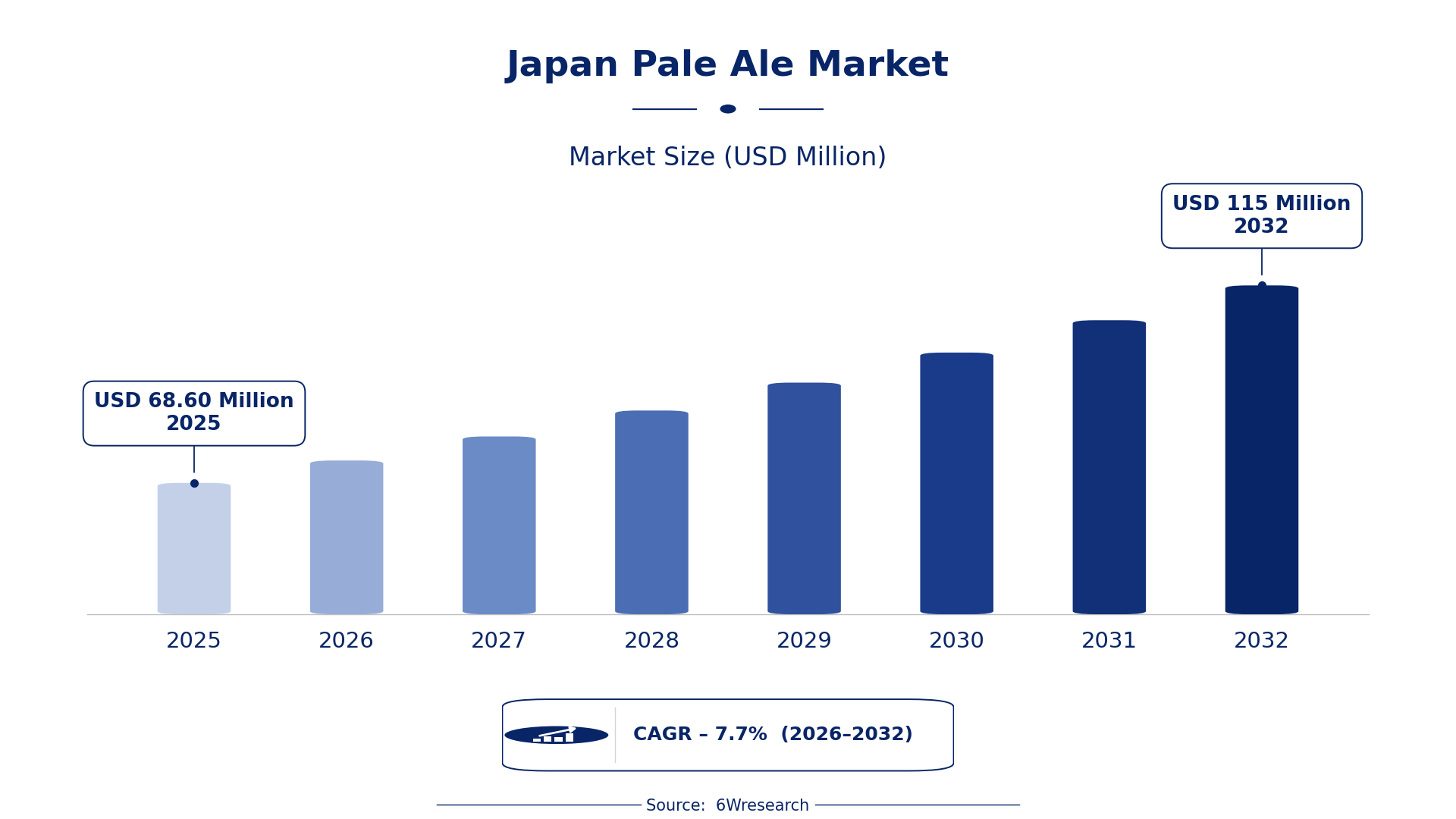
According to 6Wresearch internal database and industry insights, the Japan Pale Ale Market was valued at USD 68.60 Million in 2025 and is projected to reach USD 115 Million by 2032, growing at a CAGR of approximately 7.7% during 2026–2032.
Japan Pale Ale Market Highlights
| Report Metric | Details |
| Report Name | Japan Pale Ale Market (2026-2032) |
| Market Size 2025 | USD 68.60 Million |
| Market Size 2032 | USD 115 Million |
| Absolute Growth 2025–2032 | USD 46.40 Million |
| CAGR 2026–2032 | 7.7% |
| Peak Annual Growth | 9.1% in 2029 |
| Forecast Period | 2026–2032 |
| Historical Data | 2022–2025 |
| Base Year | 2025 |
| Leading Type, 2025 | English Pale Ale (44% share) |
| Leading Alcohol Content, 2025 | 4.5%-5.5% (44% share) |
| Leading Packaging, 2025 | Bottles (37% share) |
| Leading Distribution Channel, 2025 | Bars & Pubs (42% share) |
| Fastest-Growing Type | American Pale Ale (10.6% CAGR) |
| Fastest-Growing Alcohol Content | 5.0%-6.0% (9.9% CAGR) |
| Fastest-Growing Packaging | Cans (10.0% CAGR) |
| Fastest-Growing Distribution Channel | Supermarkets (10.2% CAGR) |
| Growing Sector | Supermarkets |
| Key End Users | Bars & Pubs, Supermarkets, Online Retail, Craft Breweries |
Japan Pale Ale Market Year-wise Growth Rate and Key Drivers (2022–2032)
This graph illustrates the annual growth rates of the market from 2022 to 2032, highlighting a steady upward trajectory and projected market expansion over the forecast period.
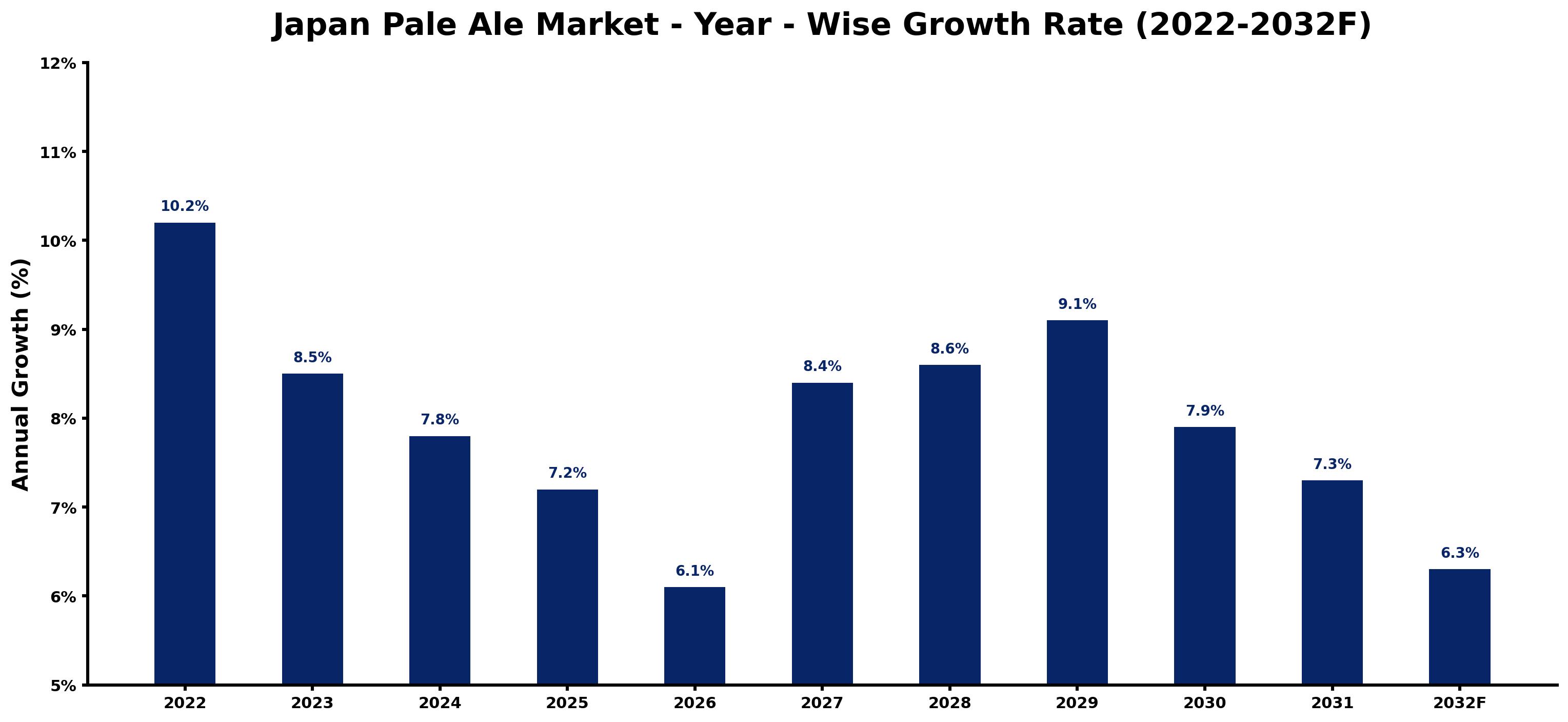
Below, each year's estimated growth is shown next to the factor that most influenced it.
| Year | Estimated Annual Growth (%) | Market Rationale |
| 2022 | 10.2 | The craft beer sector saw a notable rise in consumer interest and engagement. |
| 2023 | 8.5 | Market saturation began to affect new brewery openings and consumer choices, slowing growth. |
| 2024 | 7.8 | Increased competition among craft breweries contributed to a further slowdown in growth. |
| 2025 | 7.2 | Consumer preferences shifted towards established brands, continuing the deceleration of growth. |
| 2026 | 6.1 | Economic factors are expected to influence consumer spending, leading to a decrease in growth rate. |
| 2027 | 8.4 | Craft beer festivals and events are projected to attract more enthusiasts, increasing demand. |
| 2028 | 8.6 | Rising interest in unique and seasonal Pale Ales is anticipated to accelerate growth. |
| 2029 | 9.1 | The market is expected to peak as new brewing techniques and flavours capture consumer attention. |
| 2030 | 7.9 | Growth will slow as the market stabilises after rapid expansion in previous years. |
| 2031 | 7.3 | Consumers are projected to become more selective in their choices, slightly decreasing demand. |
| 2032 | 6.3 | Competition intensifies among breweries, leading to a slowdown in growth. |
Note: Market size estimations and growth projections presented in this report are based on 6Wresearch's proprietary forecasting methodology, utilizing the latest available industry data, government publications, and primary research inputs.
Japan Pale Ale Market Synopsis
Pale Ale is a type of beer characterised by pale malts, brewed by over 400 craft breweries in Japan. The Japan Pale Ale Market is growing, driven by a vibrant craft beer culture, increasing consumer interest, and events like the Tokyo Craft Beer Festival, which highlights local offerings. Valued at approximately 100 billion JPY in 2022, the market reflects a rising consumer base and notable investment in local breweries, backed by initiatives from the Japan Craft Beer Association and the Ministry of Agriculture, Forestry and Fisheries.
Market Dynamics Impact Analysis (2026–2032)
| Factor | Type | Impact | Primary Segment Affected |
| Rising craft beer consumption among younger demographics | Driver | High | English Pale Ale |
| Growth in craft beer festivals and events | Driver | High | American Pale Ale |
| Increasing demand for lower alcohol options | Opportunity | Medium | Session Pale Ale |
| Expansion of online retail channels for craft beer | Opportunity | Medium | Cans |
| High competition among craft breweries | Restraint | High | Craft Breweries |
| Consumer preference for established brands over new entrants | Restraint | Medium | Craft Breweries |
| Rising costs of raw materials impacting pricing | Challenge | High | Craft Breweries |
| Regulatory compliance costs for new breweries | Challenge | Medium | Craft Breweries |
Evaluation of Drivers in Japan Pale Ale Market (2026–2032)
Demand rests on the following drivers, each shown with the segment it touches most.
| Drivers | Primary Segment Affected | Why It Matters (Evidence) |
| Increased interest in craft beer among consumers | English Pale Ale | The Japanese population of beer drinkers is approximately 50 million, leading to higher purchases of craft beers. |
| Popularity of craft beer festivals | American Pale Ale | Events like the Tokyo Craft Beer Festival attract thousands of attendees, boosting sales and brand visibility. |
| Growing trend towards lower alcohol beverages | Session Pale Ale | Health-conscious consumers are creating demand for lower alcohol options, influencing purchasing decisions. |
| Expansion of online sales channels | Cans | Online sales of craft beer have increased by 20% in the last year, facilitating wider access for consumers. |
| Support from local government initiatives | Craft Breweries | The Craft Beer Market Development Program launched in 2022 promotes local breweries and craft beer culture. |
Volumes grow on the back of increasing interest in craft beer among consumers, with approximately 50 million beer drinkers in Japan driving demand for Pale Ales. Craft beer festivals attract thousands of attendees, boosting sales and brand visibility. The trend towards lower alcohol beverages is clear as health-conscious consumers seek out lighter options. Online sales channels have expanded, with a 20% increase in craft beer sales over the past year, making it easier for consumers to access diverse offerings.
Evaluation of Restraints in Japan Pale Ale Market
Below are the constraints most often cited by buyers and suppliers, with the segment each affects.
| Market Restraint | Primary Segment Affected | Why It Matters (Evidence) |
| High competition among craft breweries leading to market saturation | Craft Breweries | With over 400 craft breweries in Japan, competition is fierce, making it challenging for new entrants to gain market share. |
| Shifting consumer preferences towards established brands | Craft Breweries | Established brands dominate sales, limiting growth for newer breweries as consumers become more selective. |
| Rising costs of raw materials impacting pricing | Craft Breweries | Increased prices for ingredients like hops and malt raise production costs, affecting profitability for smaller breweries. |
| Regulatory compliance costs for new breweries | Craft Breweries | New breweries face substantial costs associated with compliance to local regulations, hindering their ability to enter the market. |
| Limited distribution channels for craft beers | Craft Breweries | Many craft breweries rely heavily on bars and pubs, which restricts their sales potential compared to larger brands. |
Japan Pale Ale Market Challenges
Limited access to advanced brewing technology restricts production efficiency for many producers. This challenge arises because importing modern equipment can take up to six months, delaying new product launches and diminishing market competitiveness. Rising ingredient prices, especially for quality malts and hops, compel buyers to pay around 800 JPY per craft beer, affecting their purchasing choices. Compliance with ISO 9001 standards incurs additional costs for producers, limiting their capacity to expand operations and ultimately reducing the variety of Pale Ales available to consumers.
Trends in the Japan Pale Ale Market
The shifts below are changing how Japan Pale Ale Market products are bought and supplied.
- Growing Popularity of the Tokyo Craft Beer Festival: The Tokyo Craft Beer Festival showcases local Pale Ales, attracting thousands of attendees each year. In 2023, the festival reported over 20,000 visitors, underscoring the increasing interest in craft beer culture.
- Rapid Shift Towards Online Sales of Craft Beer: Online retail channels for craft beer are expanding rapidly, with a 20% increase in sales last year. This shift provides consumers with greater access to diverse offerings from local breweries.
- Rising Demand for Session Pale Ales: Health-conscious consumers are driving the popularity of Session Pale Ales, which offer lower alcohol content. This trend is clear as sales of Session Pale Ales rose by 15% in 2023.
- Emergence of Collaborative Brewing Projects: Craft breweries are increasingly collaborating on seasonal Pale Ale releases, promoting variety. Collaborative projects have seen a 25% rise in participation among breweries in 2023.
Investment Opportunities in the Japan Pale Ale Market
Where to invest in the Japan Pale Ale Market: the main openings are set out below.
- Investment in Craft Brewery Equipment: With craft breweries facing high competition, an estimated gap of 5 billion JPY exists for modern brewing equipment. Local breweries in Tokyo need advanced technology to enhance production efficiency and meet consumer demand.
- Significant Expansion into Supermarkets: Supermarkets are increasingly selling craft beers, presenting a valuable opportunity for breweries. With a projected 10.2% growth in supermarket sales, producers can partner with local chains to broaden distribution.
- Growing Focus on Session Pale Ales: As health-conscious consumers seek lower alcohol options, the demand for Session Pale Ales is rising. Breweries can invest in developing new recipes to cater to this expanding segment.
- Collaboration with Local Events: Craft breweries can benefit from partnerships with local events like the Tokyo Craft Beer Festival. This collaboration can enhance brand visibility and attract new customers.
Government Initiatives in the Japan Pale Ale Market
The Act against Unjustifiable Premiums and Misleading Representations, established in 1962, ensures that consumers receive accurate information about products by prohibiting misleading labelling and advertising. This law impacts producers by requiring clear and truthful marketing practices, which helps build consumer trust in the craft beer sector.
The Digital Agency leads government digital transformation and approves initiatives that support local craft breweries. This includes funding for projects aimed at improving production methods and marketing efforts, assisting breweries in thriving within a competitive market.
Future Insight of the Japan Pale Ale Market
New craft brewing facilities will emerge by 2032, improving local production capabilities. Increased online sales will provide buyers with greater access to diverse Pale Ales, with craft beer exports projected to reach 5 billion JPY. Annual events like the Tokyo Craft Beer Festival will continue to showcase local brews, attracting more consumers. Support from the Ministry of Agriculture, Forestry and Fisheries will further strengthen the craft beer sector, enabling suppliers to innovate and respond to shifting consumer preferences.
Market Segmentation Analysis
Japan Pale Ale Market report covers a detailed analysis of the following market segments:
By Type – English Pale Ale Leads, American Pale Ale Expected to Grow Fastest
According to Sachin Kumar Rai, Senior Research Analyst at 6Wresearch, with 44% of type revenue in 2025, English Pale Ale was the largest category. English Pale Ale holds the largest share due to its widespread consumption in craft breweries across Japan, appealing to traditional beer drinkers. Events like the Tokyo Craft Beer Festival highlight its popularity, showcasing numerous local brewers that produce this style. American Pale Ale is projected to grow fastest, at a CAGR of 10.6% during 2026–2032. American Pale Ale is experiencing rapid growth as it attracts craft beer enthusiasts seeking bolder flavours and unique brewing techniques. The increasing number of craft breweries adopting this style contributes to its rising popularity among consumers. Suppliers should focus on promoting American Pale Ale to capitalise on its growing demand.
By Alcohol Content – 4.5%-5.5% Leads, 5.0%-6.0% Expected to Grow Fastest
The largest alcohol content category in 2025 was 4.5%-5.5%, at 44% of revenue. The 4.5%-5.5% alcohol content range is widely accepted among consumers, making it a common choice for social drinking occasions. This segment benefits from the established preferences of Japan's 50 million beer drinkers who enjoy balanced flavour profiles. 5.0%-6.0% is set to record the highest CAGR in this split, 9.9% over 2026–2032. The 5.0%-6.0% alcohol content segment is experiencing rapid growth as consumers are increasingly drawn to Pale Ales with a stronger taste. This trend is evident in the rising sales of craft beers at local festivals and events. Suppliers should consider expanding their product lines to include options within the 5.0%-6.0% range to meet the increasing consumer demand.
By Packaging – Bottles Lead, Cans Expected to Grow Fastest
Bottles took 37% of packaging revenue in 2025, more than any other category. Bottles are the leading packaging format for Pale Ales in Japan, providing a traditional and familiar choice for consumers at retail outlets. This format is standard for many craft breweries, ensuring consistent availability. The quickest growth will come from Cans, forecast to expand at a CAGR of 10.0% between 2026 and 2032. Cans are rapidly gaining popularity due to their convenience and portability, appealing to younger consumers who prefer craft beers on-the-go. The increase in online sales of craft beer also supports this trend, as cans are easier to ship. Suppliers need to adapt to the growing preference for cans to capture a larger share of the market.
By Distribution Channel – Bars & Pubs Lead, Supermarkets Expected to Grow Fastest
Bars & Pubs held 42% of the Japan Pale Ale Market by distribution channel in 2025. Bars & Pubs serve as the main distribution channel for draft Pale Ales, providing a vibrant environment for consumers to enjoy these beverages. This setting allows for a diverse selection, catering to the tastes of craft beer enthusiasts. Over 2026–2032, Supermarkets are expected to post the fastest growth, at a CAGR of 10.2%. Supermarkets are rapidly increasing their craft beer selections, making it easier for consumers to access a variety of Pale Ales at home. This growth reflects the broader acceptance of craft beer culture among Japanese consumers. Suppliers should focus on strengthening relationships with supermarkets to enhance product visibility and availability.
Key Attractiveness of the Report
- 10 Years of Market Numbers
- Historical Data Starting from 2022 to 2025
- Base Year 2025
- Forecast Data until 2032
- Key Performance Indicators Impacting the Market
- Major Upcoming Developments and Projects
Key Highlights of the Report:
- Japan Pale Ale Market Outlook
- Market Size of Japan Pale Ale Market,2025
- Forecast of Japan Pale Ale Market, 2032
- Historical Data and Forecast of Japan Pale Ale Revenues & Volume for the Period 2022-2032
- Japan Pale Ale Market Trend Evolution
- Japan Pale Ale Market Drivers and Challenges
- Japan Pale Ale Price Trends
- Japan Pale Ale Porter's Five Forces
- Japan Pale Ale Industry Life Cycle
- Historical Data and Forecast of Japan Pale Ale Market Revenues & Volume By Type for the Period 2022-2032
- Historical Data and Forecast of Japan Pale Ale Market Revenues & Volume By English Pale Ale for the Period 2022-2032
- Historical Data and Forecast of Japan Pale Ale Market Revenues & Volume By American Pale Ale for the Period 2022-2032
- Historical Data and Forecast of Japan Pale Ale Market Revenues & Volume By Belgian Pale Ale for the Period 2022-2032
- Historical Data and Forecast of Japan Pale Ale Market Revenues & Volume By Session Pale Ale for the Period 2022-2032
- Historical Data and Forecast of Japan Pale Ale Market Revenues & Volume By Alcohol Content for the Period 2022-2032
- Historical Data and Forecast of Japan Pale Ale Market Revenues & Volume By 4.5%-5.5% for the Period 2022-2032
- Historical Data and Forecast of Japan Pale Ale Market Revenues & Volume By 5.0%-6.0% for the Period 2022-2032
- Historical Data and Forecast of Japan Pale Ale Market Revenues & Volume By 4.5%-5.5% for the Period 2022-2032
- Historical Data and Forecast of Japan Pale Ale Market Revenues & Volume By 3.5%-4.5% for the Period 2022-2032
- Historical Data and Forecast of Japan Pale Ale Market Revenues & Volume By Packaging for the Period 2022-2032
- Historical Data and Forecast of Japan Pale Ale Market Revenues & Volume By Bottles for the Period 2022-2032
- Historical Data and Forecast of Japan Pale Ale Market Revenues & Volume By Cans for the Period 2022-2032
- Historical Data and Forecast of Japan Pale Ale Market Revenues & Volume By Kegs for the Period 2022-2032
- Historical Data and Forecast of Japan Pale Ale Market Revenues & Volume By Growlers for the Period 2022-2032
- Historical Data and Forecast of Japan Pale Ale Market Revenues & Volume By Distribution Channel for the Period 2022-2032
- Historical Data and Forecast of Japan Pale Ale Market Revenues & Volume By Bars & Pubs for the Period 2022-2032
- Historical Data and Forecast of Japan Pale Ale Market Revenues & Volume By Supermarkets for the Period 2022-2032
- Historical Data and Forecast of Japan Pale Ale Market Revenues & Volume By Online Retail for the Period 2022-2032
- Historical Data and Forecast of Japan Pale Ale Market Revenues & Volume By Craft Breweries for the Period 2022-2032
- Japan Pale Ale Import Export Trade Statistics
- Market Opportunity Assessment By Type
- Market Opportunity Assessment By Alcohol Content
- Market Opportunity Assessment By Packaging
- Market Opportunity Assessment By Distribution Channel
- Japan Pale Ale Top Companies Market Share
- Japan Pale Ale Competitive Benchmarking By Technical and Operational Parameters
- Japan Pale Ale Company Profiles
- Japan Pale Ale Key Strategic Recommendations
Market Covered
The following segment groups are covered in the report.
By Type
- English Pale Ale
- American Pale Ale
- Belgian Pale Ale
- Session Pale Ale
By Alcohol Content
- 4.5%-5.5%
- 5.0%-6.0%
- 3.5%-4.5%
By Packaging
- Bottles
- Cans
- Kegs
- Growlers
By Distribution Channel
- Bars & Pubs
- Supermarkets
- Online Retail
- Craft Breweries































