Japan Peppermint Tea Market Size & Growth Rate
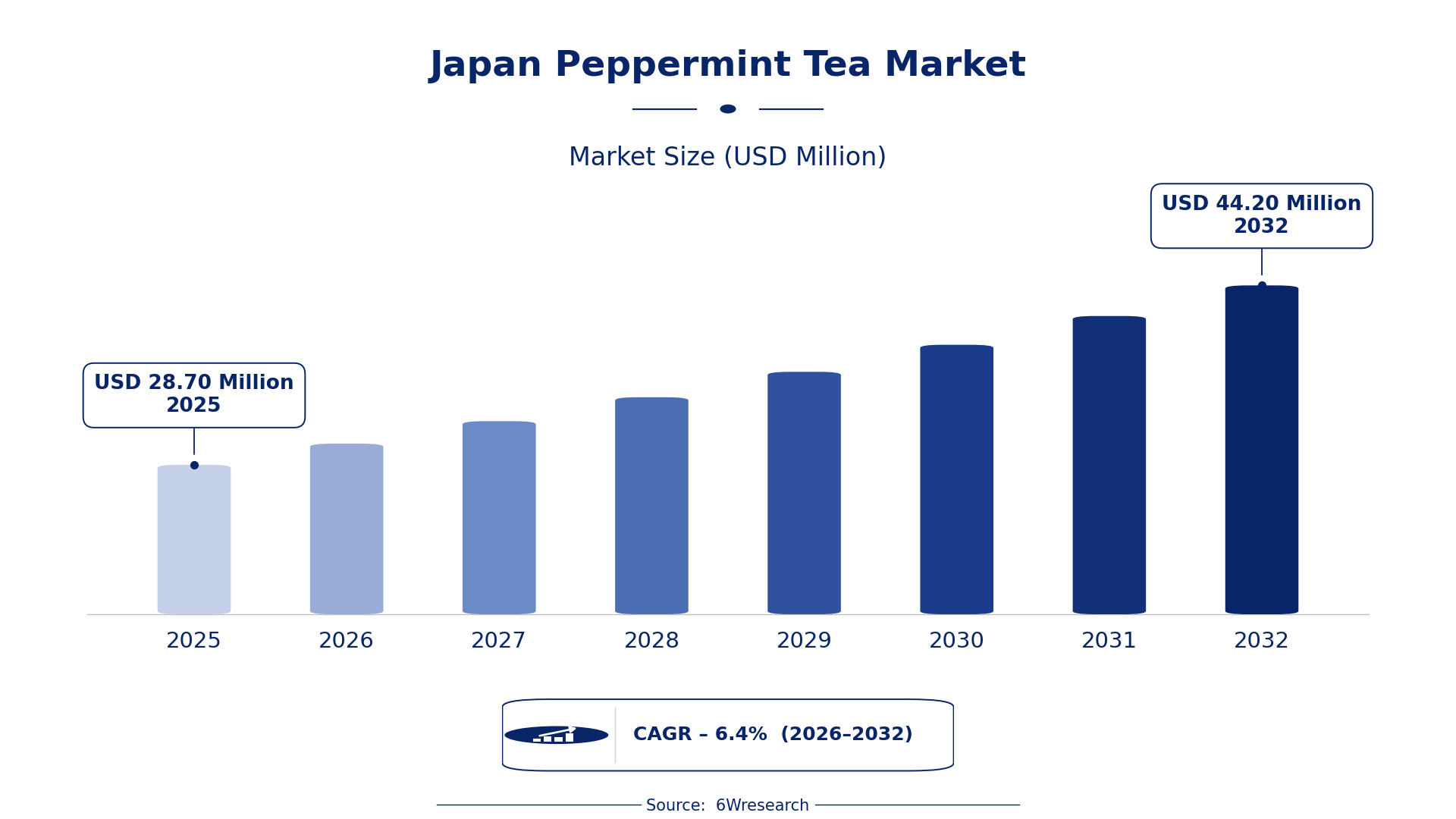
According to 6Wresearch internal database and industry insights, the Japan Peppermint Tea Market was valued at USD 28.70 Million in 2025 and is projected to reach USD 44.20 Million by 2032, growing at a CAGR of approximately 6.4% during 2026–2032.
Japan Peppermint Tea Market Highlights
| Report Metric | Details |
| Report Name | Japan Peppermint Tea Market (2026-2032) |
| Market Size 2025 | USD 28.70 Million |
| Market Size 2032 | USD 44.20 Million |
| Absolute Growth 2025–2032 | USD 15.50 Million |
| CAGR 2026–2032 | 6.4% |
| Peak Annual Growth | 7.2% in 2032 |
| Forecast Period | 2026–2032 |
| Historical Data | 2022–2025 |
| Base Year | 2025 |
| Leading Product Type, 2025 | Unblended Peppermint Tea (61% share) |
| Leading Tea Type, 2025 | Processed (65% share) |
| Leading Packaging Type, 2025 | Loose Tea (43% share) |
| Leading Price Category, 2025 | Mass (59% share) |
| Leading Consumption, 2025 | Home (60% share) |
| Fastest-Growing Product Type | Blended Peppermint Tea (8.6% CAGR) |
| Fastest-Growing Tea Type | Organic (9.0% CAGR) |
| Fastest-Growing Packaging Type | Tea Bags (8.7% CAGR) |
| Fastest-Growing Price Category | Premium (8.4% CAGR) |
| Fastest-Growing Consumption | Out of Home (8.0% CAGR) |
| Growing Sector | Health and Wellness |
| Key End Users | Health-conscious consumers, tea enthusiasts, urban dwellers, specialty tea buyers |
Japan Peppermint Tea Market Year-wise Growth Rate and Key Drivers (2022–2032)
This graph illustrates the annual growth rates of the market from 2022 to 2032, highlighting a steady upward trajectory and projected market expansion over the forecast period.
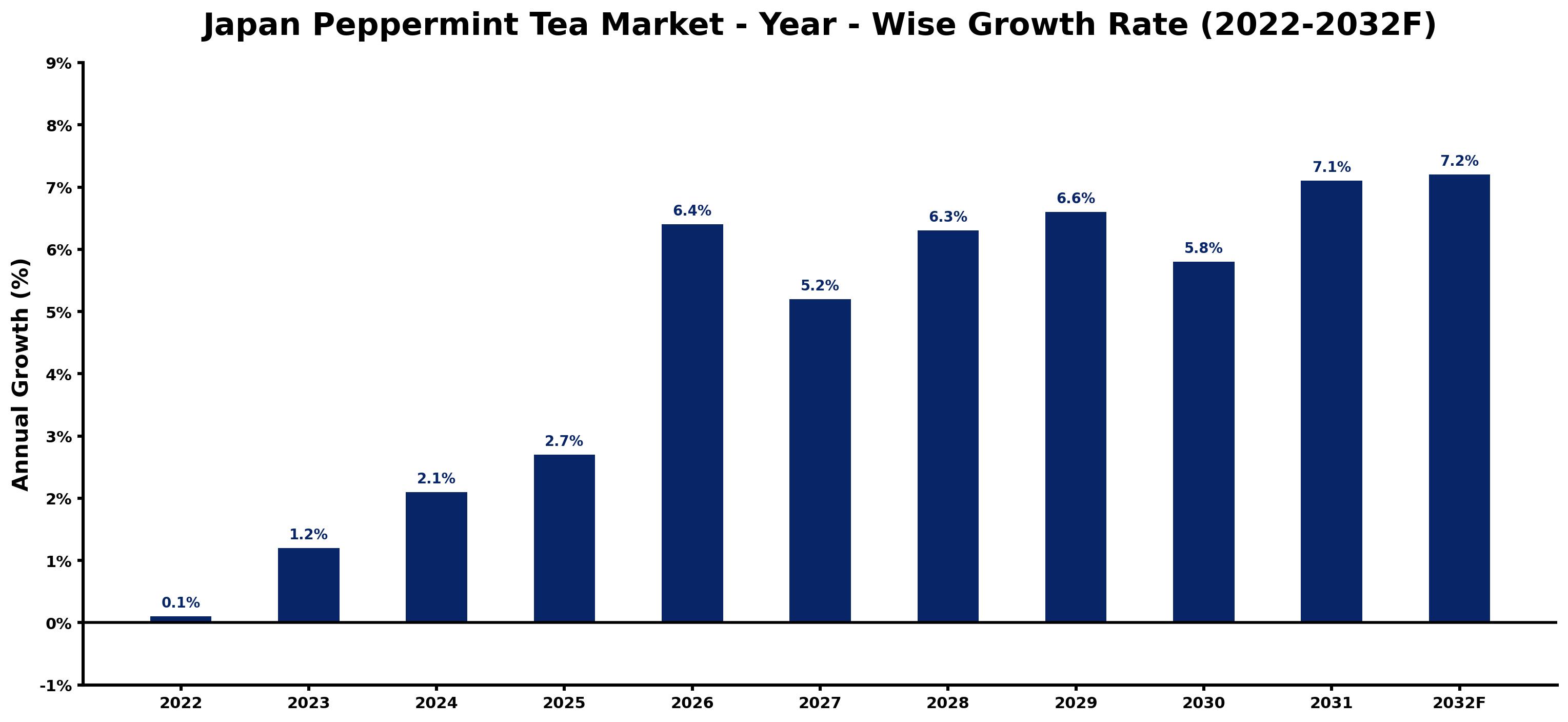
For each year, the table pairs the estimated growth rate with the leading influence on demand, showing how the drivers changed across the period.
| Year | Estimated Annual Growth (%) | Market Rationale |
| 2022 | 0.1 | The market showed minimal growth, reflecting stable consumer interest in herbal teas. |
| 2023 | 1.2 | Growth accelerated due to increased health awareness among consumers seeking herbal remedies. |
| 2024 | 2.1 | Continued interest in wellness contributed to a faster growth rate in peppermint tea consumption. |
| 2025 | 2.7 | The market peaked historically as health-conscious consumers drove demand for herbal infusions. |
| 2026 | 6.4 | The introduction of new organic blends is expected to boost market growth. |
| 2027 | 5.2 | Growth is expected to slow slightly as market saturation begins to affect purchasing patterns. |
| 2028 | 6.3 | Increased marketing efforts for herbal teas are projected to stimulate renewed consumer interest. |
| 2029 | 6.6 | Growth is expected to rise again as new product offerings attract buyers. |
| 2030 | 5.8 | A slight slowdown is projected as competition intensifies among various tea types. |
| 2031 | 7.1 | The market is expected to experience a resurgence as health trends favour herbal tea consumption. |
| 2032 | 7.2 | Demand is projected to peak as consumer preferences shift towards organic and health-oriented products. |
Note: Market size estimations and growth projections presented in this report are based on 6Wresearch's proprietary forecasting methodology, utilizing the latest available industry data, government publications, and primary research inputs.
Japan Peppermint Tea Market Synopsis
Peppermint tea, an herbal infusion made from peppermint leaves, is recognised for its digestive benefits and refreshing flavour. The Japan Peppermint Tea Market is growing as health-conscious consumers, especially in urban areas like Tokyo, seek out herbal options. In 2023, herbal tea production saw a 10% increase, reflecting a rising interest in organic varieties. The annual Tea Festival in Shizuoka showcases a range of teas, including peppermint, underscoring the cultural importance and consumer enthusiasm for herbal products.
Market Dynamics Impact Analysis (2026–2032)
| Factor | Type | Impact | Primary Segment Affected |
| Growing health consciousness among consumers | Driver | High | Unblended Peppermint Tea |
| Increased availability of organic options | Driver | High | Organic |
| Rising demand for convenient tea formats | Opportunity | High | Tea Bags |
| Expanding specialty tea market in urban areas | Opportunity | Medium | Processed |
| Competition from other herbal teas | Restraint | High | Blended Peppermint Tea |
| Market saturation in urban regions | Restraint | Medium | Loose Tea |
| Supply chain disruptions affecting production | Challenge | High | Processed |
| Fluctuating raw material prices impacting margins | Challenge | Medium | Unblended Peppermint Tea |
Evaluation of Drivers in Japan Peppermint Tea Market (2026–2032)
These are the developments adding the most demand over the forecast period.
| Drivers | Primary Segment Affected | Why It Matters (Evidence) |
| Increased consumer health awareness | Unblended Peppermint Tea | Health-conscious consumers represent 40% of the peppermint tea market, driving demand for its digestive benefits. |
| Rising organic tea consumption | Organic | Organic tea consumption has increased by 15% since 2020, prompting producers to offer more organic peppermint options. |
| Growing popularity of convenient packaging | Tea Bags | Tea bags account for 60% of total tea sales in Japan, appealing to consumers seeking convenience. |
| Cultural events promoting tea varieties | Processed | The annual Tea Festival in Shizuoka showcases peppermint tea, increasing its visibility and appeal. |
| Urbanisation leading to lifestyle changes | Loose Tea | Urban areas like Tokyo have a high demand for specialty teas, including peppermint, as lifestyles evolve. |
Purchasing is picking up as health awareness among Japanese consumers rises, with a significant portion of the peppermint tea market attributed to health-conscious buyers. The consumption of organic tea has surged, prompting producers to increase organic offerings. The convenience of tea bags, which account for a large share of total tea sales, attracts busy urban consumers. Urbanisation is also changing lifestyles, leading to higher demand for specialty teas in metropolitan areas like Tokyo. Marketing efforts for herbal teas are expected to stimulate renewed consumer interest, further driving growth in the peppermint tea market.
Evaluation of Restraints in Japan Peppermint Tea Market
The following restraints limit how fast demand can grow.
| Market Restraint | Primary Segment Affected | Why It Matters (Evidence) |
| Intense competition from other herbal teas | Blended Peppermint Tea | The growing popularity of other herbal teas limits market share for blended peppermint options. |
| Market saturation in urban areas | Loose Tea | High competition in urban markets has resulted in slower growth for loose tea offerings. |
| Supply chain disruptions affecting production | Processed | Recent supply chain issues have delayed production schedules, impacting availability for retailers. |
| Fluctuating raw material prices impacting margins | Unblended Peppermint Tea | Rising costs of peppermint leaves can squeeze profit margins for producers. |
| Limited consumer awareness of health benefits | Organic | Despite growth, some consumers remain unaware of the benefits of organic peppermint tea. |
Japan Peppermint Tea Market Challenges
In 2023, Japan's tea market encountered fierce competition, with price wars eroding profit margins for producers and forcing compromises on quality. A notable skills shortage in traditional tea preparation exists, particularly in the Kyoto region, where fewer trained artisans are available to produce specialty teas. Supply chain disruptions have arisen from a 10% increase in herbal tea production, leading to delays in product availability for retailers. Compliance with JAS standards adds extra costs for organic tea producers, limiting their capacity to scale operations effectively and affecting their market share.
Trends in the Japan Peppermint Tea Market
These developments are changing demand patterns in the Japan Peppermint Tea Market.
- Shift towards Organic Products: Since 2020, organic tea consumption in Japan has increased by 15%, reflecting a growing preference for health-oriented products. This trend is particularly noticeable in urban areas where consumers are more health-conscious.
- Transition from Loose to Tea Bags: The preference for convenient tea bags is rising, with tea bags accounting for a significant portion of total tea sales. This shift is particularly noticeable among busy urban consumers seeking ease of preparation.
- Emergence of Specialty Teas: The Tokyo region has seen a surge in demand for specialty teas, including peppermint, as health-conscious consumers seek variety. This trend is reshaping the tea market in urban settings.
- Focus on Health Benefits: Health-conscious consumers are increasingly seeking herbal teas for their digestive benefits, contributing to a broader acceptance of peppermint tea. The annual Tea Festival in Shizuoka highlights this growing interest.
Investment Opportunities in the Japan Peppermint Tea Market
Below are the investment opportunities with the strongest case in the Japan Peppermint Tea Market.
- Supply Organic Peppermint Tea: With organic tea consumption rising, there is an opportunity to supply organic peppermint tea. Producers can target health-conscious consumers in urban areas like Tokyo.
- Invest in Convenient Packaging: The demand for tea bags presents an opportunity to invest in convenient packaging solutions. Targeting busy consumers will expand market reach.
- Expand Specialty Tea Offerings: The growing demand for specialty teas in urban areas creates an opportunity for producers to broaden their offerings. Collaborating with local tea shops can facilitate market entry.
- Engage in Cultural Events: The annual Tea Festival in Shizuoka provides a platform to showcase peppermint tea. Participating in such events can increase brand visibility and attract new customers.
Government Initiatives in the Japan Peppermint Tea Market
The Industrial Standardization Act, established in 1949 and amended in 2019, governs product and test standards for peppermint tea. This law ensures that producers comply with quality standards, building consumer trust in herbal products. The Act against Unjustifiable Premiums and Misleading Representations, enacted in 1962, prohibits misleading labelling and advertising, protecting consumers from false claims in the peppermint tea market.
The JAS regulates organic tea production, ensuring that producers meet specific criteria. In 2023, a government programme allocated 500 million yen to support organic farming, benefiting peppermint tea producers seeking organic certification. The Consumer Affairs Agency oversees compliance with these standards, ensuring that buyers can trust the authenticity of organic peppermint tea.
Future Insight of the Japan Peppermint Tea Market
By 2032, a shift towards organic farming will reshape the market, driven by government support for sustainable practices. Buyers will benefit from a broader range of certified organic peppermint teas, aligning with the increasing health-conscious consumer base. Suppliers will implement advanced agricultural technologies to improve yield and quality, responding to rising demand. The Japanese Tea Association's campaigns will further elevate consumer awareness, potentially increasing annual tea consumption beyond the current average of 2.5 kg per person.
Market Segmentation Analysis
Japan Peppermint Tea Market report covers a detailed analysis of the following market segments:
By Product Type – Unblended Peppermint Tea Leads, Blended Peppermint Tea Expected to Grow Fastest
According to Shubham Padhi, Research Analyst at 6Wresearch, with 61% of product type revenue in 2025, Unblended Peppermint Tea was the largest category. Unblended peppermint tea holds the largest share as it is consumed directly for its health benefits, appealing to health-conscious consumers who prioritise wellness. The traditional tea culture in the Kyoto region significantly enhances its popularity, as many local buyers prefer its pure form. The quickest growth will come from Blended Peppermint Tea, forecast to expand at a CAGR of 8.6% between 2026 and 2032. Blended peppermint tea is witnessing rapid growth as consumers increasingly seek diverse flavours, with a notable rise in blends showcased at the annual Tea Festival in Shizuoka. This trend suggests a continuing shift towards more versatile tea options, allowing for a broader market appeal. Suppliers should consider expanding their product lines to include blended options to meet changing consumer preferences.
By Tea Type – Processed Leads, Organic Expected to Grow Fastest
The largest tea type category in 2025 was Processed, at 65% of revenue. Processed tea leads the market due to its wide availability in various forms, catering to the preferences of the average Japanese consumer who values convenience. The promotion of processed teas by the Japanese Tea Association further enhances their visibility and accessibility, making them a common choice. Organic is projected to grow fastest, at a CAGR of 9.0% during 2026–2032. Organic tea is rapidly growing, with a 15% increase in consumption since 2020 reflecting a shift towards healthier choices among consumers. This trend is supported by government initiatives that promote organic farming practices, attracting health-conscious buyers. Buyers are likely to seek more organic options, prompting suppliers to increase their organic tea offerings.
By Packaging Type – Loose Tea Leads, Tea Bags Expected to Grow Fastest
In 2025, Loose Tea led the packaging type split with a 43% share. Loose tea is favoured by tea enthusiasts who appreciate its quality and flavour, making it a staple in the market. This preference is particularly pronounced in regions with a rich tea culture, such as Kyoto, where traditional brewing methods are valued. Over 2026–2032, Tea Bags are expected to post the fastest growth, at a CAGR of 8.7%. Tea bags are gaining popularity due to their convenience for everyday use, appealing to busy consumers who prefer quick preparation. The ease of use aligns well with the modern lifestyle of many Japanese households, driving demand. Suppliers should focus on enhancing the convenience of their packaging to attract a broader consumer base.
By Price Category – Mass Leads, Premium Expected to Grow Fastest
Mass took 59% of price category revenue in 2025, more than any other category. Mass-priced peppermint tea is the most popular choice among consumers seeking affordable options, making it accessible to a wide demographic. This segment aligns well with the spending habits of the average Japanese consumer, who prioritises value for money. Premium is set to record the highest CAGR in this split, 8.4% over 2026–2032. Premium peppermint tea is witnessing significant growth as niche markets develop, with consumers willing to pay more for higher quality products. This trend indicates a growing appreciation for specialty teas among discerning buyers who seek unique flavours. Suppliers should explore premium offerings to capture the interest of consumers seeking high-quality tea experiences.
By Consumption – Home Leads, Out of Home Expected to Grow Fastest
Home held 60% of the Japan Peppermint Tea Market by consumption in 2025. Home consumption of peppermint tea is predominant, as it serves as a primary choice for health-conscious individuals seeking digestive aid and relaxation. This trend is reinforced by the average Japanese consuming about 2.5 kg of tea per year at home. The quickest growth will come from Out of Home, forecast to expand at a CAGR of 8.0% between 2026 and 2032. Out of home consumption is on the rise, particularly in cafes and restaurants, where peppermint tea is increasingly featured on menus. This shift indicates a growing trend towards enjoying tea in social settings. Suppliers should consider partnerships with cafes and restaurants to expand their market reach.
Key Attractiveness of the Report
- 10 Years of Market Numbers
- Historical Data Starting from 2022 to 2025
- Base Year 2025
- Forecast Data until 2032
- Key Performance Indicators Impacting the Market
- Major Upcoming Developments and Projects
Key Highlights of the Report:
- Japan Peppermint Tea Market Outlook
- Market Size of Japan Peppermint Tea Market, 2025
- Forecast of Japan Peppermint Tea Market, 2032
- Historical Data and Forecast of Japan Peppermint Tea Revenues & Volume for the Period 2022-2032
- Japan Peppermint Tea Market Trend Evolution
- Japan Peppermint Tea Market Drivers and Challenges
- Japan Peppermint Tea Price Trends
- Japan Peppermint Tea Porter's Five Forces
- Japan Peppermint Tea Industry Life Cycle
- Historical Data and Forecast of Japan Peppermint Tea Market Revenues & Volume By Product Type for the Period 2022-2032
- Historical Data and Forecast of Japan Peppermint Tea Market Revenues & Volume By Unblended Peppermint Tea for the Period 2022-2032
- Historical Data and Forecast of Japan Peppermint Tea Market Revenues & Volume By Blended Peppermint Tea for the Period 2022-2032
- Historical Data and Forecast of Japan Peppermint Tea Market Revenues & Volume By Tea Type for the Period 2022-2032
- Historical Data and Forecast of Japan Peppermint Tea Market Revenues & Volume By Processed for the Period 2022-2032
- Historical Data and Forecast of Japan Peppermint Tea Market Revenues & Volume By Organic for the Period 2022-2032
- Historical Data and Forecast of Japan Peppermint Tea Market Revenues & Volume By Packaging Type for the Period 2022-2032
- Historical Data and Forecast of Japan Peppermint Tea Market Revenues & Volume By Loose Tea for the Period 2022-2032
- Historical Data and Forecast of Japan Peppermint Tea Market Revenues & Volume By Tea Bags for the Period 2022-2032
- Historical Data and Forecast of Japan Peppermint Tea Market Revenues & Volume By Others for the Period 2022-2032
- Historical Data and Forecast of Japan Peppermint Tea Market Revenues & Volume By Price Category for the Period 2022-2032
- Historical Data and Forecast of Japan Peppermint Tea Market Revenues & Volume By Mass for the Period 2022-2032
- Historical Data and Forecast of Japan Peppermint Tea Market Revenues & Volume By Premium for the Period 2022-2032
- Historical Data and Forecast of Japan Peppermint Tea Market Revenues & Volume By Consumption for the Period 2022-2032
- Historical Data and Forecast of Japan Peppermint Tea Market Revenues & Volume By Home for the Period 2022-2032
- Historical Data and Forecast of Japan Peppermint Tea Market Revenues & Volume By Out of Home for the Period 2022-2032
- Historical Data and Forecast of Japan Peppermint Tea Market Revenues & Volume By Distribution Channel for the Period 2022-2032
- Historical Data and Forecast of Japan Peppermint Tea Market Revenues & Volume By Online for the Period 2022-2032
- Historical Data and Forecast of Japan Peppermint Tea Market Revenues & Volume By Offline for the Period 2022-2032
- Japan Peppermint Tea Import Export Trade Statistics
- Market Opportunity Assessment By Product Type
- Market Opportunity Assessment By Tea Type
- Market Opportunity Assessment By Packaging Type
- Market Opportunity Assessment By Price Category
- Market Opportunity Assessment By Consumption
- Market Opportunity Assessment By Distribution Channel
- Japan Peppermint Tea Top Companies Market Share
- Japan Peppermint Tea Competitive Benchmarking By Technical and Operational Parameters
- Japan Peppermint Tea Company Profiles
- Japan Peppermint Tea Key Strategic Recommendations
Market Covered
Segments analysed in this report are listed below.
By Product Type
- Unblended Peppermint Tea
- Blended Peppermint Tea
By Tea Type
- Processed
- Organic
By Packaging Type
- Loose Tea
- Tea Bags
- Others
By Price Category
- Mass
- Premium
By Consumption
- Home
- Out of Home































