Japan Tempeh Market Size & Growth Rate
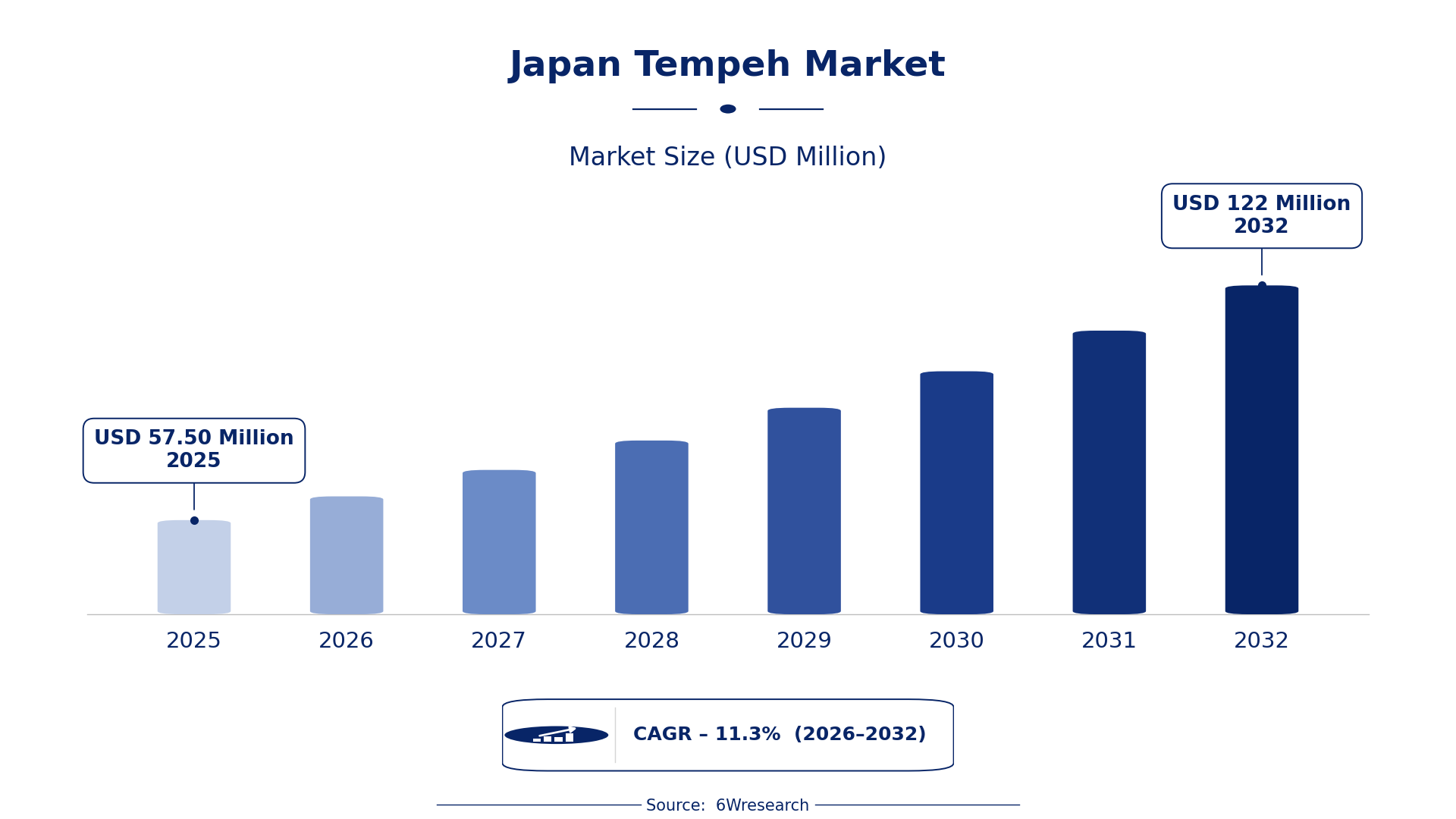
According to 6Wresearch internal database and industry insights, the Japan Tempeh Market was valued at USD 57.50 Million in 2025 and is projected to reach USD 122 Million by 2032, growing at a CAGR of approximately 11.3% during 2026–2032.
Japan Tempeh Market Highlights
| Report Metric | Details |
| Report Name | Japan Tempeh Market (2026-2032) |
| Market Size 2025 | USD 57.50 Million |
| Market Size 2032 | USD 122 Million |
| Absolute Growth 2025–2032 | USD 64.50 Million |
| CAGR 2026–2032 | 11.3% |
| Peak Annual Growth | 13.4% in 2032 |
| Forecast Period | 2026–2032 |
| Historical Data | 2022–2025 |
| Base Year | 2025 |
| Leading Type, 2025 | Soybean Tempeh (60% share) |
| Leading Application, 2025 | Supermarkets and Hypermarkets (41% share) |
| Fastest-Growing Type | Black Bean Tempeh (15.3% CAGR) |
| Fastest-Growing Application | Specialist Retailers (16.0% CAGR) |
| Growing Sector | Plant-based food sector |
| Key End Users | Health-conscious consumers, vegetarians, vegans, supermarkets |
Japan Tempeh Market Year-wise Growth Rate and Key Drivers (2022–2032)
This graph illustrates the annual growth rates of the market from 2022 to 2032, highlighting a steady upward trajectory and projected market expansion over the forecast period.
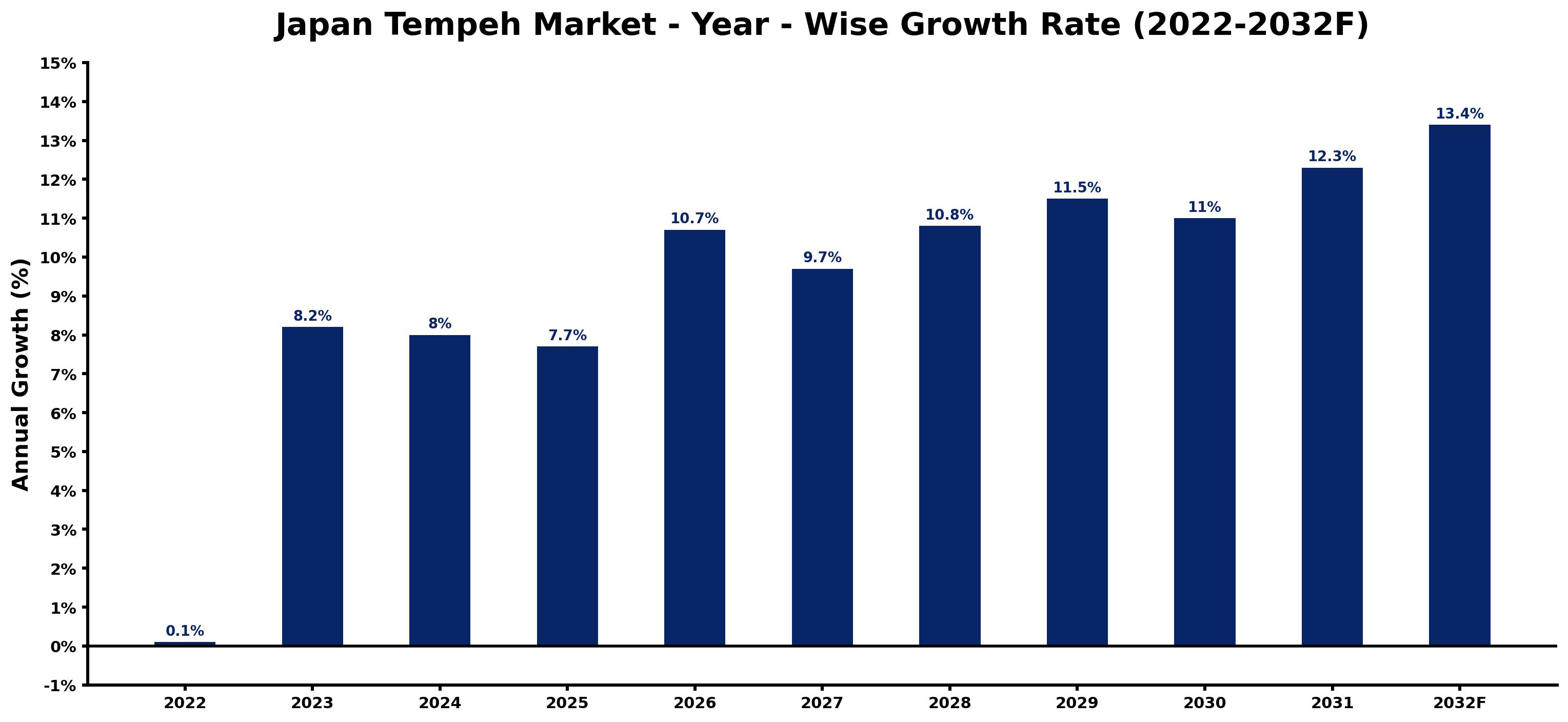
Below, each year's estimated growth is shown next to the factor that most influenced it.
| Year | Estimated Annual Growth (%) | Market Rationale |
| 2022 | 0.1 | The market showed minimal growth as consumers began exploring plant-based options. |
| 2023 | 8.2 | Growth accelerated as awareness of health benefits from plant-based diets increased. |
| 2024 | 8.0 | Demand continued to rise, albeit at a slower pace due to market saturation. |
| 2025 | 7.7 | Growth slowed further as competition intensified among various plant-based products. |
| 2026 | 10.7 | The market is expected to rebound with renewed interest in health and sustainability initiatives. |
| 2027 | 9.7 | Growth is projected to decelerate slightly as consumer preferences begin to stabilise. |
| 2028 | 10.8 | A resurgence in demand is anticipated as new product launches attract attention. |
| 2029 | 11.5 | Growth is expected to pick up again, driven by increased availability in retail channels. |
| 2030 | 11.0 | The market will see a slight slowdown as consumer choices diversify further. |
| 2031 | 12.3 | Demand is projected to surge again as health trends continue to favour plant-based diets. |
| 2032 | 13.4 | The market is expected to peak with heightened consumer interest in sustainable food options. |
Note: Market size estimations and growth projections presented in this report are based on 6Wresearch's proprietary forecasting methodology, utilizing the latest available industry data, government publications, and primary research inputs.
Japan Tempeh Market Synopsis
Tempeh is a fermented soybean product known for its high protein and probiotic content, made by inoculating cooked soybeans with specific molds. Its primary applications include serving as a meat substitute in vegetarian and vegan diets. The Japan Tempeh Market is expanding due to rising consumer interest in plant-based diets, with over 70% of sales attributed to soybean tempeh. Initiatives like the 2023 programme promoting plant-based foods in schools are driving demand, alongside increasing online sales, which rose by 25% last year.
Market Dynamics Impact Analysis (2026–2032)
| Factor | Type | Impact | Primary Segment Affected |
| Growing consumer interest in plant-based diets | Driver | High | Soybean Tempeh |
| Rising health consciousness among consumers | Driver | High | Black Bean Tempeh |
| Expansion of online retail channels | Opportunity | High | Online Retailers |
| Increased availability of organic tempeh products | Opportunity | Medium | Specialist Retailers |
| High competition from alternative protein sources | Restraint | High | Soybean Tempeh |
| Limited consumer awareness of tempeh's benefits | Restraint | Medium | Black Bean Tempeh |
| Supply chain disruptions affecting product availability | Challenge | High | Soybean Tempeh |
| Rising ingredient costs impacting pricing strategies | Challenge | Medium | Black Bean Tempeh |
Evaluation of Drivers in Japan Tempeh Market (2026–2032)
Key forces behind demand, with the segment each one moves most, are listed below.
| Drivers | Primary Segment Affected | Why It Matters (Evidence) |
| Increased demand for plant-based protein sources | Soybean Tempeh | Japan's population of approximately 125 million is increasingly seeking healthier dietary options, boosting tempeh sales. |
| Health benefits associated with fermented foods | Black Bean Tempeh | The growing interest in probiotics has led to higher sales of tempeh products, appealing to health-conscious consumers. |
| Government initiatives promoting plant-based diets | Supermarkets and Hypermarkets | The Japanese government's health promotion initiatives are encouraging supermarkets to stock more tempeh, increasing availability. |
| Rising online shopping trends | Online Retailers | Online sales of tempeh increased by 25% in the last year, reflecting changing consumer habits and preferences. |
| Expansion of health food stores | Specialist Retailers | Tempeh is increasingly featured in health food stores, catering to health-conscious consumers seeking nutritious options. |
Volumes grow on the back of a shift in consumer preferences towards healthier diets. Approximately 125 million people in Japan are increasingly seeking plant-based protein sources, with soybean tempeh accounting for over 70% of sales. Online sales of tempeh surged recently, reflecting the growing trend of online shopping, while health food stores prominently feature tempeh, catering to the rising demand for nutritious options. This combination of factors is leading to a strong growth outlook for the tempeh market.
Evaluation of Restraints in Japan Tempeh Market
The table below lists the restraints and the evidence behind each.
| Market Restraint | Primary Segment Affected | Why It Matters (Evidence) |
| High competition from other plant-based protein sources | Soybean Tempeh | The market faces challenges from various alternative protein products that appeal to consumers, impacting tempeh sales. |
| Limited awareness of tempeh's health benefits | Black Bean Tempeh | Many consumers are still unfamiliar with the nutritional advantages of tempeh, hindering its market penetration. |
| Supply chain disruptions affecting product availability | Soybean Tempeh | Recent disruptions have led to inconsistent product availability for retailers, affecting sales. |
| Rising ingredient costs impacting pricing strategies | Black Bean Tempeh | Increased costs for raw materials can affect the pricing of tempeh products, limiting affordability. |
| Consumer preference diversifying towards other meat alternatives | Soybean Tempeh | A wider variety of meat alternatives is drawing attention away from tempeh, impacting its market share. |
Japan Tempeh Market Challenges
High competition from alternative protein sources pressures tempeh suppliers, as they face challenges from meat substitutes that appeal to health-conscious consumers. Stringent food safety standards create regulatory hurdles, leading to product approval delays that can take up to six months, costing producers both time and potential sales. A shortage of skilled workers in fermentation techniques restricts production capacity, resulting in longer lead times that inconvenience buyers needing timely deliveries. Many producers still use outdated methods, inflating production costs by 20%, which ultimately raises prices for consumers seeking affordable plant-based options.
Trends in the Japan Tempeh Market
These developments are changing demand patterns in the Japan Tempeh Market.
- Shift from Traditional to Online Retail: A notable change is occurring as consumers increasingly purchase tempeh online. This shift allows suppliers to reach a broader audience efficiently, reflecting changing shopping habits.
- Growing Popularity of Organic Tempeh: Organic tempeh is gaining traction among health-conscious consumers, driven by the JAS certification. This standard ensures quality and safety, appealing to buyers looking for organic options, with organic tempeh sales projected to rise.
- Emphasis on Health and Wellness: Consumer preferences are shifting towards health and wellness. The Japan Vegetarian Society promotes the benefits of tempeh, aligning with the increasing demand for nutritious food, encouraging more consumers to incorporate tempeh into their diets.
- Rise of Plant-Based Initiatives in Schools: In 2023, Japan launched a programme to promote plant-based foods in schools. This initiative is expected to increase awareness and consumption of tempeh among younger generations, creating a new market segment.
Investment Opportunities in the Japan Tempeh Market
The following opportunities in the Japan Tempeh Market pair current demand with a clear way in.
- Supply Organic Tempeh Products: The demand for organic tempeh is rising, supported by the JAS certification. Health-conscious consumers, particularly in urban areas, are seeking organic options. Suppliers can enter this market by collaborating with local organic farms.
- Expand Online Tempeh Offerings: Online sales of tempeh have surged, presenting an opportunity for suppliers. The growing trend among millennials and Gen Z consumers in urban regions supports this shift. Establishing a strong online presence can capture this expanding market.
- Target Health Food Stores: Health food stores are increasingly featuring tempeh, driven by rising consumer interest in healthy eating. This trend is particularly strong in metropolitan areas. Suppliers should focus on building relationships with these retailers to enhance visibility.
- Develop New Tempeh Varieties: Innovation in tempeh products can attract new customer segments. The growing interest in diverse flavours among health-conscious consumers supports this opportunity. Collaborating with culinary experts can help create appealing new products.
Government Initiatives in the Japan Tempeh Market
The Act against Unjustifiable Premiums and Misleading Representations, established in 1962, mandates that tempeh producers must adhere to strict labelling standards to protect consumers from misleading information. This regulation promotes transparency in the market, encouraging trust in plant-based products. Compliance with these standards is essential for producers to maintain market access and consumer confidence.
The Consumer Affairs Agency oversees the enforcement of this act, ensuring compliance among producers. It conducts regular audits and approves labelling practices, which helps maintain product integrity and consumer confidence in tempeh.
Future Insight of the Japan Tempeh Market
Health-conscious consumers will drive a shift towards plant-based protein sources, transforming the tempeh market by 2032. The Japanese government's health promotion initiatives will expand, enhancing awareness of plant-based diets in schools and communities. Advances in fermentation technology will streamline production processes, allowing suppliers to meet increasing consumer demands more efficiently. The JAS certification will further boost the appeal of organic tempeh, with organic products currently gaining popularity among buyers prioritising health.
Market Segmentation Analysis
Japan Tempeh Market report covers a detailed analysis of the following market segments:
By Type – Soybean Tempeh Leads, Black Bean Tempeh Expected to Grow Fastest
According to Sumit Sagar, AM at 6Wresearch, the largest type category in 2025 was Soybean Tempeh, at 60% of revenue. Soybean tempeh holds the largest share as it is a widely used meat alternative in various dishes, appealing to a broad range of consumers. Its established presence in key regions such as Tokyo and Osaka underscores the strong demand for plant-based protein sources. Black Bean Tempeh is projected to grow fastest, at a CAGR of 15.3% during 2026–2032. Black bean tempeh is experiencing rapid growth as health-conscious consumers increasingly seek alternative flavours and nutritional benefits. The recent rise in interest for diverse plant-based diets is driving this segment's swift expansion. This trend suggests that suppliers should consider diversifying their offerings to include black bean tempeh to cater to the preferences of health-oriented consumers.
By Application – Supermarkets and Hypermarkets Lead, Specialist Retailers Expected to Grow Fastest
With 41% of application revenue in 2025, Supermarkets and Hypermarkets was the largest category. Supermarkets and hypermarkets dominate the market as they serve as the major distribution channel for tempeh products, providing consumers easy access. The extensive reach of these stores ensures a steady supply to a large customer base. Specialist Retailers are set to record the highest CAGR in this split, 16.0% over 2026–2032. Specialist retailers are seeing the fastest growth as they cater specifically to health and organic product enthusiasts. This trend is supported by the rising demand for plant-based foods among niche consumer segments. Suppliers may benefit from partnerships with specialist retailers to better target health-focused consumers and increase market penetration.
Key Attractiveness of the Report
- 10 Years of Market Numbers
- Historical Data Starting from 2022 to 2025
- Base Year 2025
- Forecast Data until 2032
- Key Performance Indicators Impacting the Market
- Major Upcoming Developments and Projects
Key Highlights of the Report:
- Japan Tempeh Market Outlook
- Market Size of Japan Tempeh Market, 2025
- Forecast of Japan Tempeh Market, 2032
- Historical Data and Forecast of Japan Tempeh Revenues & Volume for the Period 2022-2032
- Japan Tempeh Market Trend Evolution
- Japan Tempeh Market Drivers and Challenges
- Japan Tempeh Price Trends
- Japan Tempeh Porter's Five Forces
- Japan Tempeh Industry Life Cycle
- Historical Data and Forecast of Japan Tempeh Market Revenues & Volume By Type for the Period 2022-2032
- Historical Data and Forecast of Japan Tempeh Market Revenues & Volume By Soybean Tempeh for the Period 2022-2032
- Historical Data and Forecast of Japan Tempeh Market Revenues & Volume By Black Bean Tempeh for the Period 2022-2032
- Historical Data and Forecast of Japan Tempeh Market Revenues & Volume By Application for the Period 2022-2032
- Historical Data and Forecast of Japan Tempeh Market Revenues & Volume By Supermarkets and Hypermarkets for the Period 2022-2032
- Historical Data and Forecast of Japan Tempeh Market Revenues & Volume By Specialist Retailers for the Period 2022-2032
- Historical Data and Forecast of Japan Tempeh Market Revenues & Volume By Online Retailers for the Period 2022-2032
- Historical Data and Forecast of Japan Tempeh Market Revenues & Volume By Other for the Period 2022-2032
- Japan Tempeh Import Export Trade Statistics
- Market Opportunity Assessment By Type
- Market Opportunity Assessment By Application
- Japan Tempeh Top Companies Market Share
- Japan Tempeh Competitive Benchmarking By Technical and Operational Parameters
- Japan Tempeh Company Profiles
- Japan Tempeh Key Strategic Recommendations
Market Covered
The study includes the following segmentation.
By Type
- Soybean Tempeh
- Black Bean Tempeh
By Application
- Supermarkets and Hypermarkets
- Specialist Retailers
- Online Retailers
- Other































