Kazakhstan Construction Glass Market Size Growth Rate
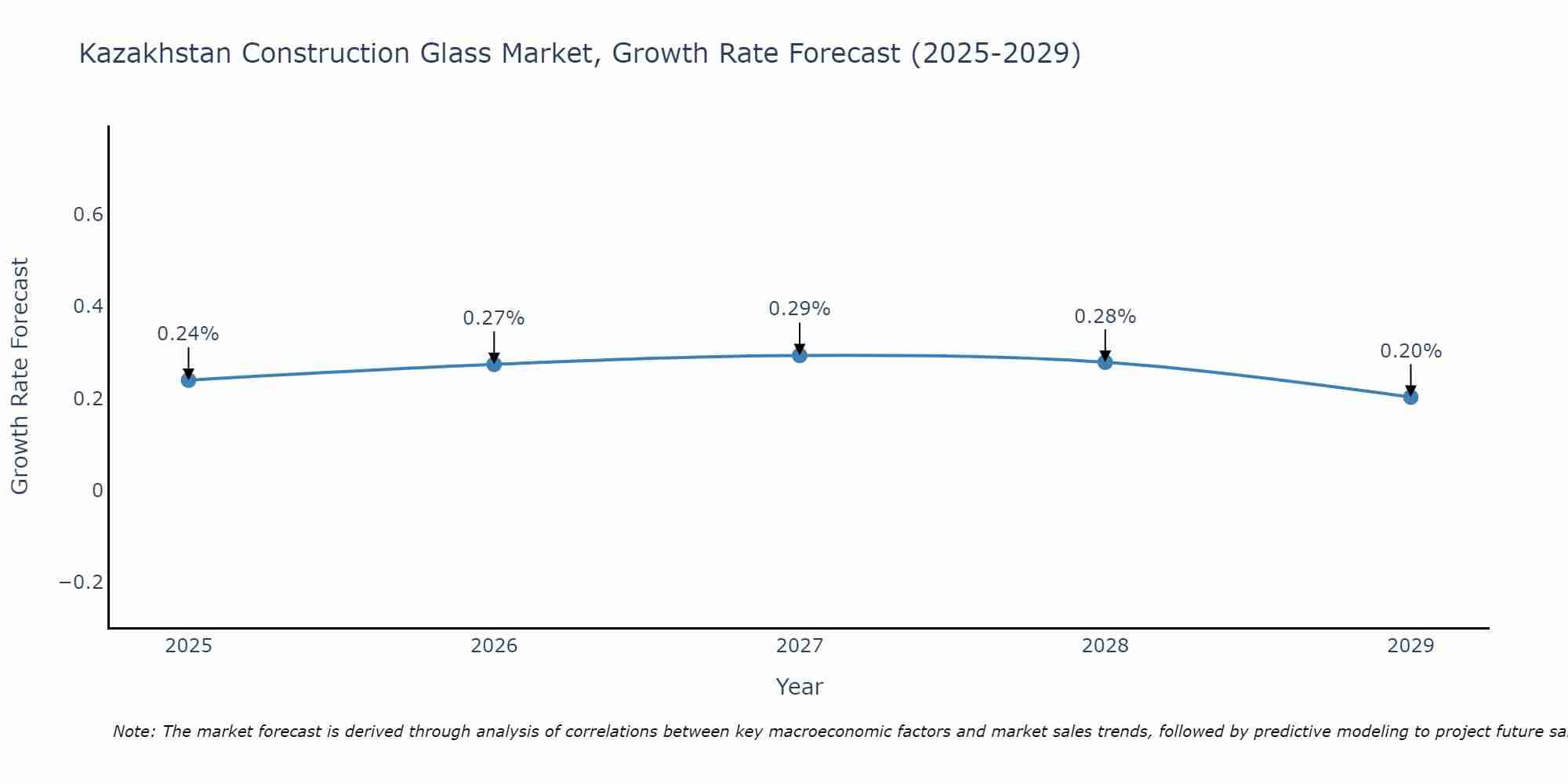
The Kazakhstan Construction Glass Market is projected to witness mixed growth rate patterns during 2025 to 2029. The growth rate begins at 0.24% in 2025, climbs to a high of 0.29% in 2027, and moderates to 0.20% by 2029.
Construction Glass Market: Kazakhstan vs Top 5 Major Economies in 2027 (Asia)
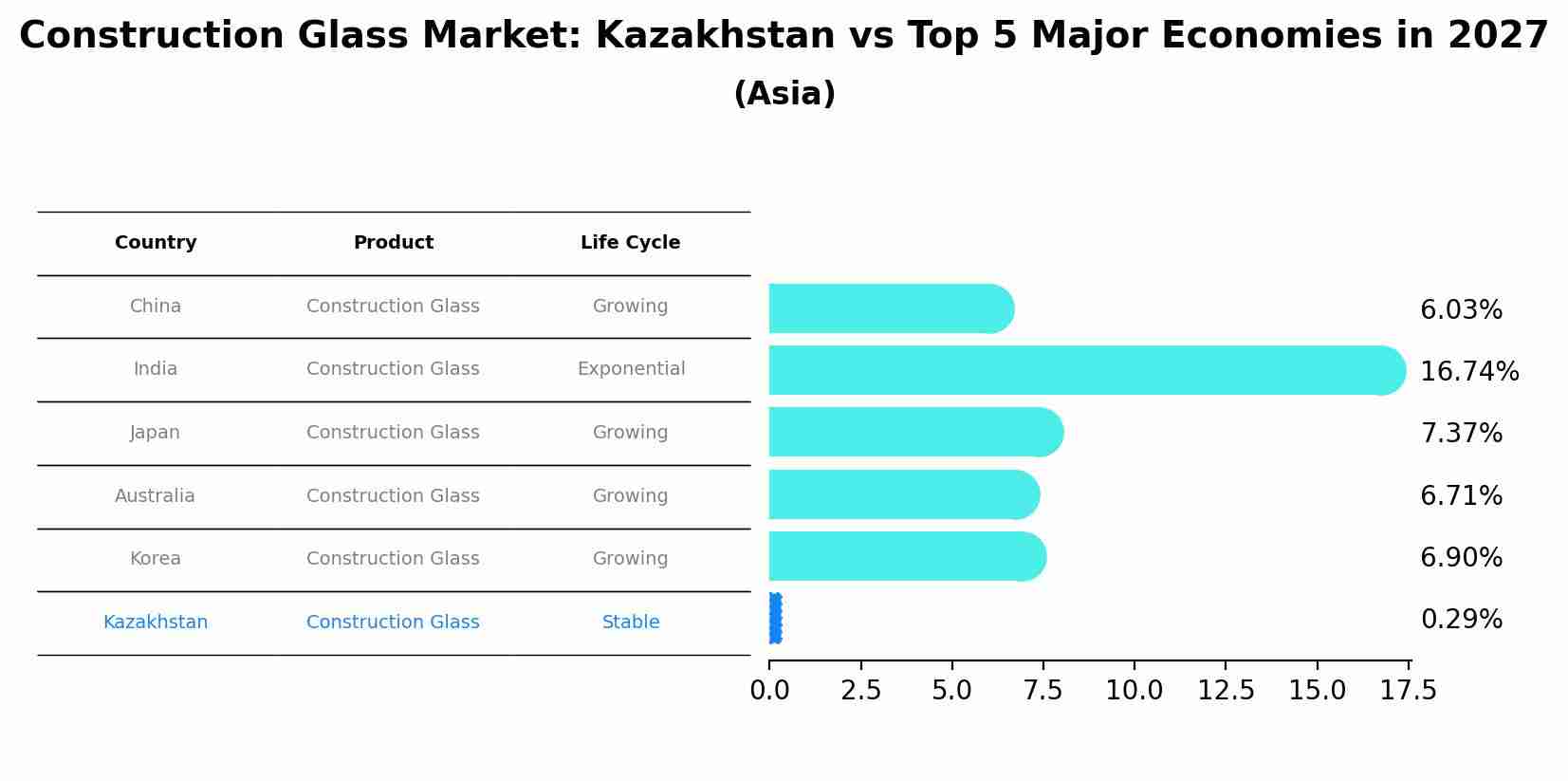
In the Asia region, the Construction Glass market in Kazakhstan is projected to expand at a stable growth rate of 0.29% by 2027. The largest economy is China, followed by India, Japan, Australia and South Korea.
Kazakhstan Construction Glass Market Overview
The construction glass market in Kazakhstan is a critical component of the building and infrastructure sectors, providing materials for windows, facades, partitions, and decorative elements. Glass products offer properties such as transparency, thermal insulation, and soundproofing, enhancing the aesthetics, comfort, and energy efficiency of buildings. With increasing focus on sustainable construction practices and green building certifications, the demand for energy-efficient and eco-friendly glass solutions is on the rise.
Drivers of the market
The construction glass market in Kazakhstan is growing due to the rising demand for energy-efficient and aesthetically pleasing building materials. Glass products such as insulated glass units, low-emissivity glass, and laminated glass offer thermal insulation, soundproofing, and safety features in buildings. As Kazakhstan focuses on sustainable building practices and energy conservation, the demand for construction glass is increasing in residential, commercial, and industrial construction projects. Moreover, architectural trends favoring glass facades and designs are driving market growth in Kazakhstan.
Challenges of the market
A challenge in the construction glass market is the need for energy-efficient and sustainable glazing solutions to meet regulatory requirements and environmental standards. Developing advanced glass technologies that optimize thermal insulation, daylighting, and solar control while maintaining aesthetic appeal poses challenges for glass manufacturers.
Government Policy of the market
Kazakhstan focus on energy efficiency and sustainable building practices has led to increased demand for high-performance construction glass. Policies promoting green building standards are driving this market.
Key Highlights of the Report:
- Kazakhstan Construction Glass Market Outlook
- Market Size of Kazakhstan Construction Glass Market, 2024
- Forecast of Kazakhstan Construction Glass Market, 2031
- Historical Data and Forecast of Kazakhstan Construction Glass Revenues & Volume for the Period 2018 - 2031
- Kazakhstan Construction Glass Market Trend Evolution
- Kazakhstan Construction Glass Market Drivers and Challenges
- Kazakhstan Construction Glass Price Trends
- Kazakhstan Construction Glass Porter's Five Forces
- Kazakhstan Construction Glass Industry Life Cycle
- Historical Data and Forecast of Kazakhstan Construction Glass Market Revenues & Volume By Chemical Composition for the Period 2018 - 2031
- Historical Data and Forecast of Kazakhstan Construction Glass Market Revenues & Volume By Soda-lime for the Period 2018 - 2031
- Historical Data and Forecast of Kazakhstan Construction Glass Market Revenues & Volume By Potash-lime for the Period 2018 - 2031
- Historical Data and Forecast of Kazakhstan Construction Glass Market Revenues & Volume By Potash-lead for the Period 2018 - 2031
- Historical Data and Forecast of Kazakhstan Construction Glass Market Revenues & Volume By Type for the Period 2018 - 2031
- Historical Data and Forecast of Kazakhstan Construction Glass Market Revenues & Volume By Low-e Glass for the Period 2018 - 2031
- Historical Data and Forecast of Kazakhstan Construction Glass Market Revenues & Volume By Special Glass for the Period 2018 - 2031
- Historical Data and Forecast of Kazakhstan Construction Glass Market Revenues & Volume By Manufacturing Process for the Period 2018 - 2031
- Historical Data and Forecast of Kazakhstan Construction Glass Market Revenues & Volume By Float Process for the Period 2018 - 2031
- Historical Data and Forecast of Kazakhstan Construction Glass Market Revenues & Volume By Rolled/sheet Process for the Period 2018 - 2031
- Historical Data and Forecast of Kazakhstan Construction Glass Market Revenues & Volume By Application for the Period 2018 - 2031
- Historical Data and Forecast of Kazakhstan Construction Glass Market Revenues & Volume By Residential for the Period 2018 - 2031
- Historical Data and Forecast of Kazakhstan Construction Glass Market Revenues & Volume By Commercial for the Period 2018 - 2031
- Historical Data and Forecast of Kazakhstan Construction Glass Market Revenues & Volume By Others for the Period 2018 - 2031
- Kazakhstan Construction Glass Import Export Trade Statistics
- Market Opportunity Assessment By Chemical Composition
- Market Opportunity Assessment By Type
- Market Opportunity Assessment By Manufacturing Process
- Market Opportunity Assessment By Application
- Kazakhstan Construction Glass Top Companies Market Share
- Kazakhstan Construction Glass Competitive Benchmarking By Technical and Operational Parameters
- Kazakhstan Construction Glass Company Profiles
- Kazakhstan Construction Glass Key Strategic Recommendations






































