Kazakhstan Construction Market: Import Trend Analysis
In the Kazakhstan construction market, the import trend experienced significant growth from 2023 to 2024, with a notable increase of 615.38%. The compound annual growth rate (CAGR) for imports during the period of 2020 to 2024 stood at 46.85%. This surge in import momentum can be attributed to a shift in demand towards specialized construction materials or a relaxation in trade policies, indicating a potential market recovery within the industry.
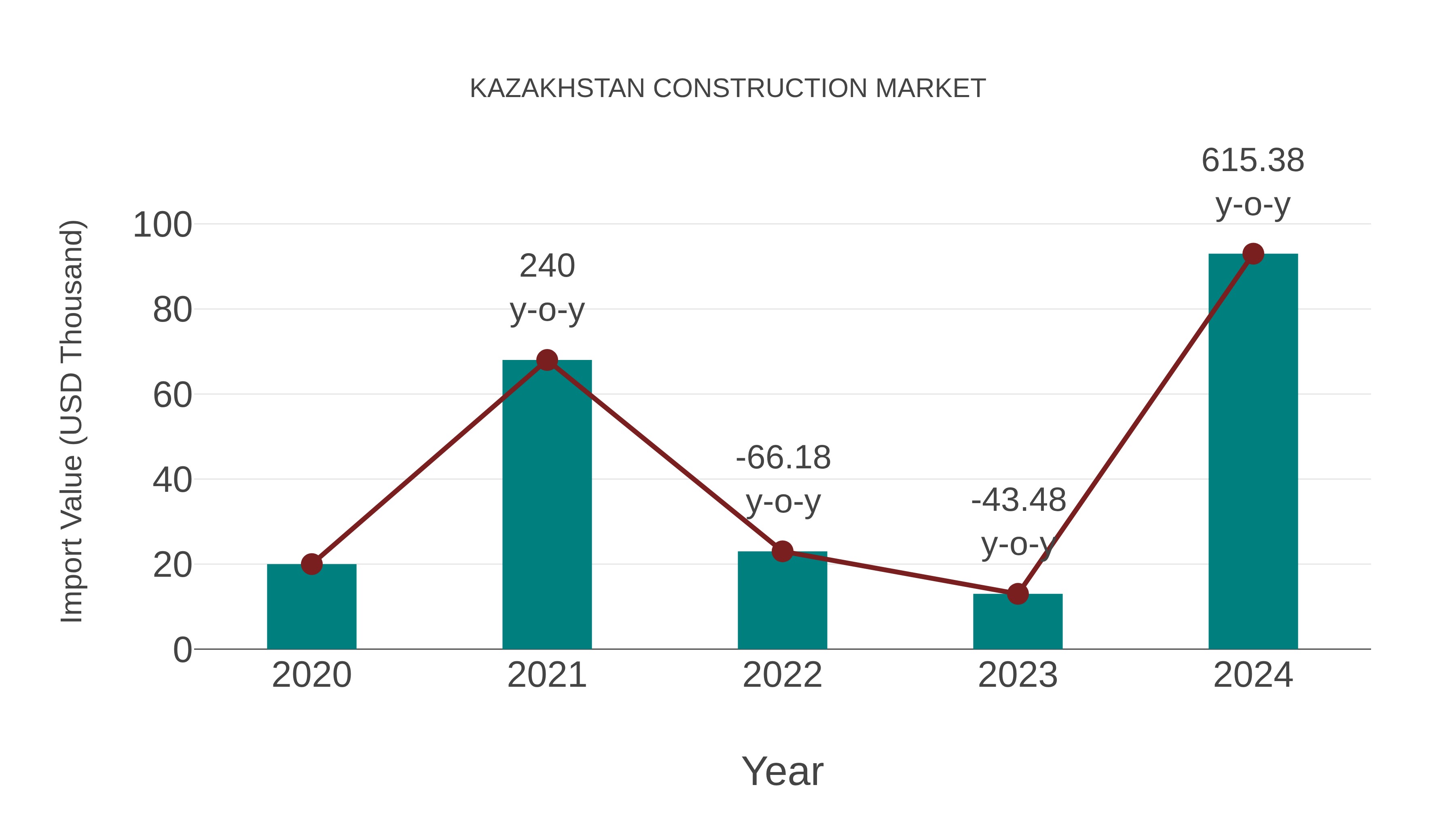
Kazakhstan Construction Market Growth Rate
According to 6Wresearch internal database and industry insights, the Kazakhstan Construction Market is projected to grow at a compound annual growth rate (CAGR) of 6.2% during the forecast period (2026–2032).
Five-Years Growth Trajectory of the Kazakhstan Construction Market with Core Drivers
Below is the evaluation of the year-wise growth rate along with key drivers:
| Years | Estimated Annual Growth (%) | Growth Drivers |
| 2021 | 4.1 | Government-backed infrastructure projects and urbanization trends |
| 2022 | 4.4 | Rising demand for residential housing and commercial properties |
| 2023 | 4.7 | Growth in the private sector construction and urban renewal projects |
| 2024 | 5.1 | Increased foreign investments and improved construction technologies |
| 2025 | 5.5 | Focus on sustainable and energy-efficient building solutions |
Topics Covered in the Kazakhstan Construction Market Report
The Kazakhstan Construction Market report thoroughly covers the market by Product Types, Sector, and Category. The report provides a detailed analysis of ongoing market trends, opportunities/high-growth areas, and market drivers that will help stakeholders devise and align strategies according to current and future market dynamics.
Kazakhstan Construction Market Highlights
| Report Name | Kazakhstan Construction Market |
| Forecast period | 2026–2032 |
| CAGR | 6.2% |
| Growing Sector | Infrastructure and Residential Development |
Kazakhstan Construction Market Synopsis
Kazakhstan Construction Market is growing steadily, driven by significant government investments in infrastructure, particularly in roads, energy, and urban development. Kazakhstan Construction Market Growth is driven by Japan expanding urban population and the growing demand for residential and commercial spaces. The State Infrastructure Development and National Housing programs, along with other key government initiatives, are accelerating construction progress. Private sector participation and foreign investments remain crucial as the industry transitions toward more environmentally friendly construction methods.
Evaluation of Growth Drivers in the Kazakhstan Construction Market
Below are some prominent drivers and their influence on the Kazakhstan Construction Market dynamics:
| Drivers | Primary Segments Affected | Why it Matters |
| Government Infrastructure Projects | By Product (Heavy and Civil Engineering) | The development of national infrastructure, such as roads, bridges, and airports, is fueling growth in civil engineering construction. |
| Urbanization and Housing Demand | By Sector (Urban) | Increasing urbanization and the growing demand for residential housing in cities fuel market expansion. |
| Private and Foreign Investments | By Category (New Construction) | New commercial and residential construction projects are being fueled by foreign investments. |
| Sustainable Building Focus | By Product (General Construction) | The increasing use of green construction practices and eco-friendly building materials is transforming market dynamics. |
The Kazakhstan Construction Market Size is projected to grow at a CAGR of 6.2% during the forecast period (2026–2032). The Kazakhstan Construction Market is steadily developing, and the main driving forces are investments in the infrastructure sector by the government, urban expansion, and an increase in the demand for both residential and commercial properties. The government has launched several programs that promote sustainable building practices, the development of affordable housing, and the establishment of Green Infrastructure, which, in turn, will help the market to grow further. Private sector investment in industrial and Energy Related Development has also increased and is helping to strengthen the market.
Evaluation of Restraints in the Kazakhstan Construction Market
Below are some prominent restraints and their influence on the Kazakhstan Construction Market dynamics:
| Drivers | Primary Segments Affected | Why it Matters |
| Infrastructure Development | By Product (Heavy and Civil Engineering) | Full-scale capital deployment into industrial and manufacturing projects is boosting construction activity. |
| Urbanization and Population Growth | By Sector (Urban) | Urban migration is increasing the need for housing and commercial developments. |
| Industrial Development | By Category (New) | Spending on manufacturing facilities and industrial zones is fueling new construction. |
| Government Housing Initiatives | By Category (New, Renovation) | Large-scale affordable housing projects help reduce housing shortages. |
Kazakhstan Construction Market Challenges
Kazakhstan Construction Industry faces many difficulties. Among them are a lack of skilled workers, difficulty obtaining project approval due to political instability and complicated regulatory systems, and increased prices for raw materials for construction projects. Harsh climates in some regions of the country add further strains to the durability of construction materials and infrastructure. Furthermore, inconsistent financing options and the difficulty sustaining construction practices over remote locations contribute to the challenges the construction sector faces in achieving sustainable development.
Kazakhstan Construction Market Trends
Several key trends are shaping the Kazakhstan Construction Growth:
- Growing Demand for Sustainable Construction: The need for sustainable construction has been increasing as governments impose regulations for energy-efficient buildings as well as due to a growing consumer preference for environmentally friendly products.
- Urbanization and Infrastructure Development: The urbanization of the cities in Kazakhstan will necessitate infrastructural developments mainly in roads, bridges, and transportation systems in order to satisfy the needs of the urban areas..
- Smart Cities and Technology Integration: Investment in smart cities and the integration of technology into urban development is steadily increasing. This includes investments in infrastructure for intelligent buildings, IoT integration, automation, and sustainable building technologies
- Focus on Affordable Housing: Several government initiatives focused on creating affordable housing options, particularly in urban areas, there has been a surge in residential construction projects in Kazakhstan.
Investment Opportunities in the Iran Construction Market
Some notable investment opportunities include:
- Infrastructure Development Projects: Ongoing investments made by both governments and the private sector into roadways, railroads, bridges and transportation centers will allow for the long-term creation of opportunities for construction companies, contractors, and investors to build and invest in infrastructure.
- Affordable Housing Initiatives: Government supported housing projects that aim to increase the number of homes for people will provide many investment opportunities in both new construction and renovations of existing structures.
- Green Building and Sustainable Solutions: There is an increasing demand for building structures that are energy efficient, as well as use eco friendly materials; therefore this creates many opportunities for developers and other technology companies that are developing sustainable technologies.
- Smart Infrastructure and Urban Technology: Cities will realize greater returns on their investment in smart city initiatives, including intelligent transportation systems, automated management of buildings, and IoT solutions.
Top 5 Leading Players in the Kazakhstan Construction Market
Some leading players operating in the Kazakhstan Construction Market Share include:
1. KazStroyService
| Company Name | KazStroyService |
|---|---|
| Established Year | 1997 |
| Headquarters | Almaty, Kazakhstan |
| Official Website | Click Here |
One of the largest construction companies in Kazakhstan, specializing in infrastructure, industrial, and residential projects.
2. BI Group
| Company Name | BI Group |
|---|---|
| Established Year | 1995 |
| Headquarters | Almaty, Kazakhstan |
| Official Website | Click Here |
A leading real estate and construction company, BI Group focuses on both residential and commercial projects, with an emphasis on sustainability and innovation.
3. Azimut Engineering
| Company Name | Azimut Engineering |
|---|---|
| Established Year | 2006 |
| Headquarters | Almaty, Kazakhstan |
| Official Website | Click Here |
Known for its expertise in industrial and civil construction, Azimut Engineering is involved in high-profile projects in Kazakhstan.
4. NefteGazMontazh
| Company Name | NefteGazMontazh |
|---|---|
| Established Year | 2004 |
| Headquarters | Atyrau, Kazakhstan |
| Official Website | Click Here |
Specializing in the construction of infrastructure for the energy sector, NefteGazMontazh plays a significant role in Kazakhstan's oil and gas industry.
5. Samruk-Kazyna Construction
| Company Name | Samruk-Kazyna Construction |
|---|---|
| Established Year | 2008 |
| Headquarters | Astana, Kazakhstan |
| Official Website | Click Here |
A state-owned company involved in large-scale infrastructure and development projects across Kazakhstan.
Government Regulations Introduced in the Kazakhstan Construction Market
According to Kazakh government data, several regulations have been implemented to strengthen the construction market, including the State Programme for Infrastructure Development, which supports road networks and urban development projects, and the State Housing Program, which focuses on affordable housing construction and city modernization. In addition, the Sustainable Construction Code promotes the development of energy-efficient buildings with longer life cycles. Tax incentives and policy support for green building projects further encourage the adoption of sustainable construction practices across the country.
Future Insights of the Kazakhstan Construction Market
The Kazakhstan Construction Market is expected to grow steadily, driven by continued infrastructure development, rising residential demand, and an increasing focus on sustainability. Government-subsidized public works and urban renewal initiatives are accelerating housing sector growth, while rising private sector participation is strengthening overall market performance. Increasing investment in smart infrastructure and green buildings will play a key role in shaping future growth. This broad-based expansion across residential, commercial, and infrastructure segments supports sustained investment and long-term development of Kazakhstan’s construction industry.
Market Segmentation Analysis
The report offers a comprehensive study of the following market segments and their leading categories:
By Product – Heavy and Civil Engineering to Lead the Market
According to Ritika Kalra, Senior Research Analyst at 6Wresearch, heavy and civil engineering projects lead the market due to substantial government investments in infrastructure such as roads, bridges, and energy facilities.
By Sector – Urban to Lead the Market
Urban construction growth is driven by rapid urbanization and increasing demand for residential, commercial, and retail developments in major cities.
By Category – New Construction to Lead the Market
New construction projects account for the majority of market growth, particularly in housing and infrastructure development, while renovation activities represent a smaller share of the market.
Key Attractiveness of the Report
- 10 Years of Market Numbers
- Historical Data Starting from 2022 to 2025
- Base Year: 2025
- Forecast Data until 2032
- Key Performance Indicators Impacting the Market
- Major Upcoming Developments and Projects
Key Highlights of the Report:
- Kazakhstan Construction Market Outlook
- Market Size of Kazakhstan Construction Market, 2025
- Forecast of Kazakhstan Construction Market, 2032
- Historical Data and Forecast of Kazakhstan Construction Revenues & Volume for the Period 2022- 2032
- Kazakhstan Construction Market Trend Evolution
- Kazakhstan Construction Market Drivers and Challenges
- Kazakhstan Construction Price Trends
- Kazakhstan Construction Porter's Five Forces
- Kazakhstan Construction Industry Life Cycle
- Historical Data and Forecast of Kazakhstan Construction Market Revenues & Volume By Product for the Period 2022- 2032
- Historical Data and Forecast of Kazakhstan Construction Market Revenues & Volume By Heavy and Civil Engineering for the Period 2022- 2032
- Historical Data and Forecast of Kazakhstan Construction Market Revenues & Volume By General Construction for the Period 2022- 2032
- Historical Data and Forecast of Kazakhstan Construction Market Revenues & Volume By Sector for the Period 2022- 2032
- Historical Data and Forecast of Kazakhstan Construction Market Revenues & Volume By Urban for the Period 2022- 2032
- Historical Data and Forecast of Kazakhstan Construction Market Revenues & Volume By Rural for the Period 2022- 2032
- Historical Data and Forecast of Kazakhstan Construction Market Revenues & Volume By Category for the Period 2022- 2032
- Historical Data and Forecast of Kazakhstan Construction Market Revenues & Volume By New for the Period 2022- 2032
- Historical Data and Forecast of Kazakhstan Construction Market Revenues & Volume By Renovation for the Period 2022- 2032
- Kazakhstan Construction Import Export Trade Statistics
- Market Opportunity Assessment By Product
- Market Opportunity Assessment By Sector
- Market Opportunity Assessment By Category
- Kazakhstan Construction Top Companies Market Share
- Kazakhstan Construction Competitive Benchmarking By Technical and Operational Parameters
- Kazakhstan Construction Company Profiles
- Kazakhstan Construction Key Strategic Recommendations
Markets Covered
The report offers a comprehensive study of the following market segments:
By Product
- Heavy and Civil Engineering
- General Construction
By Sector
- Urban
- Rural
By Category
- New
- Renovation






































