Kazakhstan Modular Kitchen Market: Import Trend Analysis
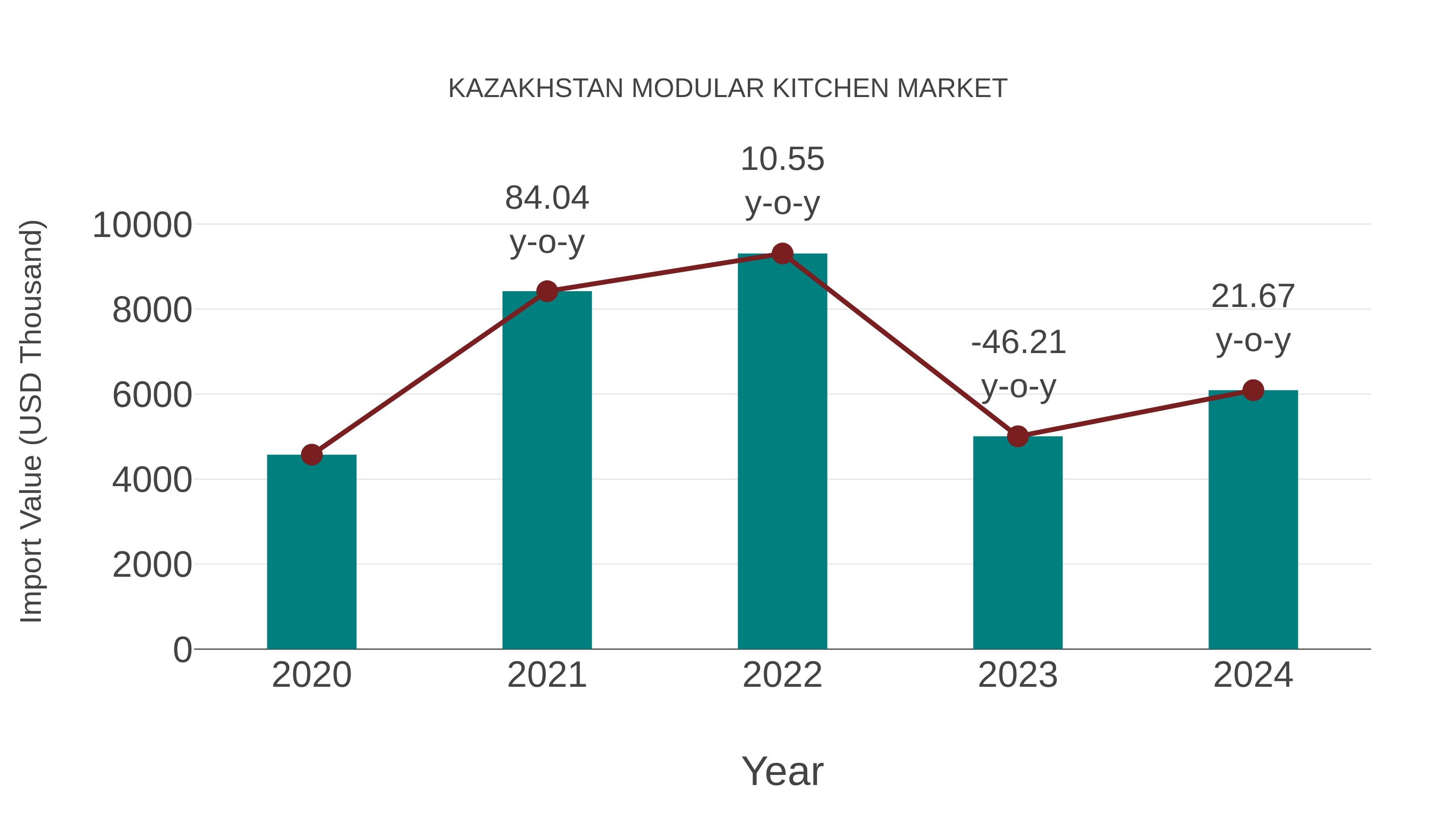
In the Kazakhstan modular kitchen market, the import trend saw significant growth from 2023 to 2024, with a growth rate of 21.67%. The compound annual growth rate (CAGR) for imports between 2020 and 2024 stood at 7.42%. This uptrend in imports can be attributed to increasing consumer demand for modern kitchen solutions, indicating a shift towards higher-quality products and designs in the market.
Kazakhstan Modular Kitchen Market Overview
The modular kitchen market in Kazakhstan is witnessing rapid growth driven by urbanization, changing lifestyle preferences, and the increasing adoption of modern kitchen designs and technologies. Modular kitchens offer space-saving solutions, ergonomic designs, and customization options to meet the diverse needs and preferences of homeowners. Key market trends include the use of premium materials such as stainless steel, granite, and engineered wood, the integration of smart appliances and IoT connectivity, and the availability of modular kitchen solutions tailored to small apartments, luxury residences, and commercial settings.
Drivers of the market
Changing lifestyles, urbanization, and a growing middle class contribute to the demand for modular kitchens in Kazakhstan. The convenience, aesthetics, and space-saving features offered by modular kitchen designs appeal to modern homeowners and drive market expansion.
Challenges of the market
The Kazakhstan Modular Kitchen Market faces obstacles such as high initial costs and the need for customization, which can increase expenses and complexity. There is also a lack of awareness and understanding of the benefits of modular kitchens among consumers. The market is further constrained by the availability of skilled labor to design and install modular kitchens. Additionally, import duties and regulations can increase the cost and limit the availability of high-quality materials.
Government Policy of the market
In response to evolving consumer preferences and lifestyle changes, Kazakhstan has implemented policies to support the modular kitchen market. These policies aim to streamline licensing and certification processes, promote sustainable design practices, and ensure consumer safety and product quality standards, thereby fostering growth in the residential construction sector.
Key Highlights of the Report:
- Kazakhstan Modular Kitchen Market Outlook
- Market Size of Kazakhstan Modular Kitchen Market, 2025
- Forecast of Kazakhstan Modular Kitchen Market, 2032
- Historical Data and Forecast of Kazakhstan Modular Kitchen Revenues & Volume for the Period 2022-2032F
- Kazakhstan Modular Kitchen Market Trend Evolution
- Kazakhstan Modular Kitchen Market Drivers and Challenges
- Kazakhstan Modular Kitchen Price Trends
- Kazakhstan Modular Kitchen Porter's Five Forces
- Kazakhstan Modular Kitchen Industry Life Cycle
- Historical Data and Forecast of Kazakhstan Modular Kitchen Market Revenues & Volume By Product for the Period 2022-2032F
- Historical Data and Forecast of Kazakhstan Modular Kitchen Market Revenues & Volume By Floor Cabinet & Wall Cabinets for the Period 2022-2032F
- Historical Data and Forecast of Kazakhstan Modular Kitchen Market Revenues & Volume By Tall Storage Cabinets for the Period 2022-2032F
- Historical Data and Forecast of Kazakhstan Modular Kitchen Market Revenues & Volume By Others for the Period 2022-2032F
- Historical Data and Forecast of Kazakhstan Modular Kitchen Market Revenues & Volume By End-User for the Period 2022-2032F
- Historical Data and Forecast of Kazakhstan Modular Kitchen Market Revenues & Volume By Residential for the Period 2022-2032F
- Historical Data and Forecast of Kazakhstan Modular Kitchen Market Revenues & Volume By Commercial for the Period 2022-2032F
- Historical Data and Forecast of Kazakhstan Modular Kitchen Market Revenues & Volume By Distribution Channel for the Period 2022-2032F
- Historical Data and Forecast of Kazakhstan Modular Kitchen Market Revenues & Volume By Offline (Contractors, Builders, and Others) for the Period 2022-2032F
- Historical Data and Forecast of Kazakhstan Modular Kitchen Market Revenues & Volume By Online for the Period 2022-2032F
- Kazakhstan Modular Kitchen Import Export Trade Statistics
- Market Opportunity Assessment By Product
- Market Opportunity Assessment By End-User
- Market Opportunity Assessment By Distribution Channel
- Kazakhstan Modular Kitchen Top Companies Market Share
- Kazakhstan Modular Kitchen Competitive Benchmarking By Technical and Operational Parameters
- Kazakhstan Modular Kitchen Company Profiles
- Kazakhstan Modular Kitchen Key Strategic Recommendations






































