Kenya Artificial Neural Network Market Size & Growth Rate (2026-2032)
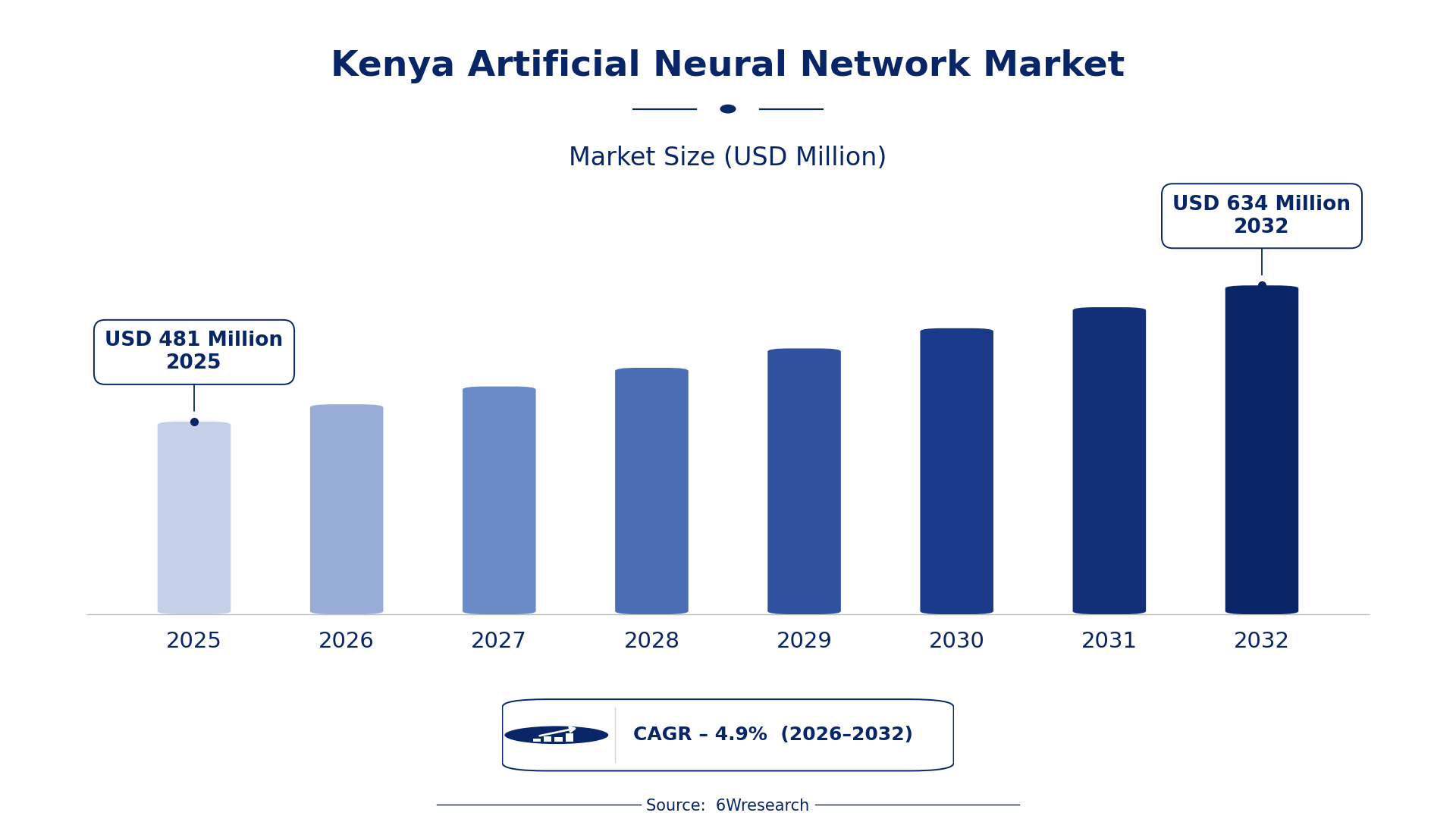
The Kenya Artificial Neural Network Market was estimated at USD 481 Million in 2025 and is projected to reach USD 634 Million by 2032, growing at a CAGR of 4.9% from 2026 to 2032.
Kenya Artificial Neural Network Market Synopsis
In Kenya, the demand for artificial neural networks is rapidly increasing, particularly in sectors like healthcare and agriculture. Organizations are seeking advanced technological solutions to enhance operational efficiencies, thus propelling market growth.
This surge in interest is not merely a trend but a response to the pressing need for data-driven decision-making tools. Companies are recognizing the vital role of AI in improving service delivery, optimizing resource allocation, and ultimately driving profitability.
Kenya Artificial Neural Network Market Year-wise Growth Rate and Key Drivers
This graph illustrates the annual growth rates of the Kenya Artificial Neural Network Market from 2021 to 2032, highlighting a steady upward trajectory and projected expansion over the forecast period.
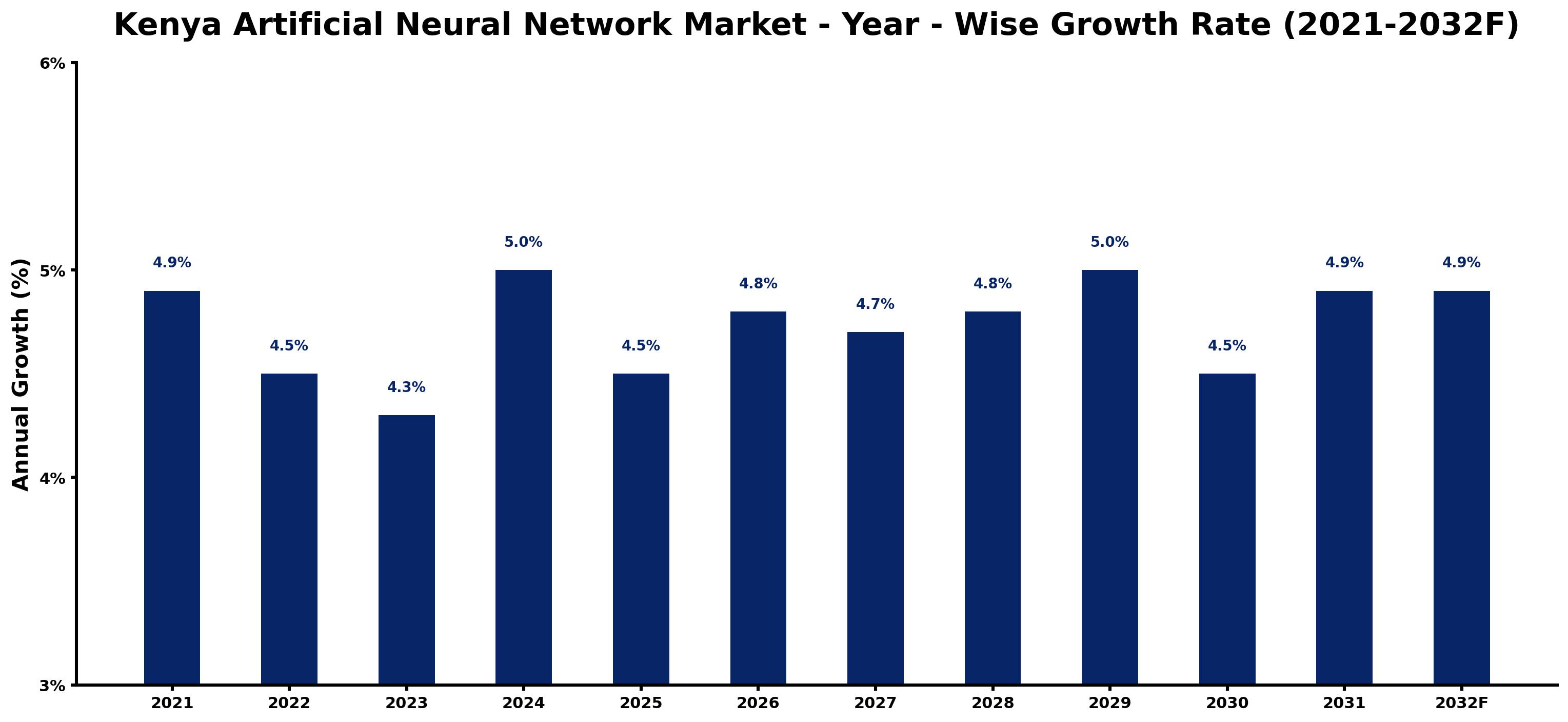
The table below presents the year‑wise growth rates along with the key drivers influencing the market
| Year | Growth Rate | Major Drivers |
| 2021 | 4.9% | Government AI strategy promotes tech startups and innovations. |
| 2022 | 4.5% | Increased mobile penetration enhances AI service accessibility. |
| 2023 | 4.3% | National digital transformation policy boosts AI adoption. |
| 2024 | 5.0% | Growing retail analytics drives demand for machine learning tools. |
| 2025 | 4.5% | Investment in smart agriculture systems increases AI applications. |
| 2026 | 4.8% | Local universities launch AI-focused research grants and partnerships. |
| 2027 | 4.7% | Fintech sector expansion fuels AI-driven financial solutions. |
| 2028 | 4.8% | Healthcare digitization spurs adoption of AI diagnostics. |
| 2029 | 5.0% | Public sector projects leverage AI for efficiency improvements. |
| 2030 | 4.5% | Rise of e-commerce platforms necessitates AI for customer insights. |
| 2031 | 4.9% | Emerging tech hubs attract international AI investments. |
| 2032 | 4.9% | Increased awareness of AI's potential enhances business interest. |
Note: Market size estimations and growth projections presented in this report are based on 6Wresearch's proprietary forecasting methodology, utilizing the latest available industry data, government publications, and primary research inputs.
Kenya Artificial Neural Network Market Key Takeaways
Below are some of the specific key takeaways from the market, including:
- Healthcare and agriculture are leading sectors driving demand for artificial neural networks in Kenya.
- The government's push towards digital transformation is a catalyst for market expansion.
- Startups are increasingly focusing on AI, fostering innovation in neural network applications.
- Deep learning solutions for data analysis are gaining traction among businesses.
- Investment opportunities are ripe in sectors such as finance and customer service.
Evaluation of Restraints in Kenya Artificial Neural Network Market
Despite its growth potential, the Kenya Artificial Neural Network market faces notable constraints. One major challenge is the limited access to advanced technology and resources, which hinders smaller businesses from adopting AI solutions. Additionally, there is a shortage of skilled professionals in artificial intelligence, making it difficult for companies to implement and maintain neural network systems effectively.
Cost remains a significant barrier; the high expenses associated with deploying AI solutions can deter investment. on top of that, concerns around data privacy and security, along with regulatory hurdles, complicate the market's landscape. Addressing these challenges will be crucial for unlocking the full potential of artificial neural networks in Kenya.
Kenya Artificial Neural Network Market Trends
A shift towards deep learning techniques is evident as businesses aim to enhance data analysis capabilities. Companies are integrating AI into their processes to improve efficiency and decision-making, reflecting a broader trend of operational optimization.
on top of that, there's a growing focus on personalized customer experiences through AI-driven solutions. Organizations are increasingly investing in research and development to create innovative neural network algorithms, which are vital for staying competitive in a data-centric market.
Kenya Artificial Neural Network Market Opportunities
Investment opportunities within the Kenya Artificial Neural Network market are abundant, particularly in sectors such as healthcare, finance, and agriculture. In healthcare, neural networks can enhance diagnostic processes and patient management systems. In finance, they can play a crucial role in detecting fraudulent activities and optimizing investment strategies.
Agriculture also presents a significant opportunity, with neural networks capable of predicting crop yields and analyzing market trends. The customer service domain is another area ripe for innovation, where AI-powered chatbots can enhance user engagement and satisfaction levels.
Government Initiatives in the Kenya Artificial Neural Network Market
The Kenyan government is actively working to foster innovation and support the artificial neural network market through a series of strategic initiatives. These public policies aim to enhance digital skills and promote the integration of AI technologies across various sectors, reflecting a strong commitment to digital transformation.
- A National Artificial Intelligence (AI) Taskforce was established to create a framework for AI adoption across industries, launched in early 2025.
- The Ajira Digital program is currently underway, focusing on training youth in emerging technologies, including artificial neural networks.
- The Kenya National Innovation Agency (KeNIA) is providing funding and support to startups in the AI sector, fostering innovation and development.
- A planned public-private initiative aims to enhance digital infrastructure access, with expected rollout by 2026.
Future Insights of the Kenya Artificial Neural Network Market
Looking ahead, the Kenya Artificial Neural Network Market is set to expand significantly from 2026 to 2032. The increasing adoption of AI technologies across diverse industries will continue to drive demand. on top of that, government initiatives aimed at digital transformation are likely to spur further growth.
However, market participants must navigate challenges such as data privacy concerns and the need for skilled talent. Addressing these issues will be essential for realizing the potential of artificial neural networks in enhancing operational capabilities and achieving competitive advantages.
Kenya Artificial Neural Network Market Latest Developments
Recent activity in the Kenya Artificial Neural Network market has been dynamic, marked by a range of innovations and investments over the past year. Companies are increasingly recognizing the importance of AI technologies in driving efficiency and improving service delivery.
- A leading regional operator launched an AI-powered customer service platform in Q2 2025, aimed at improving user engagement.
- An initiative focused on developing AI algorithms for agricultural applications is currently underway, expected to enhance crop management by mid-2026.
- A major technology vendor announced a partnership with local universities in early 2025 to advance research in neural network applications.
- Another initiative, focused on enhancing fraud detection systems in the finance sector, is set to begin rollout in late 2025.
Kenya Artificial Neural Network Market - Key Attractiveness of the Report
- 10 Years of Market Numbers
- Historical Data Starting from 2022 to 2025
- Base Year: 2025
- Forecast Data until 2032
- Key Performance Indicators Impacting the Market
- Major Upcoming Developments and Projects
Key Highlights of the Report:
- Kenya Artificial Neural Network Market Outlook
- Market Size of Kenya Artificial Neural Network Market, 2025
- Forecast of Kenya Artificial Neural Network Market, 2032
- Historical Data and Forecast of Kenya Artificial Neural Network Revenues & Volume for the Period 2022-2032F
- Kenya Artificial Neural Network Market Trend Evolution
- Kenya Artificial Neural Network Market Drivers and Challenges
- Kenya Artificial Neural Network Price Trends
- Kenya Artificial Neural Network Porter's Five Forces
- Kenya Artificial Neural Network Industry Life Cycle
- Historical Data and Forecast of Kenya Artificial Neural Network Market Revenues & Volume By Component for the Period 2022-2032F
- Historical Data and Forecast of Kenya Artificial Neural Network Market Revenues & Volume By Solutions for the Period 2022-2032F
- Historical Data and Forecast of Kenya Artificial Neural Network Market Revenues & Volume By Services for the Period 2022-2032F
- Historical Data and Forecast of Kenya Artificial Neural Network Market Revenues & Volume By Applications for the Period 2022-2032F
- Historical Data and Forecast of Kenya Artificial Neural Network Market Revenues & Volume By Image Recognition for the Period 2022-2032F
- Historical Data and Forecast of Kenya Artificial Neural Network Market Revenues & Volume By Signal Recognition for the Period 2022-2032F
- Historical Data and Forecast of Kenya Artificial Neural Network Market Revenues & Volume By Data Mining for the Period 2022-2032F
- Historical Data and Forecast of Kenya Artificial Neural Network Market Revenues & Volume By Others for the Period 2022-2032F
- Historical Data and Forecast of Kenya Artificial Neural Network Market Revenues & Volume By Deployment Mode for the Period 2022-2032F
- Historical Data and Forecast of Kenya Artificial Neural Network Market Revenues & Volume By On-premises for the Period 2022-2032F
- Historical Data and Forecast of Kenya Artificial Neural Network Market Revenues & Volume By Cloud for the Period 2022-2032F
- Historical Data and Forecast of Kenya Artificial Neural Network Market Revenues & Volume By Vertical for the Period 2022-2032F
- Historical Data and Forecast of Kenya Artificial Neural Network Market Revenues & Volume By Banking, Financial Services, and Insurance (BFSI) for the Period 2022-2032F
- Historical Data and Forecast of Kenya Artificial Neural Network Market Revenues & Volume By Retail and eCommerce for the Period 2022-2032F
- Historical Data and Forecast of Kenya Artificial Neural Network Market Revenues & Volume By Telecommunication and Information Technology (IT) for the Period 2022-2032F
- Historical Data and Forecast of Kenya Artificial Neural Network Market Revenues & Volume By Healthcare and Life Sciences for the Period 2022-2032F
- Historical Data and Forecast of Kenya Artificial Neural Network Market Revenues & Volume By Manufacturing for the Period 2022-2032F
- Historical Data and Forecast of Kenya Artificial Neural Network Market Revenues & Volume By Government and Defense for the Period 2022-2032F
- Historical Data and Forecast of Kenya Artificial Neural Network Market Revenues & Volume By Transportation and Logistics for the Period 2022-2032F
- Historical Data and Forecast of Kenya Artificial Neural Network Market Revenues & Volume By Others for the Period 2022-2032F
- Kenya Artificial Neural Network Import Export Trade Statistics
- Market Opportunity Assessment By Component
- Market Opportunity Assessment By Applications
- Market Opportunity Assessment By Deployment Mode
- Market Opportunity Assessment By Vertical
- Kenya Artificial Neural Network Top Companies Market Share
- Kenya Artificial Neural Network Competitive Benchmarking By Technical and Operational Parameters
- Kenya Artificial Neural Network Company Profiles
- Kenya Artificial Neural Network Key Strategic Recommendations






































