Kuwait Coffee Market: Import Trend Analysis
Kuwait coffee market witnessed a notable import trend from 2020 to 2024, with a Compound Annual Growth Rate (CAGR) of 19.58%. This growth indicates a strong import momentum, likely driven by shifting consumer preferences towards higher-quality coffee products, showcasing a positive trade performance in the market.
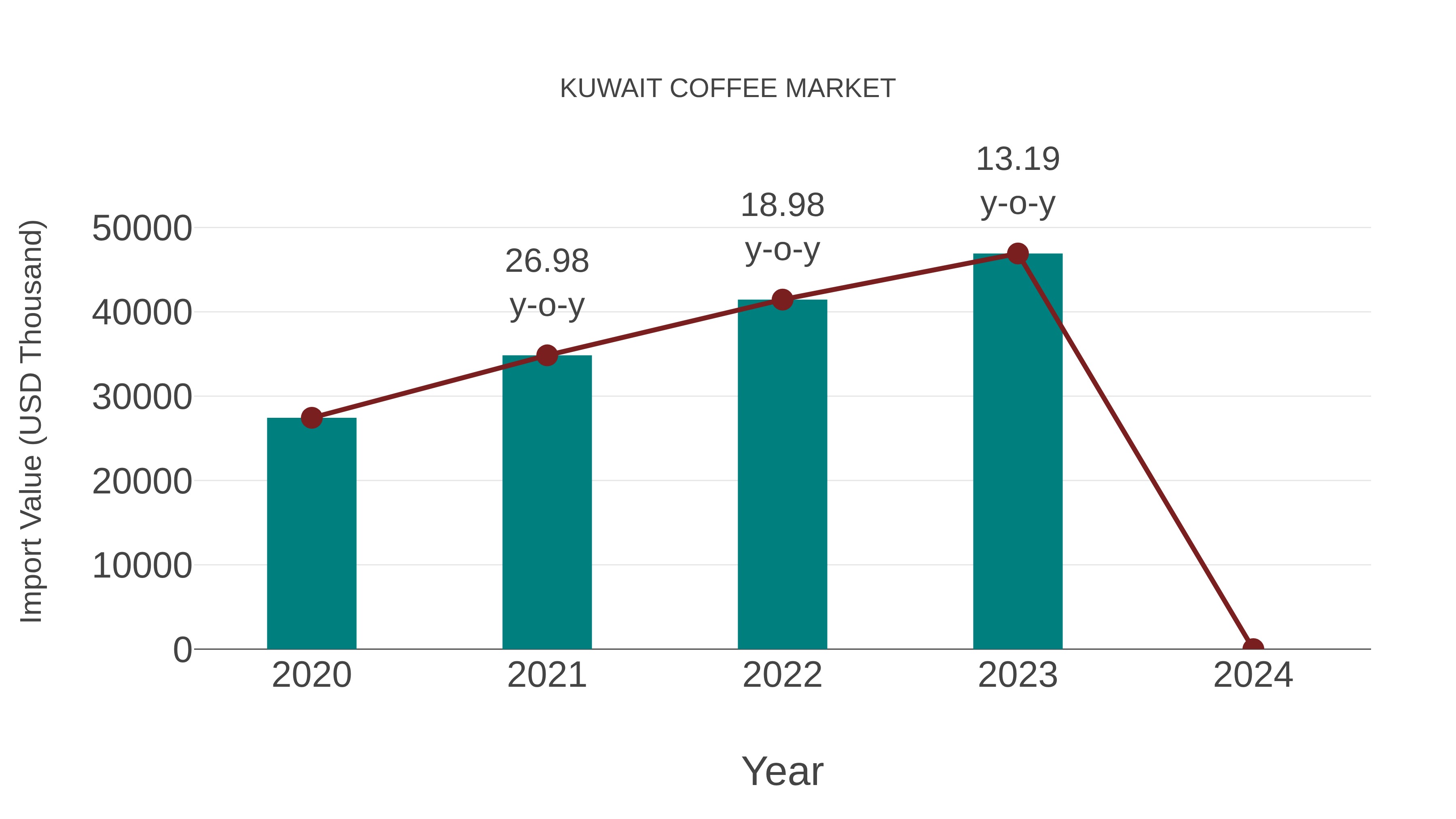
Kuwait coffee market is anticipated to show significant growth over the forecast period. Several factors such as improving economic conditions, upcoming construction of café shops, and restaurants along with rising awareness among the consumers regarding the various health benefits associated with coffee consumption would drive the Kuwait coffee market over the coming years. Further, a tremendous boost in demand for hot coffee by the youth and lucrative advertising of various coffee products has drawn the attention of the consumers, which would propel the coffee market growth over the coming years in Kuwait.
According to 6Wresearch, Kuwait Coffee Market size is anticipated to register growth during 2020-2026. The number of coffee shops and retail outlets openings has witnessed a drastic upsurge in the past few years owing to the rising interest and changing culture & lifestyle of the people across the country, which has contributed to the local specialty coffee brands and boosting the demand for coffee and relatable products in Kuwait. However, international brand dominance and attained maturity in coffee distribution mode would hamper the growth of the local brands in the coming years. Additionally, the prolonged nationwide lockdown in the country due to the outbreak of the COVID-19 pandemic would result in the sluggish market demand and supply of coffee in Kuwait in 2020.
By applications, the ready to drink coffee segment has gained significant traction in Kuwait in recent years and the same trend is expected to continue during the forecast period. Also, the coffee pod and capsules segment has witnessed a significant rise in the sales on account of the launching of own branded coffee capsules by the local coffee shops in the country.
The Kuwait coffee report thoroughly covers the market by bean types, coffee types, distribution channel, and applications. The Kuwait coffee market report outlook provides an unbiased and detailed analysis of the on-going Kuwait coffee market trends, Kuwait coffee market share, opportunities/high growth areas, market drivers, which would help stakeholders to device and align market strategies according to the current and future market dynamics.
Key Highlights of the Report:
- Kuwait Coffee Market Overview
- Kuwait Coffee Market Outlook
- Kuwait Coffee Market Forecast
- Historical Data of Kuwait Coffee Market Revenues for the Period 2016-2019
- Kuwait Coffee Market Size and Kuwait Coffee Market Forecast of Revenues until 2026
- Historical Data of Kuwait Coffee Market Revenues, By Bean Types, for the period 2016-2019
- Market Size and Forecast of Kuwait Coffee Market Revenues, By Bean Types, until 2026
- Historical Data of Kuwait Coffee Market Revenues, By Coffee Types, for the period 2016-2019
- Market Size and Forecast of Kuwait Coffee Market Revenues, By Coffee Types, until 2026
- Historical Data of Kuwait Coffee Market Revenues, By Distribution Channel, for the period 2016-2019
- Market Size and Forecast of Kuwait Coffee Market Revenues, By Distribution Channel, until 2026
- Historical Data of Kuwait Coffee Market Revenues, By Applications, for the period 2016-2019
- Market Size and Forecast of Kuwait Coffee Market Revenues, By Applications, until 2026
- Kuwait Coffee Market Drivers & Restraints
- Kuwait Coffee Market Trends & Evolution
- Kuwait Coffee Market Industry Life Cycle
- Kuwait Coffee Market Opportunity Assessment
- Kuwait Coffee Market Share, By Players
- Kuwait Coffee Market Overview on Competitive Benchmarking
- Company Profiles
- Key Strategic Recommendations
Markets Covered
The Kuwait coffee market report provides a detailed analysis of the following market segments:
By Bean Types
- Arabica
- Robusta
- Others
By Coffee Types
- Ground Coffee
- Instant Coffee
- Whole-Bean
- Coffee Pod and Capsules
By Distribution Channel
- Hypermarkets/ Supermarkets
- Online Channels
- Cafes and Food Services
- Others
By Applications
- Hot Drinks
- Ready to Drink
- Flavored Beverages
- Others






































