Kuwait Naphtha Market: Import Trend Analysis
In the Kuwait naphtha market, the import trend experienced a notable decline from 2020 to 2024, with a compound annual growth rate (CAGR) of -31.48%. This negative momentum was likely influenced by shifting demand dynamics or market instability, impacting trade performance significantly during this period.
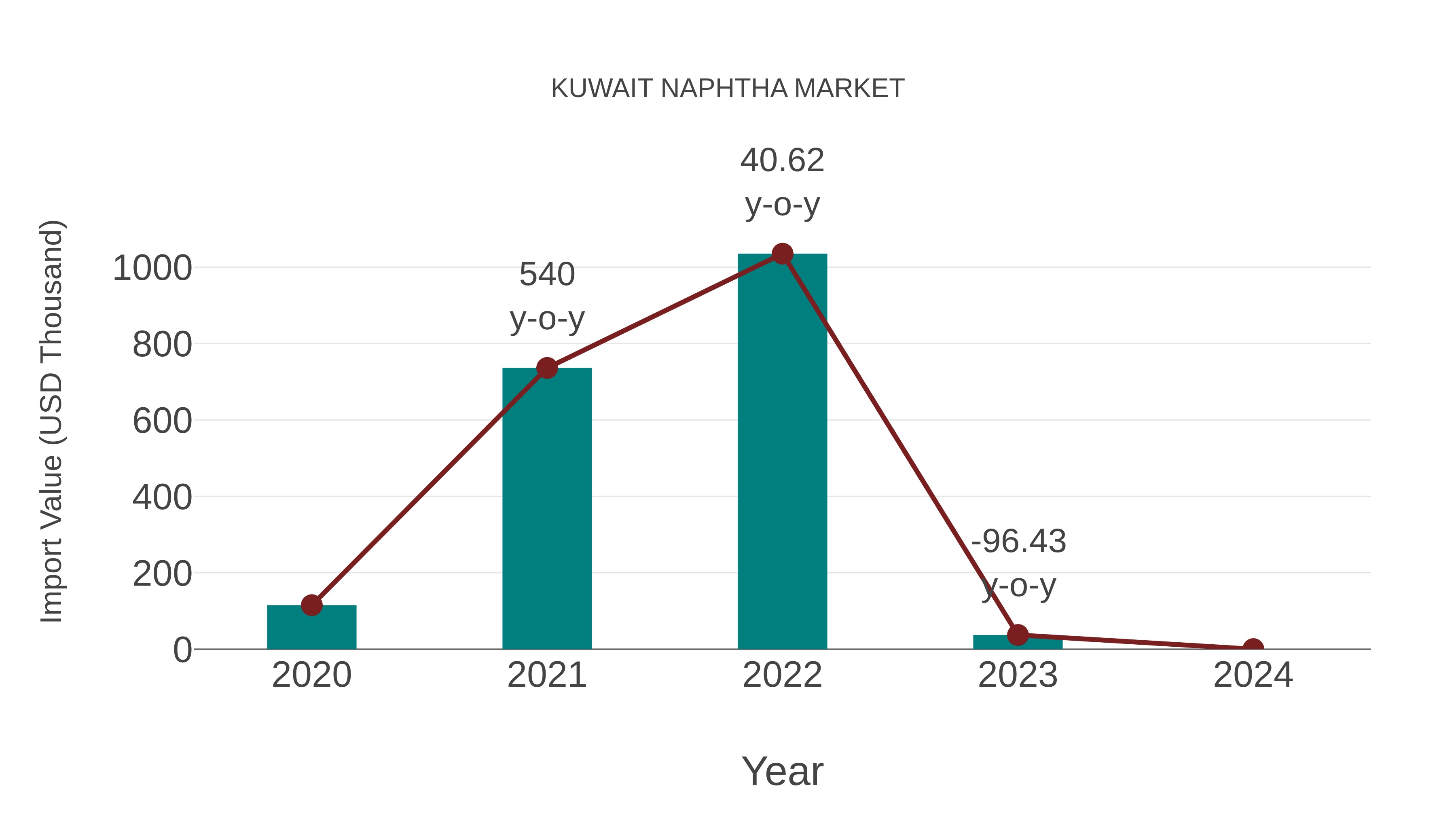
Kuwait Naphtha Market Synopsis
The Kuwait Naphtha market is a significant player in the global naphtha industry, characterized by its high-quality product offerings and strategic geographical location. Kuwait is a major producer and exporter of naphtha, with its refineries producing various grades of naphtha catering to different end-user industries such as petrochemicals, fuels, and solvents. The country`s naphtha market is influenced by global crude oil prices, demand from key importing countries in Asia, and regional supply dynamics. Kuwait`s adherence to international quality standards and its established infrastructure for naphtha production and export contribute to its competitive position in the market. Overall, the Kuwait Naphtha market is poised for growth, driven by increasing demand for petrochemical feedstock and favorable market conditions.
Kuwait Naphtha Market Trends
The Kuwait Naphtha Market is currently experiencing steady growth driven by the increasing demand for petrochemical feedstock. With Kuwait being a key player in the oil and gas industry, the availability of high-quality naphtha as a byproduct presents significant opportunities for market expansion. The trend towards using naphtha as a cleaner alternative to coal and heavy fuel oil in power generation also contributes to market growth. Furthermore, the development of new technologies for naphtha processing and the increasing focus on sustainable practices are creating opportunities for innovation and efficiency improvements in the Kuwait Naphtha Market. Overall, the market is poised for continued growth and diversification, with potential for partnerships and investments to capitalize on the expanding demand for naphtha in various industries.
Kuwait Naphtha Market Challenges
The Kuwait Naphtha Market faces several challenges, including fluctuating global oil prices which directly impact naphtha prices, competition from other naphtha-producing countries in the region, such as Saudi Arabia and the UAE, as well as the need for continuous innovation to meet changing demand patterns and environmental regulations. Additionally, the market may also face challenges related to infrastructure limitations, geopolitical tensions, and the impact of the COVID-19 pandemic on global trade and energy markets. Adapting to these challenges by implementing efficient supply chain management, investing in technology and sustainability initiatives, and maintaining strong relationships with key stakeholders will be crucial for the Kuwait Naphtha Market to remain competitive and resilient in the long term.
Kuwait Naphtha Market Investment Opportunities
The Kuwait Naphtha Market is primarily driven by factors such as the growing demand for naphtha as a feedstock in the petrochemical industry for producing plastics, synthetic fibers, and other chemical products. Additionally, the increasing use of naphtha as a blending component in gasoline production further fuels the market growth. The country`s strategic location in the Middle East region, along with its significant oil and gas reserves, plays a crucial role in supporting the naphtha market. Moreover, the development of new naphtha cracking units and infrastructure projects in Kuwait enhances the overall market dynamics. The market is also influenced by global trends, geopolitical factors, and fluctuations in crude oil prices, which impact naphtha production, pricing, and trade in the region.
Kuwait Naphtha Market Government Polices
The Kuwaiti government has implemented various policies to regulate the country`s naphtha market. These policies include setting production quotas to control supply, establishing pricing mechanisms to maintain stability, and promoting investments in infrastructure to support the industry`s growth. Additionally, the government has encouraged partnerships with international companies to enhance technological capabilities and improve efficiency in naphtha production. Environmental regulations have also been introduced to ensure sustainable practices in the extraction and processing of naphtha. Overall, the government`s policies in the Kuwait naphtha market aim to balance supply and demand, ensure fair pricing, attract investments, and promote sustainable development in the industry.
Kuwait Naphtha Market Future Outlook
The future outlook for the Kuwait Naphtha Market appears optimistic, driven by factors such as increasing demand for petrochemical products, especially in the Asia-Pacific region. Kuwait`s strategic location and well-established infrastructure for naphtha production and export position it favorably in the global market. Additionally, ongoing investments in refinery upgrades and capacity expansions are expected to further boost production capabilities and enhance competitiveness. However, challenges such as fluctuating oil prices and global economic uncertainties could impact market dynamics. Overall, the Kuwait Naphtha Market is anticipated to experience steady growth in the coming years, supported by strong demand from key consuming industries and strategic initiatives to enhance supply chain efficiency.
Key Highlights of the Report:
- Kuwait Naphtha Market Outlook
- Market Size of Kuwait Naphtha Market, 2025
- Forecast of Kuwait Naphtha Market, 2032
- Historical Data and Forecast of Kuwait Naphtha Revenues & Volume for the Period 2022 - 2032F
- Kuwait Naphtha Market Trend Evolution
- Kuwait Naphtha Market Drivers and Challenges
- Kuwait Naphtha Price Trends
- Kuwait Naphtha Porter's Five Forces
- Kuwait Naphtha Industry Life Cycle
- Historical Data and Forecast of Kuwait Naphtha Market Revenues & Volume By Application for the Period 2022 - 2032F
- Historical Data and Forecast of Kuwait Naphtha Market Revenues & Volume By Chemicals for the Period 2022 - 2032F
- Historical Data and Forecast of Kuwait Naphtha Market Revenues & Volume By Energy/Fuel for the Period 2022 - 2032F
- Historical Data and Forecast of Kuwait Naphtha Market Revenues & Volume By Others for the Period 2022 - 2032F
- Kuwait Naphtha Import Export Trade Statistics
- Market Opportunity Assessment By Application
- Kuwait Naphtha Top Companies Market Share
- Kuwait Naphtha Competitive Benchmarking By Technical and Operational Parameters
- Kuwait Naphtha Company Profiles
- Kuwait Naphtha Key Strategic Recommendations






































