Kuwait Organic Shampoo Market: Import Trend Analysis
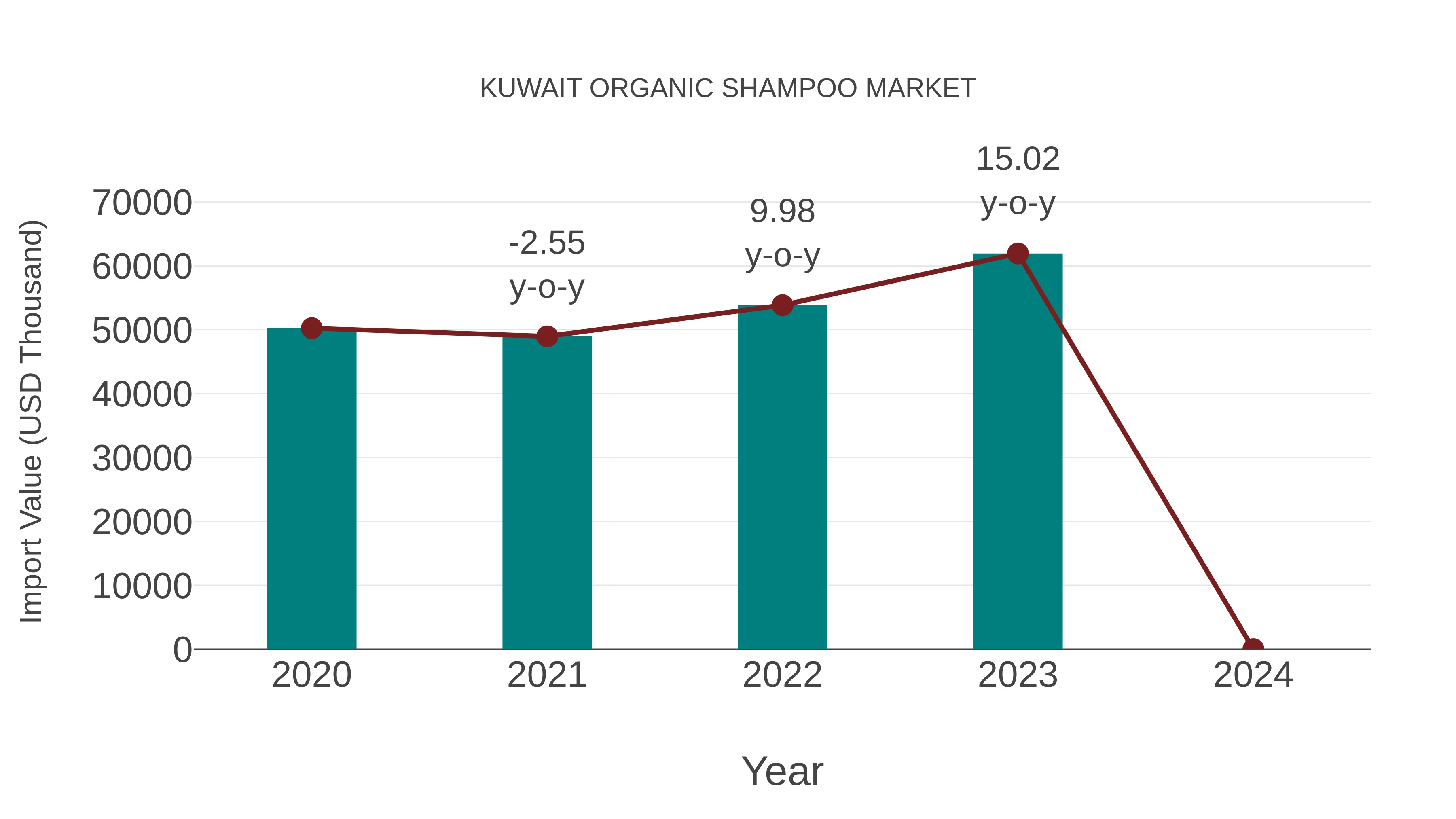
In the Kuwait organic shampoo market, the import trend showed a consistent growth trajectory from 2020 to 2024, with a Compound Annual Growth Rate (CAGR) of 7.22%. This positive import momentum indicates a sustained demand shift towards organic hair care products, contributing to market stability.
Kuwait Organic Shampoo Market Overview
The Kuwait Organic Shampoo Market is experiencing steady growth driven by increasing consumer awareness about the benefits of organic products and a growing emphasis on personal care and grooming. Consumers in Kuwait are increasingly seeking natural and chemical-free alternatives for hair care products, leading to a surge in demand for organic shampoos. Key market players are responding to this trend by expanding their organic shampoo product lines and investing in marketing efforts to educate consumers about the advantages of using organic products. The market is characterized by intense competition with both local and international brands vying for market share. As the trend towards eco-friendly and sustainable products continues to rise, the Kuwait Organic Shampoo Market is poised for further growth in the coming years.
Kuwait Organic Shampoo Market Trends and Opportunities
The Kuwait organic shampoo market is experiencing a growing demand for natural and sustainable hair care products as consumers are increasingly becoming conscious of the ingredients they use. Key trends in the market include the rising popularity of organic ingredients such as argan oil, coconut oil, and aloe vera, as well as the preference for products free from harmful chemicals like sulfates and parabens. There is also a shift towards cruelty-free and vegan formulations. Opportunities in the market lie in catering to specific hair care needs such as anti-dandruff, color protection, and hair growth, as well as expanding distribution channels through online platforms and specialty stores. Collaborations with influencers and celebrities to promote organic shampoo brands can also help in reaching a wider audience in Kuwait.
Kuwait Organic Shampoo Market Challenges
In the Kuwait Organic Shampoo Market, some challenges include low consumer awareness and understanding of the benefits of organic products, limited availability of organic shampoo options compared to traditional products, and higher price points which may deter price-sensitive consumers. Additionally, there may be challenges in terms of distribution and retail channels for organic shampoos, as well as competition from well-established conventional shampoo brands. Building trust and credibility among consumers in a market that may be more accustomed to mainstream hair care products can also be a hurdle for organic shampoo brands looking to penetrate the Kuwaiti market. Overall, overcoming these challenges will require targeted marketing efforts, education campaigns, strategic partnerships, and a strong value proposition to differentiate organic shampoo offerings in Kuwait.
Kuwait Organic Shampoo Market Drivers
The Kuwait Organic Shampoo Market is primarily driven by the increasing consumer awareness regarding the harmful effects of chemicals in traditional hair care products. Consumers are becoming more conscious of their health and are seeking natural and organic alternatives for their hair care routines. The growing trend towards sustainable and eco-friendly products is also fueling the demand for organic shampoos in Kuwait. Additionally, the rise in disposable income levels and changing lifestyle preferences are encouraging consumers to opt for premium organic hair care products. The availability of a wide range of organic shampoo options, including different formulations and fragrances, is further contributing to the market growth as consumers look for products that cater to their specific hair care needs.
Kuwait Organic Shampoo Market Government Policies
In Kuwait, the government has implemented policies to promote organic products, including organic shampoos. The Ministry of Commerce and Industry has established regulations and standards to ensure the quality and safety of organic products in the market. These regulations require organic shampoos to meet specific criteria in terms of ingredients, production processes, and labeling. Additionally, the government provides support to local organic producers through initiatives such as financial incentives, training programs, and marketing assistance. By encouraging the consumption of organic products like shampoos, the government aims to promote environmental sustainability, improve public health, and boost the growth of the organic sector in Kuwait.
Kuwait Organic Shampoo Market Future Outlook
The Kuwait organic shampoo market is poised for significant growth in the coming years as consumers increasingly prioritize natural and sustainable personal care products. Factors such as rising awareness about the harmful effects of chemicals in traditional shampoos, growing demand for organic and eco-friendly alternatives, and the presence of key players offering innovative organic hair care solutions are driving this upward trajectory. Additionally, changing consumer preferences towards clean beauty products and a shift towards healthier lifestyles are expected to further boost the demand for organic shampoos in Kuwait. With a focus on premium quality ingredients, environmentally friendly packaging, and effective marketing strategies, the Kuwait organic shampoo market is likely to witness steady expansion and offer lucrative opportunities for both established brands and new entrants in the industry.
Key Highlights of the Report:
- Kuwait Organic Shampoo Market Outlook
- Market Size of Kuwait Organic Shampoo Market, 2025
- Forecast of Kuwait Organic Shampoo Market, 2032
- Historical Data and Forecast of Kuwait Organic Shampoo Revenues & Volume for the Period 2022 - 2032F
- Kuwait Organic Shampoo Market Trend Evolution
- Kuwait Organic Shampoo Market Drivers and Challenges
- Kuwait Organic Shampoo Price Trends
- Kuwait Organic Shampoo Porter's Five Forces
- Kuwait Organic Shampoo Industry Life Cycle
- Historical Data and Forecast of Kuwait Organic Shampoo Market Revenues & Volume By Distribution Channel for the Period 2022 - 2032F
- Historical Data and Forecast of Kuwait Organic Shampoo Market Revenues & Volume By Supermarkets/hypermarkets for the Period 2022 - 2032F
- Historical Data and Forecast of Kuwait Organic Shampoo Market Revenues & Volume By Specialty stores for the Period 2022 - 2032F
- Historical Data and Forecast of Kuwait Organic Shampoo Market Revenues & Volume By Online for the Period 2022 - 2032F
- Kuwait Organic Shampoo Import Export Trade Statistics
- Market Opportunity Assessment By Distribution Channel
- Kuwait Organic Shampoo Top Companies Market Share
- Kuwait Organic Shampoo Competitive Benchmarking By Technical and Operational Parameters
- Kuwait Organic Shampoo Company Profiles
- Kuwait Organic Shampoo Key Strategic Recommendations






































