Latin America Plant Extracts Market Size, Share & Growth Rate
The Latin America Plant Extracts Market was estimated at USD 432 Million in 2025 and is projected to reach USD 599 Million by 2032, growing at a CAGR of 4.8% from 2026 to 2032. This growth trajectory is primarily driven by the increasing consumer shift towards phytomedicines and homeopathic alternatives, as individuals seek natural remedies over conventional allopathic treatments. Furthermore, rising research and development initiatives aimed at enhancing product efficacy and safety are expected to significantly contribute to market expansion in the coming years.
Latin America Plant Extracts Market Year-wise Growth Rate and Key Drivers
This graph highlights how the Latin America Plant Extracts Market has steadily grown over the years, supported by major growth factors.
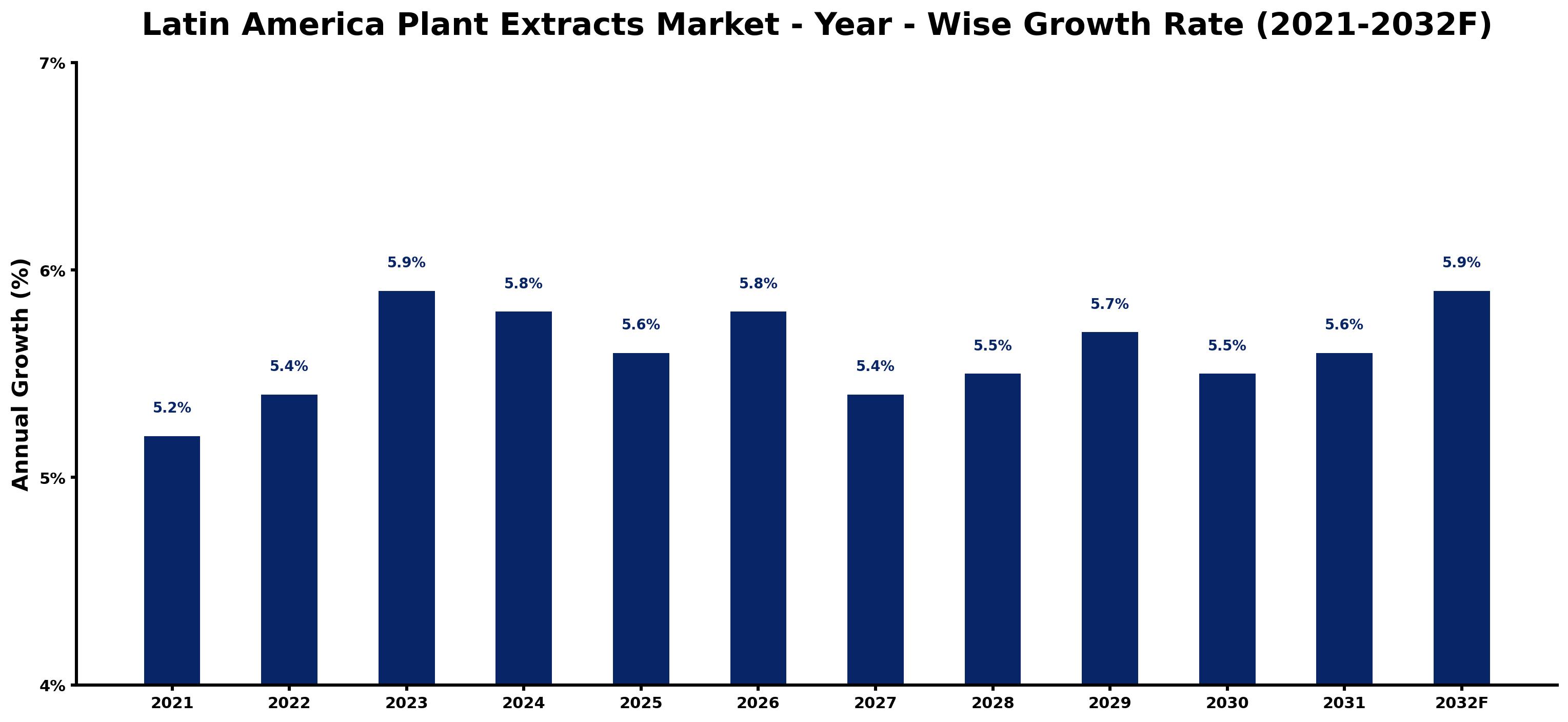
The table below presents the year‑wise growth rates along with the key drivers influencing the market
| Year | Growth Rate | Major Drivers |
| 2021 | 5.2% | Increasing adoption of advanced technologies |
| 2022 | 5.4% | Expansion of manufacturing activities |
| 2023 | 5.9% | Rapid growth in telecom and data center sectors |
| 2024 | 5.8% | Rapid growth in telecom and data center sectors |
| 2025 | 5.6% | Expansion of commercial construction activities |
| 2026 | 5.8% | Growing renewable energy integration projects |
| 2027 | 5.4% | Increasing adoption of advanced technologies |
| 2028 | 5.5% | Increasing industrial automation investments |
| 2029 | 5.7% | Government infrastructure modernization initiatives |
| 2030 | 5.5% | Expansion of transportation and logistics networks |
| 2031 | 5.6% | Growing urbanization and commercial development |
| 2032 | 5.9% | Growing renewable energy integration projects |
Note - Market size estimations and growth projections presented in this report are based on 6Wresearch’s advanced forecasting approach, validated with industry datasets as of June 2026.
Latin America Plant Extracts Market Synopsis
The Latin America Plant Extracts Market is currently experiencing a notable surge in demand, largely attributed to growing health consciousness among consumers. This heightened awareness is pushing individuals toward the adoption of natural products, with significant interest in nutraceuticals and dietary supplements derived from plant sources.
As a result, manufacturers are increasingly innovating to meet this rising demand, focusing on high-quality plant extracts that serve various applications in pharmaceuticals, cosmetics, and food industries. This innovation wave, combined with expanding consumer preferences for clean-label products, underscores the market's positive outlook.
Latin America Plant Extracts Market Key Takeaways
- Significant growth is anticipated as the trend toward natural health products continues to gain traction.
- The increased demand for nutraceuticals is fostering investment in R&D activities within the sector.
- Consumer preferences are shifting towards plant-based ingredients, particularly in cosmetics and dietary products.
- Value fluctuations in raw materials may pose challenges for market stability.
- Government policies promoting herbal medicine and plant extracts are likely to enhance market prospects.
Evaluation of Restraints in Latin America Plant Extracts Market
Despite the promising growth outlook, the Latin America Plant Extracts Market faces some tangible constraints. One major issue is the price volatility of raw materials, which can hinder consistent production and pricing strategies. The presence of informal players within the market further complicates the competitive landscape, leading to a lack of standardization and quality assurance. Moreover, the insufficient supply chain flexibility can delay market responsiveness to shifting consumer demands, limiting potential growth in the sector.
Latin America Plant Extracts Market Trends
Several trends are emerging within the Latin America Plant Extracts Market that are shaping its future. The increasing popularity of clean-label products is driving brands to reformulate offerings with natural ingredients, enhancing the appeal among health-conscious consumers. Additionally, the surge in online retailing is making plant extracts more accessible to end-users, further boosting sales. Lastly, the exploration of innovative extraction techniques and sustainable sourcing practices is gaining momentum as stakeholders aim to improve product quality and environmental impact.
Latin America Plant Extracts Market Opportunities
The market is ripe with opportunities for growth and investment. The burgeoning demand for natural ingredients in food and beverages, coupled with a rising inclination for herbal supplements, presents lucrative avenues for manufacturers. Furthermore, the cosmetics sector is increasingly integrating plant extracts, creating potential collaborations for product development. Stakeholders who capitalize on these trends while ensuring quality and sustainability will likely thrive in this evolving landscape.
Government Initiatives in the Latin America Plant Extracts Market
Governments across Latin America are taking initiatives to support the growth of the plant extracts market. These include funding research on herbal medicines, promoting sustainable agricultural practices, and creating favorable regulatory environments for natural products. Additionally, various countries are developing policies that encourage local sourcing of raw materials, enhancing the economic viability of plant extract businesses in the region.
Future Insights of the Latin America Plant Extracts Market
Looking ahead to 2026-2032, the Latin America Plant Extracts Market is expected to continue its positive growth trajectory. As consumers increasingly prioritize health and wellness, the demand for plant-based solutions will likely intensify. Innovations in extraction processes and formulations will play a pivotal role in shaping the product landscape, allowing companies to meet evolving consumer preferences effectively. Moreover, collaboration between stakeholders, including growers, manufacturers, and regulatory bodies, will be crucial in fostering a robust market environment.
Latin America Plant Extracts Market Latest Developments (May 2025 - June 2026)
Recent developments in the Latin America Plant Extracts Market indicate a growing emphasis on innovation and sustainability. Companies are increasingly investing in advanced extraction technologies to enhance product purity and efficacy. Moreover, partnerships between agricultural sectors and biotech firms are becoming more common, aiming to improve the efficiency of sourcing plant materials. Additionally, consumer feedback is increasingly influencing product development, driving brands to tailor their offerings to meet specific health needs.
Latin America Plant Extracts Market - Key Attractiveness of the Report
- 10 Years of Market Numbers
- Historical Data Starting from 2022 to 2025
- Base Year: 2025
- Forecast Data until 2032
- Key Performance Indicators Impacting the Market
- Major Upcoming Developments and Projects






































