Latvia Energy Bar Market Top 5 Importing Countries and Market Competition (HHI) Analysis
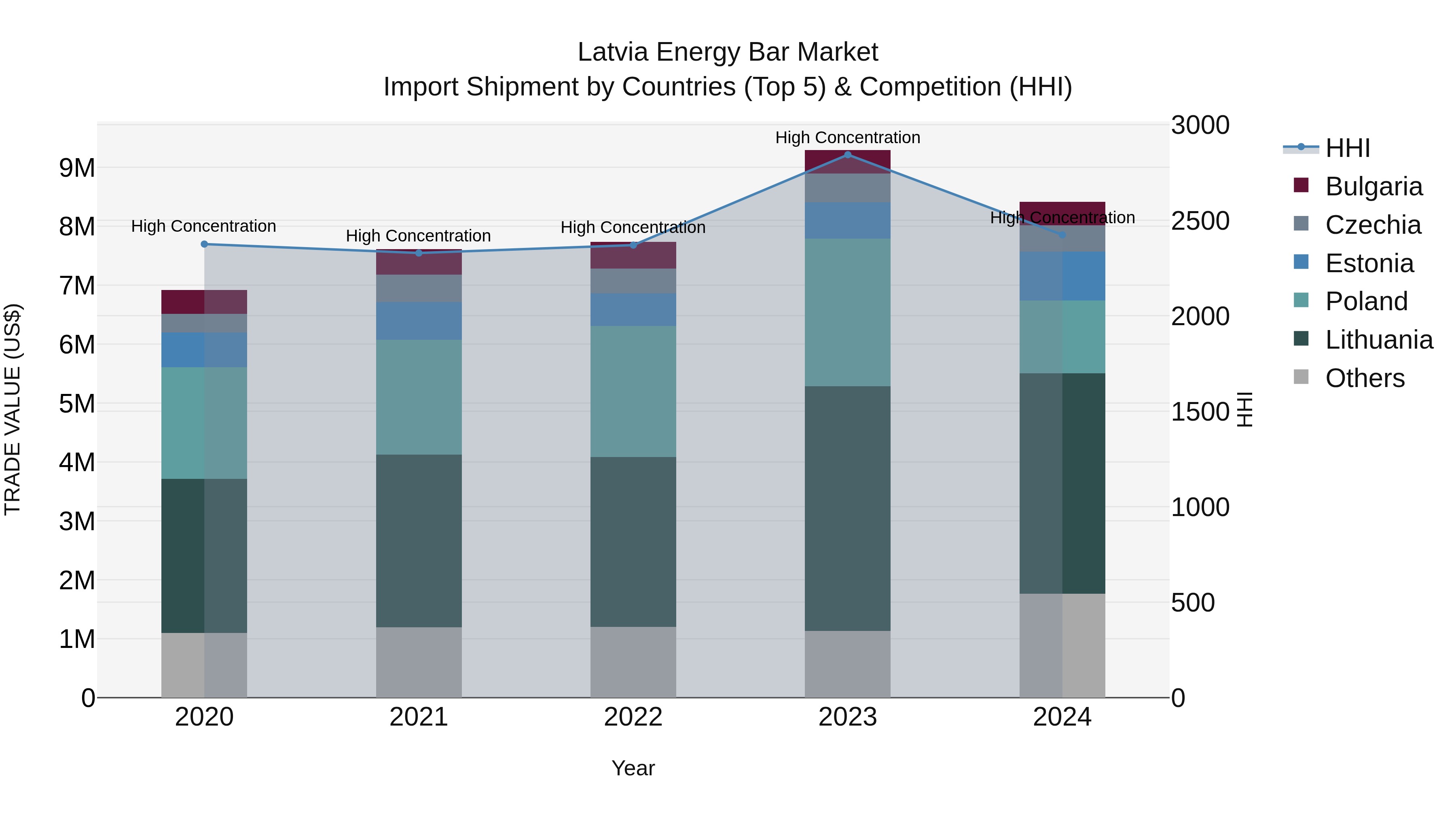
In 2024, Latvia continued to see significant energy bar import shipments from neighboring countries such as Lithuania, Poland, and Estonia, as well as from Spain and Czechia. Despite a slight decrease in growth rate from 2023 to 2024, the industry maintained a high level of market concentration, indicating strong competition among key exporters. With a steady compound annual growth rate of 5.01% from 2020 to 2024, the energy bar market in Latvia remains promising for both domestic consumption and international trade.
Latvia Energy Bar Market Overview
The Latvia Energy Bar Market is experiencing steady growth driven by increasing consumer awareness of the importance of healthy eating habits and the convenience of on-the-go snacks. Health-conscious consumers are gravitating towards energy bars as a convenient and nutritious option for boosting energy levels throughout the day. The market is characterized by a variety of flavors, ingredients, and packaging options to cater to different consumer preferences. Key players in the market are focusing on product innovation, such as introducing organic, gluten-free, and protein-rich energy bars to meet the evolving demands of health-conscious consumers. With the rising trend of fitness and active lifestyles in Latvia, the energy bar market is expected to continue its growth trajectory in the coming years.
Latvia Energy Bar Market Trends and Opportunities
The Latvia Energy Bar Market is experiencing growth driven by the increasing health-conscious consumer base seeking convenient and nutritious on-the-go snacks. Key trends in the market include the rising demand for organic and natural ingredients, gluten-free and plant-based options, as well as innovative flavors and functional ingredients like adaptogens and superfoods. Opportunities lie in catering to specific dietary requirements such as keto, vegan, and paleo diets, as well as expanding distribution channels to reach a broader audience through online platforms and partnerships with fitness centers or health stores. With the growing emphasis on sustainability and ethical sourcing, brands that prioritize transparency in their sourcing and production processes are likely to resonate well with consumers in the Latvia Energy Bar Market.
Latvia Energy Bar Market Challenges
In the Latvia Energy Bar Market, several challenges are faced, including intense competition from established brands, limited consumer awareness and understanding of the benefits of energy bars, and the high cost of production and distribution. With a relatively small market size compared to other countries, attracting and retaining customers becomes a challenge. Additionally, the lack of clear regulations and standards specific to energy bars in Latvia can lead to confusion among consumers regarding product quality and ingredients. Furthermore, fluctuations in raw material prices and changing consumer preferences towards healthier and more natural snack options pose a constant challenge for energy bar manufacturers in Latvia. Overcoming these obstacles requires innovative marketing strategies, product differentiation, and a strong focus on quality and authenticity to gain a competitive edge in the market.
Latvia Energy Bar Market Drivers
The Latvia Energy Bar Market is primarily driven by the increasing health consciousness among consumers, leading to a growing demand for convenient and nutritious on-the-go snack options. With more people adopting active lifestyles and seeking products that offer sustained energy levels, energy bars have gained popularity as a convenient and portable source of nutrition. Additionally, the rising awareness about the benefits of protein-rich and natural ingredient-based snacks has further fueled the demand for energy bars in Latvia. The market is also influenced by the expanding fitness and sports industry in the country, as athletes and fitness enthusiasts often use energy bars as a quick and efficient way to refuel and meet their nutritional requirements. Overall, the trend towards healthier eating habits and the convenience factor associated with energy bars are key drivers shaping the market in Latvia.
Latvia Energy Bar Market Government Policy
Government policies related to the Latvia Energy Bar Market focus on promoting healthy eating habits and consumer awareness. The government has implemented regulations to ensure that energy bars meet specific nutritional standards, including limits on sugar content and the inclusion of natural ingredients. Additionally, there are guidelines in place to ensure accurate labeling of energy bars to provide consumers with transparent information about the ingredients and nutritional value. The government also encourages local production of energy bars to support domestic manufacturers and reduce reliance on imported products. Overall, the government`s policies aim to create a competitive and sustainable energy bar market in Latvia while prioritizing consumer health and well-being.
Latvia Energy Bar Market Future Outlook
The future outlook for the Latvia Energy Bar Market appears promising, driven by the increasing health consciousness among consumers seeking convenient and nutritious snack options. With a growing emphasis on active lifestyles and the demand for on-the-go energy boosts, energy bars are likely to gain popularity in the Latvian market. The trend towards clean label products and organic ingredients is expected to influence purchasing decisions, leading to a shift towards healthier and more natural energy bar options. Additionally, the rise of e-commerce platforms and online retail channels is projected to expand the market reach and accessibility of energy bars to a wider consumer base in Latvia. Overall, the Latvia Energy Bar Market is anticipated to experience steady growth in the coming years, presenting opportunities for manufacturers to innovate and cater to evolving consumer preferences.
Key Highlights of the Report:
- Latvia Energy Bar Market Outlook
- Market Size of Latvia Energy Bar Market, 2024
- Forecast of Latvia Energy Bar Market, 2031
- Historical Data and Forecast of Latvia Energy Bar Revenues & Volume for the Period 2021- 2031
- Latvia Energy Bar Market Trend Evolution
- Latvia Energy Bar Market Drivers and Challenges
- Latvia Energy Bar Price Trends
- Latvia Energy Bar Porter's Five Forces
- Latvia Energy Bar Industry Life Cycle
- Historical Data and Forecast of Latvia Energy Bar Market Revenues & Volume By Distribution Channel for the Period 2021- 2031
- Historical Data and Forecast of Latvia Energy Bar Market Revenues & Volume By Supermarkets/Hypermarkets for the Period 2021- 2031
- Historical Data and Forecast of Latvia Energy Bar Market Revenues & Volume By Convenience Stores for the Period 2021- 2031
- Historical Data and Forecast of Latvia Energy Bar Market Revenues & Volume By Specialty Stores for the Period 2021- 2031
- Historical Data and Forecast of Latvia Energy Bar Market Revenues & Volume By Online Retail Stores for the Period 2021- 2031
- Historical Data and Forecast of Latvia Energy Bar Market Revenues & Volume By Other for the Period 2021- 2031
- Latvia Energy Bar Import Export Trade Statistics
- Market Opportunity Assessment By Distribution Channel
- Latvia Energy Bar Top Companies Market Share
- Latvia Energy Bar Competitive Benchmarking By Technical and Operational Parameters
- Latvia Energy Bar Company Profiles
- Latvia Energy Bar Key Strategic Recommendations






































