Lithuania Artificial Flowers Market Size (2020-2030)
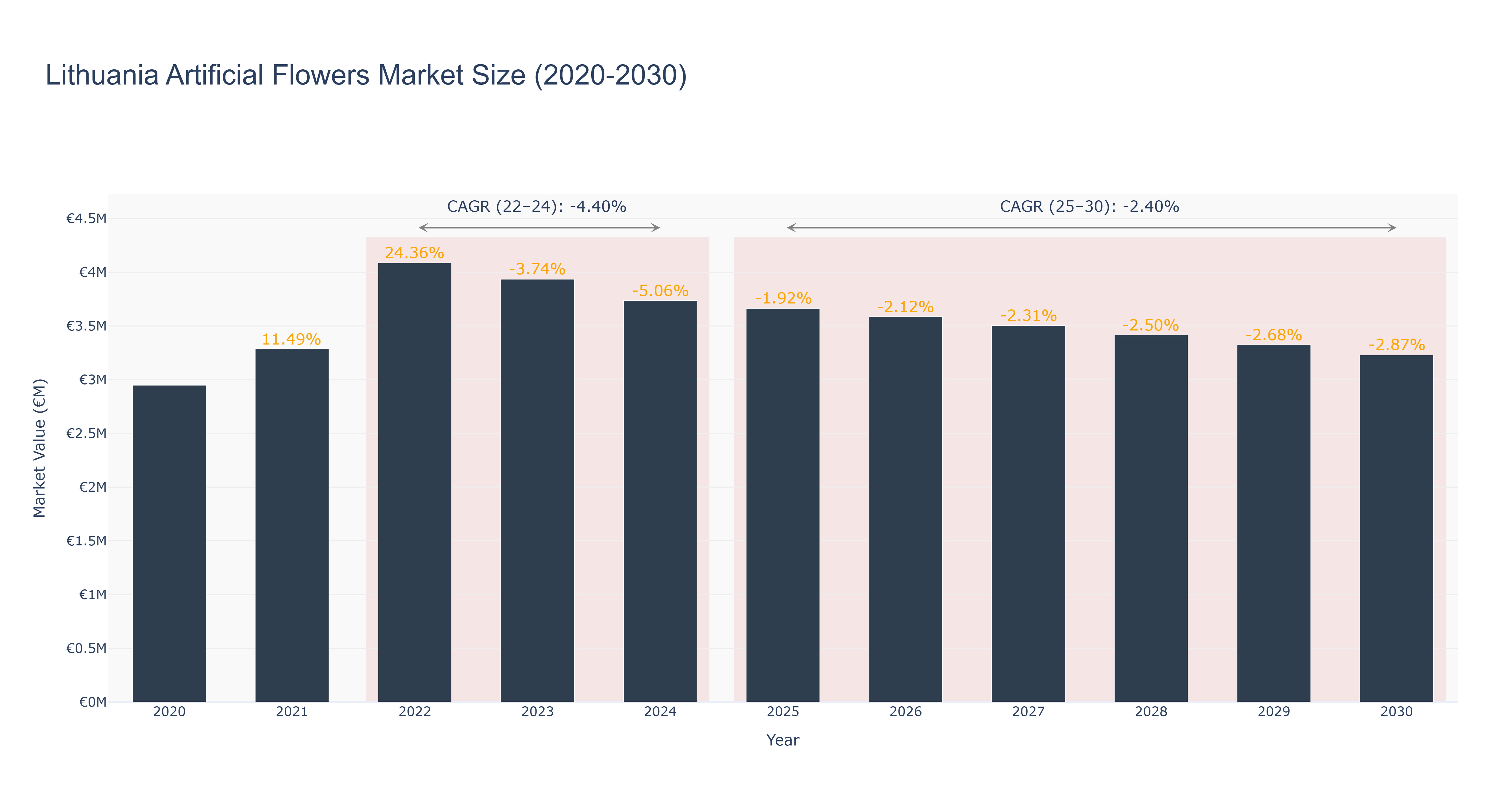
The Lithuania Artificial Flowers Market experienced a peak market size of €4.09 million in 2022. From 2020 to 2024, the market size decreased steadily from €2.95 million to €3.74 million. The forecasted market size from 2025 to 2030 is expected to continue this downward trend, reaching €3.23 million in 2030. The CAGR for the period 2022-24 was -4.40%, while for 2025-30, it is projected to be -2.40%. The decline in market size can be attributed to changing consumer preferences towards more sustainable and eco-friendly options, impacting the artificial flowers industry. Looking ahead, Lithuania is set to introduce government initiatives promoting local artisans and sustainable practices in the artificial flowers sector, aiming to revitalize market interest and drive growth in the coming years.
Lithuania Artificial Flowers Market: Production & Trade Performance (2019-2025)
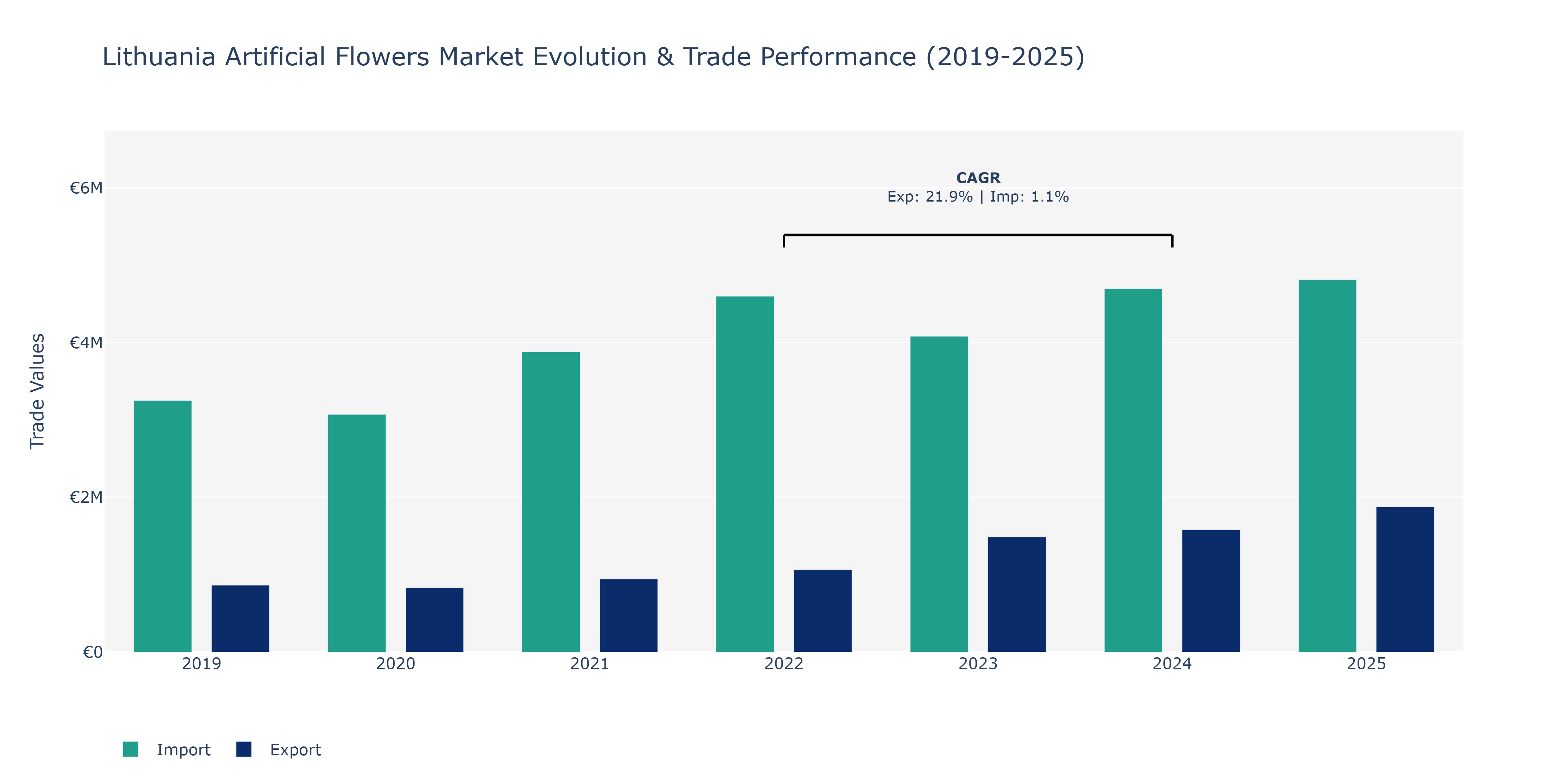
Between 2019 and 2025, the Lithuania Artificial Flowers Market saw varying trends in exports and imports. Exports experienced a steady increase from €864.58 thousand in 2019 to €1.88 million in 2025, indicating a consistent growth trajectory. On the other hand, imports fluctuated, reaching a peak of €4.7 million in 2024 after a slight decline in 2023. This surge in imports in 2024 could be attributed to increased demand for raw materials or finished artificial flower products not readily available domestically, leading to a higher reliance on imports. In contrast, the growth in exports may be due to improvements in product quality, expanded market reach, or favorable trade agreements, demonstrating Lithuania's competitiveness in the artificial flowers sector. These trends align with the global artificial flowers market growth, driven by changing consumer preferences, technological advancements, and expanding applications in the home decor and gifting industries.
Key Highlights of the Report:
- Lithuania Artificial Flowers Market Outlook
- Market Size of Lithuania Artificial Flowers Market, 2024
- Forecast of Lithuania Artificial Flowers Market, 2031
- Historical Data and Forecast of Lithuania Artificial Flowers Revenues & Volume for the Period 2021-2031
- Lithuania Artificial Flowers Market Trend Evolution
- Lithuania Artificial Flowers Market Drivers and Challenges
- Lithuania Artificial Flowers Price Trends
- Lithuania Artificial Flowers Porter`s Five Forces
- Lithuania Artificial Flowers Industry Life Cycle
- Historical Data and Forecast of Lithuania Artificial Flowers Market Revenues & Volume By Material Type for the Period 2021-2031
- Historical Data and Forecast of Lithuania Artificial Flowers Market Revenues & Volume By Clay & Porcelain for the Period 2021-2031
- Historical Data and Forecast of Lithuania Artificial Flowers Market Revenues & Volume By Cotton & Silk for the Period 2021-2031
- Historical Data and Forecast of Lithuania Artificial Flowers Market Revenues & Volume By Leather & Nylon for the Period 2021-2031
- Historical Data and Forecast of Lithuania Artificial Flowers Market Revenues & Volume By Paper & Wax for the Period 2021-2031
- Historical Data and Forecast of Lithuania Artificial Flowers Market Revenues & Volume By Plastic & Polyester for the Period 2021-2031
- Historical Data and Forecast of Lithuania Artificial Flowers Market Revenues & Volume By Application for the Period 2021-2031
- Historical Data and Forecast of Lithuania Artificial Flowers Market Revenues & Volume By Commercial for the Period 2021-2031
- Historical Data and Forecast of Lithuania Artificial Flowers Market Revenues & Volume By Residential for the Period 2021-2031
- Lithuania Artificial Flowers Import Export Trade Statistics
- Market Opportunity Assessment By Material Type
- Market Opportunity Assessment By Application
- Lithuania Artificial Flowers Top Companies Market Share
- Lithuania Artificial Flowers Competitive Benchmarking By Technical and Operational Parameters
- Lithuania Artificial Flowers Company Profiles
- Lithuania Artificial Flowers Key Strategic Recommendations






































