Lithuania Microwave Oven Market Size (2020-2030)
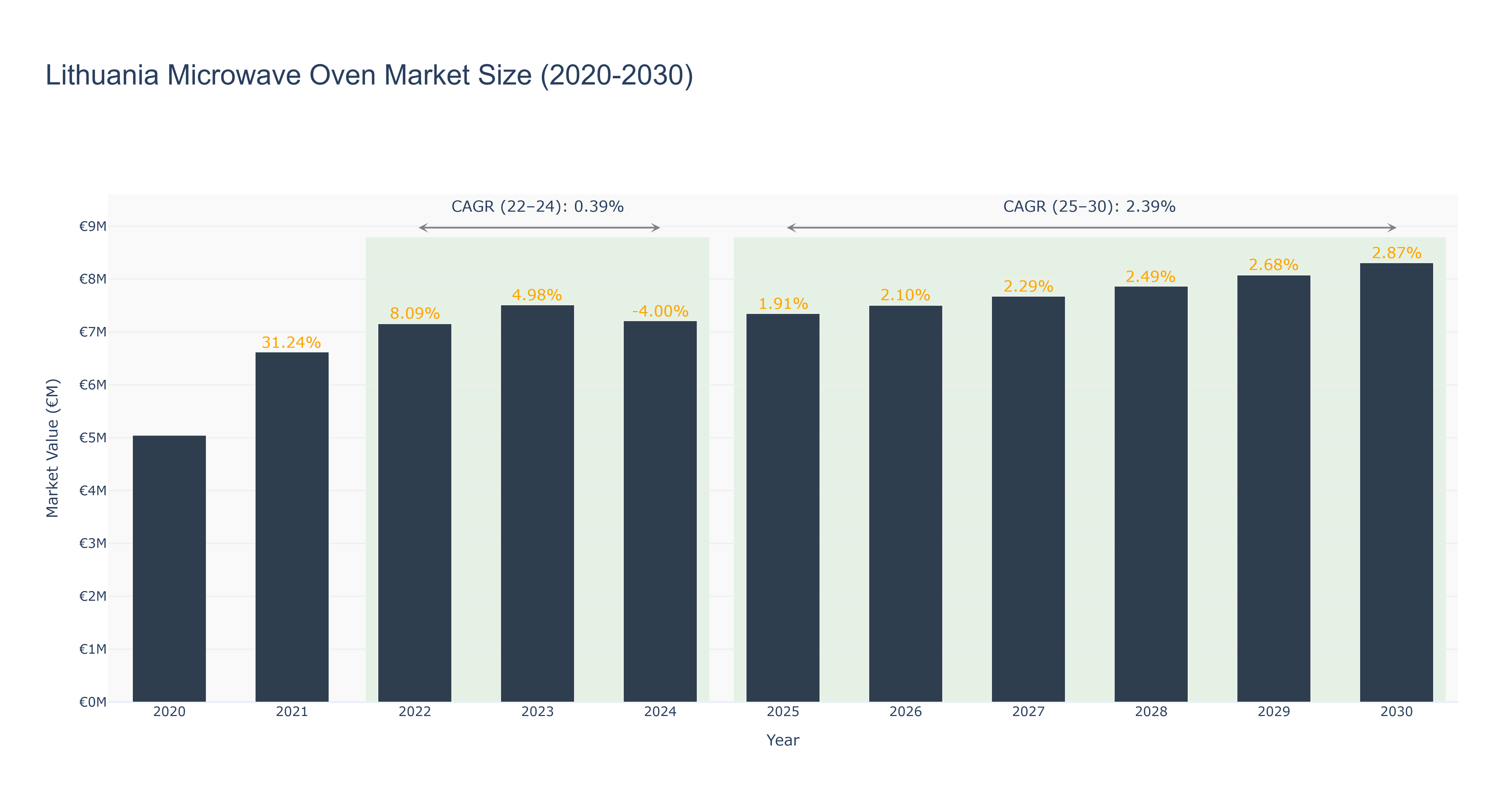
The Lithuania Microwave Oven Market experienced steady growth from 2020 to 2024, reaching a peak market size of €7.51 million in 2023. However, a slight decline was observed in 2024 with a market size of €7.21 million. Looking ahead, the market is forecasted to continue its growth trajectory, with an estimated market size of €8.31 million in 2030. The CAGR for the period 2022-24 is 0.39%, while the CAGR for 2025-30 is projected at 2.39%. The market's growth can be attributed to increasing consumer demand for convenient cooking solutions and technological advancements in microwave oven features. Recent developments in Lithuania's kitchen appliance sector indicate a focus on energy-efficient appliances and smart home integration, which are expected to drive further market expansion in the coming years.
Lithuania Microwave Oven Market: Production & Trade Performance (2019-2025)
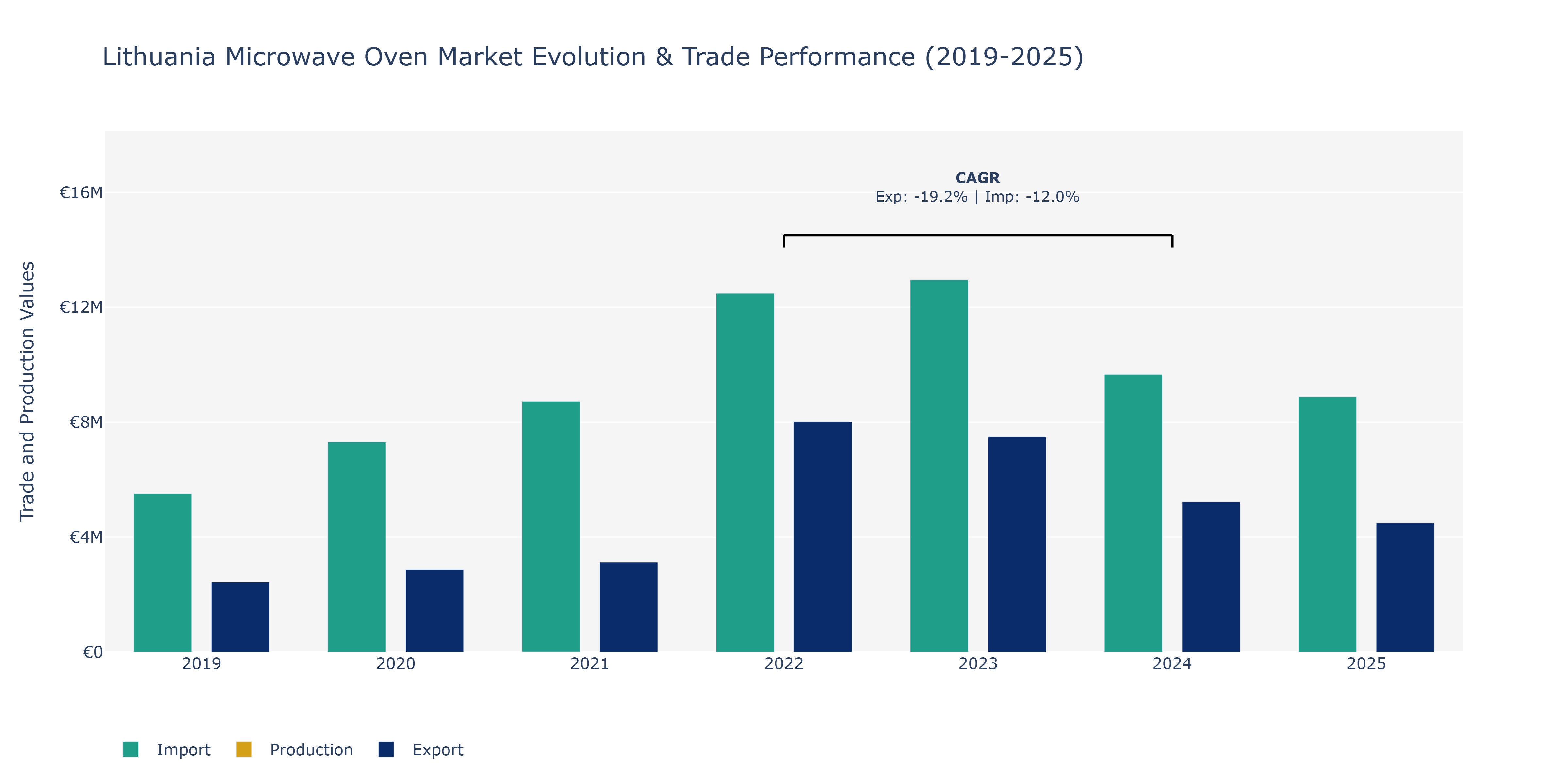
In the Lithuania Microwave Oven Market, from 2019 to 2025, exports saw fluctuations, reaching a peak in 2022 at €8.02 million and subsequently declining in 2023 and 2024. Imports followed a similar trend, peaking in 2022 at €12.49 million and then slightly decreasing in 2023 and 2024. Production remained relatively stable, with a notable increase in 2021 to 2000 units. The shifts in exports and imports can be attributed to changing consumer preferences, global economic conditions affecting trade patterns, and technological advancements in microwave oven manufacturing. The surge in 2022 could be linked to increased demand, possibly due to new product launches or marketing strategies. The subsequent dips might reflect market saturation or regulatory changes impacting trade flows. To sustain growth, market players may need to focus on innovation, pricing strategies, and market diversification to navigate the evolving market landscape.
Key Highlights of the Report:
- Lithuania Microwave Oven Market Outlook
- Market Size of Lithuania Microwave Oven Market, 2025
- Forecast of Lithuania Microwave Oven Market, 2032
- Historical Data and Forecast of Lithuania Microwave Oven Revenues & Volume for the Period 2022 - 2032F
- Lithuania Microwave Oven Market Trend Evolution
- Lithuania Microwave Oven Market Drivers and Challenges
- Lithuania Microwave Oven Price Trends
- Lithuania Microwave Oven Porter`s Five Forces
- Lithuania Microwave Oven Industry Life Cycle
- Historical Data and Forecast of Lithuania Microwave Oven Market Revenues & Volume By Structure for the Period 2022 - 2032F
- Historical Data and Forecast of Lithuania Microwave Oven Market Revenues & Volume By Built In for the Period 2022 - 2032F
- Historical Data and Forecast of Lithuania Microwave Oven Market Revenues & Volume By Counter Top for the Period 2022 - 2032F
- Historical Data and Forecast of Lithuania Microwave Oven Market Revenues & Volume By Type for the Period 2022 - 2032F
- Historical Data and Forecast of Lithuania Microwave Oven Market Revenues & Volume By Convection for the Period 2022 - 2032F
- Historical Data and Forecast of Lithuania Microwave Oven Market Revenues & Volume By Grill for the Period 2022 - 2032F
- Historical Data and Forecast of Lithuania Microwave Oven Market Revenues & Volume By Solo for the Period 2022 - 2032F
- Historical Data and Forecast of Lithuania Microwave Oven Market Revenues & Volume By Production for the Period 2022 - 2032F
- Historical Data and Forecast of Lithuania Microwave Oven Market Revenues & Volume By Commerical for the Period 2022 - 2032F
- Historical Data and Forecast of Lithuania Microwave Oven Market Revenues & Volume By Household for the Period 2022 - 2032F
- Lithuania Microwave Oven Import Export Trade Statistics
- Market Opportunity Assessment By Structure
- Market Opportunity Assessment By Type
- Market Opportunity Assessment By Production
- Lithuania Microwave Oven Top Companies Market Share
- Lithuania Microwave Oven Competitive Benchmarking By Technical and Operational Parameters
- Lithuania Microwave Oven Company Profiles
- Lithuania Microwave Oven Key Strategic Recommendations






































