Lithuania Natural Gas Generator Market Size (2020-2030)
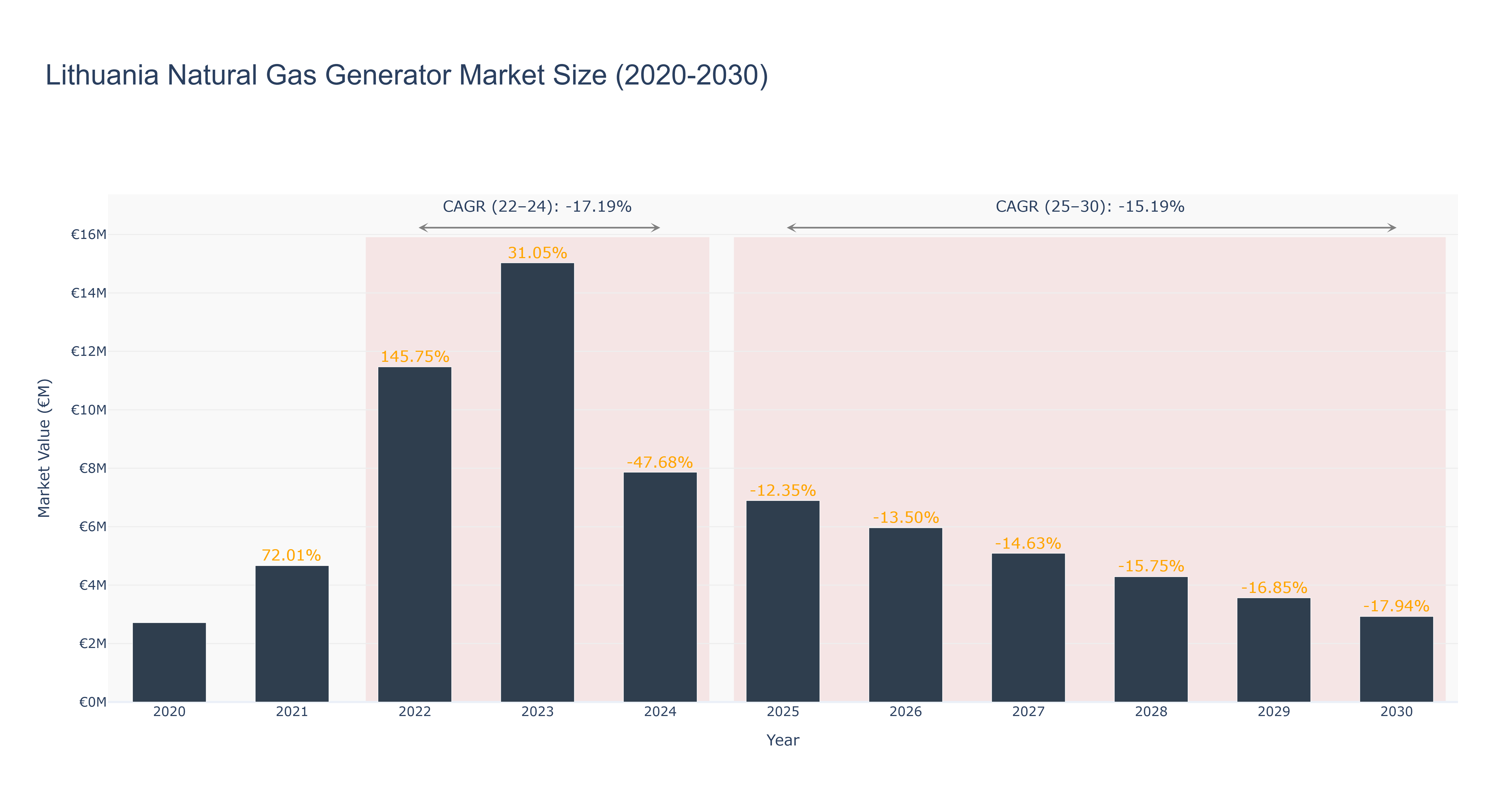
The Lithuania Natural Gas Generator Market experienced a peak size of €15.03 million in 2023, with a notable growth rate of 31.05%. However, the market faced a significant decline post-2024, reaching €5.09 million in 2027 due to a CAGR of -17.19% from 2022-2024. The forecasted market size from 2025 to 2030 shows a continued downward trend with a CAGR of -15.19% from 2025-2030. The downturn can be attributed to various factors such as regulatory changes, technological advancements, and shifts in consumer preferences towards renewable energy sources. Looking ahead, Lithuania is focusing on enhancing its renewable energy sector to reduce dependence on natural gas, with upcoming projects aimed at increasing the adoption of solar and wind energy solutions in the market. Industry drivers for the Lithuania Natural Gas Generator Market include government policies promoting renewable energy, increasing environmental concerns, and advancements in energy storage technologies. Future developments in Lithuania's energy sector include the expansion of solar and wind energy projects, investment in grid modernization, and the promotion of energy efficiency measures to drive sustainable growth in the market.
Lithuania Natural Gas Generator Market: Production & Trade Performance (2019-2025)
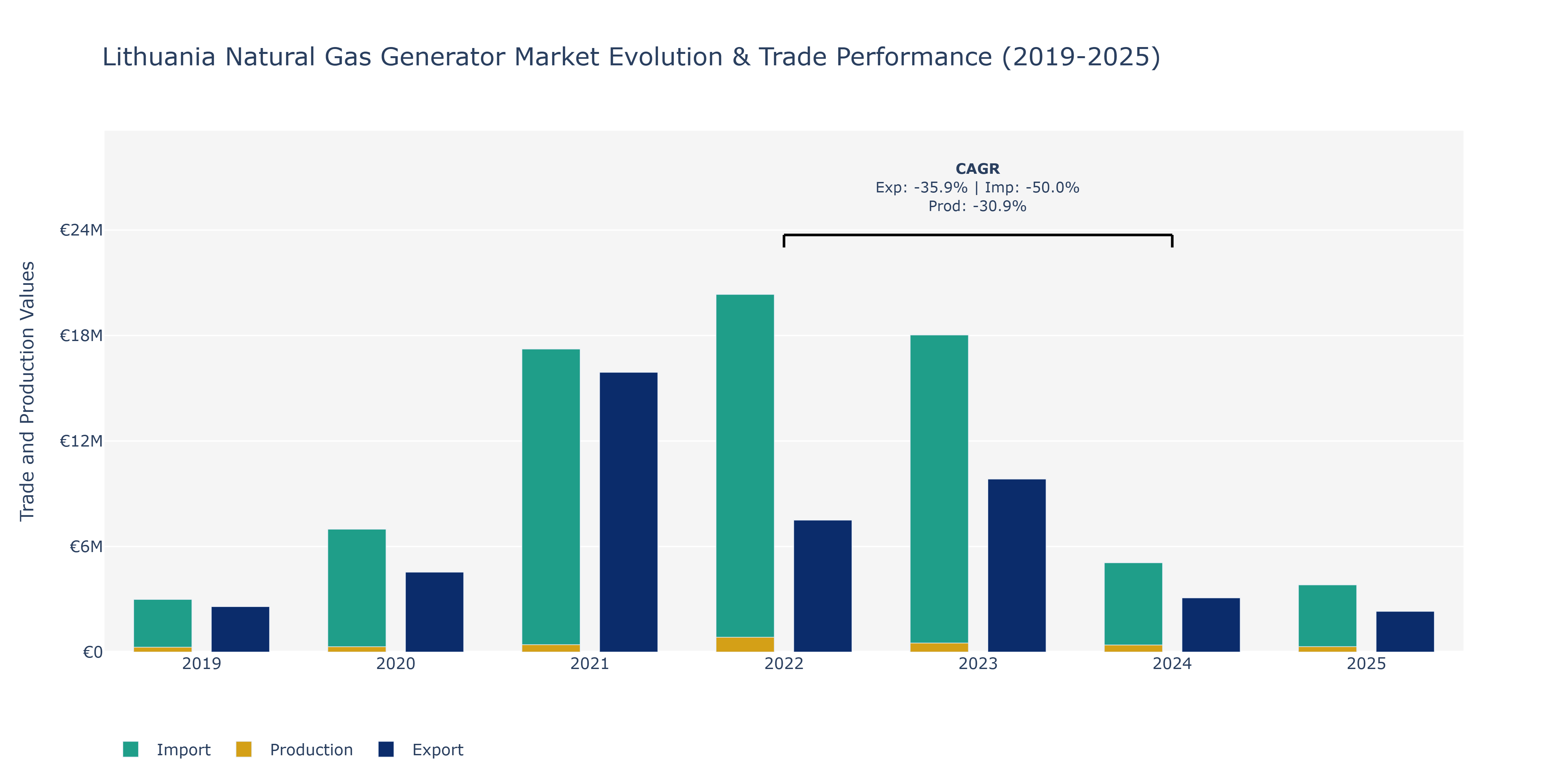
Between 2019 and 2025, Lithuania's Natural Gas Generator Market experienced notable fluctuations in exports, imports, and production. Exports surged from €2.58 million in 2019 to a peak of €15.91 million in 2021 before declining to €2.31 million in 2025. This rollercoaster trend can be attributed to various factors, such as shifts in global demand, geopolitical influences, and pricing dynamics impacting the market competitiveness. Imports followed a similar pattern, reaching €17.23 million in 2021, then dropping to €3.82 million in 2025. Production levels also peaked in 2021 at €420 million before decreasing to €305.36 million in 2025. The fluctuating nature of these metrics highlights the market's sensitivity to external factors, such as energy policies, technological advancements, and environmental regulations impacting the natural gas generator industry in Lithuania. To maintain stability and growth, market players may need to adapt strategies to navigate these dynamic market conditions effectively.
Lithuania Natural Gas Generator Market Synopsis
The Lithuania Natural Gas Generator Market is experiencing growth driven by factors such as increasing demand for reliable and sustainable power sources, government incentives promoting the use of natural gas for electricity generation, and the need for backup power solutions in industries and residential areas. The market is witnessing a shift towards cleaner energy options, with natural gas generators being favored for their lower emissions and cost-effectiveness compared to diesel generators. Key players in the market include Cummins Inc., Caterpillar Inc., Generac Power Systems, and Kohler Co., offering a range of natural gas generator products catering to varying power capacity requirements. The market is expected to further expand with advancements in natural gas technology and increasing awareness about environmental sustainability.
Lithuania Natural Gas Generator Market Trends
The Lithuania Natural Gas Generator Market is experiencing steady growth driven by the increasing demand for reliable and environmentally friendly power sources. The transition towards cleaner energy solutions is a key trend, with natural gas generators being favored for their lower emissions compared to diesel generators. The market is also witnessing a rise in the adoption of natural gas generators in various sectors such as manufacturing, healthcare, and telecommunications, further driving the market growth. Opportunities exist for market players to capitalize on the growing demand by offering innovative and efficient natural gas generator solutions tailored to the specific needs of Lithuanian businesses. Additionally, government incentives and regulations promoting the use of clean energy sources present a favorable environment for the expansion of the natural gas generator market in Lithuania.
Lithuania Natural Gas Generator Market Challenges
In the Lithuania Natural Gas Generator Market, several challenges are faced, including regulatory uncertainties, limited infrastructure for natural gas distribution, and competition from other energy sources. The regulatory environment in Lithuania regarding natural gas generation can be unpredictable, leading to uncertainty for market players. Additionally, the country`s infrastructure for natural gas distribution may not be as developed as in other European countries, posing challenges for the widespread adoption of natural gas generators. Furthermore, the market faces competition from alternative energy sources such as renewables, which are gaining traction due to environmental concerns and government incentives. Overall, navigating these challenges requires strategic planning, investment in infrastructure, and adaptation to evolving regulatory frameworks in the Lithuania Natural Gas Generator Market.
Lithuania Natural Gas Generator Market Investment Opportunities
The Lithuania Natural Gas Generator Market is primarily driven by the increasing focus on reducing carbon emissions and transitioning towards cleaner energy sources. Government initiatives promoting the use of natural gas as a cleaner alternative to traditional fuels have also played a significant role in driving the market growth. The reliability, cost-effectiveness, and efficiency of natural gas generators compared to diesel or petrol generators have further fueled their adoption across various industries in Lithuania. Additionally, the growing demand for standby power solutions in sectors such as healthcare, manufacturing, and data centers has contributed to the market expansion. The availability of natural gas infrastructure and the potential for energy savings have made natural gas generators a preferred choice for businesses looking to enhance their sustainability efforts while ensuring reliable power supply.
Lithuania Natural Gas Generator Market Government Polices
In Lithuania, government policies related to the natural gas generator market are focused on promoting energy efficiency, reducing greenhouse gas emissions, and increasing the share of renewable energy sources in the country`s energy mix. The Lithuanian government has introduced various support mechanisms and incentives to encourage the deployment of natural gas generators, including feed-in tariffs, investment grants, and tax benefits. Additionally, Lithuania is part of the European Union`s efforts to transition towards a more sustainable energy system, which includes initiatives to improve the infrastructure for natural gas distribution and promote the use of cleaner fuels. Overall, the government`s policies aim to create a favorable environment for the growth of the natural gas generator market while aligning with the country`s long-term energy goals and commitments to combat climate change.
Lithuania Natural Gas Generator Market Future Outlook
The future outlook for the Lithuania Natural Gas Generator Market appears promising, driven by factors such as increasing focus on clean energy sources, government initiatives promoting the use of natural gas for power generation, and the growing demand for reliable and uninterrupted power supply. The market is expected to witness steady growth as businesses and industries seek efficient and environmentally friendly solutions for their power generation needs. Advancements in natural gas generator technology, such as improved efficiency and lower emissions, are likely to further fuel market expansion. Additionally, the rising awareness about the benefits of natural gas as a cleaner alternative to traditional fossil fuels is anticipated to drive the adoption of natural gas generators in Lithuania in the coming years.
Key Highlights of the Report:
- Lithuania Natural Gas Generator Market Outlook
- Market Size of Lithuania Natural Gas Generator Market, 2024
- Forecast of Lithuania Natural Gas Generator Market, 2031
- Historical Data and Forecast of Lithuania Natural Gas Generator Revenues & Volume for the Period 2021- 2031
- Lithuania Natural Gas Generator Market Trend Evolution
- Lithuania Natural Gas Generator Market Drivers and Challenges
- Lithuania Natural Gas Generator Price Trends
- Lithuania Natural Gas Generator Porter's Five Forces
- Lithuania Natural Gas Generator Industry Life Cycle
- Historical Data and Forecast of Lithuania Natural Gas Generator Market Revenues & Volume By Rating for the Period 2021- 2031
- Historical Data and Forecast of Lithuania Natural Gas Generator Market Revenues & Volume By Low Power Gensets for the Period 2021- 2031
- Historical Data and Forecast of Lithuania Natural Gas Generator Market Revenues & Volume By Medium Power Gensets for the Period 2021- 2031
- Historical Data and Forecast of Lithuania Natural Gas Generator Market Revenues & Volume By High Power Gensets for the Period 2021- 2031
- Historical Data and Forecast of Lithuania Natural Gas Generator Market Revenues & Volume By Application for the Period 2021- 2031
- Historical Data and Forecast of Lithuania Natural Gas Generator Market Revenues & Volume By Industrial for the Period 2021- 2031
- Historical Data and Forecast of Lithuania Natural Gas Generator Market Revenues & Volume By Commercial for the Period 2021- 2031
- Historical Data and Forecast of Lithuania Natural Gas Generator Market Revenues & Volume By Residential for the Period 2021- 2031
- Lithuania Natural Gas Generator Import Export Trade Statistics
- Market Opportunity Assessment By Rating
- Market Opportunity Assessment By Application
- Lithuania Natural Gas Generator Top Companies Market Share
- Lithuania Natural Gas Generator Competitive Benchmarking By Technical and Operational Parameters
- Lithuania Natural Gas Generator Company Profiles
- Lithuania Natural Gas Generator Key Strategic Recommendations






































