Lithuania Retinol Market Top 5 Importing Countries and Market Competition (HHI) Analysis
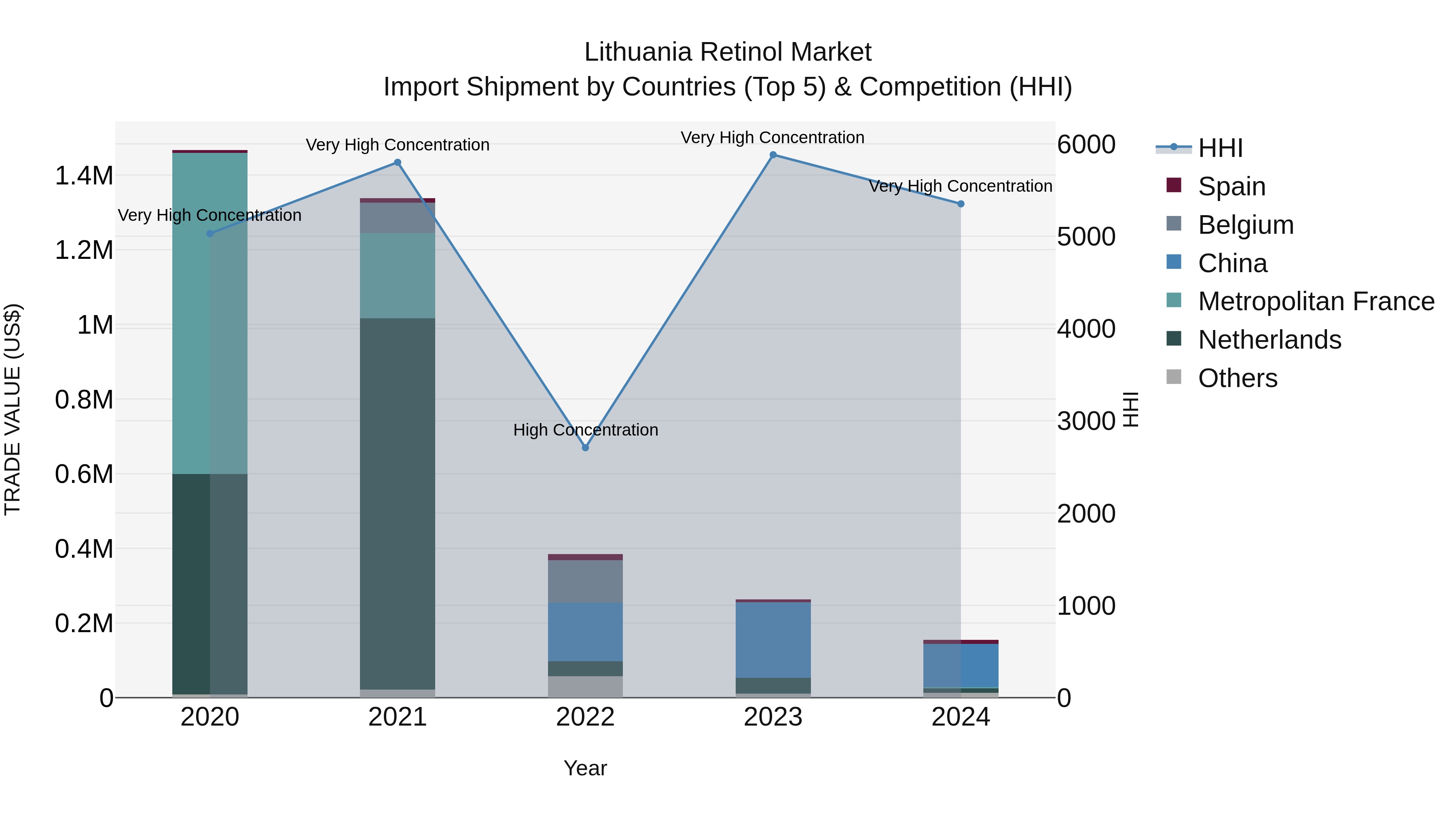
In 2024, Lithuania continued to heavily rely on retinol imports, with top contributing countries being China, Netherlands, Spain, Germany, and Metropolitan France. The high Herfindahl-Hirschman Index (HHI) indicates a concentrated market. Despite a significant compound annual growth rate (CAGR) decline of -43.0% from 2020 to 2024, the year-on-year growth rate in 2024 only slightly improved at -41.18%. This data suggests a challenging market landscape with a need for strategic interventions to stimulate growth and diversify import sources in the retinol sector.
Lithuania Retinol Market Synopsis
The Lithuania Retinol Market is experiencing steady growth, driven by increasing consumer awareness of skincare benefits and a growing demand for anti-aging products. Retinol, a derivative of vitamin A, is widely recognized for its effectiveness in reducing wrinkles, improving skin texture, and promoting cellular turnover. The market is characterized by a diverse range of products such as serums, creams, and oils, catering to different skin types and concerns. Key players in the market are focusing on product innovation, incorporating advanced formulations and packaging to attract customers. With a rising trend towards natural and organic skincare, there is also a growing demand for retinol products that are cruelty-free and environmentally friendly. Overall, the Lithuania Retinol Market is poised for further expansion as consumers increasingly prioritize skincare and invest in high-quality products for long-term skin health.
Lithuania Retinol Market Trends
The Lithuania Retinol Market is experiencing growth due to increasing consumer awareness about the benefits of retinol in skincare products. There is a rising demand for anti-aging and skincare products containing retinol, driving market expansion. Key opportunities in the market lie in the development of innovative retinol formulations targeting specific skincare concerns such as acne, hyperpigmentation, and fine lines. Manufacturers can capitalize on the trend by launching retinol-infused products with clean and sustainable formulations to cater to the growing demand for natural and eco-friendly skincare options. Additionally, partnerships with dermatologists and influencers to promote the efficacy of retinol in skincare routines can further fuel market growth in Lithuania.
Lithuania Retinol Market Challenges
In the Lithuania Retinol Market, one of the main challenges faced is the presence of counterfeit or low-quality products. This poses a threat to consumer health and safety, as well as undermines the reputation of genuine retinol products. Another challenge is the lack of consumer awareness and education about the benefits and proper usage of retinol, leading to misconceptions and hesitation in trying the product. Additionally, pricing pressure from competitors and fluctuating raw material costs can impact profit margins for companies operating in the market. Regulatory hurdles and compliance with product labeling and advertising standards also pose challenges for retinol manufacturers and marketers in Lithuania. Overall, addressing these challenges through quality control measures, consumer education campaigns, and strategic pricing strategies will be essential for the growth and success of the Retinol Market in Lithuania.
Lithuania Retinol Market Investment Opportunities
The Lithuania Retinol Market is primarily driven by increasing awareness about skincare and anti-aging products among consumers. Retinol, a form of Vitamin A, is widely recognized for its effectiveness in reducing wrinkles, fine lines, and improving skin texture. The growing trend of self-care and a desire for youthful appearance are motivating consumers to seek out products containing retinol. Additionally, the availability of a wide range of retinol-based skincare products in the market, including creams, serums, and oils, is further fueling market growth. The influence of social media, beauty influencers, and dermatologists recommending retinol products are also key drivers in the Lithuania Retinol Market. Overall, the increasing demand for skincare solutions and the proven benefits of retinol are driving the market forward.
Lithuania Retinol Market Government Policie
The Lithuanian government does not have specific policies directly targeting the retinol market. However, the country is a member of the European Union, which regulates the cosmetics industry, including the use of retinol in skincare products. The EU has strict regulations on the use of retinol due to its potential side effects, such as skin irritation and increased sensitivity to the sun. Manufacturers in Lithuania must comply with EU regulations when producing and selling retinol-based products. Additionally, the Lithuanian government may have general consumer protection laws in place to ensure the safety and quality of skincare products, which would indirectly impact the retinol market in the country.
Lithuania Retinol Market Future Outlook
The Lithuania Retinol Market is expected to witness steady growth in the coming years due to increasing awareness about skincare and the growing demand for anti-aging products. The market is likely to be driven by the rising disposable income of consumers, as well as the growing popularity of beauty and skincare products in the country. Additionally, the increasing adoption of advanced skincare products by both men and women is expected to further boost the demand for retinol-based products. Manufacturers are also focusing on product innovation and marketing strategies to cater to the evolving preferences of consumers. Overall, the Lithuania Retinol Market is poised for growth, with opportunities for new entrants and existing players to capitalize on the expanding market landscape.
Key Highlights of the Report:
- Lithuania Retinol Market Outlook
- Market Size of Lithuania Retinol Market, 2024
- Forecast of Lithuania Retinol Market, 2031
- Historical Data and Forecast of Lithuania Retinol Revenues & Volume for the Period 2021- 2031
- Lithuania Retinol Market Trend Evolution
- Lithuania Retinol Market Drivers and Challenges
- Lithuania Retinol Price Trends
- Lithuania Retinol Porter's Five Forces
- Lithuania Retinol Industry Life Cycle
- Historical Data and Forecast of Lithuania Retinol Market Revenues & Volume By Type for the Period 2021- 2031
- Historical Data and Forecast of Lithuania Retinol Market Revenues & Volume By Natural for the Period 2021- 2031
- Historical Data and Forecast of Lithuania Retinol Market Revenues & Volume By Synthetic for the Period 2021- 2031
- Historical Data and Forecast of Lithuania Retinol Market Revenues & Volume By Application for the Period 2021- 2031
- Historical Data and Forecast of Lithuania Retinol Market Revenues & Volume By Personal Care & Cosmetics for the Period 2021- 2031
- Historical Data and Forecast of Lithuania Retinol Market Revenues & Volume By Dietary Supplements for the Period 2021- 2031
- Historical Data and Forecast of Lithuania Retinol Market Revenues & Volume By Food & Beverage for the Period 2021- 2031
- Historical Data and Forecast of Lithuania Retinol Market Revenues & Volume By Animal Feed for the Period 2021- 2031
- Historical Data and Forecast of Lithuania Retinol Market Revenues & Volume By Others for the Period 2021- 2031
- Lithuania Retinol Import Export Trade Statistics
- Market Opportunity Assessment By Type
- Market Opportunity Assessment By Application
- Lithuania Retinol Top Companies Market Share
- Lithuania Retinol Competitive Benchmarking By Technical and Operational Parameters
- Lithuania Retinol Company Profiles
- Lithuania Retinol Key Strategic Recommendations






































