Handicrafts Market: Malaysia vs Top 5 Major Economies in 2027 (Asia)
In the Asia region, the Handicrafts market in Malaysia is projected to expand at a growing growth rate of 9.84% by 2027. The largest economy is China, followed by India, Japan, Australia and South Korea.
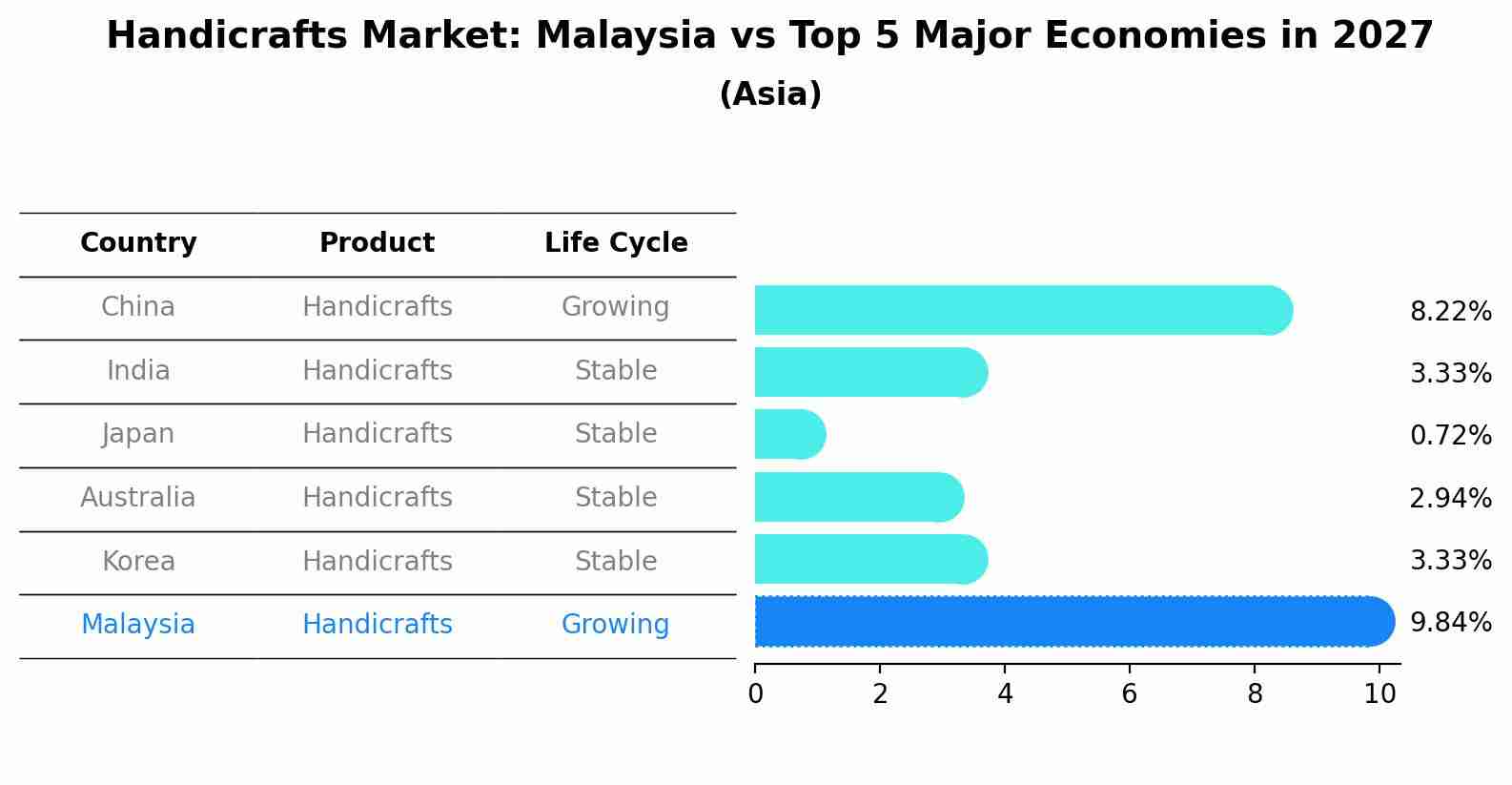
Malaysia Handicrafts Market Growth Rate
According to 6Wresearch internal database and industry insight, the Malaysia Handicrafts Market is projected to grow at a compound annual growth rate (CAGR) of 6.9% during the forecast period (2026–2032).
Topics Covered in the Malaysia Handicrafts Market Report
The Malaysia Handicrafts Market report thoroughly covers the market by product type, distribution channel, and end-users. The report provides an unbiased and detailed analysis of ongoing market trends, opportunities, and drivers to help stakeholders align their strategies with current and future dynamics.
Malaysia Handicrafts Market Highlights
| Report Name | Malaysia Handicrafts Market |
| Forecast Period | 2026–2032 |
| CAGR | 6.9% |
| Growing Sector |
Arts & Crafts |
Malaysia Handicrafts Market Synopsis
The Malaysia Handicrafts Market has been experiencing consistent growth as it has been driven by the increasing consumer choice for unique, eco-friendly, and culturally rich handmade products. Since consumers become more conscious of sustainability, the demand for handicrafts such as wooden ware, art metalware and imitation jewelry is on the rise. The market is further backed by the growth of online platforms and retail channels, which have expanded the reach of local artisans and manufacturers.
Evaluation of Growth Drivers in the Malaysia Handicrafts Market
Below mentioned are some prominent drivers and their influence on market dynamics:
| Drivers | Primary Segments Affected | Why it Matters (Evidence) |
| Sustainability Focus | Woodware, Hand printed Textiles, Embroidered Goods | Consumers are increasingly prioritizing eco-friendly and sustainable products, increasing demand for handmade and natural goods. |
| Cultural Heritage Appreciation | All Segments | A rising awareness of the value of local craftsmanship and cultural preservation is driving interest in Filipino handicrafts. |
| An Increase in the E-commerce Expansion | All Segments | E-commerce platforms are making handicrafts more accessible, allowing local artisans to reach global markets. |
| Tourism Demand | Sculptures, Zari Goods, Imitation Jewelry | Handicrafts remain popular as souvenirs for tourists, contributing to the growth of the market. |
Malaysia Handicrafts Market size is expected to grow at a significant CAGR of 6.9% during the forecast period 2026–2032. Technological adoption in craft e commerce and digital marketing boosts artisanal visibility. Rising tourist arrivals seek culturally distinctive souvenirs, DIY tourism experiences and workshops increase demand for interactive craft purchase. Craft clusters and cooperatives improve production efficiency. Export incentives and supportive government programs increase artisan incomes. Also, urban consumers also embrace hand printed textiles, embroidery and artisanal decor for home use, further driving Malaysia Handicrafts Market Growth.
Evaluation of Restraints in the Malaysia Handicrafts Market
Below mentioned are some major restraints and their influence on market dynamics:
| Restraints | Primary Segments Affected | What This Means (Evidence) |
| Price Sensitivity | Woodware, Imitation Jewelry | High production costs for quality raw materials and intricate processes can limit the affordability of products. |
| High Competition from Mass-produced Goods | All Segments | Mass production of similar products can drive down prices, which makes it difficult for handmade goods to compete. |
| Limited Awareness in Rural Areas | Offline Distribution | Rural consumers may have limited access to retail stores that sell handicrafts. |
| Raw Material Availability | Art Metal Ware, Sculptures | There are shortages of raw materials which can disrupt production. |
Malaysia Handicrafts Market Challenges
Despite the market’s growth potential, the Malaysia Handicrafts Market faces challenges such as price sensitivity, limited consumer awareness in rural areas, and competition from mass-produced goods. Additionally, difficulties in the availability of raw materials, especially for high-end products like art metalware and sculptures, can affect the overall pricing and production consistency.
Malaysia Handicrafts Market Trends
Malaysia handicraft industry is growing upon various trends. The artisans are using e-commerce channels to spread about their products. Also, employing AI-driven design tools and data analytics to customize offerings and monitor customer preferences trends can be seen in the market. A rise in the trend is omnichannel retailing, which integrates tourist craft villages and internet storefronts to offer click-and-collect services and tailored purchasing experiences. This seamless integration improves convenience and increases consumer satisfaction across physical and digital touchpoints in the Malaysia Handicrafts Market.
Investment Opportunities in the Malaysia Handicrafts Market
Expanding digital commerce presents strong opportunities for investing in handicraft. Improving logistics, secure payment systems, and packaging for craft exports can help overcome current low adoption rates and meet rising global demand. Investing in better retail infrastructure like craft centres, artisan hubs, warehouses, and distribution networks can increase efficiency and market reach. There is also potential in developing craft tourism, such as building more workshop spaces and cultural experience centres. These investments meet the increasing consumer demand for authentic, convenient and culturally rich Malaysian handicraft experiences.
Top 5 Leading Players in the Malaysia Handicrafts Market
Below is the list of prominent companies leading the Malaysia Handicrafts Market:
1. Asma Company
| Company Name | Asma Company |
|---|---|
| Established Year | 1985 |
| Headquarters | Kuala Lumpur, Malaysia |
| Official Website | - |
Asma Company is a well-established player in the Malaysian handicrafts market, specializing in the production and distribution of traditional and contemporary handmade products, including woodware, embroidered goods, and textiles. Their products are widely sought after for both domestic and international markets.
2. MBF Holdings Sdn Bhd
| Company Name | MBF Holdings Sdn Bhd |
|---|---|
| Established Year | 1972 |
| Headquarters | Kuala Lumpur, Malaysia |
| Official Website | - |
MBF Holdings is a diversified corporation with a strong presence in the Malaysian handicrafts sector. The company focuses on distributing art metal ware, imitation jewelry, and handcrafted textiles.
3. Kraf Holdings
| Company Name | Kraf Holdings |
|---|---|
| Established Year | 1995 |
| Headquarters | Johor, Malaysia |
| Official Website | - |
Kraf Holdings is a key player in the Malaysian handicrafts market, involved in the manufacturing and distribution of a variety of handicraft products, including wooden items, sculptures, and imitation jewelry.
4. Royal Selangor International Sdn Bhd
| Company Name | Royal Selangor International Sdn Bhd |
|---|---|
| Established Year | 1885 |
| Headquarters | Kuala Lumpur, Malaysia |
| Official Website | Click Here |
Royal Selangor is the world's foremost name in quality pewter and a flagship of Malaysian craftsmanship. The company specializes in high-end home décor, tableware, and giftware.
5. Syarikat Pemasaran Karyaneka Sdn Bhd
| Company Name | Syarikat Pemasaran Karyaneka Sdn Bhd |
|---|---|
| Established Year | 1982 |
| Headquarters | Kuala Lumpur, Malaysia |
| Official Website | Click Here |
A wholly-owned subsidiary of the Malaysian Handicraft Development Corporation (Kraftangan Malaysia), Karyaneka serves as the primary marketing arm for local artisans.
Government Regulations Introduced in the Malaysia Handicrafts Market
According to the Malaysian government data, the government has initiated programs like the Craft Survival Kit Scheme, Cultural Heritage Craft Development Programme, and Malaysia External Trade Development Corporation (MATRADE) export grants to support artisans. Here are some policies, one of them is the National Creative Industry Policy (2016–2030) which promote craft clusters and rural craft-based SMEs. Incentives from Tourism Malaysia promote craft villages and cultural festivals. Moreover, rules facilitate artisan registration and quality certification, thereby improving export preparedness. These initiatives seek to safeguard history, enhance exports, and empower local craftspeople.
Future Insights of the Malaysia Handicrafts Market
The Malaysia Handicrafts Market is expected to grow steadily, as it will be driven by an increase in the demand for personalized, sustainable, and culturally significant products. Due to the increasing interest in eco-friendly production and a stronger online presence, the market will likely continue expanding both locally and internationally. Innovations in design, new product offerings, and better distribution channels will continue to play a key role in boosting the market’s growth potential.
Market Segmentation Analysis
This report provides an inclusive study of the following market segments and their leading categories:
By Product Type – Woodware to Lead the Market
According to Mansi, Senior Research Analyst, 6Wresearch, woodware is expected to dominate the Malaysia Handicrafts Market due to its traditional craftsmanship and widespread popularity. Wood-based handicrafts such as furniture, decor items, and sculptures are highly valued for their durability and aesthetic appeal.
By Distribution Channel – Mass Retailers to Lead the Market
Mass retailers are expected to dominate the distribution channels in the Malaysia Handicrafts Market on account of their wide reach and ability to serve both urban and rural markets. These retailers provide a variety of handicraft products to cater to the growing demand for local crafts.
By End-users – Residential to Lead the Market
The residential segment is expected to lead the Malaysia Handicrafts Market, which is underpinned by the increasing interest in home décor, cultural expression, and personalized items. Handicrafts such as decorative sculptures, art metal ware, and hand-printed textiles are in high demand for home decoration and personal gifting.
Key Attractiveness of the Report
- 10 Years of Market Numbers
- Historical Data Starting from 2022 to 2025
- Base Year: 2025
- Forecast Data until 2032
- Key Performance Indicators Impacting the Market
- Major Upcoming Developments and Projects
Key Highlights of the Report:
- Malaysia Handicrafts Market Outlook
- Market Size of Malaysia Handicrafts Market, 2025
- Forecast of Malaysia Handicrafts Market, 2032
- Historical Data and Forecast of Malaysia Handicrafts Revenues & Volume for the Period 2022- 2032
- Malaysia Handicrafts Market Trend Evolution
- Malaysia Handicrafts Market Drivers and Challenges
- Malaysia Handicrafts Price Trends
- Malaysia Handicrafts Porter's Five Forces
- Malaysia Handicrafts Industry Life Cycle
- Historical Data and Forecast of Malaysia Handicrafts Market Revenues & Volume By Product Type for the Period 2022- 2032
- Historical Data and Forecast of Malaysia Handicrafts Market Revenues & Volume By Woodware for the Period 2022- 2032
- Historical Data and Forecast of Malaysia Handicrafts Market Revenues & Volume By Art metal Ware for the Period 2022- 2032
- Historical Data and Forecast of Malaysia Handicrafts Market Revenues & Volume By Hand printed Textiles and Scarves for the Period 2022- 2032
- Historical Data and Forecast of Malaysia Handicrafts Market Revenues & Volume By Embroidered and Crocheted Goods for the Period 2022- 2032
- Historical Data and Forecast of Malaysia Handicrafts Market Revenues & Volume By Zari and Zari Goods for the Period 2022- 2032
- Historical Data and Forecast of Malaysia Handicrafts Market Revenues & Volume By Imitation Jewellery for the Period 2022- 2032
- Historical Data and Forecast of Malaysia Handicrafts Market Revenues & Volume By Sculptures for the Period 2022- 2032
- Historical Data and Forecast of Malaysia Woodware Handicrafts Market Revenues & Volume By Others for the Period 2022- 2032
- Historical Data and Forecast of Malaysia Handicrafts Market Revenues & Volume By Distribution Channel for the Period 2022- 2032
- Historical Data and Forecast of Malaysia Handicrafts Market Revenues & Volume By Mass Retailers for the Period 2022- 2032
- Historical Data and Forecast of Malaysia Handicrafts Market Revenues & Volume By Departmental Stores for the Period 2022- 2032
- Historical Data and Forecast of Malaysia Handicrafts Market Revenues & Volume By Independent Retailers for the Period 2022- 2032
- Historical Data and Forecast of Malaysia Handicrafts Market Revenues & Volume By Specialty Stores for the Period 2022- 2032
- Historical Data and Forecast of Malaysia Handicrafts Market Revenues & Volume By Online Stores for the Period 2022- 2032
- Historical Data and Forecast of Malaysia Handicrafts Market Revenues & Volume By Others for the Period 2022- 2032
- Historical Data and Forecast of Malaysia Handicrafts Market Revenues & Volume By End-users for the Period 2022- 2032
- Historical Data and Forecast of Malaysia Handicrafts Market Revenues & Volume By Residential for the Period 2022- 2032
- Historical Data and Forecast of Malaysia Handicrafts Market Revenues & Volume By Commercial for the Period 2022- 2032
- Malaysia Handicrafts Import Export Trade Statistics
- Market Opportunity Assessment By Product Type
- Market Opportunity Assessment By Distribution Channel
- Market Opportunity Assessment By End-users
- Malaysia Handicrafts Top Companies Market Share
- Malaysia Handicrafts Competitive Benchmarking By Technical and Operational Parameters
- Malaysia Handicrafts Company Profiles
- Malaysia Handicrafts Key Strategic Recommendations
Markets Covered
The report offers a comprehensive study of the subsequent market segments:
By Product Type:
- Woodware
- Art metal ware
- Hand printed textiles and scarves
- Embroidered and crocheted goods
- Zari and zari goods
- Imitation jewellery
- Sculptures
- Others
By Distribution Channel:
- Mass reta
- dent retailers
- Specialty stores
- Online stores
- Others
By End users:
- Residential
- Commercial






































