Malaysia Plastic Market Size Growth Rate
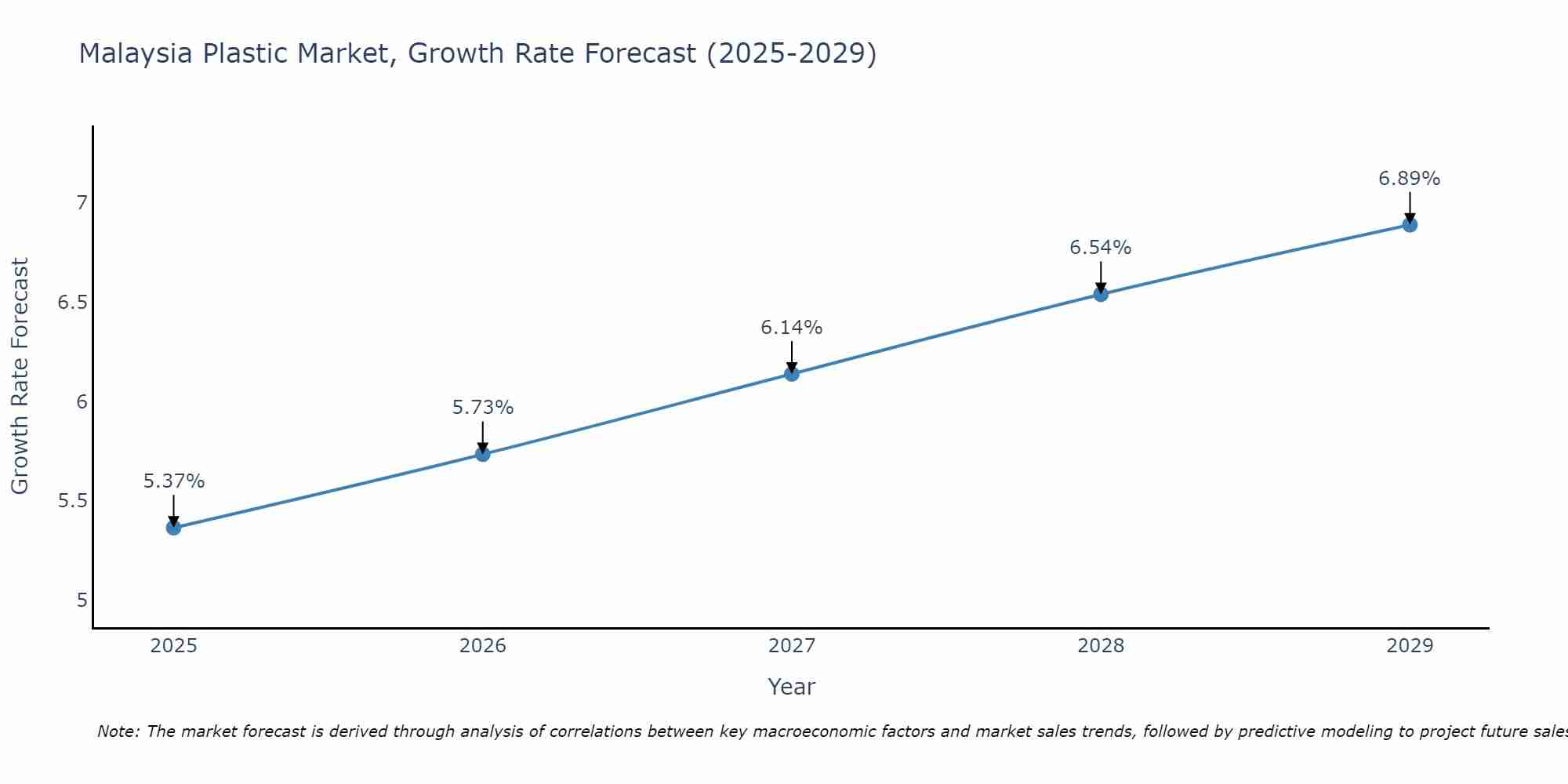
The Malaysia Plastic Market is poised for steady growth rate improvements from 2025 to 2029. The growth rate starts at 5.37% in 2025 and reaches 6.89% by 2029.
Plastic Market: Malaysia vs Top 5 Major Economies in 2027 (Asia)
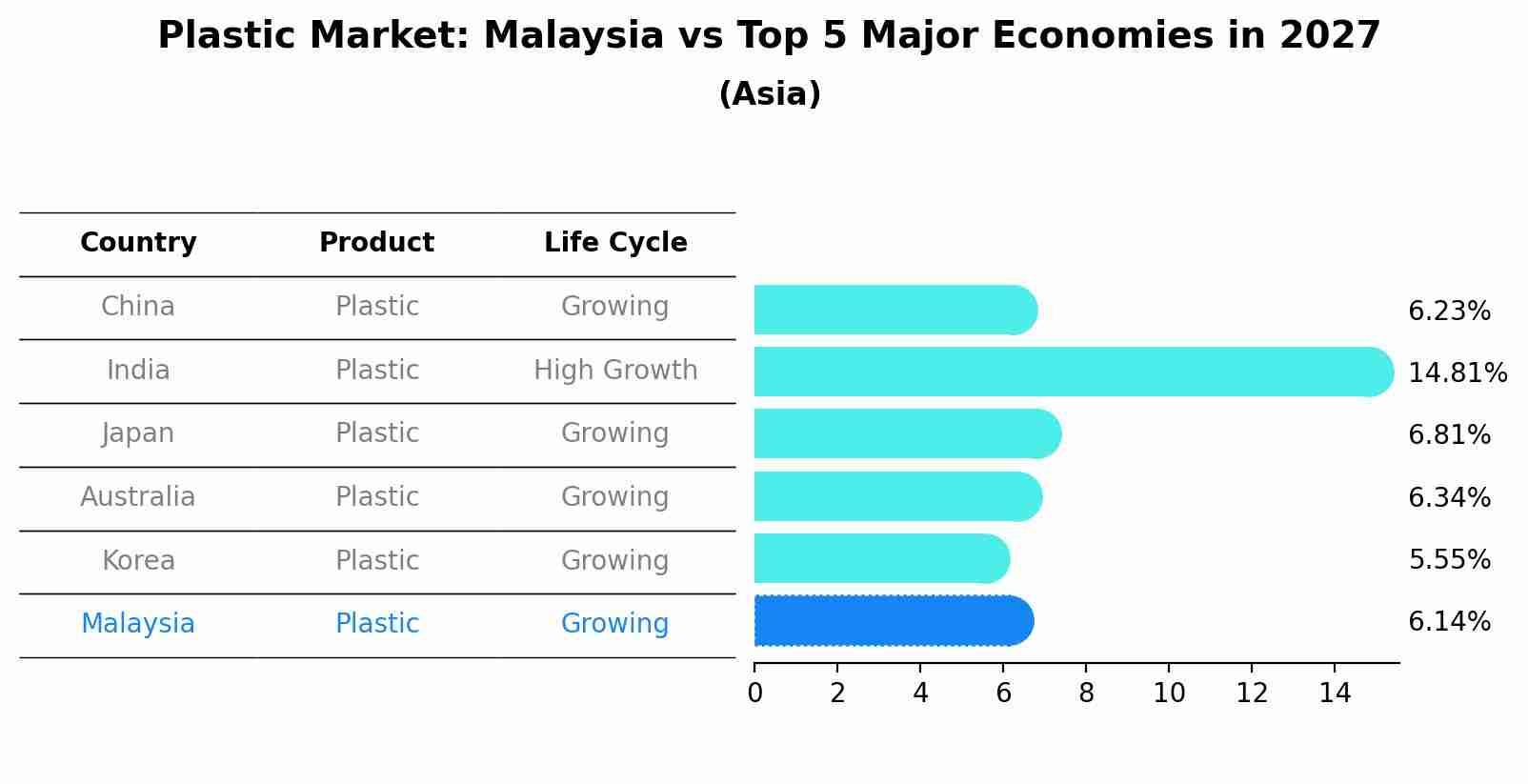
Malaysia's Plastic market is anticipated to experience a growing growth rate of 6.14% by 2027, reflecting trends observed in the largest economy China, followed by India, Japan, Australia and South Korea.
Malaysia Plastic Market Synopsis
The Malaysia plastic market registered a value of US$ 17 billion in 2018, which is expected to grow at a CAGR of 5.9% during the forecast period and reach approximately US$ 27 billion by 2026. The major factors driving the growth of the market are increasing demand from end-use industries such as packaging, construction, automotive etc., rapid urbanization and increasing disposable income among consumers across the country.
Market Drivers of the market
The Malaysia plastic market`s growth is closely linked to its wide-ranging applications in various industries. Plastics are integral to sectors such as packaging, automotive, construction, and electronics due to their versatility, lightweight nature, and cost-effectiveness. The demand for plastic products is driven by factors such as urbanization, rising consumer purchasing power, and industrial growth. Additionally, ongoing research and development efforts to create sustainable and eco-friendly plastic alternatives contribute to the market`s development.
Challenges of the market
The Malaysia plastic market grapples with challenges related to plastic waste management and sustainability. Plastic pollution has become a pressing environmental issue, prompting increased scrutiny of plastic usage and disposal. The market must adapt to changing consumer preferences for eco-friendly alternatives and recyclable materials. Developing and implementing sustainable practices, including recycling initiatives and the adoption of biodegradable plastics, is critical to addressing these challenges. The plastic industry`s ability to transition towards more environmentally friendly solutions will play a significant role in shaping its future.
Covid-19 Impact on the market
The Malaysia plastic market encountered shifts in demand patterns during the pandemic. While the packaging industry witnessed increased demand for plastic materials due to the surge in e-commerce and takeaway services, other sectors like automotive and construction experienced slowdowns. Lockdowns and restrictions on non-essential activities impacted manufacturing and supply chains, affecting the production and distribution of plastic products. Additionally, heightened awareness of plastic waste and environmental concerns led to increased scrutiny of single-use plastics. The plastic market responded by exploring sustainable alternatives and recyclable materials. The market`s recovery hinges on adapting to evolving consumer preferences and contributing to sustainable practices.
Key Players of the market
Plastics play a pivotal role in Malaysia manufacturing sector. Key players such as PlasticCorp Malaysia, PolymerMasters Sdn Bhd, and TechPlast Industries are prominent manufacturers of a wide range of plastic products, including packaging, automotive components, and consumer goods. These companies emphasize sustainability by investing in recyclable and biodegradable plastic alternatives.
Key Highlights of the Report:
- Malaysia Plastic Market Outlook
- Market Size of Malaysia Plastic Market, 2023
- Forecast of Malaysia Plastic Market, 2030
- Historical Data and Forecast of Malaysia Plastic Revenues & Volume for the Period 2020-2030
- Malaysia Plastic Market Trend Evolution
- Malaysia Plastic Market Drivers and Challenges
- Malaysia Plastic Price Trends
- Malaysia Plastic Porter's Five Forces
- Malaysia Plastic Industry Life Cycle
- Historical Data and Forecast of Malaysia Plastic Market Revenues & Volume By Product for the Period 2020-2030
- Historical Data and Forecast of Malaysia Plastic Market Revenues & Volume By Polyethylene (PE) for the Period 2020-2030
- Historical Data and Forecast of Malaysia Plastic Market Revenues & Volume By Polypropylene (PP) for the Period 2020-2030
- Historical Data and Forecast of Malaysia Plastic Market Revenues & Volume By Polyurethane (PU) for the Period 2020-2030
- Historical Data and Forecast of Malaysia Plastic Market Revenues & Volume By Polyvinyl chloride (PVC) for the Period 2020-2030
- Historical Data and Forecast of Malaysia Plastic Market Revenues & Volume By Polyethylene terephthalate (PET) for the Period 2020-2030
- Historical Data and Forecast of Malaysia Plastic Market Revenues & Volume By Polystyrene (PS) for the Period 2020-2030
- Historical Data and Forecast of Malaysia Plastic Market Revenues & Volume By Acrylonitrile butadiene styrene (ABS) for the Period 2020-2030
- Historical Data and Forecast of Malaysia Polyethylene (PE) Plastic Market Revenues & Volume By Others for the Period 2020-2030
- Historical Data and Forecast of Malaysia Plastic Market Revenues & Volume By Application for the Period 2020-2030
- Historical Data and Forecast of Malaysia Plastic Market Revenues & Volume By Injection Molding for the Period 2020-2030
- Historical Data and Forecast of Malaysia Plastic Market Revenues & Volume By Blow Molding for the Period 2020-2030
- Historical Data and Forecast of Malaysia Plastic Market Revenues & Volume By Roto Molding for the Period 2020-2030
- Historical Data and Forecast of Malaysia Plastic Market Revenues & Volume By Compression Molding for the Period 2020-2030
- Historical Data and Forecast of Malaysia Plastic Market Revenues & Volume By Casting for the Period 2020-2030
- Historical Data and Forecast of Malaysia Plastic Market Revenues & Volume By Thermoforming for the Period 2020-2030
- Historical Data and Forecast of Malaysia Plastic Market Revenues & Volume By Extrusion for the Period 2020-2030
- Historical Data and Forecast of Malaysia Plastic Market Revenues & Volume By Others for the Period 2020-2030
- Historical Data and Forecast of Malaysia Plastic Market Revenues & Volume By End-use for the Period 2020-2030
- Historical Data and Forecast of Malaysia Plastic Market Revenues & Volume By Packaging for the Period 2020-2030
- Historical Data and Forecast of Malaysia Plastic Market Revenues & Volume By Construction for the Period 2020-2030
- Historical Data and Forecast of Malaysia Plastic Market Revenues & Volume By Electrical & Electronics for the Period 2020-2030
- Historical Data and Forecast of Malaysia Plastic Market Revenues & Volume By Automotive for the Period 2020-2030
- Historical Data and Forecast of Malaysia Plastic Market Revenues & Volume By Medical Devices for the Period 2020-2030
- Historical Data and Forecast of Malaysia Plastic Market Revenues & Volume By Agriculture for the Period 2020-2030
- Historical Data and Forecast of Malaysia Plastic Market Revenues & Volume By Furniture & Bedding for the Period 2020-2030
- Historical Data and Forecast of Malaysia Plastic Market Revenues & Volume By Others for the Period 2020-2030
- Malaysia Plastic Import Export Trade Statistics
- Market Opportunity Assessment By Product
- Market Opportunity Assessment By Application
- Market Opportunity Assessment By End-use
- Malaysia Plastic Top Companies Market Share
- Malaysia Plastic Competitive Benchmarking By Technical and Operational Parameters
- Malaysia Plastic Company Profiles
- Malaysia Plastic Key Strategic Recommendations






































