Malta Natural Vanillin Market Size (2020-2030)
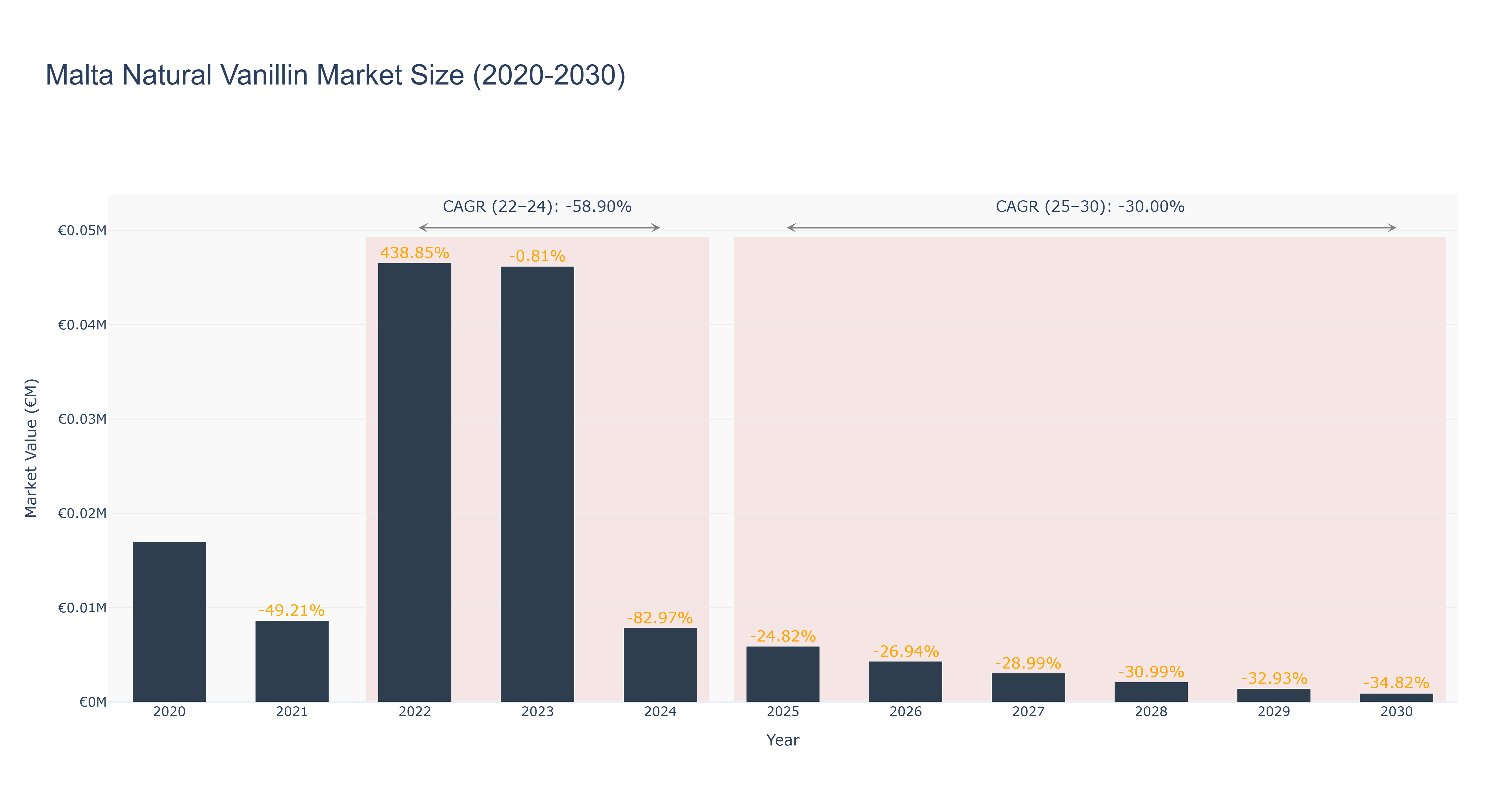
The Malta Natural Vanillin Market has experienced significant volatility, marked by a peak market size of €46.57 thousand in 2022, following a substantial decline to €8.64 thousand in 2021 and a slight decrease to €46.19 thousand in 2023. The actual market data from 2022 to 2024 reflects a dramatic CAGR of -58.90%, indicating serious challenges within the sector. The forecasted period from 2025 to 2030 suggests a continued downward trend, with projected market sizes decreasing from €5.91 thousand in 2025 to €925.32 by 2030, resulting in a CAGR of -30.00%. This decline can be attributed to factors such as fluctuating consumer preferences, competition from synthetic alternatives, and potential regulatory changes impacting natural flavoring sources. While there are no specific upcoming projects noted for the Maltese market, broader trends in sustainability and natural ingredients could influence future recovery efforts within the industry.
Malta Natural Vanillin Market: Production & Trade Performance (2019-2025)
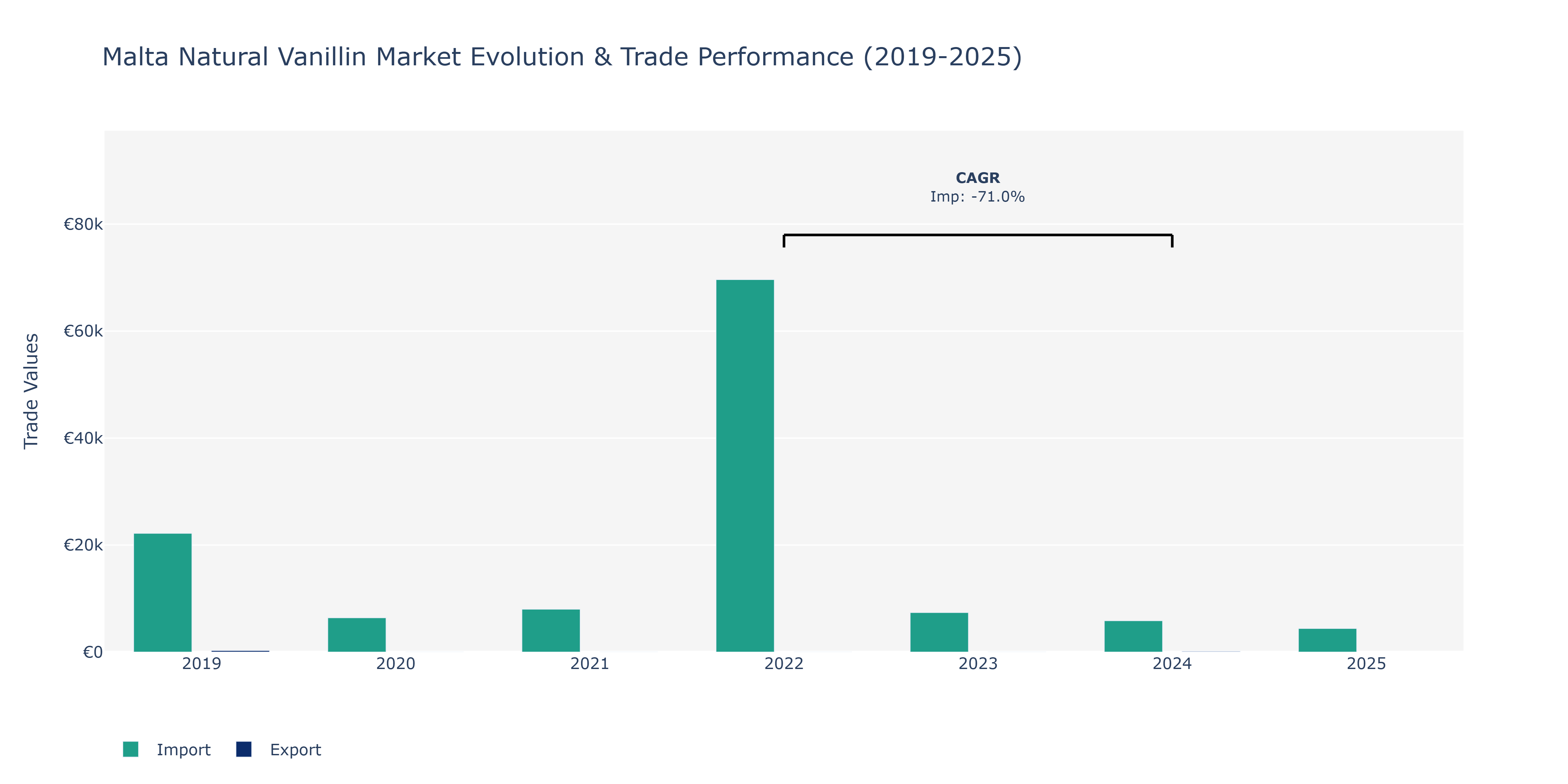
In the Malta Natural Vanillin Market, from 2019 to 2025, the exports of natural vanillin displayed a fluctuating pattern. In 2019, exports stood at €270 million, dropping significantly in 2024 to €135 million. This decline may be attributed to various factors such as changes in global demand, pricing dynamics, or shifts in production capacity. On the import side, the market witnessed substantial growth from 2019 to 2022, with imports soaring from €22.18 thousand to €69.62 thousand. This remarkable surge could be linked to increased domestic consumption, expanding product portfolios, or enhanced trade relations. However, a noticeable decline occurred in 2023 with imports falling to €7.38 thousand followed by a further decrease in 2025 to €4.39 thousand. Such fluctuations in imports might be influenced by regulatory changes, supply chain disruptions, or evolving consumer preferences. These trends highlight the market's sensitivity to various external factors, necessitating stakeholders to adapt strategies to navigate through dynamic market conditions.
Key Highlights of the Report:
- Malta Natural Vanillin Market Outlook
- Market Size of Malta Natural Vanillin Market, 2025
- Forecast of Malta Natural Vanillin Market, 2032
- Historical Data and Forecast of Malta Natural Vanillin Revenues & Volume for the Period 2022 - 2032F
- Malta Natural Vanillin Market Trend Evolution
- Malta Natural Vanillin Market Drivers and Challenges
- Malta Natural Vanillin Price Trends
- Malta Natural Vanillin Porter`s Five Forces
- Malta Natural Vanillin Industry Life Cycle
- Historical Data and Forecast of Malta Natural Vanillin Market Revenues & Volume By Source for the Period 2022 - 2032F
- Historical Data and Forecast of Malta Natural Vanillin Market Revenues & Volume By Vanilla Bean Extract for the Period 2022 - 2032F
- Historical Data and Forecast of Malta Natural Vanillin Market Revenues & Volume By Ferulic Acid Synthesis for the Period 2022 - 2032F
- Historical Data and Forecast of Malta Natural Vanillin Market Revenues & Volume By Eugenol Synthesis for the Period 2022 - 2032F
- Historical Data and Forecast of Malta Natural Vanillin Market Revenues & Volume By Application for the Period 2022 - 2032F
- Historical Data and Forecast of Malta Natural Vanillin Market Revenues & Volume By Food & Beverages for the Period 2022 - 2032F
- Historical Data and Forecast of Malta Natural Vanillin Market Revenues & Volume By Pharmaceuticals for the Period 2022 - 2032F
- Historical Data and Forecast of Malta Natural Vanillin Market Revenues & Volume By Cosmetics & Personal Care for the Period 2022 - 2032F
- Malta Natural Vanillin Import Export Trade Statistics
- Market Opportunity Assessment By Source
- Market Opportunity Assessment By Application
- Malta Natural Vanillin Top Companies Market Share
- Malta Natural Vanillin Competitive Benchmarking By Technical and Operational Parameters
- Malta Natural Vanillin Company Profiles
- Malta Natural Vanillin Key Strategic Recommendations






































