Morocco Soybean Meal Market Size Growth Rate
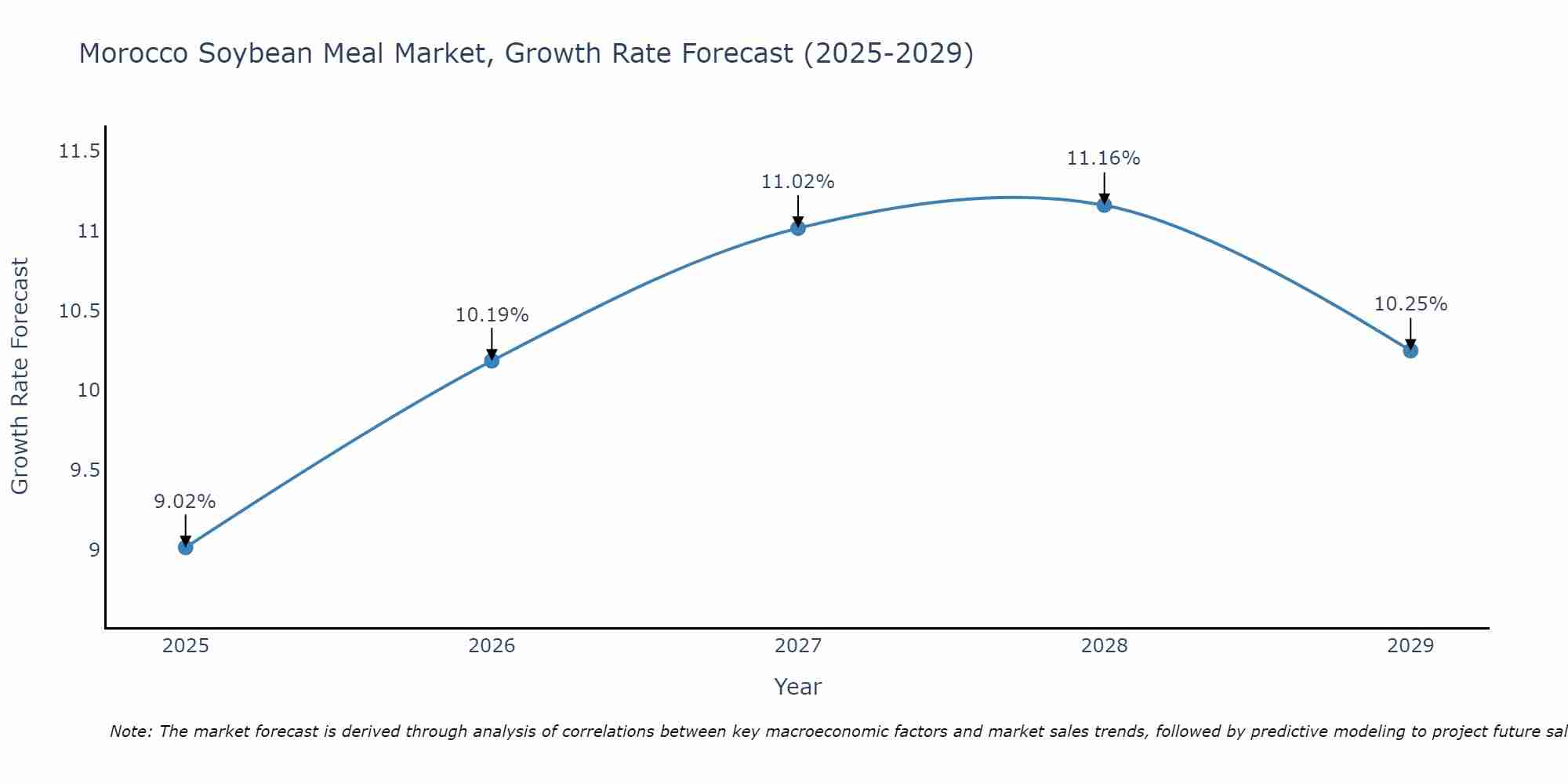
The Morocco Soybean Meal Market is projected to witness mixed growth rate patterns during 2025 to 2029. Starting at 9.02% in 2025, the market peaks at 11.16% in 2028, and settles at 10.25% by 2029.
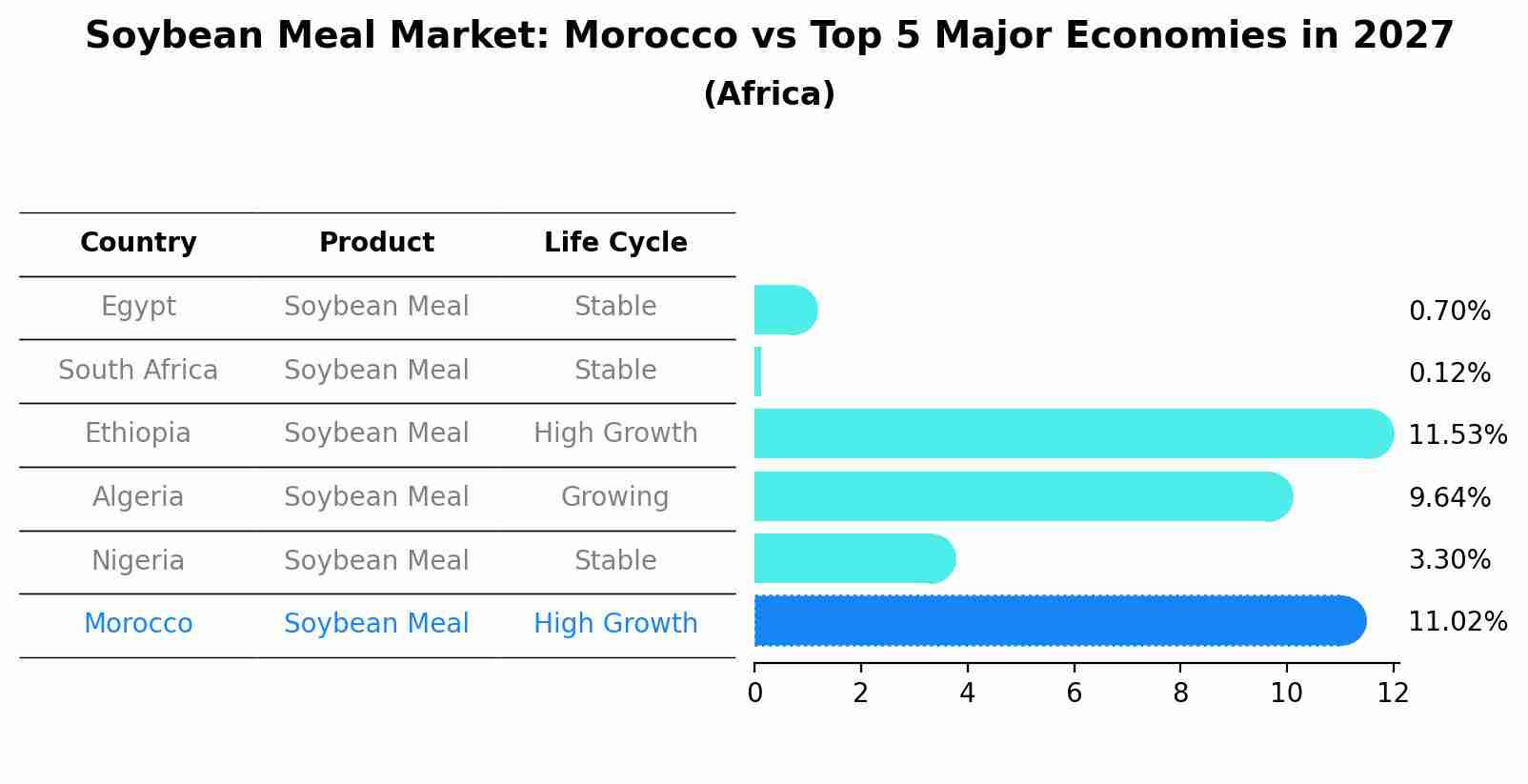
Soybean Meal Market: Morocco vs Top 5 Major Economies in 2027 (Africa)
By 2027, Morocco's Soybean Meal market is forecasted to achieve a high growth rate of 11.02%, with Egypt leading the Africa region, followed by South Africa, Ethiopia, Algeria and Nigeria.
Morocco Soybean Meal Market Synopsis
The Morocco soybean meal market is experiencing steady growth driven by increasing demand in the animal feed industry. Soybean meal is a key protein source used in livestock feed production, particularly for poultry and dairy cattle. The market is influenced by factors such as growth in livestock production, rising consumer preference for meat and dairy products, and government initiatives to promote sustainable agricultural practices. Importing a significant portion of its soybean meal needs, Morocco relies on countries like the United States, Brazil, and Argentina for supply. Market players are focusing on product innovation, quality control, and expanding distribution networks to cater to the evolving needs of the livestock industry in Morocco. Overall, the Morocco soybean meal market presents opportunities for both domestic and international suppliers to meet the growing demand for high-quality animal feed ingredients.
Morocco Soybean Meal Market Trends
Currently, the Morocco Soybean Meal Market is experiencing an upward trend driven by the growing demand for soybean meal as a key protein source in animal feed production. This demand is fueled by the expansion of the livestock industry in Morocco, particularly in poultry and dairy sectors. Additionally, soybean meal is gaining popularity due to its nutritional benefits and cost-effectiveness compared to other protein sources. The market is also witnessing increasing imports of soybean meal to meet the rising demand, with countries like the United States and Brazil being major suppliers. Overall, the Morocco Soybean Meal Market is expected to continue growing as the livestock industry expands and awareness about the benefits of soybean meal increases among farmers and feed manufacturers.
Morocco Soybean Meal Market Challenges
The Morocco Soybean Meal Market faces several challenges, including limited domestic production, dependency on imports, fluctuating global prices, and competition from alternative protein sources. Morocco relies heavily on imports to meet its soybean meal demand, making the market vulnerable to international trade dynamics and currency fluctuations. Additionally, the country`s limited infrastructure for soybean cultivation and processing hinders domestic production, leading to higher dependency on imports. Fluctuating global prices of soybeans and soybean meal further impact the market, influencing pricing strategies and profit margins for stakeholders. Moreover, the growing popularity of alternative protein sources like peas, lentils, and chickpeas presents a competitive challenge for soybean meal in the Moroccan market. Overall, addressing these challenges requires strategic planning, investment in infrastructure, and diversification of protein sources to ensure sustainability and growth in the Morocco Soybean Meal Market.
Morocco Soybean Meal Market Investment Opportunities
The Morocco Soybean Meal Market offers promising investment opportunities due to the increasing demand for soybean meal as a feed ingredient in the livestock industry. The country`s growing poultry, dairy, and aquaculture sectors are driving the need for high-quality protein sources, making soybean meal a popular choice. Additionally, Morocco`s strategic location as a gateway to both Europe and Africa positions it as a key player in the soybean meal trade. Investors can explore opportunities in soybean meal processing plants, distribution networks, or partnerships with local livestock producers to capitalize on the expanding market. With supportive government policies and a focus on enhancing food security, the Morocco Soybean Meal Market presents a lucrative investment landscape for those looking to tap into the growing demand for animal feed ingredients.
Jordan Agar Market Government Policies
The Moroccan government has implemented policies to promote self-sufficiency in the soybean meal market. This includes providing subsidies to local farmers for soybean cultivation, investing in research and development to improve crop yields, and imposing import tariffs on soybean meal to protect domestic producers. Additionally, the government has introduced initiatives to support the livestock industry, a key consumer of soybean meal, by providing financial assistance and technical support. These policies aim to reduce dependency on imported soybean meal, enhance food security, and stimulate the growth of the agricultural sector in Morocco.
Morocco Soybean Meal Market Future Outlook
The future outlook for the Morocco Soybean Meal Market appears promising, driven by increasing demand for protein-rich animal feed due to growth in the livestock industry. With Morocco heavily reliant on soybean meal imports to address its feed requirements, opportunities exist for local and international suppliers to capitalize on this demand. Additionally, changing consumer preferences towards healthier and sustainable food options may further boost the market for soybean meal in the country. However, challenges such as price volatility in the global soybean market and competition from alternative protein sources could impact the growth trajectory. Overall, with supportive government policies and investments in the agricultural sector, the Morocco Soybean Meal Market is expected to witness steady growth in the coming years.
Key Highlights of the Report:
- Morocco Soybean Meal Market Outlook
- Market Size of Morocco Soybean Meal Market, 2021
- Forecast of Morocco Soybean Meal Market, 2031
- Historical Data and Forecast of Morocco Soybean Meal Revenues & Volume for the Period 2018 - 2031
- Morocco Soybean Meal Market Trend Evolution
- Morocco Soybean Meal Market Drivers and Challenges
- Morocco Soybean Meal Price Trends
- Morocco Soybean Meal Porter's Five Forces
- Morocco Soybean Meal Industry Life Cycle
- Historical Data and Forecast of Morocco Soybean Meal Market Revenues & Volume By Application for the Period 2018 - 2031
- Historical Data and Forecast of Morocco Soybean Meal Market Revenues & Volume By Animal Feed for the Period 2018 - 2031
- Historical Data and Forecast of Morocco Soybean Meal Market Revenues & Volume By Food Industry for the Period 2018 - 2031
- Historical Data and Forecast of Morocco Soybean Meal Market Revenues & Volume By Beverage for the Period 2018 - 2031
- Historical Data and Forecast of Morocco Soybean Meal Market Revenues & Volume By Healthcare Products for the Period 2018 - 2031
- Morocco Soybean Meal Import Export Trade Statistics
- Market Opportunity Assessment By Application
- Morocco Soybean Meal Top Companies Market Share
- Morocco Soybean Meal Competitive Benchmarking By Technical and Operational Parameters
- Morocco Soybean Meal Company Profiles
- Morocco Soybean Meal Key Strategic Recommendations






































