Myanmar Ascorbic Acid Market Size, Share & Growth Rate
The Myanmar Ascorbic Acid Market was estimated at USD 233 Million in 2025 and is projected to reach USD 316 Million by 2032, growing at a CAGR of 4.4% from 2026 to 2032. This growth trajectory is fueled by a surge in consumer awareness regarding the health benefits of Vitamin C, alongside its vital applications in the food and beverage, pharmaceuticals, and personal care sectors. Additionally, the rising disposable income in Myanmar is enabling a wider consumer base to seek out fortified products and dietary supplements, further propelling market demand.
Myanmar Ascorbic Acid Market Year-wise Growth Rate and Key Drivers
This graph highlights how the Myanmar Ascorbic Acid Market has steadily grown over the years, supported by major growth factors.
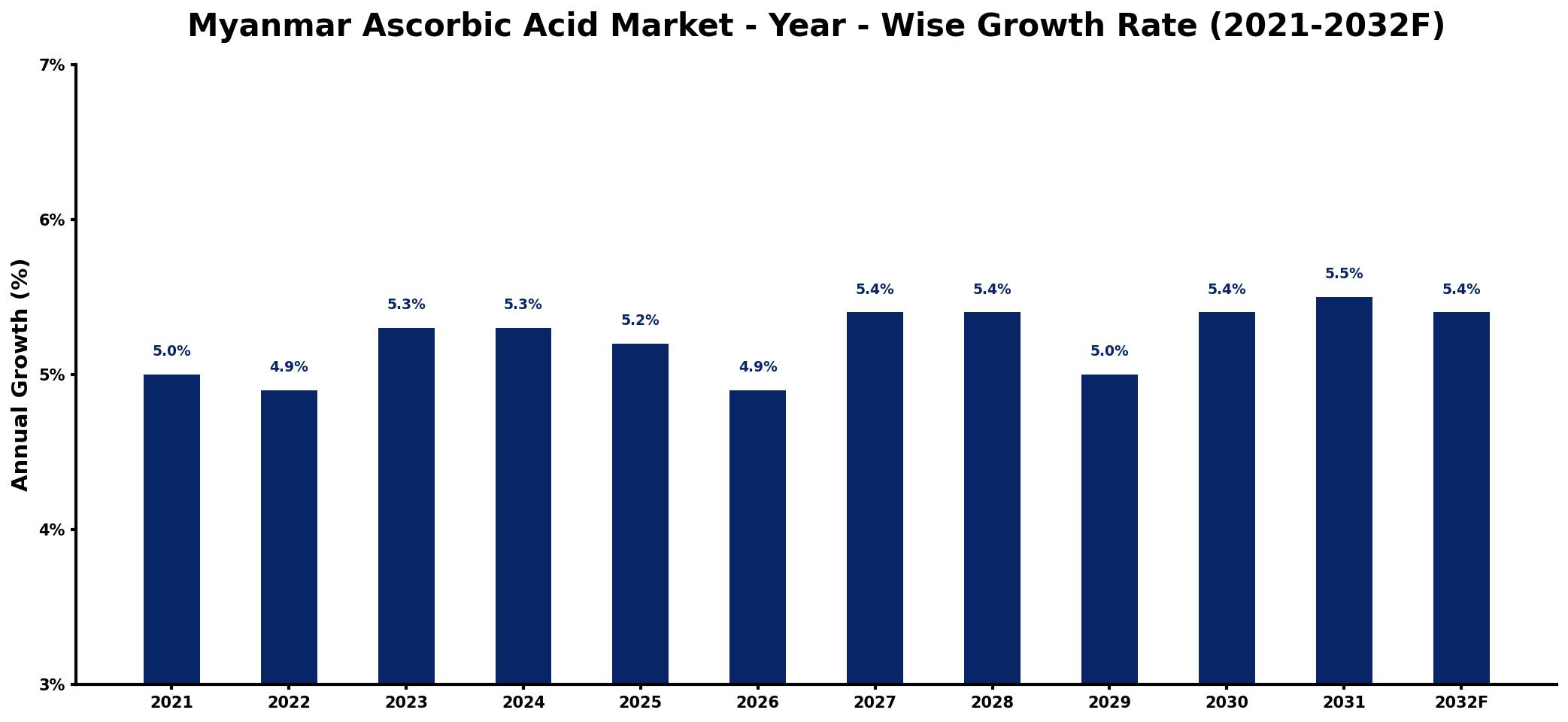
The table below presents the year‑wise growth rates along with the key drivers influencing the market
| Year | Growth Rate | Major Drivers |
| 2021 | 5.0% | Rising health awareness among consumers |
| 2022 | 4.9% | Increased demand from food industry |
| 2023 | 5.3% | Growing trend of dietary supplements |
| 2024 | 5.3% | Expansion of pharmaceutical applications |
| 2025 | 5.2% | Higher investments in health products |
| 2026 | 4.9% | Emerging markets adopting wellness trends |
| 2027 | 5.4% | Innovation in food preservation techniques |
| 2028 | 5.4% | Strengthened supply chain networks |
| 2029 | 5.0% | Broader adoption in cosmetic formulations |
| 2030 | 5.4% | Surge in online retail channels |
| 2031 | 5.5% | Growing popularity of functional foods |
| 2032 | 5.4% | Enhanced consumer education initiatives |
Note: Market size estimations and growth projections presented in this report are based on 6Wresearch's proprietary forecasting methodology, utilizing the latest available industry data, government publications, and primary research inputs.
Myanmar Ascorbic Acid Market Synopsis
The Myanmar Ascorbic Acid market has recently gained momentum due to heightened awareness about the importance of Vitamin C, particularly in immune health, amidst global health challenges. Looking ahead, this trend is expected to solidify, particularly as local manufacturers scale up production capabilities to meet burgeoning demand.
However, the market does face challenges that could temper its expansion, such as fluctuations in raw material pricing and regulatory hurdles. Nevertheless, the competitive landscape remains vibrant, with significant opportunities for innovation and product development that align with evolving consumer preferences.
Myanmar Ascorbic Acid Market Key Takeaways
- The market is on a growth trajectory, projected to reach USD 316 Million by 2032.
- Consumer demand is shifting towards fortified foods and dietary supplements rich in Vitamin C.
- Intense competition drives manufacturers to innovate and improve marketing strategies.
- Rising disposable income levels are creating a larger market for health-conscious products.
- Government regulations aim to protect local manufacturers and maintain product quality.
Evaluation of Restraints in Myanmar Ascorbic Acid Market
The Myanmar Ascorbic Acid market is held back by several real constraints. A significant factor is the limited public awareness regarding the benefits of ascorbic acid, which often results in lower demand for these products. Additionally, the lack of stringent regulatory frameworks can lead to market saturation with substandard or counterfeit goods, undermining consumer trust. Supply chain disruptions, notably those stemming from raw material price volatility and import restrictions, further complicate operational stability for manufacturers and distributors alike.
Myanmar Ascorbic Acid Market Trends
Emerging trends indicate a growing consumer preference for natural and organic sources of ascorbic acid, reflecting a broader movement towards health-conscious choices. The COVID-19 pandemic has significantly amplified the demand for vitamin C-rich supplements, as individuals focus on boosting their immune systems. Additionally, product innovation is prevalent, with brands exploring novel delivery formats, such as gummies and fortified beverages, to attract health-conscious consumers.
Myanmar Ascorbic Acid Market Opportunities
The Myanmar Ascorbic Acid market presents promising investment opportunities, particularly for companies keen on expanding their portfolios in health-oriented products. The convergence of rising population numbers and a shift towards healthier lifestyles creates a fertile environment for fortified food and beverage innovations. Moreover, the market remains relatively untapped, offering new entrants the chance to establish a strong foothold as demand continues to grow.
Government Initiatives in the Myanmar Ascorbic Acid Market
The Myanmar government has instituted various policies aimed at enhancing the Ascorbic Acid market. These include guidelines from the Food and Drug Administration (FDA) that ensure product safety and quality. Regulatory measures governing importation, including licensing requirements and taxation on foreign products, aim to bolster domestic production while safeguarding public health. Such initiatives are pivotal in fostering an environment conducive to market growth.
Future Insights of the Myanmar Ascorbic Acid Market
Looking forward to the period from 2026 to 2032, the Myanmar Ascorbic Acid market is expected to continue its upward trajectory. Increasing public awareness about the health benefits of vitamin C, combined with broader applications across various industries, will drive sustained demand. With the pharmaceutical sector poised for growth, manufacturers will find ample opportunity to cater to the rising need for high-quality ascorbic acid products tailored to the health-conscious consumer.
Myanmar Ascorbic Acid Market Latest Developments (2025 - 2026)
In recent months, the industry has seen a notable shift towards innovation, with a rise in product offerings that emphasize natural ingredients and sustainability. Many manufacturers are actively engaging in marketing campaigns aimed at educating consumers about the advantages of vitamin C, especially in light of ongoing health trends. Furthermore, initiatives to streamline supply chains and improve production efficiencies are gaining traction, setting the stage for enhanced market competitiveness.
Myanmar Ascorbic Acid Market - Key Attractiveness of the Report
- 10 Years of Market Numbers
- Historical Data Starting from 2022 to 2025
- Base Year: 2025
- Forecast Data until 2032
- Key Performance Indicators Impacting the Market
- Major Upcoming Developments and Projects
Key Highlights of the Report:
- Myanmar Ascorbic Acid Market Outlook
- Market Size of Myanmar Ascorbic Acid Market, 2025
- Forecast of Myanmar Ascorbic Acid Market, 2032
- Historical Data and Forecast of Myanmar Ascorbic Acid Revenues & Volume for the Period 2022-2032F
- Myanmar Ascorbic Acid Market Trend Evolution
- Myanmar Ascorbic Acid Market Drivers and Challenges
- Myanmar Ascorbic Acid Price Trends
- Myanmar Ascorbic Acid Porter's Five Forces
- Myanmar Ascorbic Acid Industry Life Cycle
- Historical Data and Forecast of Myanmar Ascorbic Acid Market Revenues & Volume By Grade for the Period 2022-2032F
- Historical Data and Forecast of Myanmar Ascorbic Acid Market Revenues & Volume By Food & Pharmaceutical for the Period 2022-2032F
- Historical Data and Forecast of Myanmar Ascorbic Acid Market Revenues & Volume By Industrial for the Period 2022-2032F
- Historical Data and Forecast of Myanmar Ascorbic Acid Market Revenues & Volume By Application for the Period 2022-2032F
- Historical Data and Forecast of Myanmar Ascorbic Acid Market Revenues & Volume By Food & Beverages for the Period 2022-2032F
- Historical Data and Forecast of Myanmar Ascorbic Acid Market Revenues & Volume By Pharmaceutical for the Period 2022-2032F
- Historical Data and Forecast of Myanmar Ascorbic Acid Market Revenues & Volume By Cosmetics for the Period 2022-2032F
- Historical Data and Forecast of Myanmar Ascorbic Acid Market Revenues & Volume By Chemicals for the Period 2022-2032F
- Historical Data and Forecast of Myanmar Ascorbic Acid Market Revenues & Volume By Agriculture for the Period 2022-2032F
- Historical Data and Forecast of Myanmar Ascorbic Acid Market Revenues & Volume By Others for the Period 2022-2032F
- Myanmar Ascorbic Acid Import Export Trade Statistics
- Market Opportunity Assessment By Grade
- Market Opportunity Assessment By Application
- Myanmar Ascorbic Acid Top Companies Market Share
- Myanmar Ascorbic Acid Competitive Benchmarking By Technical and Operational Parameters
- Myanmar Ascorbic Acid Company Profiles
- Myanmar Ascorbic Acid Key Strategic Recommendations






































