Myanmar Bamboos Market Size Growth Rate
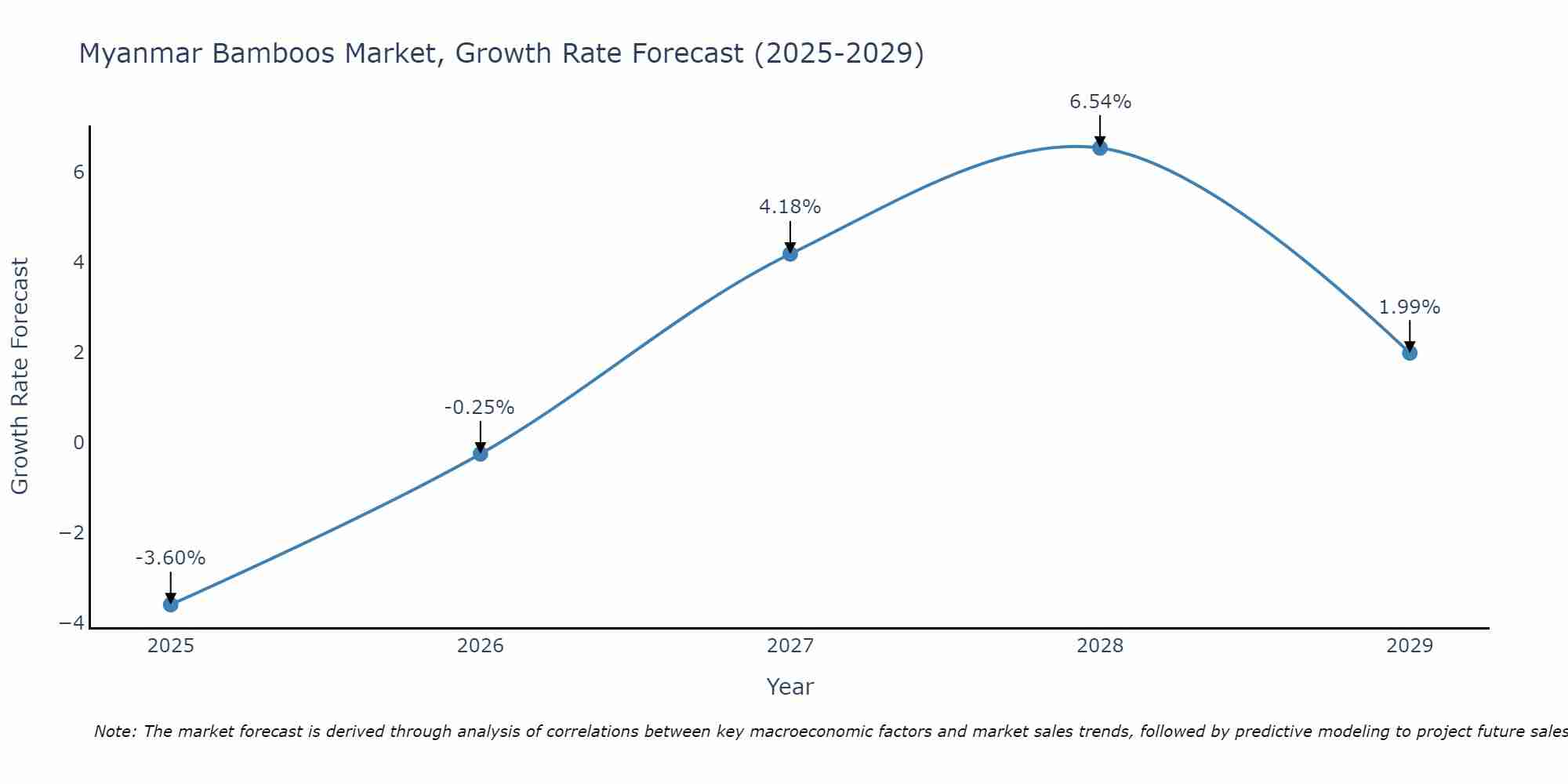
The Myanmar Bamboos Market is projected to witness mixed growth rate patterns during 2025 to 2029. Growth accelerates to 6.54% in 2028, following an initial rate of -3.60%, before easing to 1.99% at the end of the period.
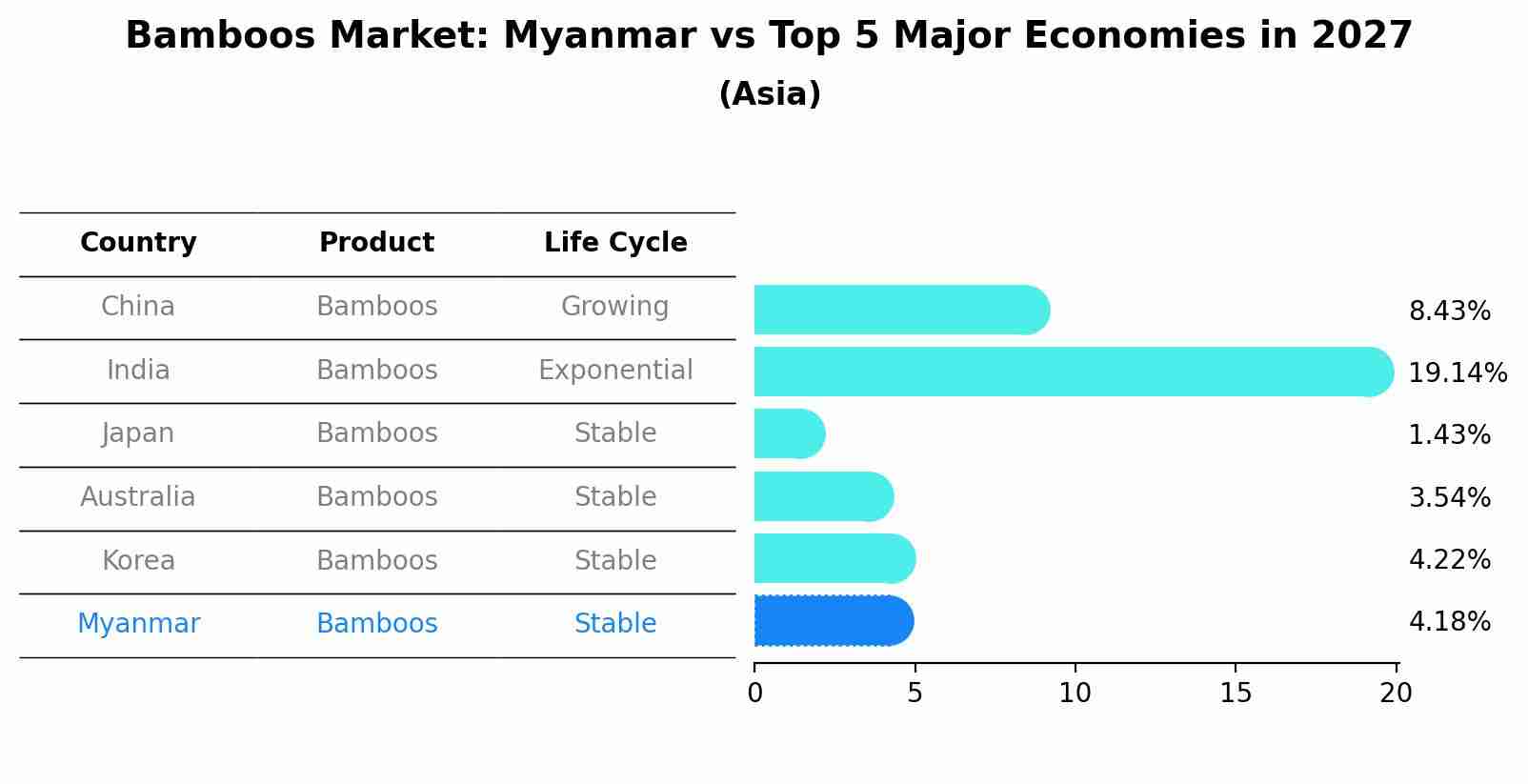
Bamboos Market: Myanmar vs Top 5 Major Economies in 2027 (Asia)
Myanmar's Bamboos market is anticipated to experience a stable growth rate of 4.18% by 2027, reflecting trends observed in the largest economy China, followed by India, Japan, Australia and South Korea.
Myanmar Bamboos Market Overview
The Myanmar Bamboos Market is experiencing significant growth due to the versatile applications of bamboo in various industries such as construction, furniture, and handicrafts. The abundance of bamboo forests in Myanmar provides a sustainable source of raw material for the market. The demand for bamboo products in both domestic and international markets is on the rise, driven by the increasing awareness of the environmental benefits and durability of bamboo products. Government initiatives to promote bamboo cultivation and processing further support the market growth. Additionally, the traditional craftsmanship and skills of local artisans in working with bamboo contribute to the unique and high-quality products available in the Myanmar Bamboos Market, making it a lucrative and promising sector for investment and expansion.
Myanmar Bamboos Market Trends
The Myanmar bamboo market is experiencing growth driven by increasing awareness of sustainable and eco-friendly materials. Bamboo is being increasingly utilized in construction, furniture, and handicrafts due to its versatility, durability, and rapid growth rate. Demand for bamboo products is rising both domestically and internationally, as consumers seek environmentally friendly alternatives to traditional materials. Government initiatives promoting the use of bamboo for economic development and environmental conservation are also contributing to the market`s expansion. Additionally, technological advancements in bamboo processing and product development are enhancing the quality and appeal of bamboo products in Myanmar. Overall, the Myanmar bamboo market is poised for continued growth as the global trend towards sustainability drives demand for renewable and eco-friendly materials.
Myanmar Bamboos Market Challenges
In the Myanmar Bamboos Market, challenges include issues with sustainability and deforestation due to illegal logging practices. The lack of proper regulations and enforcement mechanisms further exacerbates these problems, leading to environmental degradation and threats to biodiversity. Additionally, the industry faces challenges in terms of inconsistent quality control and limited access to technology and resources for bamboo cultivation and processing. This hinders the market`s ability to meet international standards and compete effectively in global markets. Addressing these challenges will require concerted efforts from government authorities, industry stakeholders, and environmental organizations to promote sustainable practices, improve regulation, and enhance the overall competitiveness of the Myanmar Bamboos Market.
Myanmar Bamboos Market Investment Opportunities
The Myanmar bamboos market presents promising investment opportunities due to the country`s abundant bamboo resources and growing demand for sustainable materials. Investors can explore opportunities in bamboo cultivation, processing, and value-added products such as bamboo flooring, furniture, and handicrafts. With bamboo being a versatile and eco-friendly material, there is a rising global trend towards using bamboo in various industries, including construction, textiles, and renewable energy. Additionally, the government of Myanmar has been promoting the bamboo sector through policy support and initiatives to attract investment. Investing in the Myanmar bamboos market not only offers financial returns but also contributes to environmental conservation and sustainable development in the region.
Myanmar Bamboos Market Government Policy
The Myanmar government has implemented policies to regulate the bamboo market in the country, aiming to promote sustainable harvesting practices and conservation efforts. These policies include licensing requirements for bamboo harvesting, restrictions on cutting down mature bamboo trees, and penalties for illegal logging activities. Additionally, the government has established initiatives to support bamboo cultivation and processing industries, such as providing incentives for bamboo farmers and promoting the use of bamboo in construction and manufacturing sectors. Overall, these policies are designed to ensure the long-term viability of the bamboo industry in Myanmar while also addressing environmental concerns and promoting economic development.
Myanmar Bamboos Market Future Outlook
The Myanmar bamboo market is poised for significant growth in the coming years due to increasing demand for sustainable and eco-friendly construction materials. With the rising awareness of environmental concerns and the push towards green building practices, bamboo is gaining popularity as a versatile and renewable alternative to traditional materials. The government`s initiatives to promote bamboo cultivation and the development of bamboo-based industries are also expected to drive market growth. Additionally, the growing interest in bamboo products for furniture, handicrafts, and textiles both domestically and internationally will further fuel market expansion. Overall, the Myanmar bamboo market is likely to experience a positive outlook with opportunities for innovation and investment in the sustainable construction and manufacturing sectors.
Key Highlights of the Report:
- Myanmar Bamboos Market Outlook
- Market Size of Myanmar Bamboos Market, 2021
- Forecast of Myanmar Bamboos Market, 2031
- Historical Data and Forecast of Myanmar Bamboos Revenues & Volume for the Period 2018 - 2031
- Myanmar Bamboos Market Trend Evolution
- Myanmar Bamboos Market Drivers and Challenges
- Myanmar Bamboos Price Trends
- Myanmar Bamboos Porter's Five Forces
- Myanmar Bamboos Industry Life Cycle
- Historical Data and Forecast of Myanmar Bamboos Market Revenues & Volume By Application for the Period 2018 - 2031
- Historical Data and Forecast of Myanmar Bamboos Market Revenues & Volume By Raw Materials for the Period 2018 - 2031
- Historical Data and Forecast of Myanmar Bamboos Market Revenues & Volume By Industrial Products for the Period 2018 - 2031
- Historical Data and Forecast of Myanmar Bamboos Market Revenues & Volume By Furniture for the Period 2018 - 2031
- Historical Data and Forecast of Myanmar Bamboos Market Revenues & Volume By Shoots for the Period 2018 - 2031
- Historical Data and Forecast of Myanmar Bamboos Market Revenues & Volume By Others for the Period 2018 - 2031
- Myanmar Bamboos Import Export Trade Statistics
- Market Opportunity Assessment By Application
- Myanmar Bamboos Top Companies Market Share
- Myanmar Bamboos Competitive Benchmarking By Technical and Operational Parameters
- Myanmar Bamboos Company Profiles
- Myanmar Bamboos Key Strategic Recommendations






































