Myanmar Digital Market Size & Growth Rate (2026-2032)
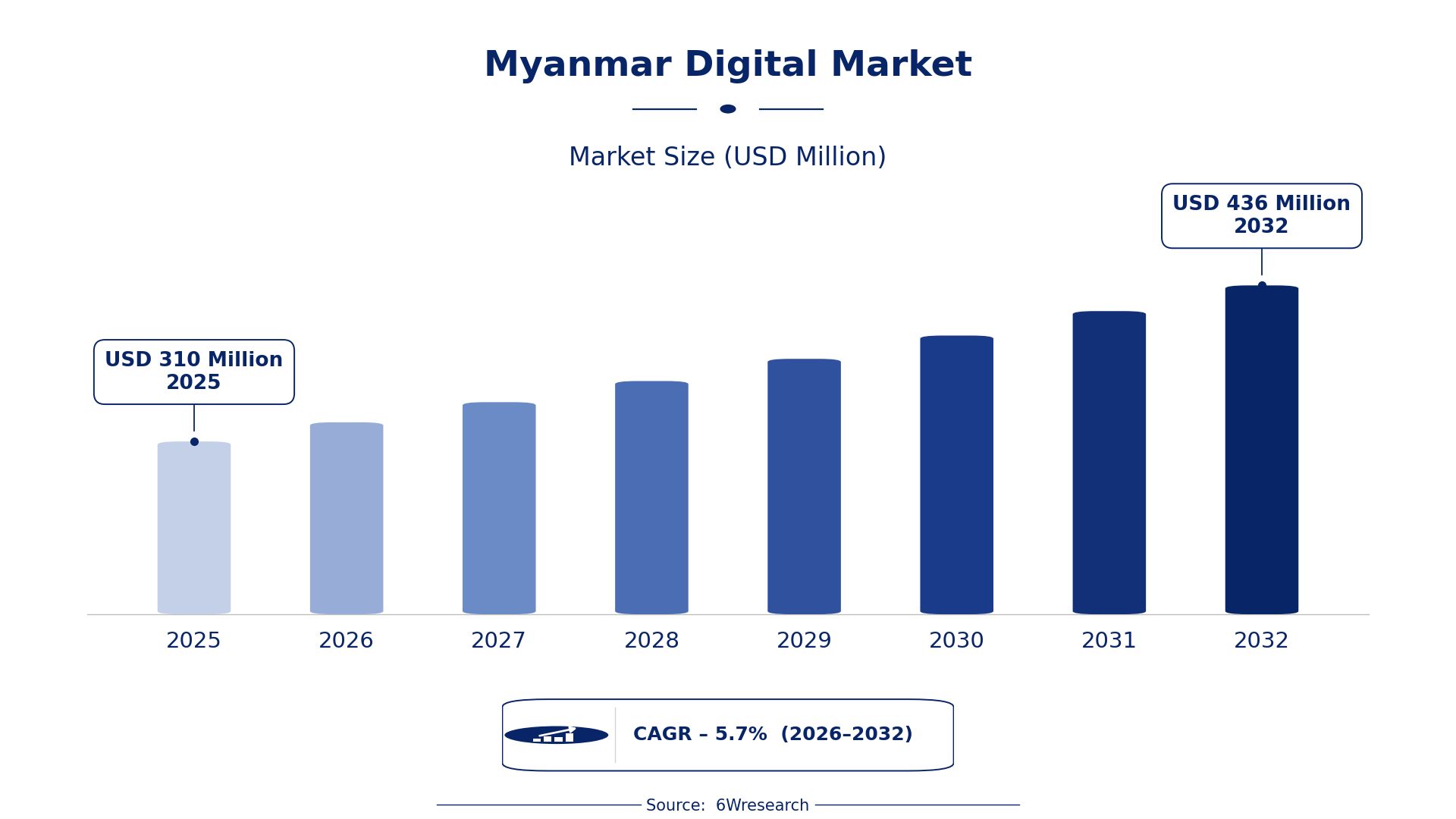
The Myanmar Digital Market was estimated at USD 310 Million in 2025 and is projected to reach USD 436 Million by 2032, growing at a CAGR of 5.7% from 2026 to 2032.
Myanmar Digital Market Synopsis
The Myanmar digital market has seen a surge in activity driven by rising internet access and smartphone usage, creating a vibrant environment for digital services. However, this momentum contrasts with ongoing challenges such as infrastructure gaps and regulatory hurdles that could impede long-term growth.
In the near future, we can expect the digital landscape to continue evolving, particularly in e-commerce and mobile payments. As more consumers shift online, businesses will need to adapt swiftly to meet the demands of a tech-savvy population eager for innovative solutions.
Myanmar Digital Market Year-wise Growth Rate and Key Drivers
This graph illustrates the annual growth rates of the Myanmar Digital Market from 2021 to 2032, highlighting a steady upward trajectory and projected expansion over the forecast period.
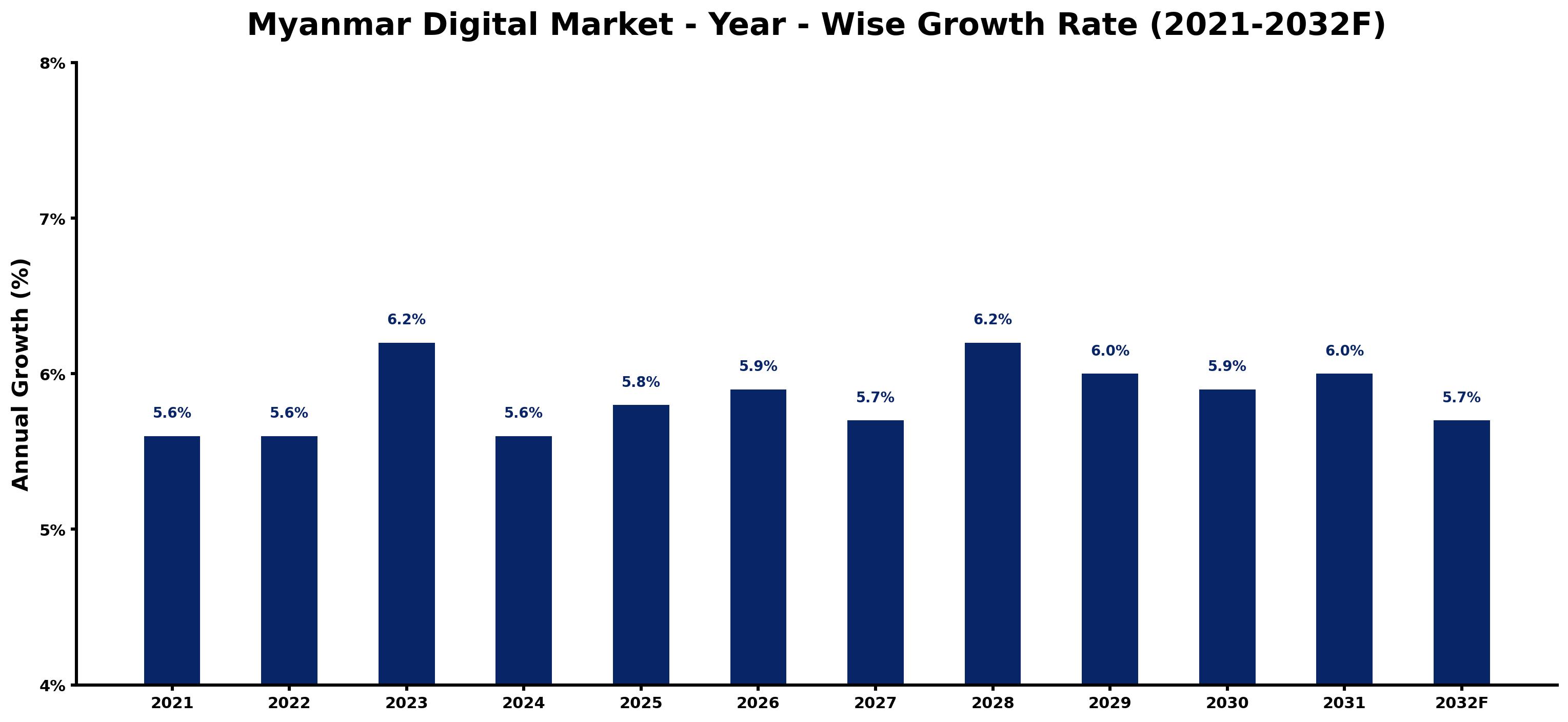
The table below presents the year‑wise growth rates along with the key drivers influencing the market
| Year | Growth Rate | Major Drivers |
| 2021 | 5.6% | Adoption of digital payment systems by local retailers. |
| 2022 | 5.6% | Government incentives for tech startups in Yangon. |
| 2023 | 6.2% | Growth in smartphone ownership among rural populations. |
| 2024 | 5.6% | Launch of nationwide 4G network by Myanmar telecom operators. |
| 2025 | 5.8% | Emergence of local social media platforms catering to youth. |
| 2026 | 5.9% | Increased internet accessibility through public Wi-Fi initiatives. |
| 2027 | 5.7% | Rise of digital content consumption among urban youth. |
| 2028 | 6.2% | Partnerships between local firms and international tech companies. |
| 2029 | 6.0% | Government push for digital literacy programs nationwide. |
| 2030 | 5.9% | Emerging cybersecurity regulations enhancing user trust. |
| 2031 | 6.0% | Local demand for streaming services and entertainment apps. |
| 2032 | 5.7% | Continued growth in online retail driven by youth demographics. |
Note: Market size estimations and growth projections presented in this report are based on 6Wresearch's proprietary forecasting methodology, utilizing the latest available industry data, government publications, and primary research inputs.
Myanmar Digital Market Key Takeaways
Below are some of the specific key takeaways from the market, including:
- Rapid growth in e-commerce driven by increasing consumer preference for online shopping.
- Mobile payment solutions are expanding, creating a more inclusive financial ecosystem.
- Social media platforms are becoming essential tools for marketing and customer engagement.
- Infrastructure improvements are necessary to support the burgeoning digital services sector.
- The demand for digital content is rising, particularly among younger demographics.
Evaluation of Restraints in Myanmar Digital Market
Despite the promising outlook, several restraints hinder the Myanmar digital market's growth trajectory. Limited internet penetration remains a critical issue, particularly in rural areas where connectivity is sporadic at best. The existing infrastructure struggles to keep pace with demand, resulting in inconsistent service quality.
on top of that, regulatory uncertainties can deter foreign investment and complicate operations for local businesses. A lack of digital literacy among the population poses an additional barrier, requiring concerted efforts in education and training to empower consumers and entrepreneurs alike.
Myanmar Digital Market Trends
Several trends are shaping the Myanmar digital market today. The increasing popularity of social media, particularly among younger users, is revolutionizing marketing strategies. Companies are leveraging platforms like Facebook and TikTok to build brand awareness and drive sales.
on top of that, the rise of e-commerce is backed by the convenience of online shopping and the growing adoption of mobile payment methods. As consumers become more accustomed to digital transactions, the demand for secure and efficient payment options is likely to increase, paving the way for fintech innovations.
Myanmar Digital Market Opportunities
The Myanmar digital market is ripe for investment across multiple sectors. E-commerce platforms are expanding, offering an untapped audience eager for online shopping experiences. Similarly, mobile payment services like Wave Money and KBZPay are addressing the need for accessible financial solutions.
Fintech startups have a unique opportunity to cater to underserved populations, making financial services more inclusive. With digital content consumption on the rise, there is also potential for media companies to create engaging platforms for streaming and gaming.
Government Initiatives in the Myanmar Digital Market
Government initiatives are crucial in shaping the trajectory of the Myanmar digital market. Recognizing the importance of digital infrastructure, the government has implemented policies aimed at enhancing internet access and supporting the growth of the digital economy. This strategic focus is vital for attracting investment and fostering innovation.
- A national digital infrastructure upgrade programme is currently underway to expand broadband coverage across the country.
- Recent policy initiatives have been introduced to improve data privacy and enhance cybersecurity measures.
- Ongoing efforts include training programmes aimed at increasing digital literacy among the population.
- Planned regulations are set to promote fair competition in the digital market, ensuring a level playing field for all players.
- A forthcoming initiative will focus on expanding access to digital payment solutions to drive financial inclusion.
Future Insights of the Myanmar Digital Market
Looking ahead, the Myanmar digital market is expected to witness substantial growth through 2032. Increasing internet penetration and smartphone usage will continue to fuel demand for digital services. E-commerce, mobile payments, and social media platforms are anticipated to thrive, driven by shifting consumer behaviors and preferences.
While challenges such as infrastructure limitations persist, ongoing government efforts to improve connectivity and regulatory frameworks will likely create a conducive environment for investment. As businesses adapt to the evolving digital landscape, opportunities for innovation and market entry will abound.
Myanmar Digital Market Latest Developments
In the past year, the Myanmar digital market has seen significant developments as companies and the government adapt to emerging trends. The pace of innovation has picked up, with various players launching new services to cater to the growing digital consumer base.
- A major regional operator launched a new mobile payment app in early 2025, aiming to capture the growing demand for cashless transactions.
- A fintech startup is currently expanding its services to rural areas, focusing on providing digital financial solutions to underserved populations.
- In mid-2025, a prominent e-commerce platform introduced a same-day delivery service, enhancing the online shopping experience for consumers.
- A partnership between local telecommunications and tech firms is expected to roll out in Q3 2026, targeting improvements in internet speed and reliability.
- An upcoming initiative will introduce a nationwide digital skills training programme planned for late 2026 to boost digital literacy.
Myanmar Digital Market - Key Attractiveness of the Report
- 10 Years of Market Numbers
- Historical Data Starting from 2022 to 2025
- Base Year: 2025
- Forecast Data until 2032
- Key Performance Indicators Impacting the Market
- Major Upcoming Developments and Projects
How are consumer behaviors changing in Myanmar’s digital market?
What role does social media play in Myanmar’s digital market?
Key Highlights of the Report:
- Myanmar Digital Market Outlook
- Market Size of Myanmar Digital Market, 2025
- Forecast of Myanmar Digital Market, 2032
- Historical Data and Forecast of Myanmar Digital Revenues & Volume for the Period 2022-2032F
- Myanmar Digital Market Trend Evolution
- Myanmar Digital Market Drivers and Challenges
- Myanmar Digital Price Trends
- Myanmar Digital Porter's Five Forces
- Myanmar Digital Industry Life Cycle
- Historical Data and Forecast of Myanmar Digital Market Revenues & Volume By Software for the Period 2022-2032F
- Historical Data and Forecast of Myanmar Digital Market Revenues & Volume By CRM Software for the Period 2022-2032F
- Historical Data and Forecast of Myanmar Digital Market Revenues & Volume By Email Marketing Software for the Period 2022-2032F
- Historical Data and Forecast of Myanmar Digital Market Revenues & Volume By Social Media Advertising for the Period 2022-2032F
- Myanmar Digital Import Export Trade Statistics
- Market Opportunity Assessment By Software
- Myanmar Digital Top Companies Market Share
- Myanmar Digital Competitive Benchmarking By Technical and Operational Parameters
- Myanmar Digital Company Profiles
- Myanmar Digital Key Strategic Recommendations






































