Myanmar Interior Design Market Size, Share & Growth Rate
The Myanmar Interior Design Market was estimated at USD 455 Million in 2025 and is projected to reach USD 624 Million by 2032, growing at a CAGR of 4.6% from 2026 to 2032. This growth trajectory is primarily driven by the country's rapid urbanization and an emerging middle class eager to enhance their living environments. As disposable incomes rise, consumers increasingly prioritize aesthetics and functionality in both residential and commercial spaces, fueling demand for innovative interior design services.
Myanmar Interior Design Market Year-wise Growth Rate and Key Drivers
This graph highlights how the Myanmar Interior Design Market has steadily grown over the years, supported by major growth factors.
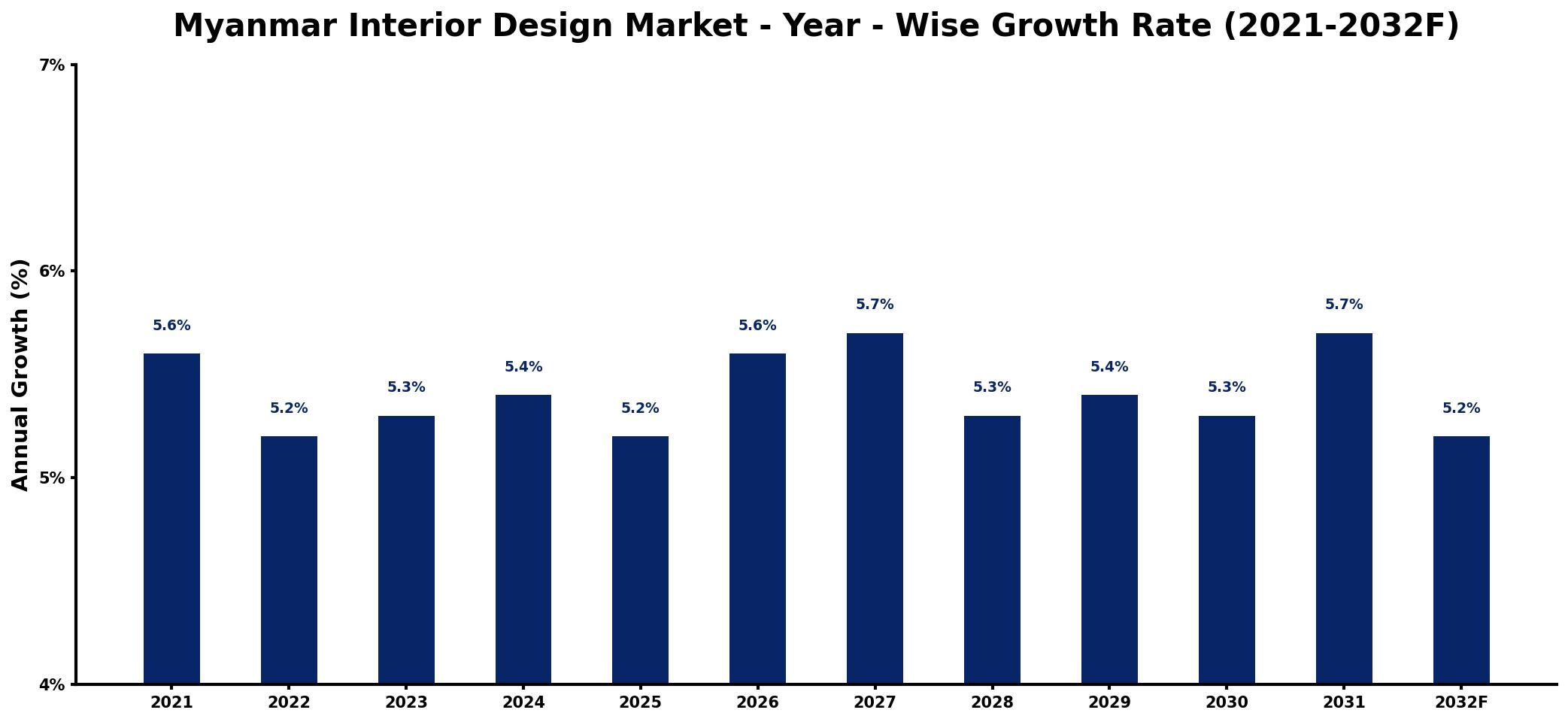
The table below presents the year‑wise growth rates along with the key drivers influencing the market
| Year | Growth Rate | Major Drivers |
| 2021 | 5.6% | Rising urban population trends |
| 2022 | 5.2% | Increased disposable income levels |
| 2023 | 5.3% | Growing tourism and hospitality sector |
| 2024 | 5.4% | Expansion of real estate projects |
| 2025 | 5.2% | Emergence of sustainable practices |
| 2026 | 5.6% | Technological advancements in construction |
| 2027 | 5.7% | Surge in expatriate housing demand |
| 2028 | 5.3% | Government investment in infrastructure |
| 2029 | 5.4% | Enhanced consumer awareness initiatives |
| 2030 | 5.3% | Growth in online service platforms |
| 2031 | 5.7% | Increased foreign direct investment |
| 2032 | 5.2% | Rising interest in cultural aesthetics |
Note: Market size estimations and growth projections presented in this report are based on 6Wresearch's proprietary forecasting methodology, utilizing the latest available industry data, government publications, and primary research inputs.
Myanmar Interior Design Market Synopsis
The strongest force shaping the Myanmar interior design market today is urbanization, which has prompted a significant transformation in how spaces are designed and utilized. As cities expand and the population shifts toward urban living, there is a palpable demand for well-designed interiors that reflect both modern tastes and cultural heritage.
Moreover, there is a notable integration of traditional Burmese design elements with contemporary styles, resulting in a unique aesthetic that resonates with both locals and expatriates. This fusion not only enhances the appeal of spaces but also promotes cultural continuity amid the rapid changes brought about by urban development.
Myanmar Interior Design Market Key Takeaways
- The market is characterized by a blend of traditional and modern design elements, reflecting the country's cultural richness.
- Increased disposable income among the growing middle class is a significant driver of demand for interior design services.
- Sustainability and the use of locally sourced materials are becoming critical trends in interior design projects.
- Smart home technology integration is increasingly sought after, particularly in urban areas with smaller living spaces.
- The government's support for local artisans and sustainable practices is paving the way for innovative business opportunities.
Evaluation of Restraints in Myanmar Interior Design Market
The Myanmar Interior Design Market, while promising, faces several restraints that could impede its growth. Access to quality materials and tools remains limited, often affecting the overall quality of design projects. Furthermore, the lack of a skilled workforce poses a significant challenge, as many designers struggle to find trained professionals who can meet the evolving demands of the industry. Additionally, there exists a general lack of awareness about the value of professional interior design, which can hinder broader market acceptance. These challenges, coupled with inconsistent regulations and licensing requirements, create an environment that complicates the pursuit of professionalism and growth within the sector.
Myanmar Interior Design Market Trends
Current trends in the Myanmar interior design market reveal a dynamic interplay between tradition and innovation. The increasing popularity of minimalist and Scandinavian design styles points to a shift towards clean, functional spaces that maximize light and efficiency. Concurrently, there's a rising emphasis on sustainability, with many designers opting for eco-friendly practices and materials sourced locally. As technology continues to advance, integration of smart home systems is also becoming more prevalent, reflecting the modern consumers demand for convenience and efficiency.
Myanmar Interior Design Market Opportunities
Investment opportunities within the Myanmar interior design market are plentiful, especially as the real estate sector expands. There is a clear demand for quality interior design services from both residential and commercial clients eager to enhance their environments. Collaborations with local artisans to create culturally inspired design products can differentiate firms in a competitive marketplace. As consumer preferences evolve towards contemporary styles, there remains significant potential for growth and innovation.
Government Initiatives in the Myanmar Interior Design Market
Government policies in Myanmar are increasingly supportive of the interior design sector, focusing on promoting local craftsmanship and sustainable practices. Initiatives aimed at fostering entrepreneurship within the industry include training programs for skill development and efforts to enhance access to financing for design projects. Regulatory frameworks are evolving to ensure that quality standards and environmental sustainability practices are met, creating a conducive environment for growth while preserving the rich cultural heritage of Myanmar.
Future Insights of the Myanmar Interior Design Market
Looking ahead to 2026-2032, the Myanmar Interior Design Market is anticipated to experience significant expansion. As urbanization continues and disposable incomes rise, more consumers are expected to prioritize personalized and stylish living environments. The fusion of global design trends with local traditions is likely to foster creativity and innovation, attracting both local and international players to the market. However, addressing skill shortages and regulatory challenges will be essential in sustaining this growth trajectory.
Myanmar Interior Design Market Latest Developments (2025 - 2026)
Recent developments within the Myanmar interior design market indicate a growing interest in sustainability and innovation. Many firms are now prioritizing environmentally friendly practices and sourcing materials locally. Furthermore, collaborations between designers and local craftsmen are becoming more common, enhancing the cultural relevance of projects. There is also a marked increase in consumer awareness and appreciation for professional design services, further driving demand in the sector.
Myanmar Interior Design Market - Key Attractiveness of the Report
- 10 Years of Market Numbers
- Historical Data Starting from 2022 to 2025
- Base Year: 2025
- Forecast Data until 2032
- Key Performance Indicators Impacting the Market
- Major Upcoming Developments and Projects
Key Highlights of the Report:
- Myanmar Interior Design Market Outlook
- Market Size of Myanmar Interior Design Market, 2025
- Forecast of Myanmar Interior Design Market, 2032
- Historical Data and Forecast of Myanmar Interior Design Revenues & Volume for the Period 2022-2032F
- Myanmar Interior Design Market Trend Evolution
- Myanmar Interior Design Market Drivers and Challenges
- Myanmar Interior Design Price Trends
- Myanmar Interior Design Porter's Five Forces
- Myanmar Interior Design Industry Life Cycle
- Historical Data and Forecast of Myanmar Interior Design Market Revenues & Volume By End Use for the Period 2022-2032F
- Historical Data and Forecast of Myanmar Interior Design Market Revenues & Volume By Commercial for the Period 2022-2032F
- Historical Data and Forecast of Myanmar Interior Design Market Revenues & Volume By Residential for the Period 2022-2032F
- Historical Data and Forecast of Myanmar Interior Design Market Revenues & Volume By Decoration Type for the Period 2022-2032F
- Historical Data and Forecast of Myanmar Interior Design Market Revenues & Volume By New for the Period 2022-2032F
- Historical Data and Forecast of Myanmar Interior Design Market Revenues & Volume By Renovations for the Period 2022-2032F
- Myanmar Interior Design Import Export Trade Statistics
- Market Opportunity Assessment By End Use
- Market Opportunity Assessment By Decoration Type
- Myanmar Interior Design Top Companies Market Share
- Myanmar Interior Design Competitive Benchmarking By Technical and Operational Parameters
- Myanmar Interior Design Company Profiles
- Myanmar Interior Design Key Strategic Recommendations






































