Myanmar Office Chair Market Size Growth Rate
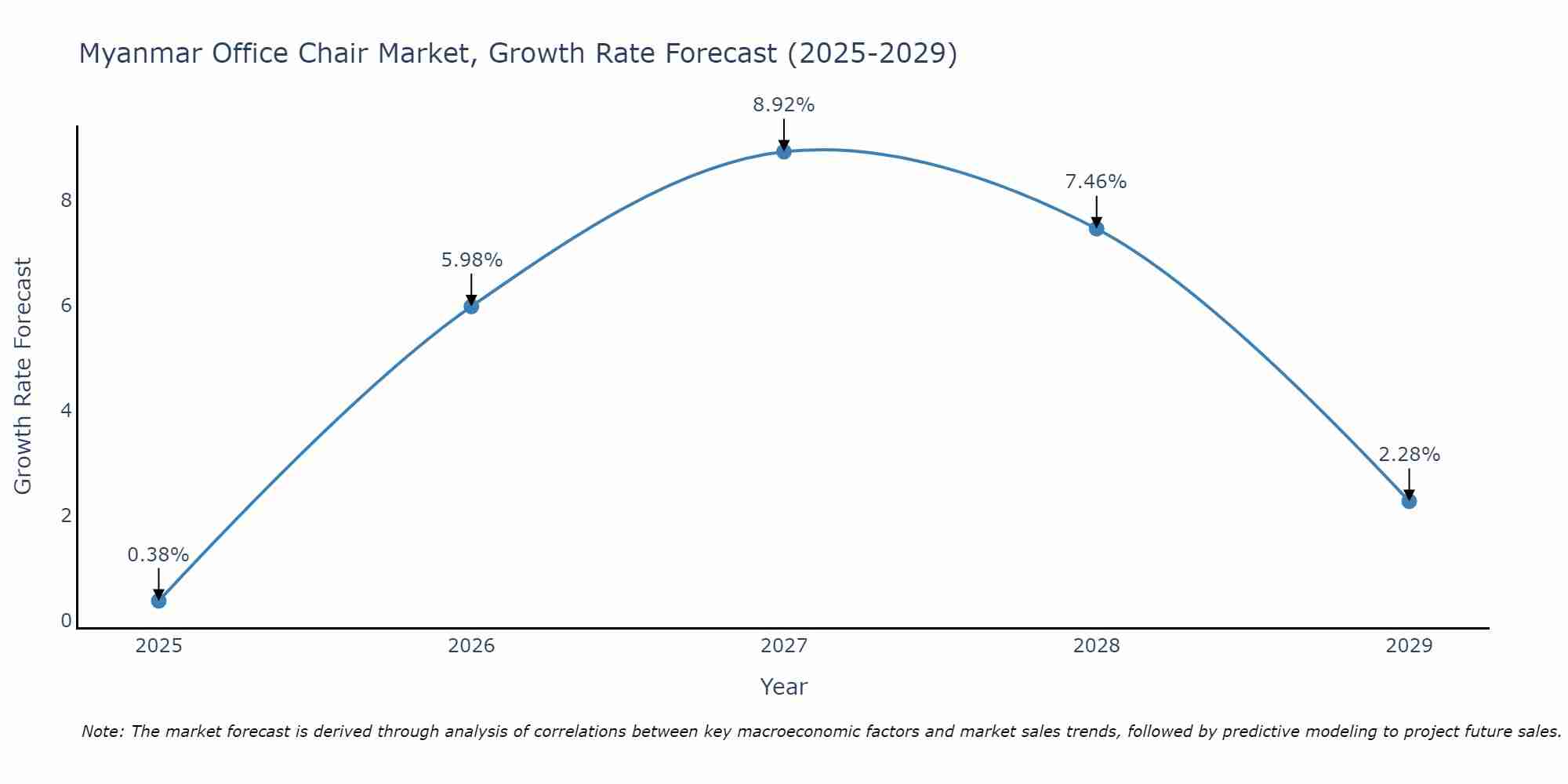
The Myanmar Office Chair Market is projected to witness mixed growth rate patterns during 2025 to 2029. The growth rate begins at 0.38% in 2025, climbs to a high of 8.92% in 2027, and moderates to 2.28% by 2029.
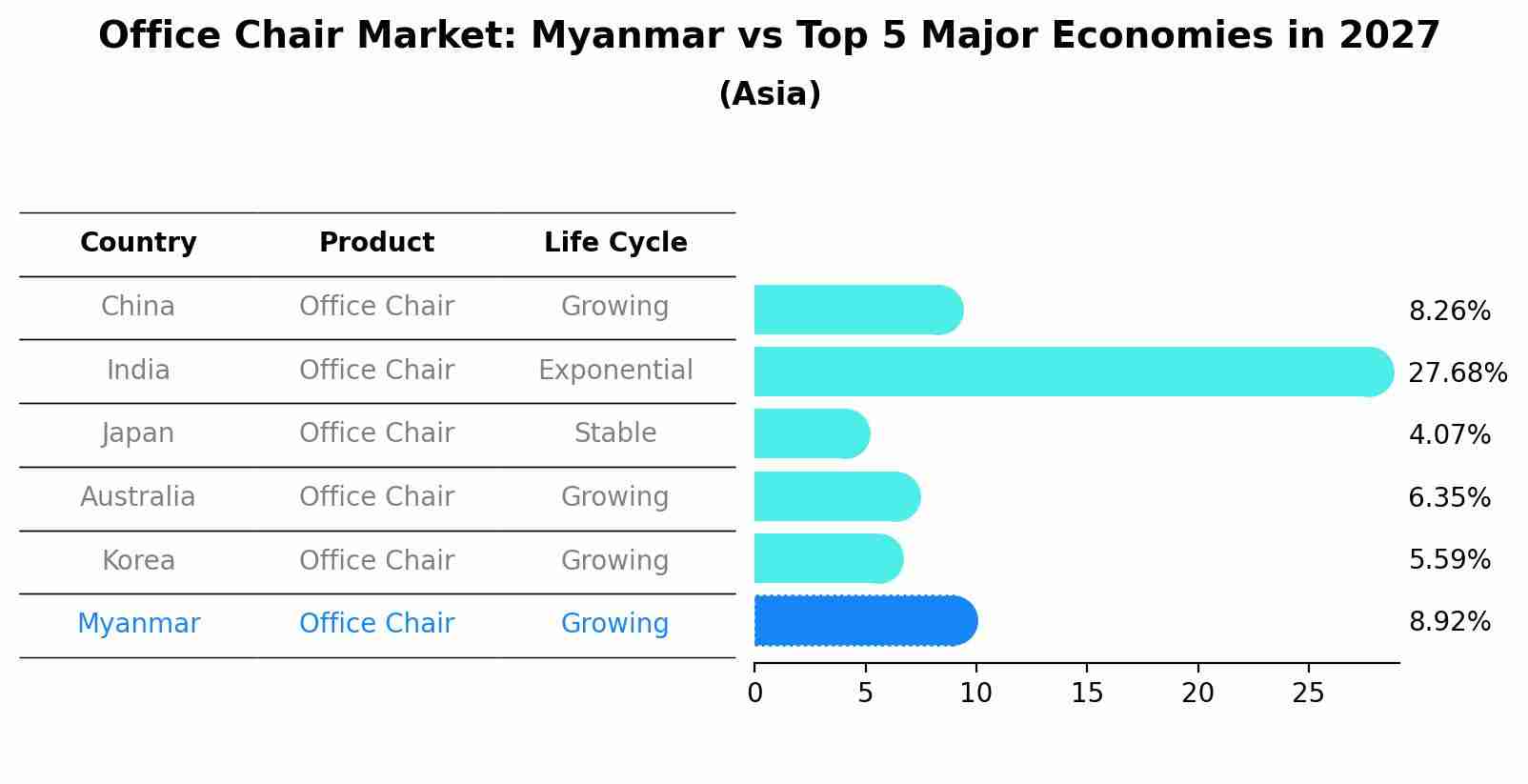
Office Chair Market: Myanmar vs Top 5 Major Economies in 2027 (Asia)
By 2027, the Office Chair market in Myanmar is anticipated to reach a growth rate of 8.92%, as part of an increasingly competitive Asia region, where China remains at the forefront, supported by India, Japan, Australia and South Korea, driving innovations and market adoption across sectors.
Myanmar Office Chair Market Synopsis
The Myanmar office chair market is experiencing steady growth driven by the expanding commercial sector, particularly in major cities like Yangon and Mandalay. The increasing number of businesses, both local and foreign, setting up offices in the country has boosted demand for ergonomic and stylish office chairs. The market is characterized by a mix of local manufacturers and international brands offering a variety of products across different price points to cater to the diverse needs of consumers. With a growing awareness of the importance of employee comfort and productivity, there is a rising trend towards the adoption of high-quality office chairs with features such as adjustable lumbar support, breathable mesh backrests, and durable materials. As the office culture continues to evolve in Myanmar, the demand for functional and aesthetically pleasing office chairs is expected to further drive market growth.
Myanmar Office Chair Market Trends
The Myanmar office chair market is experiencing a shift towards ergonomic designs and sustainable materials. With a growing awareness of the importance of employee well-being and productivity, companies are increasingly investing in ergonomic office chairs that offer better support and comfort. Sustainable materials such as recycled plastics and eco-friendly fabrics are also gaining popularity as businesses in Myanmar are becoming more environmentally conscious. Additionally, there is a rising demand for adjustable and customizable features in office chairs to cater to different body types and preferences. As the office culture evolves and remote work becomes more prevalent, the demand for versatile and adaptable office chairs that can suit various work environments is also on the rise in the Myanmar market.
Myanmar Office Chair Market Challenges
The Myanmar Office Chair Market faces various challenges, including limited awareness and adoption of ergonomic office furniture principles, which can hinder the demand for higher-priced, more specialized office chairs. Additionally, the presence of counterfeit or low-quality products in the market poses a threat to both consumer trust and the reputation of legitimate office chair manufacturers. Infrastructure limitations and logistics issues in Myanmar also contribute to difficulties in distribution and delivery, impacting the overall efficiency of the supply chain. Moreover, fluctuating import regulations and tariffs can affect the cost and availability of office chairs in the market, adding another layer of complexity for both manufacturers and consumers looking to navigate the industry.
Myanmar Office Chair Market Investment Opportunities
The Myanmar office chair market presents promising investment opportunities due to the country`s growing economy and increasing demand for office furniture. With the rise of commercial spaces, co-working offices, and corporate sectors in Myanmar, there is a growing need for ergonomic, durable, and stylish office chairs. Investors can focus on offering a diverse range of high-quality chairs that cater to different preferences and budgets, including ergonomic designs, modern styles, and eco-friendly materials to appeal to a wide customer base. Additionally, investing in innovative technologies such as adjustable features, lumbar support, and sustainable manufacturing processes can help companies differentiate themselves in the market and capitalize on the growing demand for premium office furniture in Myanmar.
Jordan Agar Market Government Policies
Government policies related to the Myanmar Office Chair Market include regulations on import tariffs and taxes, which can impact the cost of importing office chairs into the country. Additionally, there may be policies related to product safety and quality standards that office chair manufacturers and suppliers need to adhere to. The government may also have initiatives to promote local manufacturing of office chairs, which could involve providing incentives or support to domestic producers. Overall, government policies in Myanmar likely play a significant role in shaping the competitive landscape of the office chair market, influencing factors such as pricing, product availability, and market entry barriers for both domestic and international players.
Myanmar Office Chair Market Future Outlook
The future outlook for the Myanmar Office Chair Market is promising with steady growth anticipated in the coming years. Factors such as the increasing number of businesses and office spaces being set up in the country, coupled with a growing focus on ergonomic furniture solutions, are expected to drive demand for office chairs. Additionally, as companies prioritize employee well-being and productivity, there is a rising awareness regarding the importance of comfortable and supportive seating in the workplace. With a burgeoning economy and a developing corporate sector, the Myanmar Office Chair Market is likely to witness a surge in demand for modern, stylish, and functional office chairs, presenting opportunities for both domestic and international manufacturers and suppliers to capitalize on this growing market segment.
Key Highlights of the Report:
- Myanmar Office Chair Market Outlook
- Market Size of Myanmar Office Chair Market, 2024
- Forecast of Myanmar Office Chair Market, 2031
- Historical Data and Forecast of Myanmar Office Chair Revenues & Volume for the Period 2021 - 2031
- Myanmar Office Chair Market Trend Evolution
- Myanmar Office Chair Market Drivers and Challenges
- Myanmar Office Chair Price Trends
- Myanmar Office Chair Porter's Five Forces
- Myanmar Office Chair Industry Life Cycle
- Historical Data and Forecast of Myanmar Office Chair Market Revenues & Volume By Product Type for the Period 2021 - 2031
- Historical Data and Forecast of Myanmar Office Chair Market Revenues & Volume By Executive Office for the Period 2021 - 2031
- Historical Data and Forecast of Myanmar Office Chair Market Revenues & Volume By Ergonomic for the Period 2021 - 2031
- Historical Data and Forecast of Myanmar Office Chair Market Revenues & Volume By Conference for the Period 2021 - 2031
- Historical Data and Forecast of Myanmar Office Chair Market Revenues & Volume By Material for the Period 2021 - 2031
- Historical Data and Forecast of Myanmar Office Chair Market Revenues & Volume By Mesh for the Period 2021 - 2031
- Historical Data and Forecast of Myanmar Office Chair Market Revenues & Volume By Lather for the Period 2021 - 2031
- Historical Data and Forecast of Myanmar Office Chair Market Revenues & Volume By Plastic for the Period 2021 - 2031
- Historical Data and Forecast of Myanmar Office Chair Market Revenues & Volume By Fabric for the Period 2021 - 2031
- Historical Data and Forecast of Myanmar Office Chair Market Revenues & Volume By Sales Channel for the Period 2021 - 2031
- Historical Data and Forecast of Myanmar Office Chair Market Revenues & Volume By Offline for the Period 2021 - 2031
- Historical Data and Forecast of Myanmar Office Chair Market Revenues & Volume By Online for the Period 2021 - 2031
- Myanmar Office Chair Import Export Trade Statistics
- Market Opportunity Assessment By Product Type
- Market Opportunity Assessment By Material
- Market Opportunity Assessment By Sales Channel
- Myanmar Office Chair Top Companies Market Share
- Myanmar Office Chair Competitive Benchmarking By Technical and Operational Parameters
- Myanmar Office Chair Company Profiles
- Myanmar Office Chair Key Strategic Recommendations






































