Nepal Bakery Market Size Growth Rate
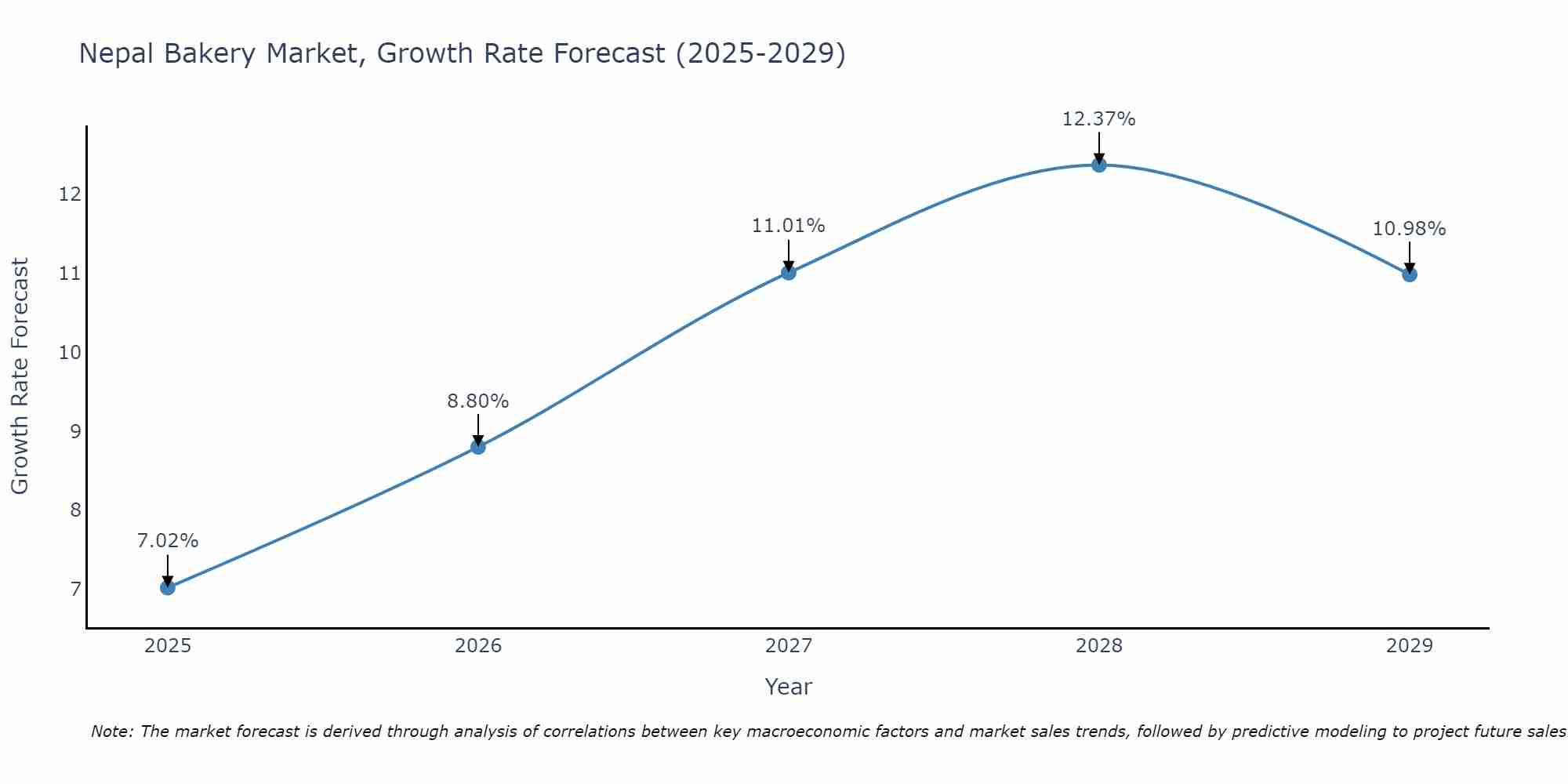
The Nepal Bakery Market is projected to witness mixed growth rate patterns during 2025 to 2029. Growth accelerates to 12.37% in 2028, following an initial rate of 7.02%, before easing to 10.98% at the end of the period.
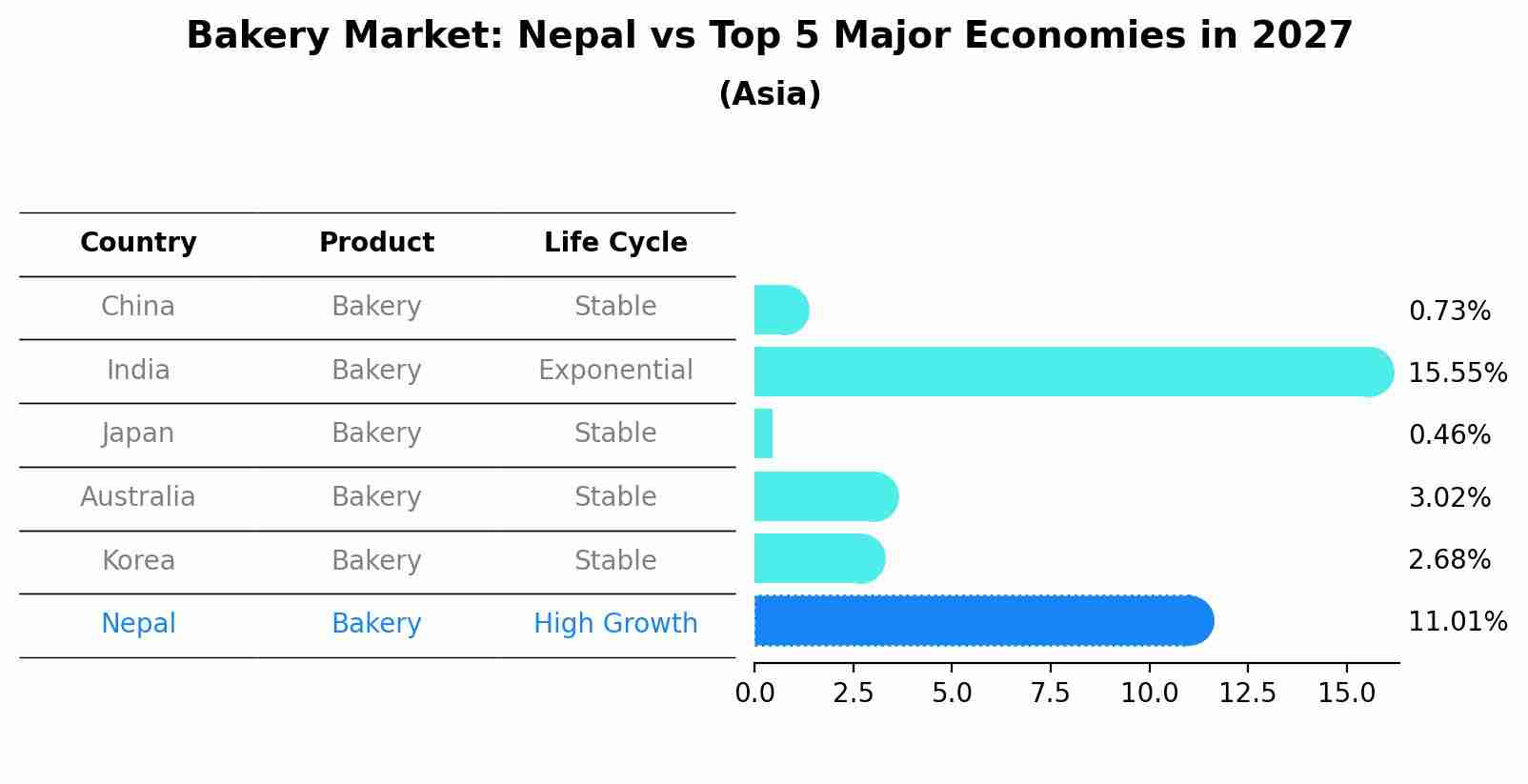
Bakery Market: Nepal vs Top 5 Major Economies in 2027 (Asia)
By 2027, the Bakery market in Nepal is anticipated to reach a growth rate of 11.01%, as part of an increasingly competitive Asia region, where China remains at the forefront, supported by India, Japan, Australia and South Korea, driving innovations and market adoption across sectors.
Nepal Bakery Market Growth Rate
According to 6Wresearch internal database and industry insights, the Nepal Bakery Market is projected to grow at a compound annual growth rate (CAGR) of 4.8% during the forecast period from 2026 to 2032.
Topics Covered in the Nepal Bakery Market Report
The Nepal Bakery Market report thoroughly covers the market by product type and distribution channel, providing an unbiased and detailed analysis of ongoing market trends, opportunities, challenges, and market drivers, helping stakeholders align their strategies with current and future market dynamics.
Nepal Bakery Market Highlights
| Report Name | Nepal Bakery Market |
| Forecast Period | 2026–2032 |
| CAGR | 4.8% |
| Growing Sector | Bakery |
Nepal Bakery Market Synopsis
The Nepal Bakery Market is expected to experience steady growth due to the increasing consumer preference for bakery products like bread, cakes, and pastries. The growing demand for convenient, ready-to-eat baked goods is being driven by busy lifestyles and urbanization. As consumer preferences evolve, there is a growing demand for healthier alternatives like whole-grain bread and gluten-free products. The online retail sector is expanding fast, driving higher sales and broader market access. Technological advancement in food newbies across the globe; thereby helping them build quality products of international standards.
Evaluation of Growth Drivers in the Nepal Bakery Market
Below mentioned are some prominent drivers and their impact on the market dynamics:
| Drivers | Primary Segments Affected | Why It Matters (Evidence) |
| Health-Conscious Consumer Shift | Cakes & Pastries, Bread, Morning Goods | The growing awareness about healthy eating habits is pushing demand for low-sugar, gluten-free, and functional bakery items. |
| Increasing Demand for Convenience | Biscuits, Morning Goods | Busy lifestyles are increasing demand for convenient, on-the-go bakery products such as snacks and sandwiches. |
| Popularity of Artisanal Products | Bread, Cakes & Pastries | Consumers are increasingly attracted to high-quality, handmade, and distinct bakery items, boosting the growth of artisanal products. |
| Ethnic and Fusion Product Growth | Other (Fusion Bakery Products) | The rise in multicultural influences is encouraging demand for ethnic and fusion bakery products that cater to diverse tastes. |
| Innovations in Product Offerings | Biscuits, Cakes & Pastries | Bakery producers are innovating with new ingredients, flavors, and formulations, providing more variety to consumers. |
Nepal Bakery Market size is expected to grow at a significant CAGR of 4.8% during the forecast period 2026-2032. Nepal Bakery Market growth is majorly propelled by consumer behavior towards health-conscious and convenient bakery products. Technological enhancements in baking and e-commerce expansion play a critical role in providing wider access to bakery items. The growing popularity of on-the-go snacks and convenience foods boosts the demand for fresh, packaged baked goods. In addition, the rise in the requirement for gluten-free, low-sugar, and organic bakery products caters to health-conscious consumers, contributing to market diversification. Furthermore, innovative packaging solutions and a growing number of retail outlets are enhancing consumer accessibility to bakery products across the country.
Evaluation of Restraints in the Nepal Bakery Market
Below mentioned are some major restraints and their influence on the market dynamics:
| Restraints | Primary Segments Affected | What This Means (Evidence) |
| High Price Sensitivity | Cakes & Pastries, Bread | The premium pricing of some organic or health-focused products may limit access among price-sensitive consumers. |
| Regulatory Barriers | All Product Segments | The enforcement of strict food labeling and safety standards can raise operational costs for manufacturers. |
| Competition from Packaged Snacks | Biscuits, Morning Goods | The growing demand for pre-packaged snacks and convenience foods is competing with the market for traditional bakery products. |
| Labor Shortages in Baking Industry | Bread, Cakes & Pastries | A shortage of skilled labor in the bakery industry could cause production delays and higher operational expenses. |
| Shelf-Life Limitations | Cakes & Pastries, Bread | Distribution of perishable bakery goods might be severely limited by their short shelf-lives, and this is sometimes a cost-incurring situation leading to wastage. |
Nepal Bakery Market Challenges
The Nepal Bakery Industry faces two main challenges such as the raw material prices of wheat; sugar and dairy products remain high. The food safety and hygiene regulations that bakeries must follow, create operational difficulties for their businesses. Business operations require product development as companies face two main challenges which include their need to create new products and their need to adapt to changing market conditions and consumer preferences.
Nepal Bakery Market Trends
Here are some major trends changing the Nepal Bakery Market Growth dynamics:
- Adoption of Digital Platforms and AI: The Nepal Bakery Market is adopting digital platforms together with AI-based data analytics to study customer preferences and create customized bakery products for their customers.
- Enhancement of Online Retail and Product Development: Digital tools are being used to improve online retail, create new recipes, and develop products catering to health-conscious consumers.
- Demand for Eco-Friendly Packaging: Requirement for eco-friendly packaging is increasing as sustainability has become an important business requirement.
- Rise of Health-Conscious Products: The popularity of organic gluten-free and keto-friendly baked goods is growing as consumers now prefer healthier food options.
Investment Opportunities in the Nepal Bakery Market
The Nepal Bakery Market presents several investment opportunities, including:
- E-Commerce Expansion: Online retail stores keep expanding their operations which enables them to reach more customers throughout cities.
- Logistics and Cold Storage Investment: By improving logistics and investment in cold storage, supply chain efficiency can be increased.
- Development of Healthier Product Lines: The rising consumer preference for healthy products such as gluten-free items and keto foods and organic products creates an opportunity for businesses to invest in these bakery goods.
- Premium and Artisanal Products: The rise of premium and artisanal bakery products opens new investment opportunities as consumers demand more distinctive, high-quality items.
Top 5 Leading Players in the Nepal Bakery Market
Below is the list of prominent companies leading the Nepal Bakery Market Share:
1. Krishna Pauroti (P) Ltd.
| Company Name | Krishna Pauroti (P) Ltd. |
|---|---|
| Established Year | 1948 |
| Headquarters | Kathmandu, Nepal |
| Official Website | Click Here |
Krishna Pauroti is one of the oldest and most iconic bakery brands in Nepal, known for its traditional breads and baked goods with wide local reach and strong heritage.
2. Ramro Bakes (RP Bakery)
| Company Name | Ramro Bakes (RP Bakery) |
|---|---|
| Established Year | 2011 |
| Headquarters | Dhangadhi, Nepal |
| Official Website | Click Here |
Ramro Bakes is a premium bakery brand offering a variety of breads, cookies, cakes, and pastries made from quality ingredients, popular for consistent taste and innovation.
3. Sarawagi Group
| Company Name | Sarawagi Group (Bakery Division) |
|---|---|
| Established Year | 1992 |
| Headquarters | Kathmandu, Nepal |
| Official Website | Click Here |
Sarawagi Group is a leading supplier of bakery ingredients and food products in Nepal, supporting bakery manufacturers with quality raw materials and distribution networks.
4. Nanglo Bakery Cafe (The Bakery Cafe Pvt. Ltd.)
| Company Name | Nanglo Bakery Cafe (The Bakery Cafe Pvt. Ltd.) |
|---|---|
| Established Year | 1991 |
| Headquarters | Kathmandu, Nepal |
| Official Website | Click Here |
Nanglo Bakery Cafe blends bakery and cafe experiences with a range of breads, pastries, and desserts, while also providing inclusive employment opportunities.
5. Utpala BakeHouse
| Company Name | Utpala BakeHouse |
|---|---|
| Established Year | 2010s (approx) |
| Headquarters | Kathmandu, Nepal |
| Official Website | Click Here |
Utpala BakeHouse is a popular bakery in Nepal offering fresh breads, cakes, and pastries with a focus on quality, freshness, and artisanal tastes.
Government Regulations Introduced in the Nepal Bakery Market
According to Nepalese government data, food safety and quality in the Nepal Bakery Market are overseen by the Department of Food Technology and Quality Control (DFTQC) under the Ministry of Agriculture and Livestock Development, which sets mandatory standards for bakery products, ingredients, hygiene, and manufacturing processes. Along with this, the government also imposes licensing and periodic inspections to ensure compliance with safety and labeling requirements. In addition, initiatives such as skill development programs for bakery entrepreneurs and incentives for adopting modern baking technologies support industry modernization.
Future Insights of the Nepal Bakery Market
There are three major factors supporting the expansion of Nepal Bakery Industry, which include technological progress and customer preferences for healthier products and sustainable practices. Consumers will begin to prefer premium bakery products, which offer convenience, as their disposable income levels increase. The market will experience a new transformation through the increasing adoption of plant-based products, organic products and keto-friendly products. Digital platforms and AI technologies will enable businesses to provide customized products while reaching more customers.
Market Segmentation Analysis
The report offers a comprehensive study of the subsequent market segments and their leading categories.
Bread to Dominate the Market – By Product Type
According to Rashika, Senior Research Analyst, 6Wresearch, bread will lead the market due to its widespread consumption across various demographics. Its versatility, convenience, and affordability make it a preferred choice, fuelling its strong market growth in Nepal.
Online Retailing to Dominate the Market – By Distribution Channel
The application of online retailing is rapidly growing as more consumers prefer the convenience of purchasing bakery products from their homes. E-commerce platforms offer an expanded range of products and enhanced accessibility, fuelling its strong demand and market expansion.
Key Attractiveness of the Report
- 10 Years of Market Numbers.
- Historical Data Starting from 2022 to 2025.
- Base Year: 2025
- Forecast Data until 2032.
- Key Performance Indicators Impacting the Market.
- Major Upcoming Developments and Projects.
Key Highlights of the Report:
- Nepal Bakery Market Outlook
- Market Size of Nepal Bakery Market, 2025
- Forecast of Nepal Bakery Market, 2032
- Historical Data and Forecast of Nepal Bakery Revenues & Volume for the Period 2022 - 2032
- Nepal Bakery Market Trend Evolution
- Nepal Bakery Market Drivers and Challenges
- Nepal Bakery Price Trends
- Nepal Bakery Porter's Five Forces
- Nepal Bakery Industry Life Cycle
- Historical Data and Forecast of Nepal Bakery Market Revenues & Volume By Product Type for the Period 2022 - 2032
- Historical Data and Forecast of Nepal Bakery Market Revenues & Volume By Cakes and Pastries for the Period 2022 - 2032
- Historical Data and Forecast of Nepal Bakery Market Revenues & Volume By Biscuits for the Period 2022 - 2032
- Historical Data and Forecast of Nepal Bakery Market Revenues & Volume By Bread for the Period 2022 - 2032
- Historical Data and Forecast of Nepal Bakery Market Revenues & Volume By Morning Goods for the Period 2022 - 2032
- Historical Data and Forecast of Nepal Bakery Market Revenues & Volume By Other for the Period 2022 - 2032
- Historical Data and Forecast of Nepal Bakery Market Revenues & Volume By Distribution Channel for the Period 2022 - 2032
- Historical Data and Forecast of Nepal Bakery Market Revenues & Volume By Hypermarkets/Supermarkets for the Period 2022 - 2032
- Historical Data and Forecast of Nepal Bakery Market Revenues & Volume By Convenience Stores for the Period 2022 - 2032
- Historical Data and Forecast of Nepal Bakery Market Revenues & Volume By Speciality Stores for the Period 2022 - 2032
- Historical Data and Forecast of Nepal Bakery Market Revenues & Volume By Online Retailing for the Period 2022 - 2032
- Historical Data and Forecast of Nepal Bakery Market Revenues & Volume By Other for the Period 2022 - 2032
- Nepal Bakery Import Export Trade Statistics
- Market Opportunity Assessment By Product Type
- Market Opportunity Assessment By Distribution Channel
- Nepal Bakery Top Companies Market Share
- Nepal Bakery Competitive Benchmarking By Technical and Operational Parameters
- Nepal Bakery Company Profiles
- Nepal Bakery Key Strategic Recommendations
Markets Covered
The report offers a comprehensive study of the subsequent market segments:
By Product Type:
- Cakes and Pastries
- Biscuits
- Bread
- Morning Goods
- Other
By Distribution Channel:
- Hypermarkets/Supermarkets
- Convenience Stores
- Specialty Stores
- Online Retailing
- Other






































