Nepal Bamboo Furniture Market Size, Share & Growth Rate
The Nepal Bamboo Furniture Market was estimated at USD 222 Million in 2025 and is projected to reach USD 309 Million by 2032, growing at a CAGR of 4.8% from 2026 to 2032. This upward trajectory can be attributed to the increasing consumer preference for eco-friendly products and the growing popularity of bamboo furniture as a sustainable alternative to traditional materials. Additionally, the rise of minimalist and nature-inspired home decor trends is reinforcing this shift towards bamboo, making it a sought-after option for modern interiors.
Nepal Bamboo Furniture Market Year-wise Growth Rate and Key Drivers
This graph highlights how the Nepal Bamboo Furniture Market has steadily grown over the years, supported by major growth factors.
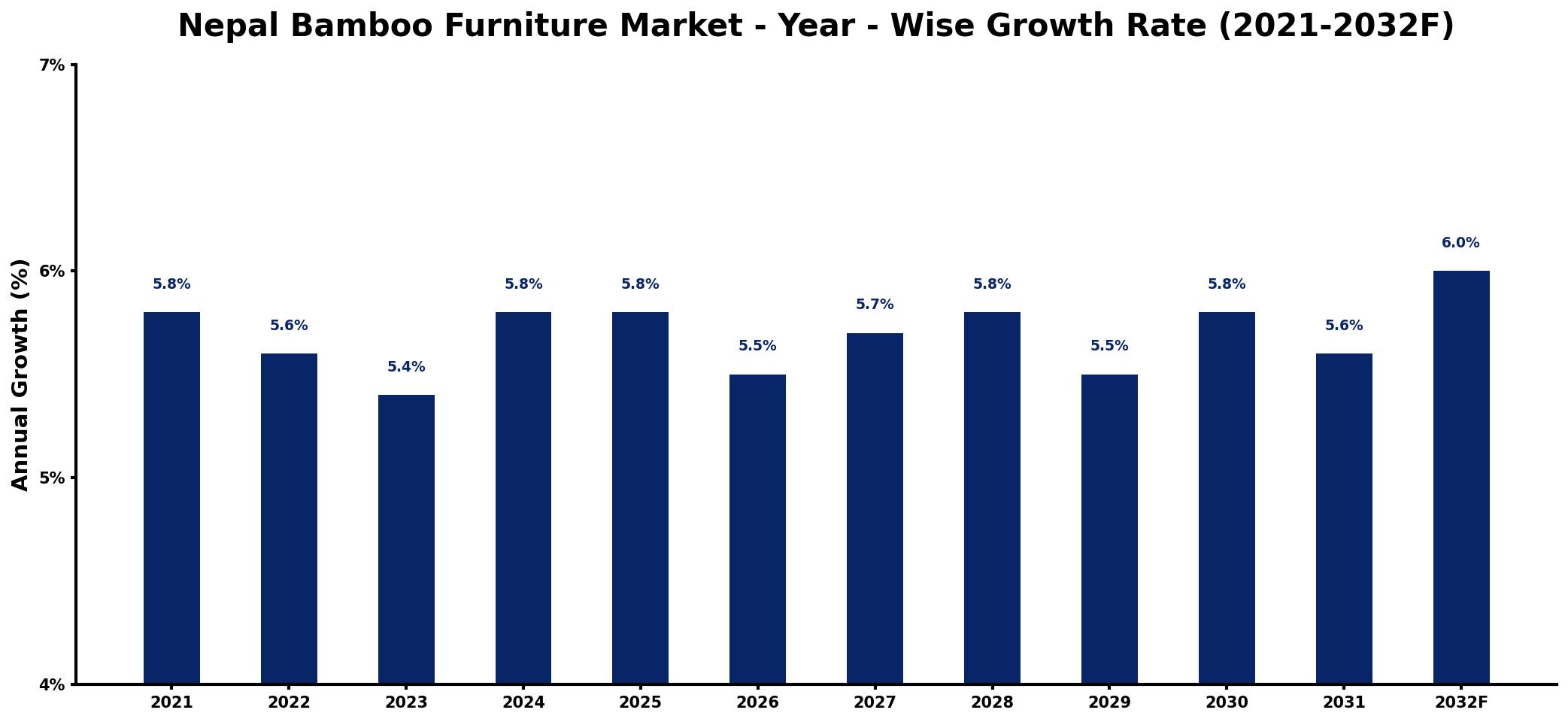
The table below presents the year‑wise growth rates along with the key drivers influencing the market
| Year | Growth Rate | Major Drivers |
| 2021 | 5.8% | Rising eco-friendly consumer preferences |
| 2022 | 5.6% | Increased investment in sustainable materials |
| 2023 | 5.4% | Growing popularity of artisanal craftsmanship |
| 2024 | 5.8% | Expansion of online retail platforms |
| 2025 | 5.8% | Surge in home renovation projects |
| 2026 | 5.5% | Strengthening local artisan communities |
| 2027 | 5.7% | Increase in eco-tourism initiatives |
| 2028 | 5.8% | Growing awareness of environmental benefits |
| 2029 | 5.5% | Development of innovative design concepts |
| 2030 | 5.8% | Rising demand for custom solutions |
| 2031 | 5.6% | Enhanced marketing of sustainable lifestyles |
| 2032 | 6.0% | Growth in green building certifications |
Note: Market size estimations and growth projections presented in this report are based on 6Wresearch's proprietary forecasting methodology, utilizing the latest available industry data, government publications, and primary research inputs.
Nepal Bamboo Furniture Market Synopsis
Currently, the Nepal Bamboo Furniture Market is gaining momentum as both domestic and international consumers embrace sustainable living. With a deep-rooted tradition of craftsmanship, local artisans are innovating by producing high-quality bamboo furniture that highlights Nepal's unique design aesthetics. This shift is not only economically beneficial but also essential for promoting sustainable practices in the furniture sector.
The market is supported by a growing demand for unique, handcrafted products that reflect a connection to nature. As consumers become increasingly aware of their environmental impact, bamboo furniture offers a compelling solution due to its natural durability, versatility, and minimal environmental footprint. In response to this rising awareness, manufacturers are enhancing their production techniques and expanding their offerings to meet evolving consumer tastes.
Nepal Bamboo Furniture Market Key Takeaways
- Strong growth projected, with a market value increase from USD 222 Million in 2025 to USD 309 Million by 2032.
- Consumer trends are shifting towards sustainable and eco-friendly furniture options, particularly bamboo products.
- Local craftsmanship and innovative designs are playing a crucial role in differentiating Nepali bamboo furniture in the market.
- Government initiatives are fostering a conducive environment for bamboo furniture manufacturing and promoting its use in public infrastructure.
- Growing interest in unique, handmade furniture pieces is driving demand, encouraging artisanal practices.
Evaluation of Restraints in Nepal Bamboo Furniture Market
Despite the promising growth, the Nepal Bamboo Furniture Market faces several challenges that could hinder its progress. A significant barrier is the limited consumer awareness and appreciation of bamboo furniture compared to traditional wooden options. Many potential buyers still perceive bamboo as inferior in terms of durability and luxury. Furthermore, inconsistencies in the supply chain often lead to quality variations, which can affect consumer trust. The market also grapples with a shortage of skilled artisans, making it difficult for manufacturers to produce high-quality items consistently. Overcoming these restraints will require comprehensive marketing strategies, educational initiatives to highlight the benefits of bamboo, and investments in skill development.
Nepal Bamboo Furniture Market Trends
The trend toward sustainable living is reshaping consumer preferences, with bamboo furniture rising to prominence as a viable eco-friendly choice. Customers are increasingly interested in unique, handcrafted pieces that embody traditional Nepali craftsmanship while also meeting modern aesthetic demands. Additionally, advancements in design are leading to innovative bamboo furniture solutions that blend functionality with artistry, appealing to both eco-conscious consumers and interior design enthusiasts alike.
Nepal Bamboo Furniture Market Opportunities
Investment opportunities in the Nepal Bamboo Furniture Market are abundant, particularly given the global surge in demand for sustainable products. As consumers prioritize environmentally friendly options, businesses can capitalize on this trend by offering distinctive bamboo furniture that emphasizes craftsmanship and design. The potential for export markets, especially in regions where sustainability is a key purchasing factor, presents additional avenues for growth. Furthermore, partnerships with local artisans can enhance product offerings and elevate the markets appeal.
Government Initiatives in the Nepal Bamboo Furniture Market
The government of Nepal has introduced several initiatives to bolster the bamboo furniture sector. These include policies supporting sustainable harvesting practices, financial assistance for manufacturers, and training programs to enhance skills in bamboo craftsmanship. Additionally, promoting bamboo products within public infrastructure projects has opened new avenues for demand. By ensuring quality and safety standards, the government aims to create a robust framework that encourages innovation and long-term sustainability in the bamboo furniture market.
Future Insights of the Nepal Bamboo Furniture Market
Looking ahead to 2026-2032, the Nepal Bamboo Furniture Market is poised for substantial growth. As sustainability continues to be a focal point for consumers, bamboo furniture is expected to flourish due to its eco-friendly properties and unique craftsmanship. The market's expansion will likely be driven by innovative design developments, increased domestic and international demand, and ongoing government support aimed at enhancing the industry's viability and global competitiveness.
Nepal Bamboo Furniture Market Latest Developments (2025 - 2026)
Recent developments in the Nepal Bamboo Furniture Market indicate a growing collaboration between local artisans and international designers, aiming to create innovative and market-ready products. There's also a noticeable increase in workshops and training sessions aimed at enhancing artisan skills, which is expected to elevate the quality and appeal of bamboo furniture. Furthermore, marketing campaigns focused on sustainability are being rolled out to improve consumer awareness, significantly shaping market dynamics.
Nepal Bamboo Furniture Market - Key Attractiveness of the Report
- 10 Years of Market Numbers
- Historical Data Starting from 2022 to 2025
- Base Year: 2025
- Forecast Data until 2032
- Key Performance Indicators Impacting the Market
- Major Upcoming Developments and Projects
Key Highlights of the Report:
- Nepal Bamboo Furniture Market Outlook
- Market Size of Nepal Bamboo Furniture Market, 2025
- Forecast of Nepal Bamboo Furniture Market, 2032
- Historical Data and Forecast of Nepal Bamboo Furniture Revenues & Volume for the Period 2022-2032F
- Nepal Bamboo Furniture Market Trend Evolution
- Nepal Bamboo Furniture Market Drivers and Challenges
- Nepal Bamboo Furniture Price Trends
- Nepal Bamboo Furniture Porter's Five Forces
- Nepal Bamboo Furniture Industry Life Cycle
- Historical Data and Forecast of Nepal Bamboo Furniture Market Revenues & Volume By Type for the Period 2022-2032F
- Historical Data and Forecast of Nepal Bamboo Furniture Market Revenues & Volume By Chairs & Tables for the Period 2022-2032F
- Historical Data and Forecast of Nepal Bamboo Furniture Market Revenues & Volume By Stools for the Period 2022-2032F
- Historical Data and Forecast of Nepal Bamboo Furniture Market Revenues & Volume By Beds for the Period 2022-2032F
- Historical Data and Forecast of Nepal Bamboo Furniture Market Revenues & Volume By Others for the Period 2022-2032F
- Historical Data and Forecast of Nepal Bamboo Furniture Market Revenues & Volume By End User for the Period 2022-2032F
- Historical Data and Forecast of Nepal Bamboo Furniture Market Revenues & Volume By Residential for the Period 2022-2032F
- Historical Data and Forecast of Nepal Bamboo Furniture Market Revenues & Volume By Commercial for the Period 2022-2032F
- Nepal Bamboo Furniture Import Export Trade Statistics
- Market Opportunity Assessment By Type
- Market Opportunity Assessment By End User
- Nepal Bamboo Furniture Top Companies Market Share
- Nepal Bamboo Furniture Competitive Benchmarking By Technical and Operational Parameters
- Nepal Bamboo Furniture Company Profiles
- Nepal Bamboo Furniture Key Strategic Recommendations






































