Nepal Pest Control Market Size Growth Rate
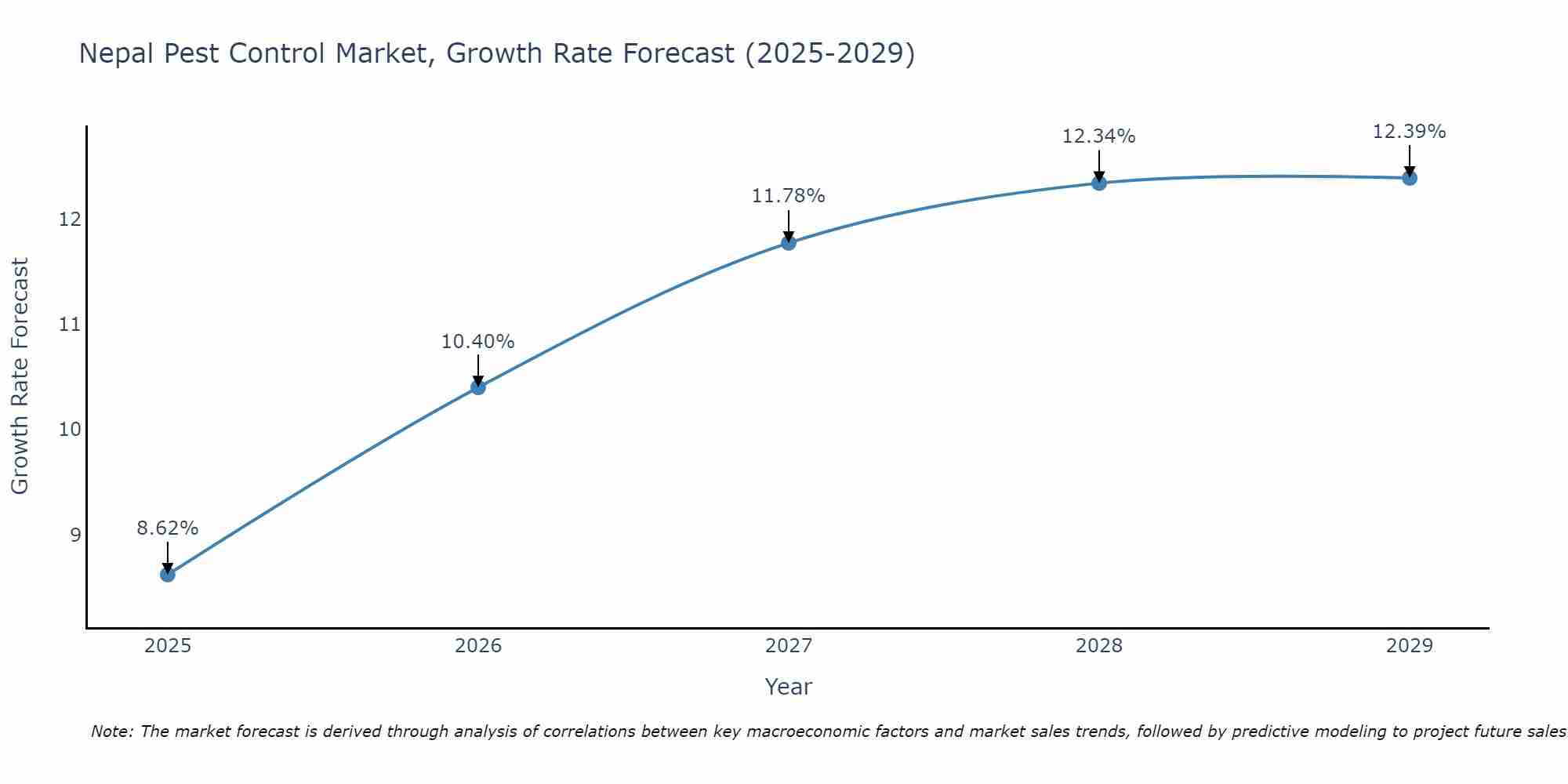
The Nepal Pest Control Market is poised for steady growth rate improvements from 2025 to 2029. The growth rate starts at 8.62% in 2025 and reaches 12.39% by 2029.
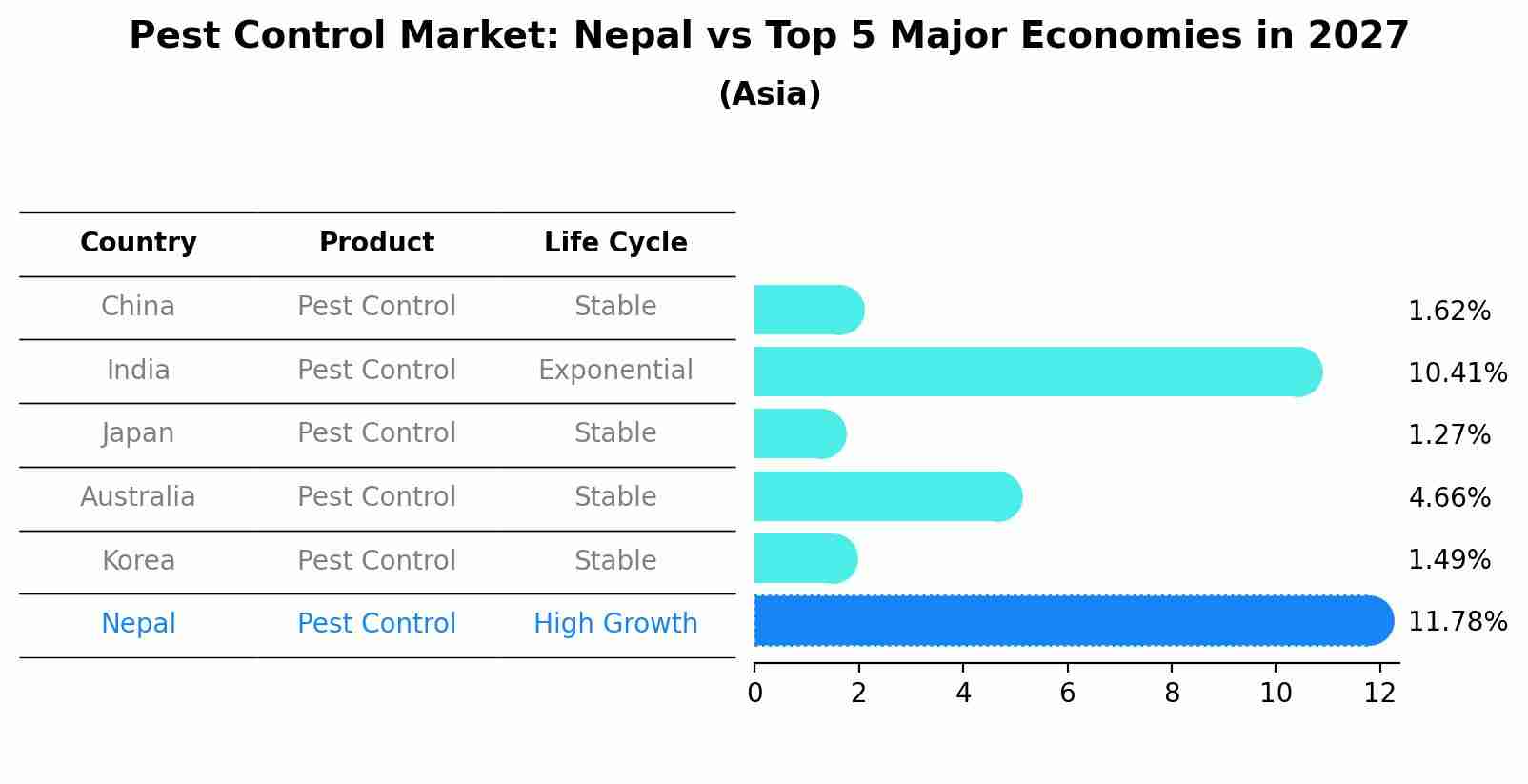
Pest Control Market: Nepal vs Top 5 Major Economies in 2027 (Asia)
The Pest Control market in Nepal is projected to grow at a high growth rate of 11.78% by 2027, within the Asia region led by China, along with other countries like India, Japan, Australia and South Korea, collectively shaping a dynamic and evolving market environment driven by innovation and increasing adoption of emerging technologies.
Nepal Pest Control Market Synopsis
The Nepal pest control market is witnessing steady growth due to increasing awareness about hygiene and health, particularly in urban areas. The market is driven by factors such as a rise in pest-related diseases, growing demand for commercial pest control services in industries like food processing and hospitality, and a surge in residential properties seeking preventive pest management solutions. Key players in the market offer a range of services including insect control, rodent control, termite treatment, and fumigation services. The market also benefits from advancements in pest control technologies and environmentally friendly solutions. With increasing concerns about food safety and health standards, the Nepal pest control market is expected to continue its growth trajectory in the coming years.
Nepal Pest Control Market Trends
The Nepal pest control market is witnessing a shift towards eco-friendly and sustainable pest management solutions. With increasing awareness about the negative impacts of chemical pesticides on human health and the environment, there is a growing demand for organic and natural pest control methods. Integrated pest management (IPM) practices are gaining popularity, which involve a combination of biological, cultural, and physical control measures alongside minimal pesticide use. Additionally, there is a rising preference for preventive pest control strategies to avoid infestations rather than relying solely on reactive treatments. The market is also seeing a surge in the use of technology-driven solutions such as smart traps, remote monitoring systems, and data analytics for more efficient and targeted pest control services. Overall, the Nepal pest control market is evolving towards more sustainable and innovative approaches to pest management.
Nepal Pest Control Market Challenges
In the Nepal pest control market, some key challenges include the lack of awareness about the importance of professional pest control services among the general population, leading to a preference for traditional or DIY methods. Additionally, there is a shortage of properly trained and certified pest control professionals, which can impact the quality and effectiveness of services provided. The presence of unregulated and unqualified service providers further adds to the challenges in maintaining industry standards and customer trust. Limited access to modern equipment and pest control products, as well as the difficulty in reaching remote or rural areas, also pose obstacles to market growth and service delivery in Nepal. Overall, addressing these challenges will be crucial for the sustainable development and success of the pest control industry in the country.
Nepal Pest Control Market Investment Opportunities
In the Nepal pest control market, there are several promising investment opportunities for both local and international investors. With the increasing awareness of the importance of pest control in maintaining hygiene and preventing diseases, there is a growing demand for professional pest management services in residential, commercial, and agricultural sectors. Investing in modern pest control technologies and eco-friendly solutions can be lucrative, as consumers are increasingly seeking sustainable and non-toxic pest control options. Additionally, offering integrated pest management services that focus on prevention rather than just treatment can differentiate a company in the market. Collaborations with local agricultural businesses and government agencies to provide pest control solutions can also be a strategic investment opportunity in Nepal`s pest control market.
Nepal Pest Control Market Future Outlook
The Nepal pest control market is expected to witness steady growth in the coming years due to increasing urbanization, growing awareness about the health risks associated with pests, and stricter regulations regarding pest control. Factors such as climate change and globalization are likely to contribute to the spread of pests, creating a higher demand for pest control services. Additionally, the rising trend of eco-friendly and sustainable pest control methods is expected to drive innovation in the market. With a focus on integrated pest management solutions and technological advancements, the Nepal pest control market is poised for expansion, presenting opportunities for both established companies and new entrants to capitalize on this growing sector.
Key Highlights of the Report:
- Nepal Pest Control Market Outlook
- Market Size of Nepal Pest Control Market, 2024
- Forecast of Nepal Pest Control Market, 2031
- Historical Data and Forecast of Nepal Pest Control Revenues & Volume for the Period 2021 - 2031
- Nepal Pest Control Market Trend Evolution
- Nepal Pest Control Market Drivers and Challenges
- Nepal Pest Control Price Trends
- Nepal Pest Control Porter's Five Forces
- Nepal Pest Control Industry Life Cycle
- Historical Data and Forecast of Nepal Pest Control Market Revenues & Volume By Pest Type for the Period 2021 - 2031
- Historical Data and Forecast of Nepal Pest Control Market Revenues & Volume By Insects for the Period 2021 - 2031
- Historical Data and Forecast of Nepal Pest Control Market Revenues & Volume By Termites for the Period 2021 - 2031
- Historical Data and Forecast of Nepal Pest Control Market Revenues & Volume By Rodents for the Period 2021 - 2031
- Historical Data and Forecast of Nepal Pest Control Market Revenues & Volume By Wildlife for the Period 2021 - 2031
- Historical Data and Forecast of Nepal Pest Control Market Revenues & Volume By Other pest types (birds, reptiles, and mollusks) for the Period 2021 - 2031
- Historical Data and Forecast of Nepal Pest Control Market Revenues & Volume By Control Method for the Period 2021 - 2031
- Historical Data and Forecast of Nepal Pest Control Market Revenues & Volume By Chemical for the Period 2021 - 2031
- Historical Data and Forecast of Nepal Pest Control Market Revenues & Volume By Biological for the Period 2021 - 2031
- Historical Data and Forecast of Nepal Pest Control Market Revenues & Volume By Mechanical for the Period 2021 - 2031
- Historical Data and Forecast of Nepal Pest Control Market Revenues & Volume By Software & services for the Period 2021 - 2031
- Historical Data and Forecast of Nepal Pest Control Market Revenues & Volume By Mode of Application for the Period 2021 - 2031
- Historical Data and Forecast of Nepal Pest Control Market Revenues & Volume By Powder for the Period 2021 - 2031
- Historical Data and Forecast of Nepal Pest Control Market Revenues & Volume By Sprays for the Period 2021 - 2031
- Historical Data and Forecast of Nepal Pest Control Market Revenues & Volume By Pellets for the Period 2021 - 2031
- Historical Data and Forecast of Nepal Pest Control Market Revenues & Volume By Traps for the Period 2021 - 2031
- Historical Data and Forecast of Nepal Pest Control Market Revenues & Volume By Baits for the Period 2021 - 2031
- Historical Data and Forecast of Nepal Pest Control Market Revenues & Volume By Application: for the Period 2021 - 2031
- Historical Data and Forecast of Nepal Pest Control Market Revenues & Volume By Residential for the Period 2021 - 2031
- Historical Data and Forecast of Nepal Pest Control Market Revenues & Volume By Commercial for the Period 2021 - 2031
- Historical Data and Forecast of Nepal Pest Control Market Revenues & Volume By Livestock for the Period 2021 - 2031
- Historical Data and Forecast of Nepal Pest Control Market Revenues & Volume By Industrial for the Period 2021 - 2031
- Historical Data and Forecast of Nepal Pest Control Market Revenues & Volume By Other applications (non-commercial institutions, storage & transport facilities, and public landscapes) for the Period 2021 - 2031
- Nepal Pest Control Import Export Trade Statistics
- Market Opportunity Assessment By Pest Type
- Market Opportunity Assessment By Control Method
- Market Opportunity Assessment By Mode of Application
- Market Opportunity Assessment By Application:
- Nepal Pest Control Top Companies Market Share
- Nepal Pest Control Competitive Benchmarking By Technical and Operational Parameters
- Nepal Pest Control Company Profiles
- Nepal Pest Control Key Strategic Recommendations






































