Nepal Vetiver Oil Market Size, Share & Growth Rate
The Nepal Vetiver Oil Market was estimated at USD 264 Million in 2025 and is projected to reach USD 374 Million by 2032, growing at a CAGR of 5.1% from 2026 to 2032. This robust growth is primarily driven by a surge in consumer demand for organic and natural ingredients, particularly within the beauty and personal care sectors. Additionally, the increasing recognition of vetiver oil's therapeutic properties further propels its adoption in aromatherapy and wellness applications.
Nepal Vetiver Oil Market Year-wise Growth Rate and Key Drivers
This graph highlights how the Nepal Vetiver Oil Market has steadily grown over the years, supported by major growth factors.
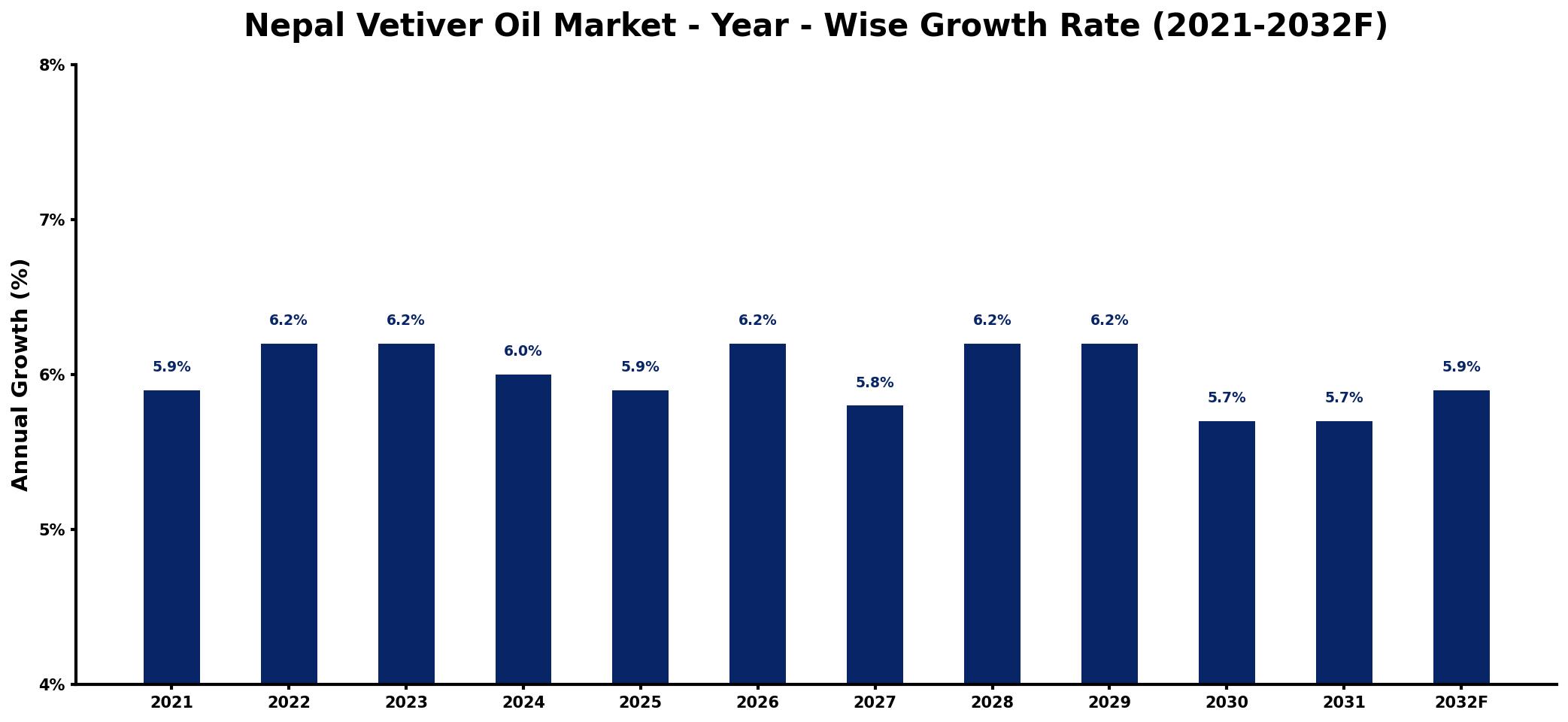
The table below presents the year‑wise growth rates along with the key drivers influencing the market
| Year | Growth Rate | Major Drivers |
| 2021 | 5.9% | Rising demand for natural fragrances |
| 2022 | 6.2% | Expansion of organic skincare products |
| 2023 | 6.2% | Increased use in aromatherapy practices |
| 2024 | 6.0% | Growth in wellness tourism sector |
| 2025 | 5.9% | Surge in herbal product market |
| 2026 | 6.2% | Investments in sustainable agriculture initiatives |
| 2027 | 5.8% | Higher consumer preference for eco-friendly |
| 2028 | 6.2% | Development of new fragrance applications |
| 2029 | 6.2% | Emergence of niche cosmetic brands |
| 2030 | 5.7% | Focus on holistic health solutions |
| 2031 | 5.7% | Growing popularity of organic perfumes |
| 2032 | 5.9% | Increased exports to international markets |
Note: Market size estimations and growth projections presented in this report are based on 6Wresearch's proprietary forecasting methodology, utilizing the latest available industry data, government publications, and primary research inputs.
Nepal Vetiver Oil Market Synopsis
The unique geographical conditions of Nepal provide an exceptional environment for vetiver cultivation, resulting in the production of premium-quality vetiver oil. The roots of the vetiver plant, known for their distinctive earthy aroma, are becoming increasingly favored by manufacturers of perfumes, cosmetics, and wellness products.
In recent years, there has been a noticeable increase in consumer awareness surrounding the benefits of vetiver oil, particularly its calming and grounding attributes. This trend is further complemented by a growing preference for sustainably sourced and environmentally friendly products, positioning Nepals vetiver oil market for continued expansion.
Nepal Vetiver Oil Market Key Takeaways
- Steady growth driven by the rising demand for natural and organic ingredients in the personal care industry.
- Unique climatic conditions in Nepal yield high-quality vetiver oil, enhancing its market competitiveness.
- Increasing consumer awareness of vetiver oil's therapeutic benefits fuels its adoption in various applications.
- Investment in sustainable practices and quality assurance is becoming crucial for producers.
- Government support through policies and programs is promoting the growth of the vetiver oil sector.
Evaluation of Restraints in Nepal Vetiver Oil Market
Despite the promising outlook, the Nepal Vetiver Oil market faces notable challenges. One significant restraint is the limited understanding among consumers about the benefits and uses of vetiver oil, which can hinder market penetration. Additionally, issues surrounding inconsistent quality and supply chain disruptions could impede the growth of the industry. The absence of standardized production practices further complicates the assurance of product authenticity and purity. Lastly, competition from alternative essential oils and synthetic fragrances exacerbates market pressures, making it imperative for stakeholders to adopt proactive strategies to strengthen their position.
Nepal Vetiver Oil Market Trends
The market is currently witnessing a strong trend towards the use of natural ingredients within the cosmetics and aromatherapy sectors. Consumers are increasingly inclined to opt for products that align with their values surrounding sustainability and health. The rise of organic farming practices among vetiver growers reflects this consumer shift, aiming to meet the heightened demand for ethically sourced and high-quality vetiver oil. Additionally, the popularity of vetiver's earthy scent in contemporary perfumery is driving innovation and diversification in product formulations.
Nepal Vetiver Oil Market Opportunities
There is a myriad of investment opportunities in the Nepal Vetiver Oil Market. With global consumers gravitating towards natural and sustainable products, investing in vetiver cultivation, essential oil extraction facilities, and the development of value-added products presents lucrative prospects. Moreover, the growing trend of incorporating vetiver oil in wellness and health products showcases an avenue for innovation. Investors who prioritize sustainable practices and quality enhancement are well-positioned to benefit from this burgeoning market.
Government Initiatives in the Nepal Vetiver Oil Market
The government of Nepal is actively fostering the growth of the vetiver oil market through various initiatives. This includes support for farmers via agricultural extension services and training programs aimed at promoting the cultivation of vetiver. Furthermore, there is an emphasis on sustainable farming practices to safeguard the environment, coupled with the establishment of quality standards to ensure that Nepals vetiver oil meets international benchmarks. These measures not only enhance market potential but also improve the livelihoods of those involved in vetiver production.
Future Insights of the Nepal Vetiver Oil Market
Looking ahead to 2026-2032, the Nepal Vetiver Oil Market is positioned for significant growth. As consumer preferences increasingly lean towards natural and organic ingredients, the demand for vetiver oil is set to rise. The oils unique earthy fragrance, coupled with its therapeutic properties, will likely solidify its applications in skincare and wellness products. With heightened environmental consciousness driving purchasing decisions, Nepal's commitment to producing high-quality vetiver oil through sustainable methods will enhance its attractiveness in the global market.
Nepal Vetiver Oil Market Latest Developments (2025 - 2026)
Recent developments in the Nepal Vetiver Oil market indicate a strategic shift towards enhancing product quality and sustainability. Numerous stakeholders are investing in modern extraction technologies to improve the efficiency and purity of vetiver oil production. Additionally, there has been an uptick in collaboration among farmers and producers to establish better supply chains, ensuring consistent quality and reliable distribution. The overall market direction is increasingly aligned with global trends favoring natural ingredients and eco-friendly practices.
Nepal Vetiver Oil Market - Key Attractiveness of the Report
- 10 Years of Market Numbers
- Historical Data Starting from 2022 to 2025
- Base Year: 2025
- Forecast Data until 2032
- Key Performance Indicators Impacting the Market
- Major Upcoming Developments and Projects
Key Highlights of the Report:
- Nepal Vetiver Oil Market Outlook
- Market Size of Nepal Vetiver Oil Market, 2025
- Forecast of Nepal Vetiver Oil Market, 2032
- Historical Data and Forecast of Nepal Vetiver Oil Revenues & Volume for the Period 2022-2032F
- Nepal Vetiver Oil Market Trend Evolution
- Nepal Vetiver Oil Market Drivers and Challenges
- Nepal Vetiver Oil Price Trends
- Nepal Vetiver Oil Porter's Five Forces
- Nepal Vetiver Oil Industry Life Cycle
- Historical Data and Forecast of Nepal Vetiver Oil Market Revenues & Volume By Application for the Period 2022-2032F
- Historical Data and Forecast of Nepal Vetiver Oil Market Revenues & Volume By Medical for the Period 2022-2032F
- Historical Data and Forecast of Nepal Vetiver Oil Market Revenues & Volume By Food & Beverage for the Period 2022-2032F
- Historical Data and Forecast of Nepal Vetiver Oil Market Revenues & Volume By Spa & Relaxation for the Period 2022-2032F
- Nepal Vetiver Oil Import Export Trade Statistics
- Market Opportunity Assessment By Application
- Nepal Vetiver Oil Top Companies Market Share
- Nepal Vetiver Oil Competitive Benchmarking By Technical and Operational Parameters
- Nepal Vetiver Oil Company Profiles
- Nepal Vetiver Oil Key Strategic Recommendations






































