Nigeria Bromine Market Top 5 Importing Countries and Market Competition (HHI) Analysis
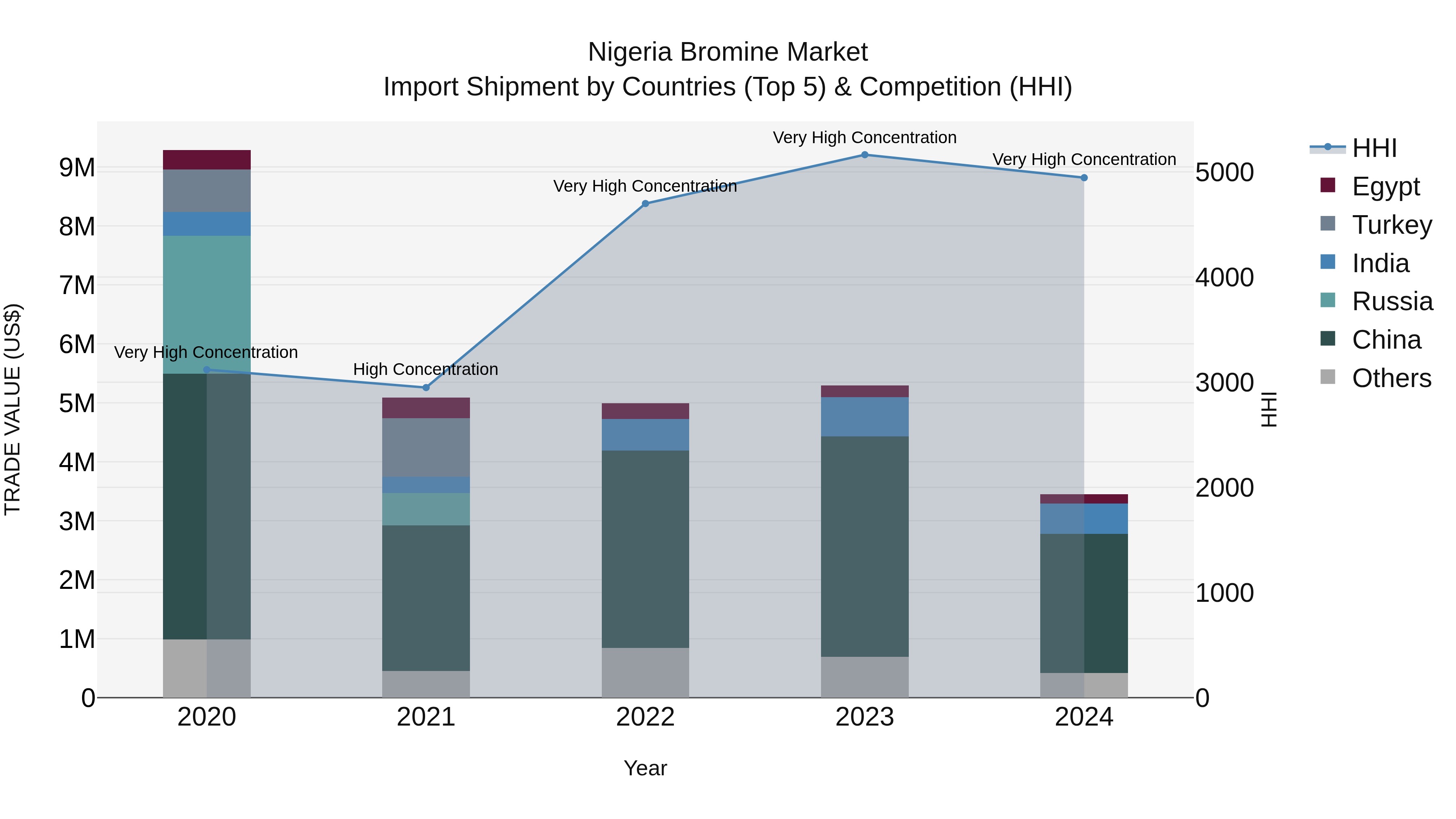
Nigeria`s bromine import market in 2024 saw significant contributions from top exporting countries such as China, India, Denmark, Egypt, and the UAE. Despite the high concentration with a very high HHI in 2024, the market experienced a notable decline with a CAGR of -21.91% from 2020 to 2024. The growth rate for 2023 to 2024 further decreased by -34.81%. This data suggests a challenging landscape for bromine import shipments into Nigeria, indicating potential shifts and challenges within the market.
Nigeria Bromine Market Overview
The Nigeria Bromine market is experiencing steady growth due to increasing demand from various industries such as oil and gas, pharmaceuticals, and agriculture. Bromine, a versatile chemical element, is primarily used in flame retardants, oil and gas drilling fluids, and as a catalyst in pharmaceuticals production. The market is driven by the growth of the oil and gas sector in Nigeria, which is one of the largest producers of crude oil in Africa. Additionally, the increasing emphasis on fire safety regulations in the construction industry is boosting the demand for bromine-based flame retardants. However, challenges such as fluctuating raw material prices and stringent environmental regulations may hinder market growth. Overall, the Nigeria Bromine market is poised for continued expansion in the coming years.
Nigeria Bromine Market Trends
The Nigeria Bromine Market is experiencing steady growth due to increasing demand from various industries such as pharmaceuticals, oil & gas, and agriculture. The pharmaceutical sector, in particular, is driving the market growth as bromine is used in the manufacture of pharmaceutical products. Additionally, the oil & gas industry`s demand for bromine-based drilling fluids and chemicals is contributing to the market expansion. Environmental regulations and sustainability concerns are also influencing the market, prompting companies to adopt eco-friendly bromine production methods. Overall, the Nigeria Bromine Market is expected to continue growing as industries diversify their applications of bromine and focus on sustainable practices.
Nigeria Bromine Market Challenges
The Nigeria Bromine Market faces challenges such as limited domestic production capacity, reliance on imports for meeting demand, fluctuating global prices impacting local prices, and lack of awareness about the benefits and applications of bromine-based products among industries. Additionally, inadequate infrastructure, regulatory hurdles, and inconsistent quality standards pose obstacles to market growth. The market also experiences competition from alternative chemicals and substitutes, further impacting its growth potential. To overcome these challenges, stakeholders in the Nigeria Bromine Market need to focus on increasing local production capacities, enhancing supply chain efficiencies, educating potential buyers about the advantages of bromine products, and working towards regulatory reforms to promote market expansion.
Nigeria Bromine Market Investment Opportunities
In the Nigeria Bromine Market, there are several investment opportunities worth considering. The growing demand for bromine in various industries such as pharmaceuticals, oil and gas, agriculture, and water treatment presents a promising investment landscape. Investing in bromine production facilities, distribution networks, or trading of bromine-based products could be lucrative. With Nigeria`s strategic location in West Africa and its natural resources base, there is potential for the country to become a key player in the regional bromine market. Additionally, as industries continue to expand and regulations drive the need for bromine-based solutions, investing in research and development of innovative bromine applications can also yield substantial returns in the long run. Overall, the Nigeria Bromine Market offers diverse investment opportunities for those looking to capitalize on the growing demand for bromine.
Nigeria Bromine Market Government Policy
The Nigerian government has implemented policies aimed at regulating the bromine market in the country. These policies include the restriction of bromine imports to protect local producers and promote self-sufficiency, as well as the enforcement of quality control standards to ensure the safety and efficacy of bromine products available in the market. Additionally, the government has introduced measures to support research and development in the bromine sector, encouraging innovation and technological advancements. Overall, these policies are designed to promote the growth of the domestic bromine industry, create employment opportunities, and enhance the country`s competitiveness in the global market.
Nigeria Bromine Market Future Outlook
The Nigeria Bromine Market is poised for steady growth in the coming years, driven by increasing demand from various industries such as pharmaceuticals, oil and gas, and agriculture. The country`s abundant salt reserves, which serve as a primary source of bromine production, provide a strong foundation for further market expansion. Additionally, the growing awareness about the benefits of bromine-based products in water treatment and flame retardants is expected to fuel market growth. However, challenges such as regulatory constraints and competition from alternative chemicals may pose some hurdles. Overall, with the right strategies in place to address these challenges and capitalize on emerging opportunities, the Nigeria Bromine Market is likely to experience sustained growth in the foreseeable future.
Key Highlights of the Report:
- Nigeria Bromine Market Outlook
- Market Size of Nigeria Bromine Market, 2021
- Forecast of Nigeria Bromine Market, 2031
- Historical Data and Forecast of Nigeria Bromine Revenues & Volume for the Period 2021 - 2031
- Nigeria Bromine Market Trend Evolution
- Nigeria Bromine Market Drivers and Challenges
- Nigeria Bromine Price Trends
- Nigeria Bromine Porter's Five Forces
- Nigeria Bromine Industry Life Cycle
- Historical Data and Forecast of Nigeria Bromine Market Revenues & Volume By Derivative for the Period 2021 - 2031
- Historical Data and Forecast of Nigeria Bromine Market Revenues & Volume By Organobromine for the Period 2021 - 2031
- Historical Data and Forecast of Nigeria Bromine Market Revenues & Volume By Clear Brine Fluids for the Period 2021 - 2031
- Historical Data and Forecast of Nigeria Bromine Market Revenues & Volume By Hydrogen Bromide for the Period 2021 - 2031
- Historical Data and Forecast of Nigeria Bromine Market Revenues & Volume By Application for the Period 2021 - 2031
- Historical Data and Forecast of Nigeria Bromine Market Revenues & Volume By Flame Retardants for the Period 2021 - 2031
- Historical Data and Forecast of Nigeria Bromine Market Revenues & Volume By Oil & Gas Drilling for the Period 2021 - 2031
- Historical Data and Forecast of Nigeria Bromine Market Revenues & Volume By PTA Synthesis for the Period 2021 - 2031
- Historical Data and Forecast of Nigeria Bromine Market Revenues & Volume By Water Treatment & Biocides for the Period 2021 - 2031
- Historical Data and Forecast of Nigeria Bromine Market Revenues & Volume By Pesticides for the Period 2021 - 2031
- Historical Data and Forecast of Nigeria Bromine Market Revenues & Volume By HBr Flow Batteries for the Period 2021 - 2031
- Historical Data and Forecast of Nigeria Bromine Market Revenues & Volume By Pharmaceuticals for the Period 2021 - 2031
- Historical Data and Forecast of Nigeria Bromine Market Revenues & Volume By Others for the Period 2021 - 2031
- Nigeria Bromine Import Export Trade Statistics
- Market Opportunity Assessment By Derivative
- Market Opportunity Assessment By Application
- Nigeria Bromine Top Companies Market Share
- Nigeria Bromine Competitive Benchmarking By Technical and Operational Parameters
- Nigeria Bromine Company Profiles
- Nigeria Bromine Key Strategic Recommendations






































