Norway Processed Pork Market Growth Rate Analysis (2025 - 2031)
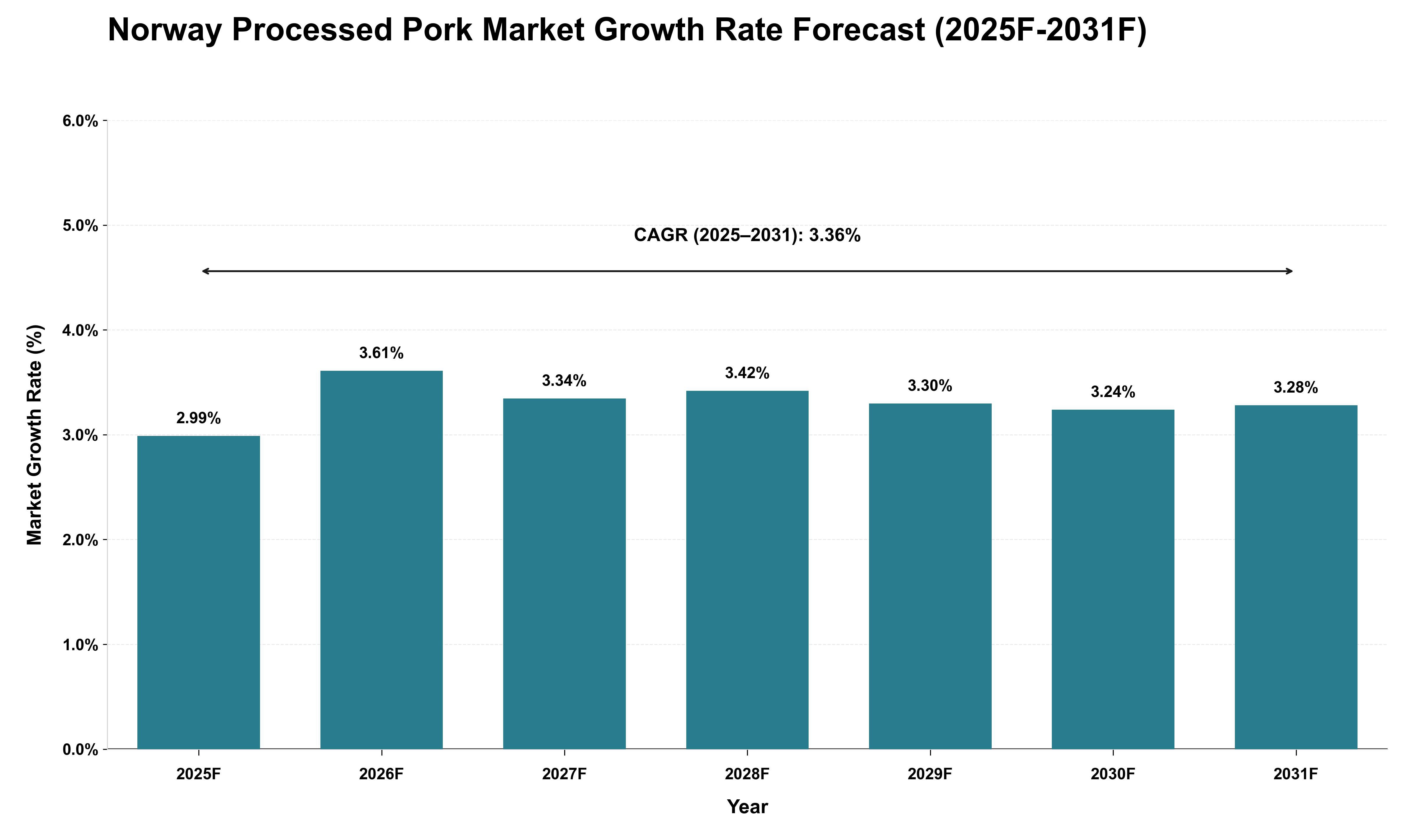
The outlook for Norway's processed pork market will be shaped by several macroeconomic factors, including consumer preferences, disposable income growth, and import dependencies. As the economy continues to recover from recent disruptions, an anticipated increase in disposable income will likely drive demand for higher-quality processed meats, contributing to a projected CAGR of 3.36% from 2025 to 2031. The annual growth rates will fluctuate slightly, with a peak of 3.61% in 2026 as consumers increasingly prioritize convenience and premium products. Import dependencies may also influence market dynamics; fluctuations in global supply chains could affect pricing and availability, particularly if trade policies evolve. Overall, the cyclical nature of food consumption patterns will support steady growth in this sector as consumers adapt to changing economic conditions and dietary trends throughout the forecast period.
Key Highlights of the Report:
- Norway Processed Pork Market Outlook
- Market Size of Norway Processed Pork Market, 2025
- Forecast of Norway Processed Pork Market, 2032
- Historical Data and Forecast of Norway Processed Pork Revenues & Volume for the Period 2022 - 2032F
- Norway Processed Pork Market Trend Evolution
- Norway Processed Pork Market Drivers and Challenges
- Norway Processed Pork Price Trends
- Norway Processed Pork Porter`s Five Forces
- Norway Processed Pork Industry Life Cycle
- Historical Data and Forecast of Norway Processed Pork Market Revenues & Volume By Meat Product for the Period 2022 - 2032F
- Historical Data and Forecast of Norway Processed Pork Market Revenues & Volume By Cured Meat for the Period 2022 - 2032F
- Historical Data and Forecast of Norway Processed Pork Market Revenues & Volume By Uncured Meat for the Period 2022 - 2032F
- Historical Data and Forecast of Norway Processed Pork Market Revenues & Volume By Pork Meat for the Period 2022 - 2032F
- Historical Data and Forecast of Norway Processed Pork Market Revenues & Volume By Fresh Pork Meat for the Period 2022 - 2032F
- Historical Data and Forecast of Norway Processed Pork Market Revenues & Volume By Processed Pork Meat for the Period 2022 - 2032F
- Historical Data and Forecast of Norway Processed Pork Market Revenues & Volume By Packaging Type for the Period 2022 - 2032F
- Historical Data and Forecast of Norway Processed Pork Market Revenues & Volume By Chilled Processed Meat for the Period 2022 - 2032F
- Historical Data and Forecast of Norway Processed Pork Market Revenues & Volume By Frozen Processed Meat for the Period 2022 - 2032F
- Historical Data and Forecast of Norway Processed Pork Market Revenues & Volume By Canned Processed Meat for the Period 2022 - 2032F
- Historical Data and Forecast of Norway Processed Pork Market Revenues & Volume By Distribution for the Period 2022 - 2032F
- Historical Data and Forecast of Norway Processed Pork Market Revenues & Volume By Supermarket for the Period 2022 - 2032F
- Historical Data and Forecast of Norway Processed Pork Market Revenues & Volume By Convenience Stores for the Period 2022 - 2032F
- Historical Data and Forecast of Norway Processed Pork Market Revenues & Volume By Grocery Stores for the Period 2022 - 2032F
- Historical Data and Forecast of Norway Processed Pork Market Revenues & Volume By Individual Retailers for the Period 2022 - 2032F
- Historical Data and Forecast of Norway Processed Pork Market Revenues & Volume By Online Sales Channel for the Period 2022 - 2032F
- Norway Processed Pork Import Export Trade Statistics
- Market Opportunity Assessment By Meat Product
- Market Opportunity Assessment By Pork Meat
- Market Opportunity Assessment By Packaging Type
- Market Opportunity Assessment By Distribution
- Norway Processed Pork Top Companies Market Share
- Norway Processed Pork Competitive Benchmarking By Technical and Operational Parameters
- Norway Processed Pork Company Profiles
- Norway Processed Pork Key Strategic Recommendations






































