Norway Silk Market Growth Rate Analysis (2025 - 2031)
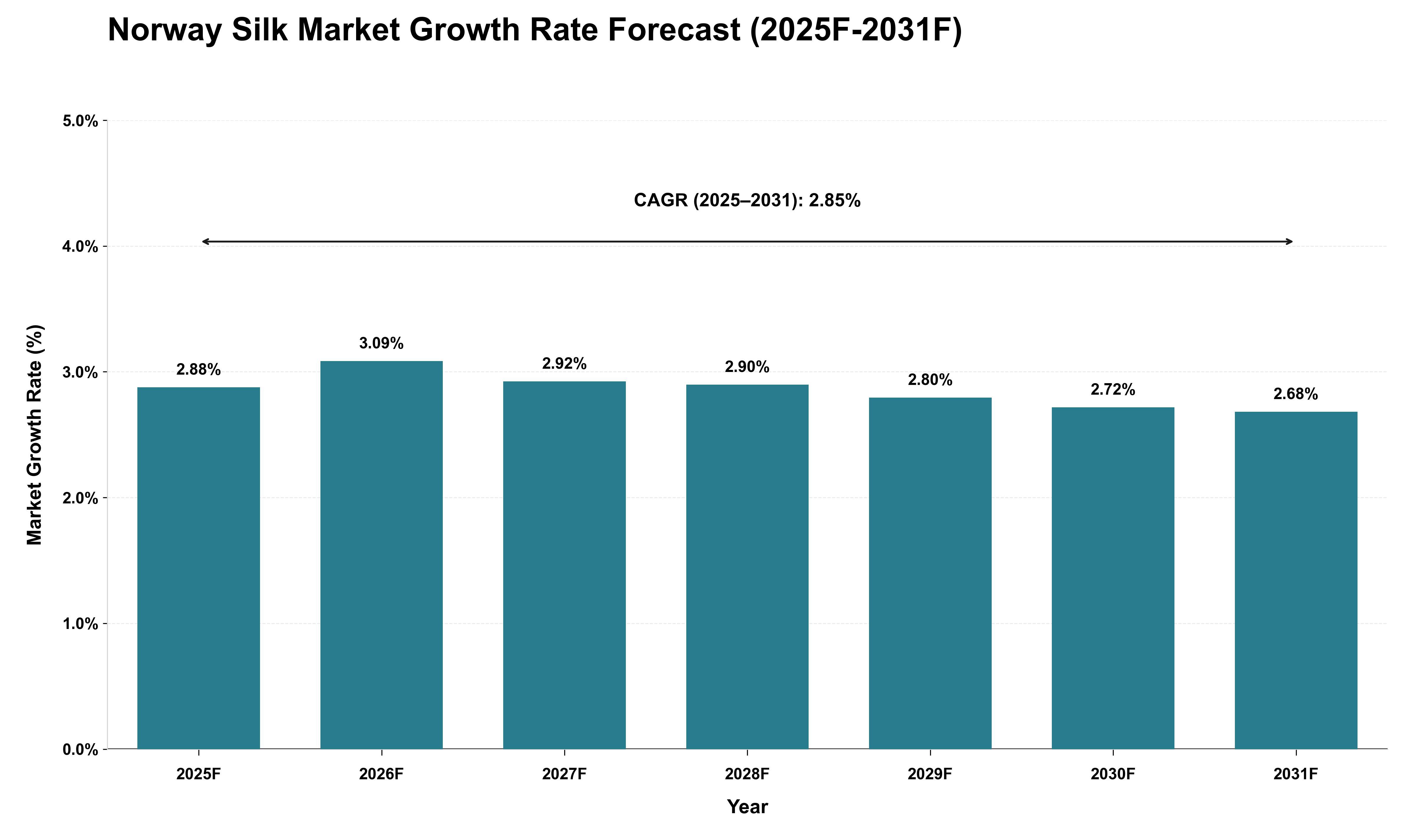
From 2025 onward, the Norway silk market will experience a steady growth trajectory, driven by evolving consumer preferences and increasing demand for luxury textiles. The projected CAGR of 2.85% reflects a consistent annual growth pattern, with initial years showing slightly higher rates—such as 3.09% in 2026—indicating robust market entry dynamics as consumers increasingly prioritize quality and sustainability in their purchasing decisions. As the forecast period progresses, growth rates will gradually moderate, aligning with broader economic cycles and potential shifts in import dependencies due to global supply chain adjustments. Factors such as rising disposable incomes and heightened awareness of ethical sourcing will further bolster demand for silk products. Consequently, the market will likely adapt to these end-use demand shifts while navigating external pressures from competing textile alternatives and fluctuating trade policies that could influence import volumes throughout this period.
Key Highlights of the Report:
- Norway Silk Market Outlook
- Market Size of Norway Silk Market, 2025
- Forecast of Norway Silk Market, 2032
- Historical Data and Forecast of Norway Silk Revenues & Volume for the Period 2022 - 2032F
- Norway Silk Market Trend Evolution
- Norway Silk Market Drivers and Challenges
- Norway Silk Price Trends
- Norway Silk Porter`s Five Forces
- Norway Silk Industry Life Cycle
- Historical Data and Forecast of Norway Silk Market Revenues & Volume By Production process for the Period 2022 - 2032F
- Historical Data and Forecast of Norway Silk Market Revenues & Volume By Cocoon Production for the Period 2022 - 2032F
- Historical Data and Forecast of Norway Silk Market Revenues & Volume By Reeling for the Period 2022 - 2032F
- Historical Data and Forecast of Norway Silk Market Revenues & Volume By Throwing for the Period 2022 - 2032F
- Historical Data and Forecast of Norway Silk Market Revenues & Volume By Weaving for the Period 2022 - 2032F
- Historical Data and Forecast of Norway Silk Market Revenues & Volume By Dyeing for the Period 2022 - 2032F
- Historical Data and Forecast of Norway Silk Market Revenues & Volume By Type for the Period 2022 - 2032F
- Historical Data and Forecast of Norway Silk Market Revenues & Volume By Mulberry Silk for the Period 2022 - 2032F
- Historical Data and Forecast of Norway Silk Market Revenues & Volume By Tussar Silk for the Period 2022 - 2032F
- Historical Data and Forecast of Norway Silk Market Revenues & Volume By Eri Silk for the Period 2022 - 2032F
- Historical Data and Forecast of Norway Silk Market Revenues & Volume By Spider Silk for the Period 2022 - 2032F
- Historical Data and Forecast of Norway Silk Market Revenues & Volume By Application for the Period 2022 - 2032F
- Historical Data and Forecast of Norway Silk Market Revenues & Volume By Textile for the Period 2022 - 2032F
- Historical Data and Forecast of Norway Silk Market Revenues & Volume By Cosmetics for the Period 2022 - 2032F
- Historical Data and Forecast of Norway Silk Market Revenues & Volume By Medicine for the Period 2022 - 2032F
- Norway Silk Import Export Trade Statistics
- Market Opportunity Assessment By Production process
- Market Opportunity Assessment By Type
- Market Opportunity Assessment By Application
- Norway Silk Top Companies Market Share
- Norway Silk Competitive Benchmarking By Technical and Operational Parameters
- Norway Silk Company Profiles
- Norway Silk Key Strategic Recommendations






































