Norway Textile Market Growth Rate Analysis (2025 - 2031)
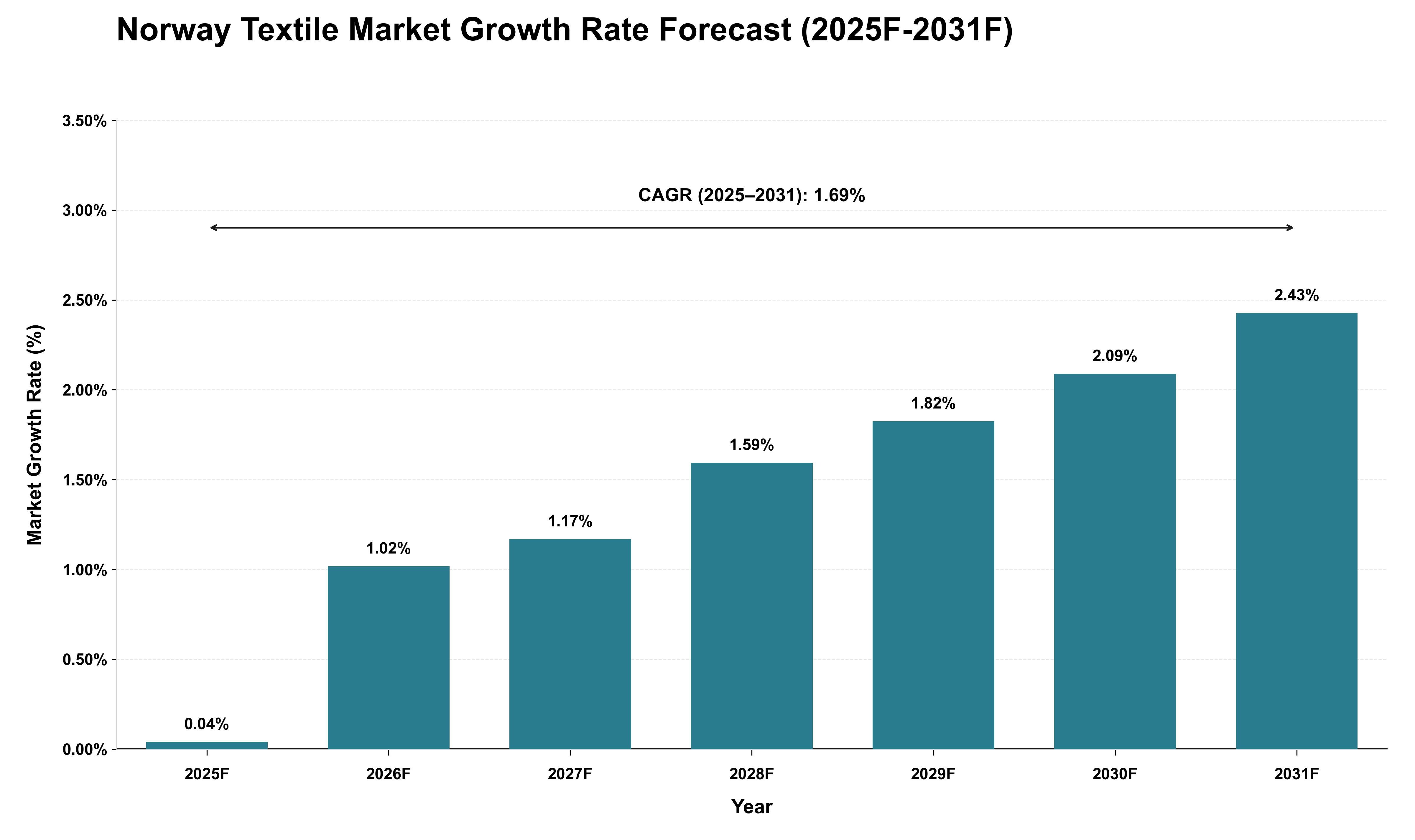
The projected compound annual growth rate of 1.69% for the Norway textile market from 2025 to 2031 indicates a gradual increase in demand, driven by evolving consumer preferences and potential shifts in import dependencies. As the annual growth rates rise from a mere 0.04% in 2025 to 2.43% by 2031, this trend suggests an anticipated recovery in consumer spending and an increasing inclination towards sustainable and locally sourced textiles. The competitive landscape will likely see established players adapting their strategies to enhance product offerings while new entrants may emerge, focusing on niche markets such as eco-friendly materials. Additionally, cyclical trends in global supply chains could influence import dynamics, with Norway potentially seeking to diversify its sources to mitigate risks associated with geopolitical tensions or trade disruptions. Overall, these factors will shape the market's trajectory within the forecast period.
Key Highlights of the Report:
- Norway Textile Market Outlook
- Market Size of Norway Textile Market, 2025
- Forecast of Norway Textile Market, 2032
- Historical Data and Forecast of Norway Textile Revenues & Volume for the Period 2022 - 2032F
- Norway Textile Market Trend Evolution
- Norway Textile Market Drivers and Challenges
- Norway Textile Price Trends
- Norway Textile Porter`s Five Forces
- Norway Textile Industry Life Cycle
- Historical Data and Forecast of Norway Textile Market Revenues & Volume By Raw Material Types for the Period 2022 - 2032F
- Historical Data and Forecast of Norway Textile Market Revenues & Volume By Cotton for the Period 2022 - 2032F
- Historical Data and Forecast of Norway Textile Market Revenues & Volume By Chemical for the Period 2022 - 2032F
- Historical Data and Forecast of Norway Textile Market Revenues & Volume By Wool for the Period 2022 - 2032F
- Historical Data and Forecast of Norway Textile Market Revenues & Volume By Silk for the Period 2022 - 2032F
- Historical Data and Forecast of Norway Textile Market Revenues & Volume By Others for the Period 2022 - 2032F
- Historical Data and Forecast of Norway Textile Market Revenues & Volume By Product Types for the Period 2022 - 2032F
- Historical Data and Forecast of Norway Textile Market Revenues & Volume By Natural Fibers for the Period 2022 - 2032F
- Historical Data and Forecast of Norway Textile Market Revenues & Volume By Polyesters for the Period 2022 - 2032F
- Historical Data and Forecast of Norway Textile Market Revenues & Volume By Nylon for the Period 2022 - 2032F
- Historical Data and Forecast of Norway Textile Market Revenues & Volume By Others for the Period 2022 - 2032F
- Historical Data and Forecast of Norway Textile Market Revenues & Volume By Applications for the Period 2022 - 2032F
- Historical Data and Forecast of Norway Textile Market Revenues & Volume By Household for the Period 2022 - 2032F
- Historical Data and Forecast of Norway Textile Market Revenues & Volume By Technical for the Period 2022 - 2032F
- Historical Data and Forecast of Norway Textile Market Revenues & Volume By Fashion & Clothing for the Period 2022 - 2032F
- Historical Data and Forecast of Norway Textile Market Revenues & Volume By Others for the Period 2022 - 2032F
- Norway Textile Import Export Trade Statistics
- Market Opportunity Assessment By Raw Material Types
- Market Opportunity Assessment By Product Types
- Market Opportunity Assessment By Applications
- Norway Textile Top Companies Market Share
- Norway Textile Competitive Benchmarking By Technical and Operational Parameters
- Norway Textile Company Profiles
- Norway Textile Key Strategic Recommendations






































