Norway Umbrella Market Growth Rate Analysis (2025 - 2031)
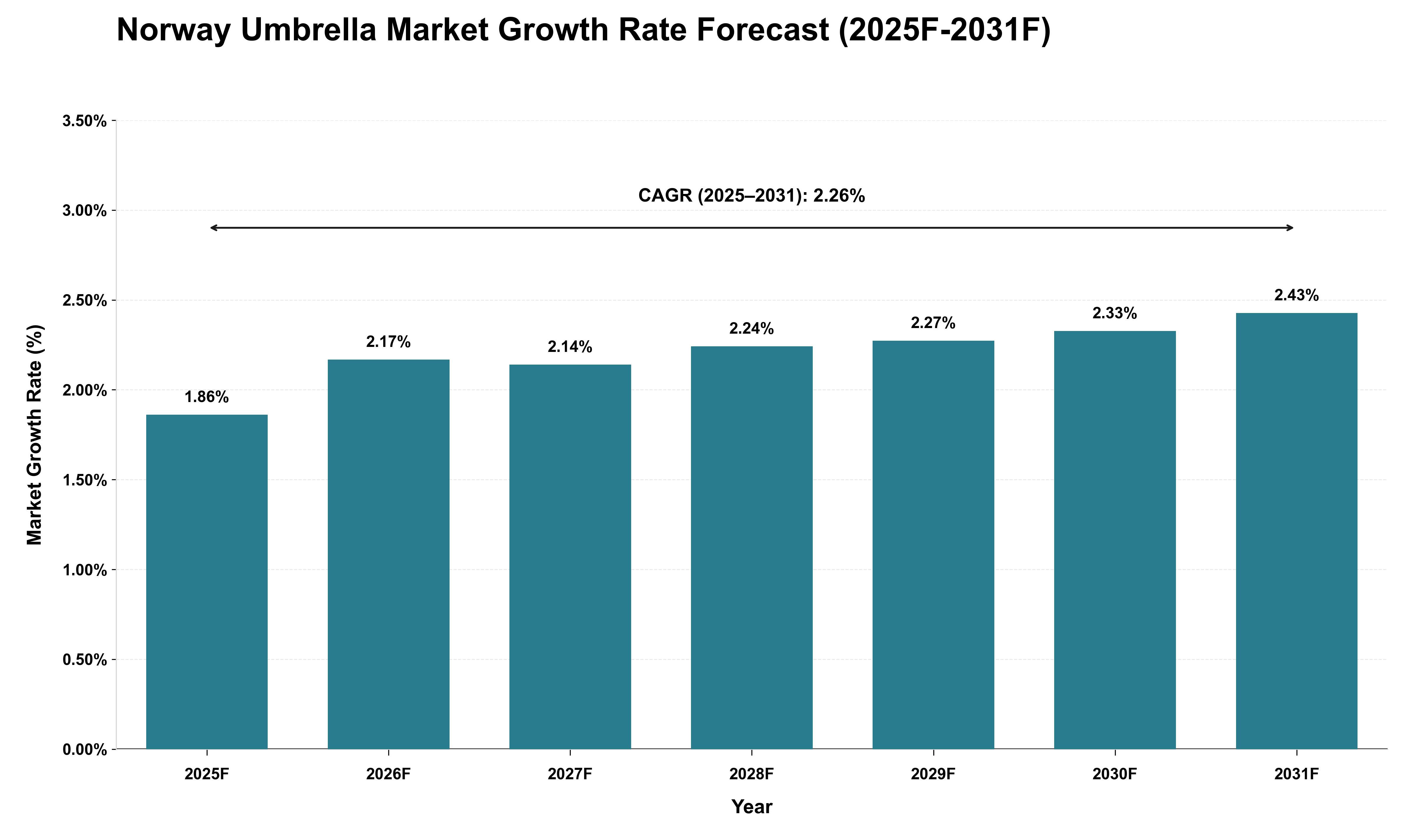
From 2025 onward, the Norway umbrella market will likely experience a steady growth trajectory, driven by macroeconomic factors such as increasing disposable incomes and heightened consumer awareness regarding weather-related products. The forecasted CAGR of 2.26% reflects a consistent annual growth pattern, with rates gradually increasing from 1.86% in 2025 to 2.43% by 2031. This upward trend suggests that consumers will prioritize quality and durability in their purchases, influenced by changing climate patterns that necessitate reliable weather protection. Additionally, import dependencies may play a role in shaping market dynamics; fluctuations in global supply chains could impact pricing and availability, thereby affecting consumer purchasing behavior. As economic conditions stabilize post-pandemic, the umbrella market is expected to benefit from enhanced retail strategies and e-commerce integration, further supporting its growth through the forecast period.
Key Highlights of the Report:
- Norway Umbrella Market Outlook
- Market Size of Norway Umbrella Market, 2025
- Forecast of Norway Umbrella Market, 2032
- Historical Data and Forecast of Norway Umbrella Revenues & Volume for the Period 2022 - 2032F
- Norway Umbrella Market Trend Evolution
- Norway Umbrella Market Drivers and Challenges
- Norway Umbrella Price Trends
- Norway Umbrella Porter`s Five Forces
- Norway Umbrella Industry Life Cycle
- Historical Data and Forecast of Norway Umbrella Market Revenues & Volume By Product for the Period 2022 - 2032F
- Historical Data and Forecast of Norway Umbrella Market Revenues & Volume By Reverse Umbrella for the Period 2022 - 2032F
- Historical Data and Forecast of Norway Umbrella Market Revenues & Volume By Straight Umbrella for the Period 2022 - 2032F
- Historical Data and Forecast of Norway Umbrella Market Revenues & Volume By Folding Umbrella for the Period 2022 - 2032F
- Historical Data and Forecast of Norway Umbrella Market Revenues & Volume By Automatic Umbrella for the Period 2022 - 2032F
- Historical Data and Forecast of Norway Umbrella Market Revenues & Volume By Other for the Period 2022 - 2032F
- Historical Data and Forecast of Norway Umbrella Market Revenues & Volume By Application for the Period 2022 - 2032F
- Historical Data and Forecast of Norway Umbrella Market Revenues & Volume By Commercial Use for the Period 2022 - 2032F
- Historical Data and Forecast of Norway Umbrella Market Revenues & Volume By Entertainment Use for the Period 2022 - 2032F
- Norway Umbrella Import Export Trade Statistics
- Market Opportunity Assessment By Product
- Market Opportunity Assessment By Application
- Norway Umbrella Top Companies Market Share
- Norway Umbrella Competitive Benchmarking By Technical and Operational Parameters
- Norway Umbrella Company Profiles
- Norway Umbrella Key Strategic Recommendations






































