Oman Modular Kitchen Market Size, Share & Growth Rate
The Oman Modular Kitchen Market was estimated at USD 363 Million in 2025 and is projected to reach USD 476 Million by 2032, growing at a CAGR of 3.9% from 2026 to 2032. This growth trajectory is primarily fueled by increasing urbanization, as more Omanis migrate to urban centers and seek contemporary solutions to optimize living spaces. Coupled with rising disposable incomes and evolving lifestyle preferences, consumers are gravitating toward modular kitchens that combine functionality with aesthetic appeal.
Oman Modular Kitchen Market Year-wise Growth Rate and Key Drivers
This graph highlights how the Oman Modular Kitchen Market has steadily grown over the years, supported by major growth factors.
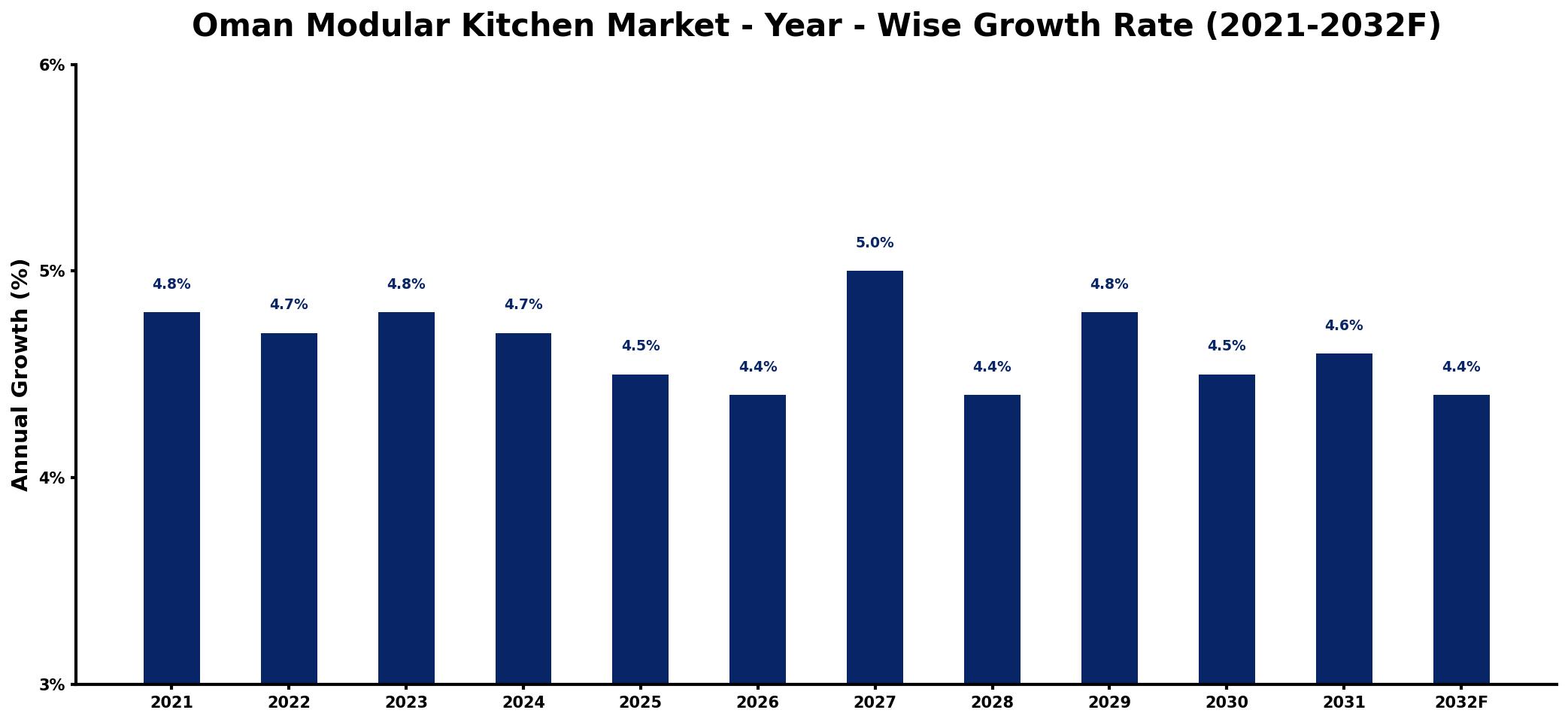
The table below presents the year‑wise growth rates along with the key drivers influencing the market
| Year | Growth Rate | Major Drivers |
| 2021 | 4.8% | Rising disposable income levels |
| 2022 | 4.7% | Increased urban housing projects |
| 2023 | 4.8% | Growing interest in renovations |
| 2024 | 4.7% | Expansion of luxury real estate |
| 2025 | 4.5% | Emergence of sustainable designs |
| 2026 | 4.4% | Technological advancements in manufacturing |
| 2027 | 5.0% | Surge in eco-friendly materials |
| 2028 | 4.4% | Boost in online shopping trends |
| 2029 | 4.8% | Increased focus on aesthetics |
| 2030 | 4.5% | Growth in expatriate population |
| 2031 | 4.6% | Rising popularity of open spaces |
| 2032 | 4.4% | Increase in home improvement investments |
Note: Market size estimations and growth projections presented in this report are based on 6Wresearch's proprietary forecasting methodology, utilizing the latest available industry data, government publications, and primary research inputs.
Oman Modular Kitchen Market Synopsis
The demand for modular kitchens in Oman is witnessing a notable surge, driven by the need for efficient use of space in urban homes. Homeowners are increasingly prioritizing stylish, customized designs that reflect personal tastes while meeting practical requirements.
Moreover, commercial establishments are adopting modular kitchens to enhance operational efficiency and cater to modern culinary demands. This shift is reshaping both residential and commercial landscapes, making modular solutions a preferred choice.
Oman Modular Kitchen Market Key Takeaways
- Urbanization is a primary catalyst for growth in the Oman modular kitchen market.
- Rising awareness about interior design trends is influencing consumer preferences towards modular solutions.
- Customization and space optimization are critical factors driving consumer choices.
- The perception of modular kitchens as luxury items can hinder broader market penetration.
- Government initiatives support sustainable practices and safety standards in kitchen design and manufacturing.
Evaluation of Restraints in Oman Modular Kitchen Market
While the Oman modular kitchen market shows promise, it faces several restraints. A significant hurdle is the absence of standardized building codes and regulations, which can lead to inconsistencies in quality and safety across installations. Additionally, cultural preferences heavily influence kitchen design choices; traditional styles often compete with modern aesthetics, complicating the market landscape. There is also a prevailing perception that modular kitchens are high-end luxury items rather than essential home investments. This mindset could deter potential buyers, limiting the overall market reach.
Oman Modular Kitchen Market Trends
The Oman modular kitchen market is currently experiencing a shift toward sustainability and eco-friendly materials. As consumers become more environmentally conscious, there is a growing demand for modular kitchens that utilize sustainable resources and practices. Additionally, technological advancements such as integrated smart appliances are becoming increasingly popular, appealing to tech-savvy consumers who desire modern conveniences in their cooking spaces. Furthermore, the trend toward open-concept living spaces is driving the need for kitchens that blend seamlessly with dining and living areas.
Oman Modular Kitchen Market Opportunities
There are substantial growth opportunities in the Oman modular kitchen market, particularly in the realm of customization. Offering bespoke solutions that cater to individual tastes and spatial constraints can enhance market appeal. Moreover, targeting commercial sectors such as hotels, restaurants, and cafes could yield significant returns, as these establishments prioritize efficient and stylish kitchen designs. Collaborations with local architects and designers could also facilitate innovative product offerings, further driving market expansion.
Government Initiatives in the Oman Modular Kitchen Market
The Omani government is actively involved in promoting the modular kitchen market through various initiatives. Policies focusing on consumer safety and quality standards are being established to ensure that modular kitchen products adhere to best practices. In addition, the government collaborates with industry associations to develop guidelines for manufacturers. To foster growth, incentives for local businesses adopting modular technologies are also provided, alongside support for sustainable practices in kitchen design and installation.
Future Insights of the Oman Modular Kitchen Market
Looking ahead to 2026-2032, the Oman modular kitchen market is poised for continued growth. The increasing urban population will demand innovative solutions that make the best use of limited space while satisfying aesthetic desires. As consumer preferences shift toward sustainability, manufacturers focusing on eco-friendly materials and practices are likely to gain a competitive edge. Additionally, the integration of smart technology within modular kitchens will cater to a tech-savvy demographic, shaping the future of kitchen design in Oman.
Oman Modular Kitchen Market Latest Developments (2025 - 2026)
Recent industry developments in the Oman modular kitchen market indicate a significant push towards modern design trends, emphasizing user-friendly features and technological integration. Manufacturers are increasingly adopting sustainable practices in production, aligning with the growing consumer demand for environmentally responsible products. Additionally, collaborations between local suppliers and international brands are enhancing product offerings, ensuring that the market remains dynamic and responsive to evolving customer preferences.
Oman Modular Kitchen Market - Key Attractiveness of the Report
- 10 Years of Market Numbers
- Historical Data Starting from 2022 to 2025
- Base Year: 2025
- Forecast Data until 2032
- Key Performance Indicators Impacting the Market
- Major Upcoming Developments and Projects
Key Highlights of the Report:
- Oman Modular Kitchen Market Outlook
- Market Size of Oman Modular Kitchen Market, 2025
- Forecast of Oman Modular Kitchen Market, 2032
- Historical Data and Forecast of Oman Modular Kitchen Revenues & Volume for the Period 2022-2032F
- Oman Modular Kitchen Market Trend Evolution
- Oman Modular Kitchen Market Drivers and Challenges
- Oman Modular Kitchen Price Trends
- Oman Modular Kitchen Porter's Five Forces
- Oman Modular Kitchen Industry Life Cycle
- Historical Data and Forecast of Oman Modular Kitchen Market Revenues & Volume By Product for the Period 2022-2032F
- Historical Data and Forecast of Oman Modular Kitchen Market Revenues & Volume By Floor Cabinet & Wall Cabinets for the Period 2022-2032F
- Historical Data and Forecast of Oman Modular Kitchen Market Revenues & Volume By Tall Storage Cabinets for the Period 2022-2032F
- Historical Data and Forecast of Oman Modular Kitchen Market Revenues & Volume By Others for the Period 2022-2032F
- Historical Data and Forecast of Oman Modular Kitchen Market Revenues & Volume By End-User for the Period 2022-2032F
- Historical Data and Forecast of Oman Modular Kitchen Market Revenues & Volume By Residential for the Period 2022-2032F
- Historical Data and Forecast of Oman Modular Kitchen Market Revenues & Volume By Commercial for the Period 2022-2032F
- Historical Data and Forecast of Oman Modular Kitchen Market Revenues & Volume By Distribution Channel for the Period 2022-2032F
- Historical Data and Forecast of Oman Modular Kitchen Market Revenues & Volume By Offline (Contractors, Builders, and Others) for the Period 2022-2032F
- Historical Data and Forecast of Oman Modular Kitchen Market Revenues & Volume By Online for the Period 2022-2032F
- Oman Modular Kitchen Import Export Trade Statistics
- Market Opportunity Assessment By Product
- Market Opportunity Assessment By End-User
- Market Opportunity Assessment By Distribution Channel
- Oman Modular Kitchen Top Companies Market Share
- Oman Modular Kitchen Competitive Benchmarking By Technical and Operational Parameters
- Oman Modular Kitchen Company Profiles
- Oman Modular Kitchen Key Strategic Recommendations






































