Pakistan Acetone Market Growth Rate Analysis (2025 - 2031)
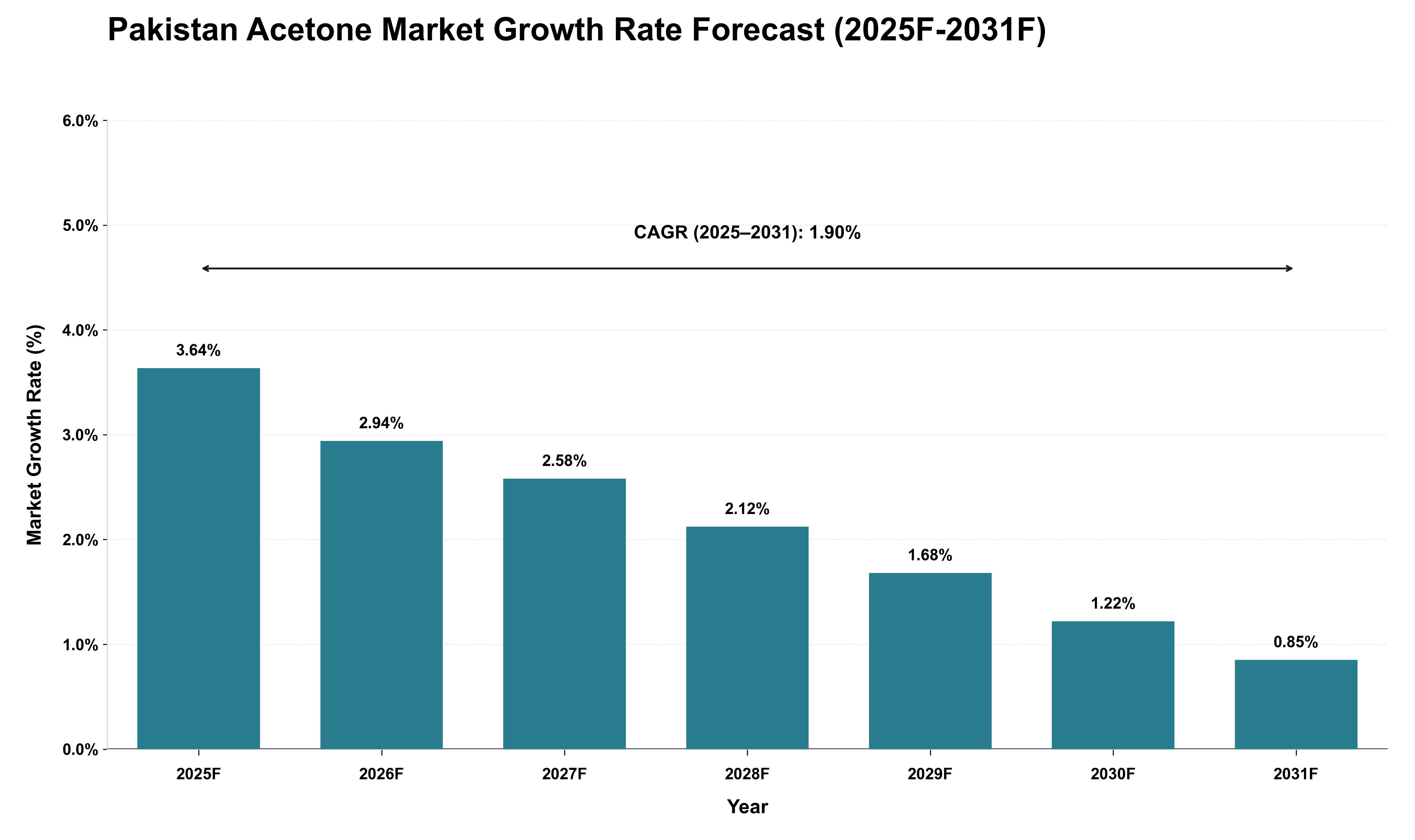
The Pakistan acetone market is projected to experience a compound annual growth rate of 1.90% from 2025 to 2031, reflecting a gradual decline in growth rates over the forecast period. The initial surge of 3.64% in 2025 indicates a potential rebound driven by increased industrial activity and demand for solvents in various applications, including pharmaceuticals and chemicals. However, as the years progress, growth rates are expected to taper off, with significant declines observed by 2031, where growth may drop to just 0.85%. This trend could be influenced by macroeconomic factors such as fluctuating import dependencies on acetone and raw materials, alongside global economic cycles that may impact production costs and consumer demand. Additionally, shifts in regulatory frameworks or environmental considerations could further shape the market dynamics, leading to a more cautious approach among manufacturers and consumers alike as they navigate these evolving conditions.
Key Highlights of the Report:
- Pakistan Acetone Market Outlook
- Market Size of Pakistan Acetone Market, 2025
- Forecast of Pakistan Acetone Market, 2032
- Historical Data and Forecast of Pakistan Acetone Revenues & Volume for the Period 2022-2032F
- Pakistan Acetone Market Trend Evolution
- Pakistan Acetone Market Drivers and Challenges
- Pakistan Acetone Price Trends
- Pakistan Acetone Porter's Five Forces
- Pakistan Acetone Industry Life Cycle
- Historical Data and Forecast of Pakistan Acetone Market Revenues & Volume By Application for the Period 2022-2032F
- Historical Data and Forecast of Pakistan Acetone Market Revenues & Volume By Solvent for the Period 2022-2032F
- Historical Data and Forecast of Pakistan Acetone Market Revenues & Volume By Bisphenol A (BPA) for the Period 2022-2032F
- Historical Data and Forecast of Pakistan Acetone Market Revenues & Volume By Methyl Methacrylate (MMA) for the Period 2022-2032F
- Historical Data and Forecast of Pakistan Acetone Market Revenues & Volume By Others for the Period 2022-2032F
- Historical Data and Forecast of Pakistan Acetone Market Revenues & Volume By End-Use for the Period 2022-2032F
- Historical Data and Forecast of Pakistan Acetone Market Revenues & Volume By Paints & Coatings for the Period 2022-2032F
- Historical Data and Forecast of Pakistan Acetone Market Revenues & Volume By Plastic for the Period 2022-2032F
- Historical Data and Forecast of Pakistan Acetone Market Revenues & Volume By Automotive for the Period 2022-2032F
- Historical Data and Forecast of Pakistan Acetone Market Revenues & Volume By Adhesives for the Period 2022-2032F
- Historical Data and Forecast of Pakistan Acetone Market Revenues & Volume By Pharmaceuticals for the Period 2022-2032F
- Historical Data and Forecast of Pakistan Acetone Market Revenues & Volume By Cosmetics for the Period 2022-2032F
- Historical Data and Forecast of Pakistan Acetone Market Revenues & Volume By Electrical & Electronics for the Period 2022-2032F
- Historical Data and Forecast of Pakistan Acetone Market Revenues & Volume By Others for the Period 2022-2032F
- Pakistan Acetone Import Export Trade Statistics
- Market Opportunity Assessment By Application
- Market Opportunity Assessment By End-Use
- Pakistan Acetone Top Companies Market Share
- Pakistan Acetone Competitive Benchmarking By Technical and Operational Parameters
- Pakistan Acetone Company Profiles
- Pakistan Acetone Key Strategic Recommendations






































