Pakistan Lumber Market: Import Trend Analysis
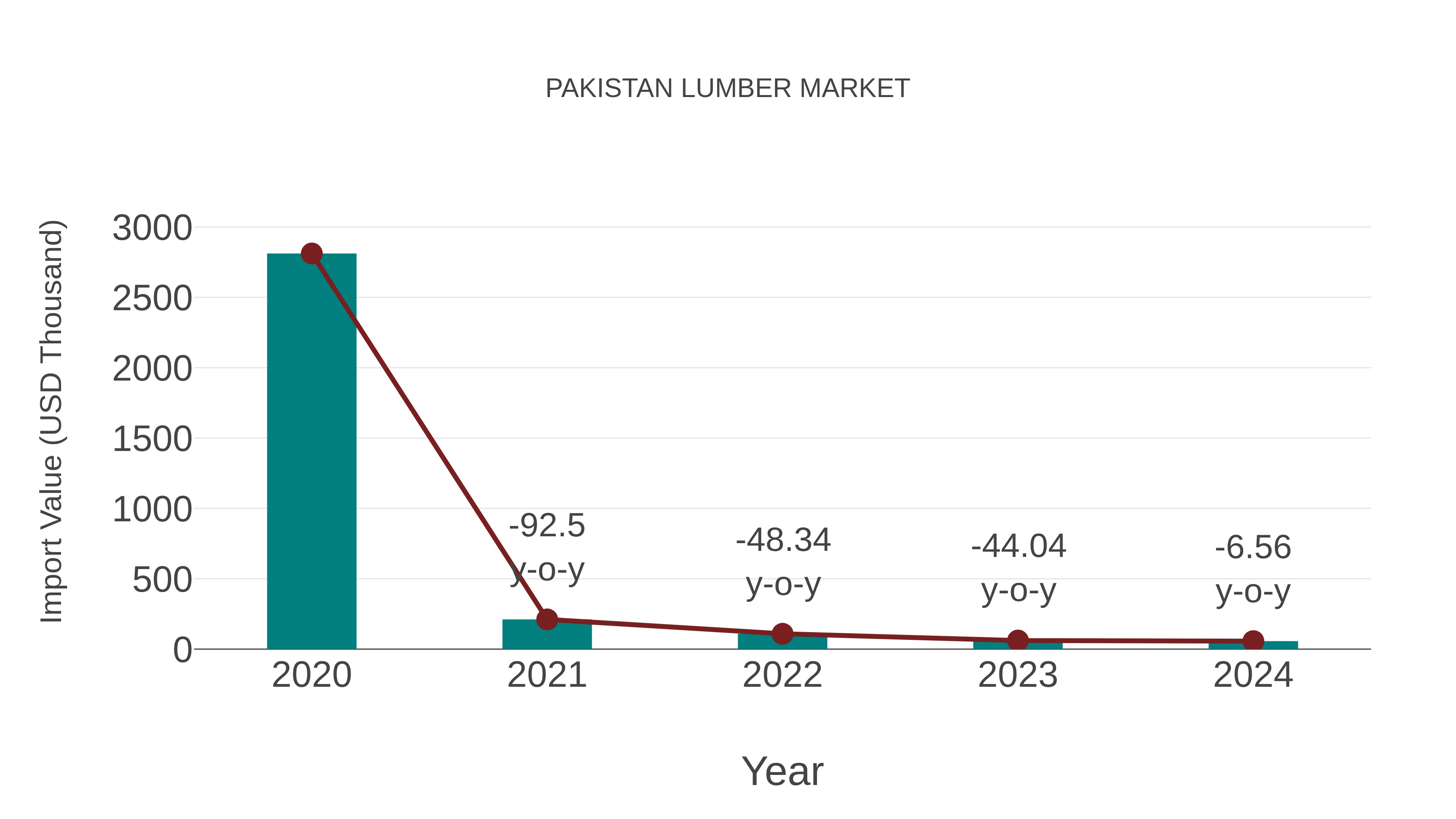
Pakistan lumber market witnessed a declining import trend from 2023 to 2024, with a growth rate of -6.56%. The compound annual growth rate (CAGR) for imports between 2020 and 2024 stood at -62.27%. This decline could be attributed to shifts in demand due to economic factors or changes in trade policies impacting the market.
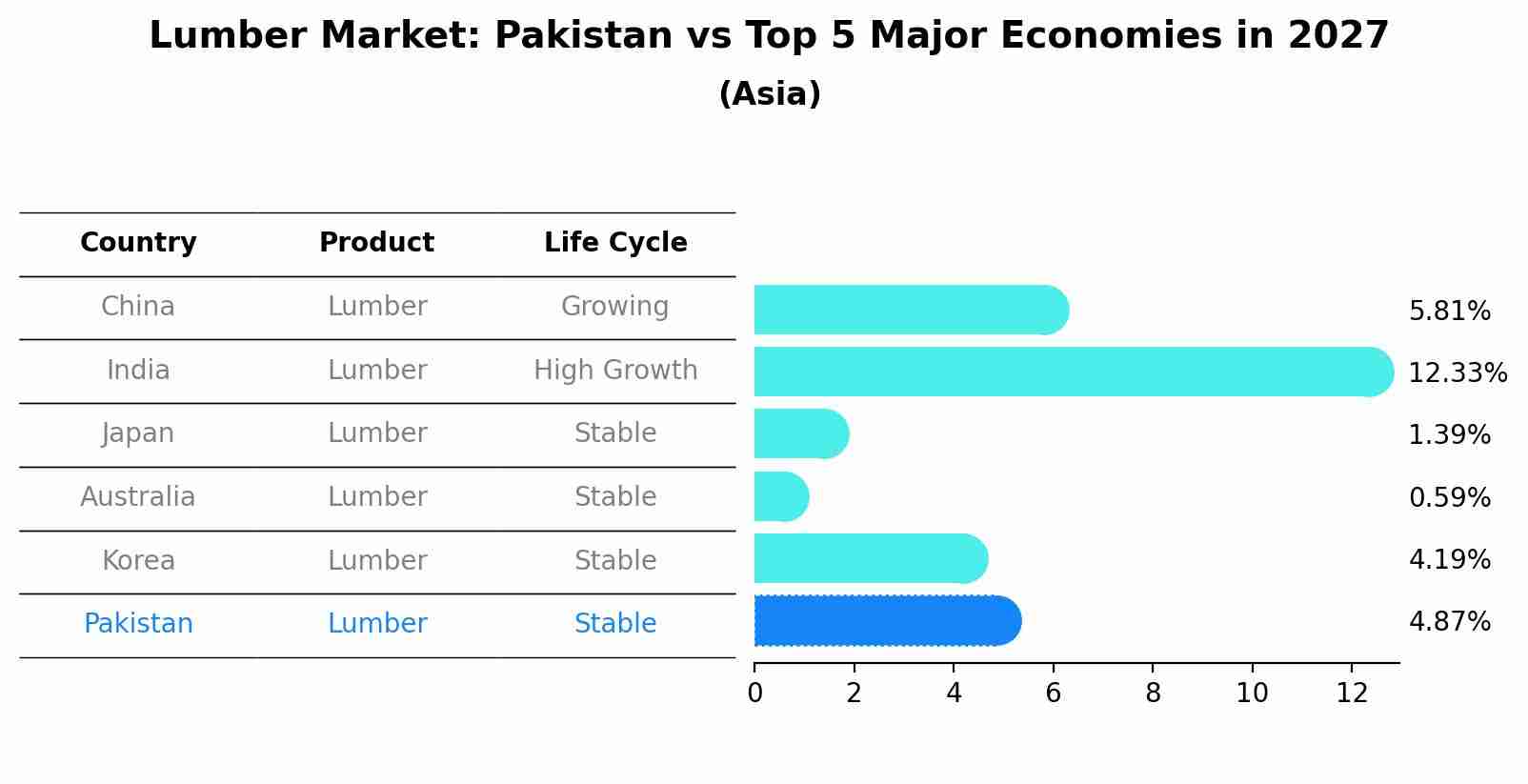
Lumber Market: Pakistan vs Top 5 Major Economies in 2027 (Asia)
The Lumber market in Pakistan is projected to grow at a stable growth rate of 4.87% by 2027, highlighting the country's increasing focus on advanced technologies within the Asia region, where China holds the dominant position, followed closely by India, Japan, Australia and South Korea, shaping overall regional demand.
Pakistan Lumber Market Overview
In the Pakistan Lumber Market, the demand for wood and wood products is increasing, driven by the construction and furniture industries. Sustainable forestry practices and efficient supply chains are key factors influencing market dynamics.
Drivers of the market
The construction boom and the growing demand for wood products in Pakistan are driving the lumber market. Lumber is a primary material used in construction, furniture manufacturing, and woodworking industries. With increasing urbanization and infrastructure development projects, the demand for lumber is expected to remain strong in Pakistan. Additionally, sustainable forestry practices and the adoption of certified wood products are becoming key trends in the lumber market.
Challenges of the market
The lumber market in Pakistan encounters various challenges, primarily concerning sustainability, supply chain efficiency, and market demand. Despite the increasing need for lumber in construction and furniture manufacturing, sourcing sustainable and certified wood materials remains a significant obstacle. The lack of stringent regulations and monitoring mechanisms often results in the exploitation of forests, leading to deforestation and environmental degradation. Moreover, the complexity of the lumber supply chain, including logging, processing, and distribution, adds to the challenge of ensuring the quality and legality of wood products. Additionally, fluctuations in market demand and economic uncertainties can impact the profitability of lumber businesses, making it difficult to forecast future trends and plan investments effectively. Overcoming these challenges requires collaborative efforts between government agencies, industry stakeholders, and environmental organizations to implement sustainable forestry practices, enhance supply chain transparency, and promote responsible consumption of wood products.
Government Policy of the market
Government policies aim to sustainably manage Pakistan`s forest resources and regulate the harvesting and trade of lumber products. Measures include forest certification programs, timber harvesting quotas, and enforcement against illegal logging to promote environmental conservation and industry sustainability.
Key Highlights of the Report:
- Pakistan Lumber Market Outlook
- Market Size of Pakistan Lumber Market, 2025
- Forecast of Pakistan Lumber Market, 2032
- Historical Data and Forecast of Pakistan Lumber Revenues & Volume for the Period 2022-2032F
- Pakistan Lumber Market Trend Evolution
- Pakistan Lumber Market Drivers and Challenges
- Pakistan Lumber Price Trends
- Pakistan Lumber Porter's Five Forces
- Pakistan Lumber Industry Life Cycle
- Historical Data and Forecast of Pakistan Lumber Market Revenues & Volume By Types for the Period 2022-2032F
- Historical Data and Forecast of Pakistan Lumber Market Revenues & Volume By Hardwood Lumber for the Period 2022-2032F
- Historical Data and Forecast of Pakistan Lumber Market Revenues & Volume By Softwood Lumber for the Period 2022-2032F
- Historical Data and Forecast of Pakistan Lumber Market Revenues & Volume By Application for the Period 2022-2032F
- Historical Data and Forecast of Pakistan Lumber Market Revenues & Volume By Construction for the Period 2022-2032F
- Historical Data and Forecast of Pakistan Lumber Market Revenues & Volume By Furniture for the Period 2022-2032F
- Historical Data and Forecast of Pakistan Lumber Market Revenues & Volume By Flooring for the Period 2022-2032F
- Historical Data and Forecast of Pakistan Lumber Market Revenues & Volume By Moldings for the Period 2022-2032F
- Historical Data and Forecast of Pakistan Lumber Market Revenues & Volume By Others for the Period 2022-2032F
- Pakistan Lumber Import Export Trade Statistics
- Market Opportunity Assessment By Types
- Market Opportunity Assessment By Application
- Pakistan Lumber Top Companies Market Share
- Pakistan Lumber Competitive Benchmarking By Technical and Operational Parameters
- Pakistan Lumber Company Profiles
- Pakistan Lumber Key Strategic Recommendations






































