Pakistan Printed Signage Market: Import Trend Analysis
Pakistan import trend for the printed signage market showed a notable growth rate of 35.02% from 2023 to 2024, with a CAGR of -16.66% from 2020 to 2024. This fluctuation may be attributed to shifts in consumer preferences or changes in trade policies impacting the market dynamics.
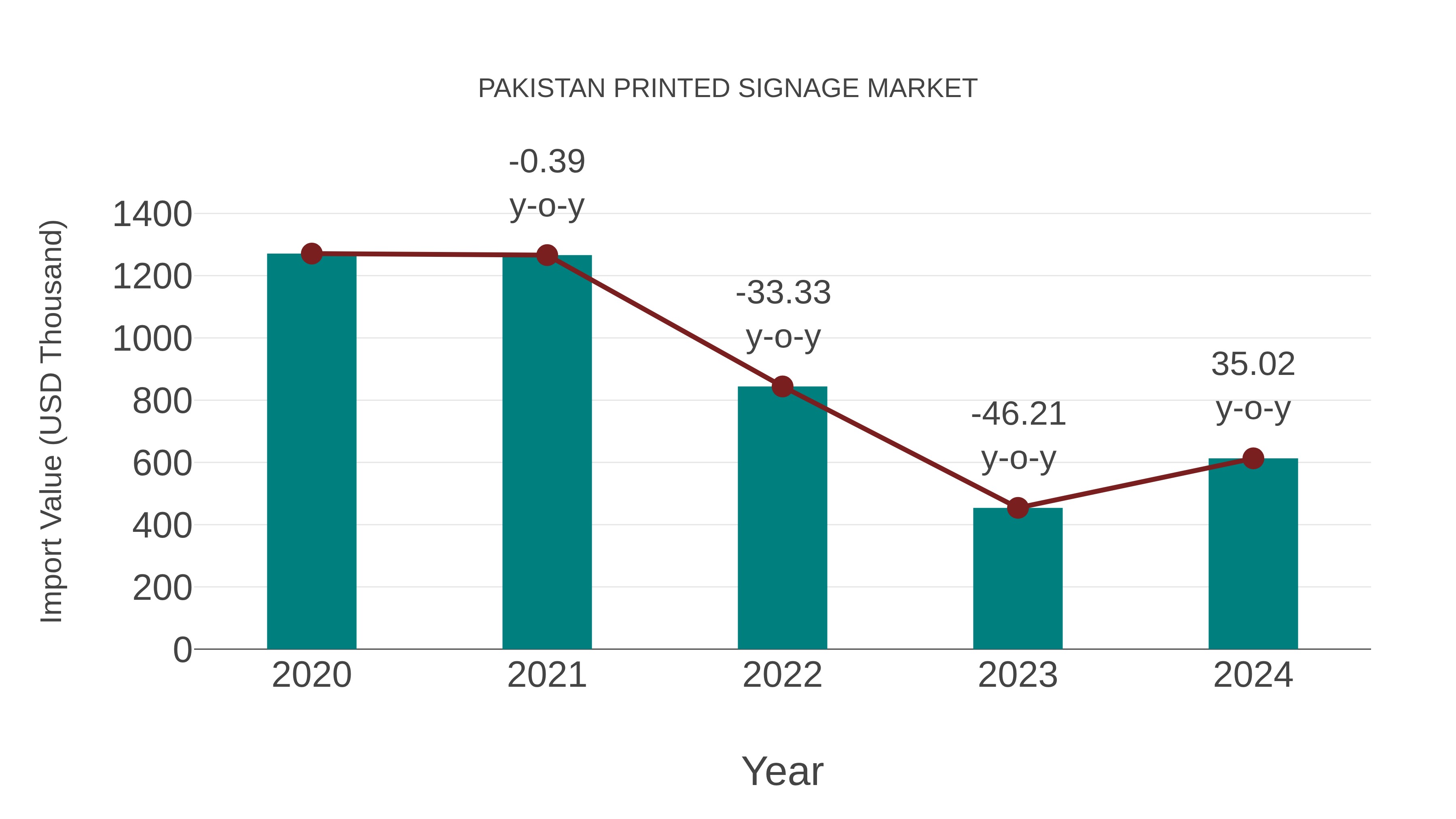
Pakistan Printed Signage Market Synopsis
The Pakistan Printed Signage Market is experiencing steady growth driven by increasing demand across various industries such as retail, hospitality, and healthcare. The market is characterized by the rising adoption of digital signage solutions, advancements in printing technologies, and the growing trend of personalized and visually appealing signage. Key players in the market are focusing on offering innovative and cost-effective solutions to cater to the diverse needs of businesses. Additionally, the government initiatives to promote tourism and infrastructure development are further fueling the demand for printed signage in the country. The market is highly competitive with players competing based on product quality, technology integration, and after-sales services. Overall, the Pakistan Printed Signage Market is poised for significant growth in the coming years.
Pakistan Printed Signage Market Trends
In the Pakistan Printed Signage Market, there is a growing demand for digital signage solutions due to their dynamic content capabilities and interactive features, which help businesses attract and engage customers effectively. Personalization and customization options are also gaining popularity as companies look to create unique and eye-catching signage to stand out in a crowded market. Sustainability is another key trend, with an increasing focus on eco-friendly materials and printing processes to reduce environmental impact. Additionally, the use of LED technology in signage is on the rise, offering energy-efficient and visually striking display options. Overall, the market is evolving towards more innovative and impactful signage solutions that cater to the changing preferences of businesses and consumers in Pakistan.
Pakistan Printed Signage Market Challenges
In the Pakistan Printed Signage Market, some key challenges include increasing competition among signage providers, fluctuating raw material costs, limited technological advancements leading to slower production times, and the need for skilled labor to produce high-quality printed signage. Additionally, the market faces challenges related to inconsistent government regulations regarding outdoor advertising, which can impact the visibility and reach of printed signage. Economic instability and disruptions in supply chains can also pose challenges for companies operating in this market. Overall, navigating these challenges requires signage providers in Pakistan to adapt quickly to market trends, invest in technology upgrades, and streamline operations to remain competitive and meet the evolving demands of clients.
Pakistan Printed Signage Market Investment Opportunities
The Pakistan Printed Signage Market presents several investment opportunities due to the country`s growing advertising and marketing industry. With businesses increasingly focusing on brand visibility and customer engagement, there is a rising demand for high-quality printed signage for both indoor and outdoor use. Investing in state-of-the-art printing equipment and technology to offer innovative and eye-catching signage solutions can be lucrative. Additionally, there is potential for growth in sectors such as retail, hospitality, and event management, which rely heavily on signage for promotion and wayfinding. Collaborating with local businesses and advertising agencies to provide customized signage services tailored to their specific needs can also be a profitable investment strategy in the Pakistan Printed Signage Market.
Jordan Agar Market Government Policies
In Pakistan, the Printed Signage Market is regulated by various government policies aimed at ensuring quality standards, safety measures, and environmental sustainability. The Pakistan Standards and Quality Control Authority (PSQCA) sets guidelines for the production and installation of printed signage to maintain quality and safety standards. Additionally, the government has implemented regulations on the type of materials used in signage to promote environmental sustainability and reduce pollution. Businesses operating in the Printed Signage Market are required to comply with these policies to ensure consumer safety and environmental protection. Moreover, the government periodically conducts inspections and audits to enforce compliance with these regulations and may impose penalties on non-compliant businesses. Compliance with government policies is crucial for businesses to operate legally and ethically in the Printed Signage Market in Pakistan.
Pakistan Printed Signage Market Future Outlook
The Pakistan Printed Signage Market is expected to witness steady growth in the coming years, driven by increasing demand from various industries such as retail, hospitality, and transportation. Factors such as the rising trend of digital printing technology, expanding advertising and marketing activities, and the growing number of businesses seeking to enhance their brand visibility are contributing to the market`s growth. Additionally, government initiatives to promote infrastructure development and urbanization are likely to further fuel the demand for printed signage in Pakistan. With the increasing focus on creativity and customization in signage solutions, the market is anticipated to offer attractive opportunities for manufacturers, suppliers, and service providers in the country. However, challenges such as price competition, environmental concerns, and technological advancements may also impact the market landscape in the future.
Key Highlights of the Report:
- Pakistan Printed Signage Market Outlook
- Market Size of Pakistan Printed Signage Market, 2025
- Forecast of Pakistan Printed Signage Market, 2032
- Historical Data and Forecast of Pakistan Printed Signage Revenues & Volume for the Period 2022 - 2032F
- Pakistan Printed Signage Market Trend Evolution
- Pakistan Printed Signage Market Drivers and Challenges
- Pakistan Printed Signage Price Trends
- Pakistan Printed Signage Porter's Five Forces
- Pakistan Printed Signage Industry Life Cycle
- Historical Data and Forecast of Pakistan Printed Signage Market Revenues & Volume By Product for the Period 2022 - 2032F
- Historical Data and Forecast of Pakistan Printed Signage Market Revenues & Volume By Billboard for the Period 2022 - 2032F
- Historical Data and Forecast of Pakistan Printed Signage Market Revenues & Volume By Backlit Display for the Period 2022 - 2032F
- Historical Data and Forecast of Pakistan Printed Signage Market Revenues & Volume By Pop Display for the Period 2022 - 2032F
- Historical Data and Forecast of Pakistan Printed Signage Market Revenues & Volume By Banner for the Period 2022 - 2032F
- Historical Data and Forecast of Pakistan Printed Signage Market Revenues & Volume By Corporate Graphics for the Period 2022 - 2032F
- Historical Data and Forecast of Pakistan Printed Signage Market Revenues & Volume By Others for the Period 2022 - 2032F
- Historical Data and Forecast of Pakistan Printed Signage Market Revenues & Volume By Type for the Period 2022 - 2032F
- Historical Data and Forecast of Pakistan Printed Signage Market Revenues & Volume By Indoor Printed Signage for the Period 2022 - 2032F
- Historical Data and Forecast of Pakistan Printed Signage Market Revenues & Volume By Outdoor Printed Signage for the Period 2022 - 2032F
- Historical Data and Forecast of Pakistan Printed Signage Market Revenues & Volume By End-user Vertical for the Period 2022 - 2032F
- Historical Data and Forecast of Pakistan Printed Signage Market Revenues & Volume By BFSI for the Period 2022 - 2032F
- Historical Data and Forecast of Pakistan Printed Signage Market Revenues & Volume By Retail for the Period 2022 - 2032F
- Historical Data and Forecast of Pakistan Printed Signage Market Revenues & Volume By Sports and Leisure for the Period 2022 - 2032F
- Historical Data and Forecast of Pakistan Printed Signage Market Revenues & Volume By Entertainment for the Period 2022 - 2032F
- Historical Data and Forecast of Pakistan Printed Signage Market Revenues & Volume By Transportation and Logistics for the Period 2022 - 2032F
- Historical Data and Forecast of Pakistan Printed Signage Market Revenues & Volume By Healthcare for the Period 2022 - 2032F
- Historical Data and Forecast of Pakistan Printed Signage Market Revenues & Volume By Others for the Period 2022 - 2032F
- Pakistan Printed Signage Import Export Trade Statistics
- Market Opportunity Assessment By Product
- Market Opportunity Assessment By Type
- Market Opportunity Assessment By End-user Vertical
- Pakistan Printed Signage Top Companies Market Share
- Pakistan Printed Signage Competitive Benchmarking By Technical and Operational Parameters
- Pakistan Printed Signage Company Profiles
- Pakistan Printed Signage Key Strategic Recommendations






































