Philippines Animal Protein Market Top 5 Importing Countries and Market Competition (HHI) Analysis
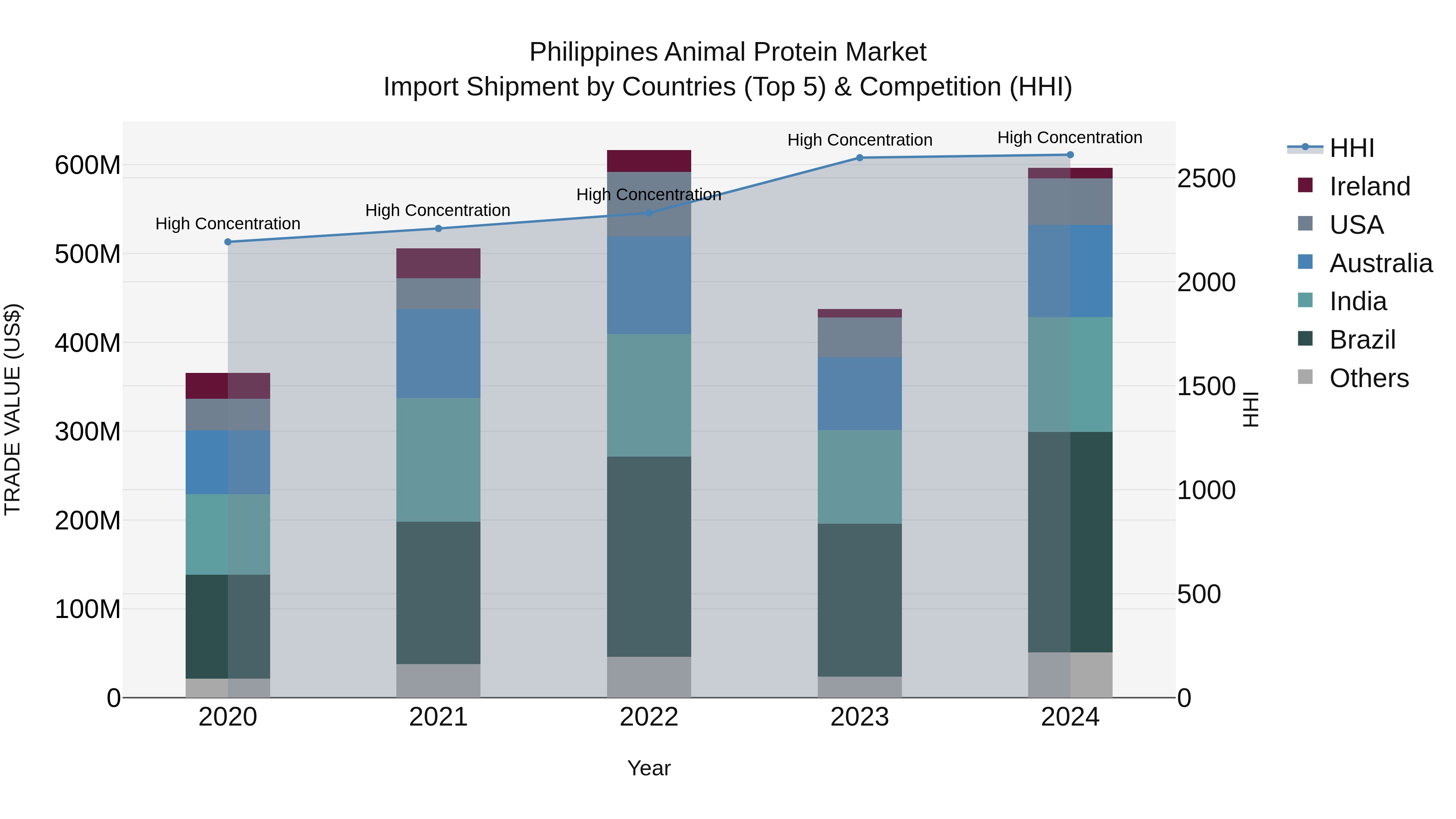
The Philippines animal protein import market continued to thrive in 2024, with top exporters including Brazil, India, Australia, USA, and New Zealand. The high concentration of market share, as indicated by the HHI, suggests a competitive landscape dominated by these key players. The impressive CAGR of 13.01% from 2020 to 2024 reflects sustained growth in demand for animal protein imports. Furthermore, the significant growth rate of 36.3% from 2023 to 2024 underscores the rapid expansion of this market segment, presenting lucrative opportunities for both suppliers and stakeholders in the industry.
Philippines Animal Protein Market Synopsis
Animal protein remains a key part of the Filipino diet. Poultry, pork, and fish dominate the market, with demand bolstered by population growth and food service industry expansion. However, concerns around sustainability and health are gradually encouraging diversification.
Trends of the market
The Philippines Animal Protein market, encompassing meat, dairy, and eggs, is driven by growing urbanization and dietary patterns favoring high-protein meals. However, challenges such as disease outbreaks and environmental sustainability are influencing production methods. Industry players are investing in quality control, traceability, and sustainable practices to meet rising demand.
Challenges of the market
The animal protein market in the Philippines faces sustainability and ethical concerns, especially regarding environmental impacts and animal welfare. Rising feed and labor costs, coupled with disease risks, reduce margins for producers. Additionally, global trade dynamics and import competition affect pricing stability. Demand fluctuations due to shifting dietary preferences and increasing interest in plant-based diets also present long-term challenges for this segment.
Investment opportunities in the Market
The Philippines Animal Protein market continues to dominate the countrys protein consumption, including meat, eggs, dairy, and fish. Urbanization and increasing disposable incomes are driving demand for quality animal proteins. Investment opportunities exist in improving livestock production efficiency, cold-chain infrastructure, and value-added meat processing. There is also potential in premiumization, such as free-range, organic, and hormone-free offerings targeting the health-conscious consumer base.
Government Policy of the market
Animal protein remains a staple in the Filipino diet, with the government supporting its production through infrastructure development, veterinary health programs, and incentives for livestock and poultry farming. Despite growing competition from plant-based alternatives, animal protein consumption remains strong, particularly in rural and low-income urban areas.
Key Highlights of the Report:
- Philippines Animal Protein Market Outlook
- Market Size of Philippines Animal Protein Market, 2024
- Forecast of Philippines Animal Protein Market, 2031
- Historical Data and Forecast of Philippines Animal Protein Revenues & Volume for the Period 2021- 2031
- Philippines Animal Protein Market Trend Evolution
- Philippines Animal Protein Market Drivers and Challenges
- Philippines Animal Protein Price Trends
- Philippines Animal Protein Porter's Five Forces
- Philippines Animal Protein Industry Life Cycle
- Historical Data and Forecast of Philippines Animal Protein Market Revenues & Volume By Protein Type for the Period 2021- 2031
- Historical Data and Forecast of Philippines Animal Protein Market Revenues & Volume By Casein and Caseinates for the Period 2021- 2031
- Historical Data and Forecast of Philippines Animal Protein Market Revenues & Volume By Collagen for the Period 2021- 2031
- Historical Data and Forecast of Philippines Animal Protein Market Revenues & Volume By Egg Protein for the Period 2021- 2031
- Historical Data and Forecast of Philippines Animal Protein Market Revenues & Volume By Gelatin for the Period 2021- 2031
- Historical Data and Forecast of Philippines Animal Protein Market Revenues & Volume By Insect Protein for the Period 2021- 2031
- Historical Data and Forecast of Philippines Animal Protein Market Revenues & Volume By Milk Protein for the Period 2021- 2031
- Historical Data and Forecast of Philippines Animal Protein Market Revenues & Volume By Whey Protein for the Period 2021- 2031
- Historical Data and Forecast of Philippines Casein and Caseinates Animal Protein Market Revenues & Volume By Other Animal Protein for the Period 2021- 2031
- Philippines Animal Protein Import Export Trade Statistics
- Market Opportunity Assessment By Protein Type
- Philippines Animal Protein Top Companies Market Share
- Philippines Animal Protein Competitive Benchmarking By Technical and Operational Parameters
- Philippines Animal Protein Company Profiles
- Philippines Animal Protein Key Strategic Recommendations






































