Philippines Bamboos Market Top 5 Importing Countries and Market Competition (HHI) Analysis
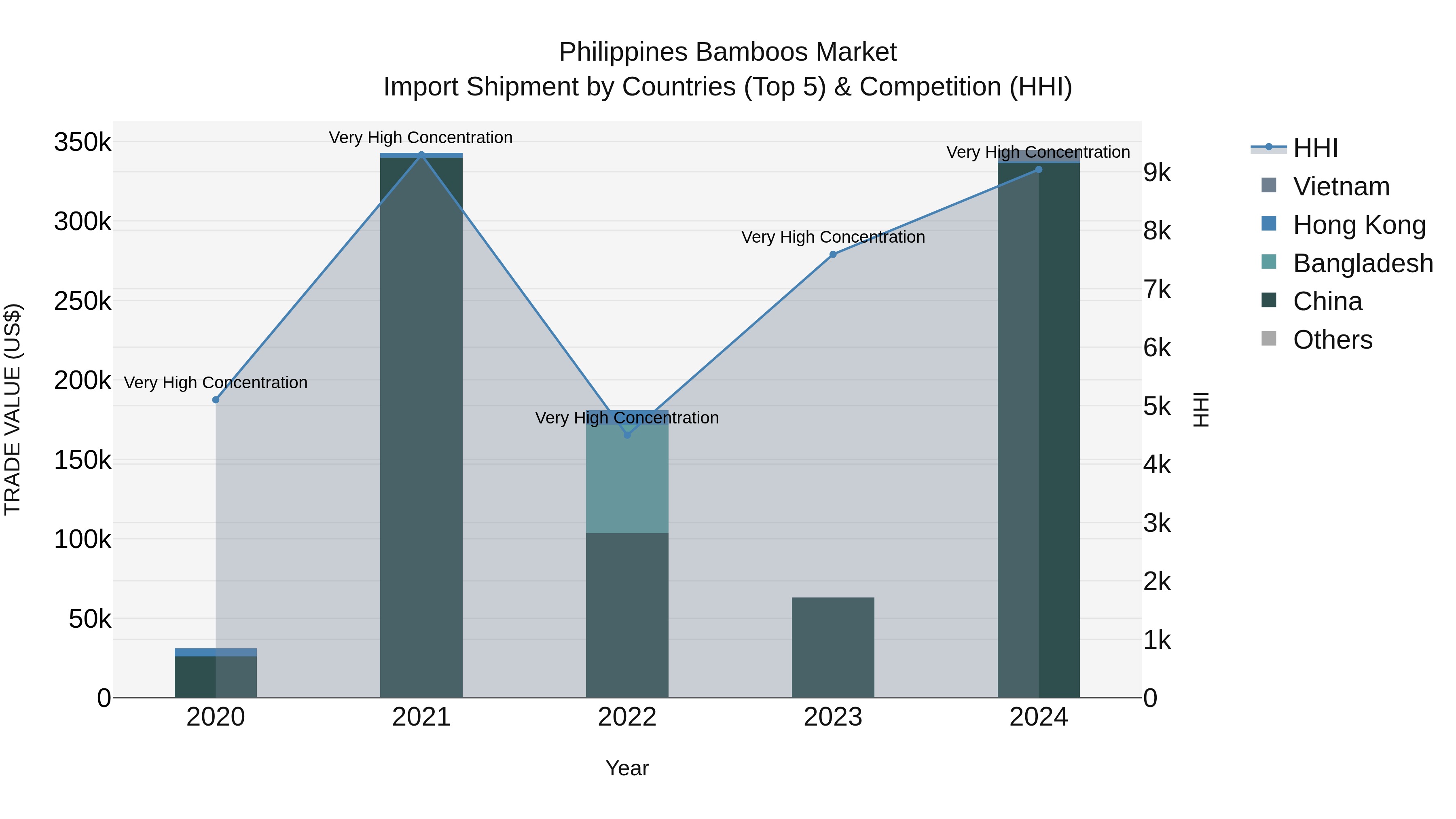
Philippines maintained a strong demand for bamboo imports in 2024, with China, Vietnam, Hong Kong, and Bangladesh emerging as the top exporting countries. The market exhibited a very high concentration level, indicating significant dominance by key players. The impressive compound annual growth rate (CAGR) of 82.34% from 2020 to 2024 highlights the robust expansion of the bamboo import market in the country. Moreover, the exceptional growth rate of 445.23% in 2024 further underlines the accelerating pace of development in this sector. This trend signifies lucrative opportunities and a thriving market for bamboo imports in the Philippines.
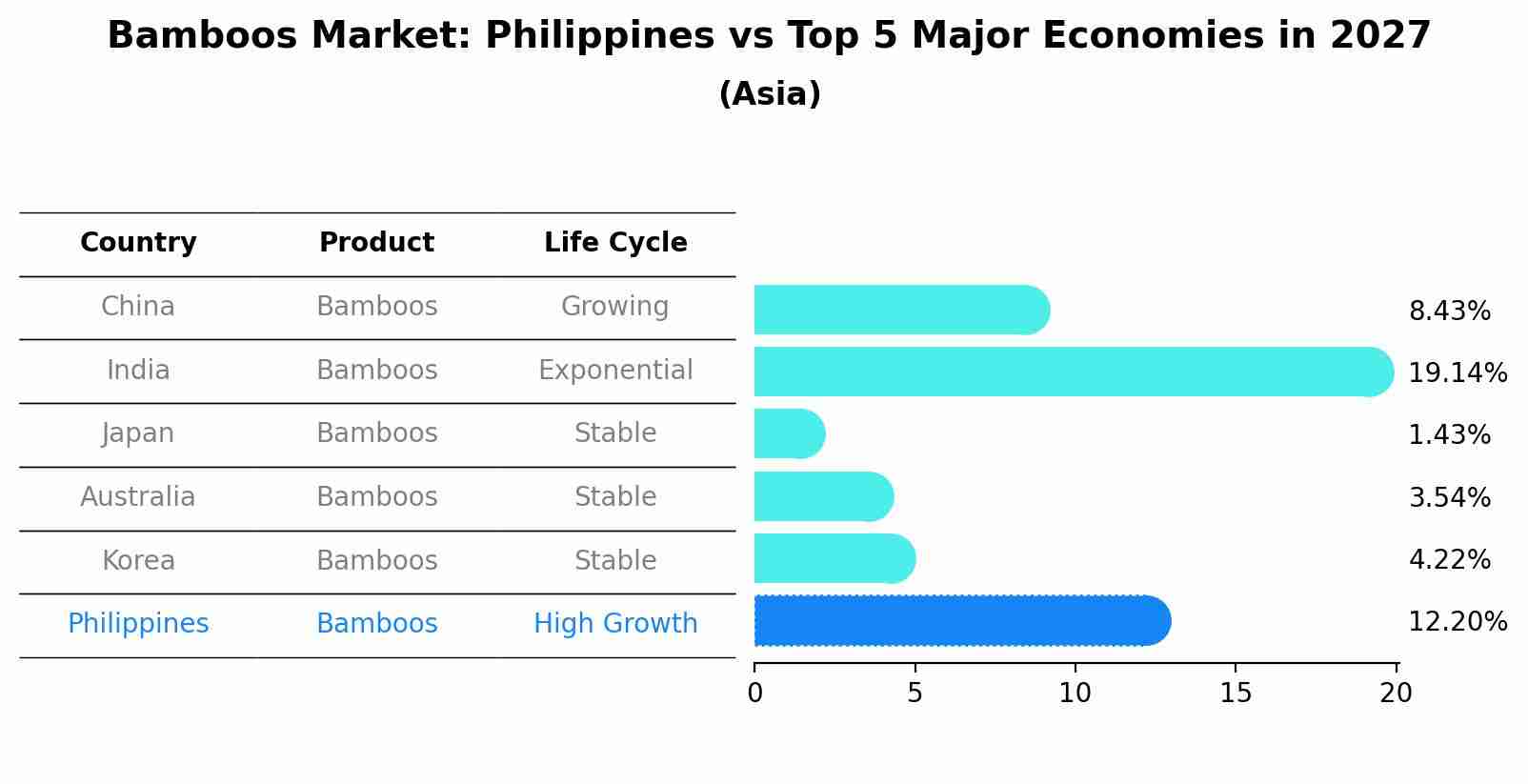
Bamboos Market: Philippines vs Top 5 Major Economies in 2027 (Asia)
By 2027, the Bamboos market in Philippines is anticipated to reach a growth rate of 12.20%, as part of an increasingly competitive Asia region, where China remains at the forefront, supported by India, Japan, Australia and South Korea, driving innovations and market adoption across sectors.
philippines bamboos market Synopsis
The Philippines bamboos market is experiencing significant growth due to the versatile applications of bamboo in various industries, including construction, furniture, paper, and textiles. Bamboo is valued for its sustainability, rapid growth, and strength, making it a popular choice for eco-friendly products. The construction sector`s demand for bamboo-based materials and the increasing interest in bamboo-based textiles are driving the market`s expansion. According to recent market data, the Philippines bamboos market is projected to achieve a CAGR of around 9% over the forecast period.
Drivers of the Market
Driven by its versatility and sustainability, the Philippines bamboos market is poised for substantial growth. Bamboos` fast growth rate, low environmental impact, and diverse applications across construction, furniture, and handicrafts contribute to its increasing demand. Government initiatives promoting bamboo cultivation and value-added products, along with rising global awareness of sustainable materials, will likely fuel market expansion.
Challenges of the Market
The Philippines bamboos market holds substantial potential due to the versatility and sustainability of bamboo as a resource. Nevertheless, challenges persist. Bamboo cultivation requires specific conditions, and improper management can lead to issues like over-harvesting, soil degradation, and pest infestations. Sustainable bamboo sourcing is a concern that requires careful attention to avoid environmental degradation. Additionally, while bamboo products are eco-friendly, convincing consumers of their durability and quality compared to traditional materials like wood or plastic can be challenging. Market awareness campaigns and quality assurance measures are necessary. Furthermore, ensuring fair trade practices along the bamboo value chain is essential to support the livelihoods of local communities involved in cultivation and production. Overcoming these challenges will determine the long-term success of the Philippines bamboo market.
COVID-19 Impact on the Market
The Philippines bamboos market faced challenges due to disruptions in the supply chain and construction industry during the pandemic. However, bamboos` eco-friendly and versatile nature makes them a sought-after resource in sustainable construction and various industries. As infrastructure projects resume and environmental concerns remain paramount, the market is poised for growth.
Key Players in the Market
The Philippines bamboos market has been witnessing significant growth in recent years. With the increasing demand for sustainable and eco-friendly materials, bamboos have gained prominence in various industries. Key players in this market include BambooTech, EcoBamboo, and GreenBamboo Enterprises.
Key Highlights of the Report:
- Philippines Bamboos Market Outlook
- Market Size of Philippines Bamboos Market, 2024
- Forecast of Philippines Bamboos Market, 2031
- Historical Data and Forecast of Philippines Bamboos Revenues & Volume for the Period 2021-2031
- Philippines Bamboos Market Trend Evolution
- Philippines Bamboos Market Drivers and Challenges
- Philippines Bamboos Price Trends
- Philippines Bamboos Porter's Five Forces
- Philippines Bamboos Industry Life Cycle
- Historical Data and Forecast of Philippines Bamboos Market Revenues & Volume By Application for the Period 2021-2031
- Historical Data and Forecast of Philippines Bamboos Market Revenues & Volume By Raw Materials for the Period 2021-2031
- Historical Data and Forecast of Philippines Bamboos Market Revenues & Volume By Industrial Products for the Period 2021-2031
- Historical Data and Forecast of Philippines Bamboos Market Revenues & Volume By Furniture for the Period 2021-2031
- Historical Data and Forecast of Philippines Bamboos Market Revenues & Volume By Shoots for the Period 2021-2031
- Historical Data and Forecast of Philippines Bamboos Market Revenues & Volume By Others for the Period 2021-2031
- Philippines Bamboos Import Export Trade Statistics
- Market Opportunity Assessment By Application
- Philippines Bamboos Top Companies Market Share
- Philippines Bamboos Competitive Benchmarking By Technical and Operational Parameters
- Philippines Bamboos Company Profiles
- Philippines Bamboos Key Strategic Recommendations






































