Philippines Digital Market Size & Growth Rate (2026-2032)
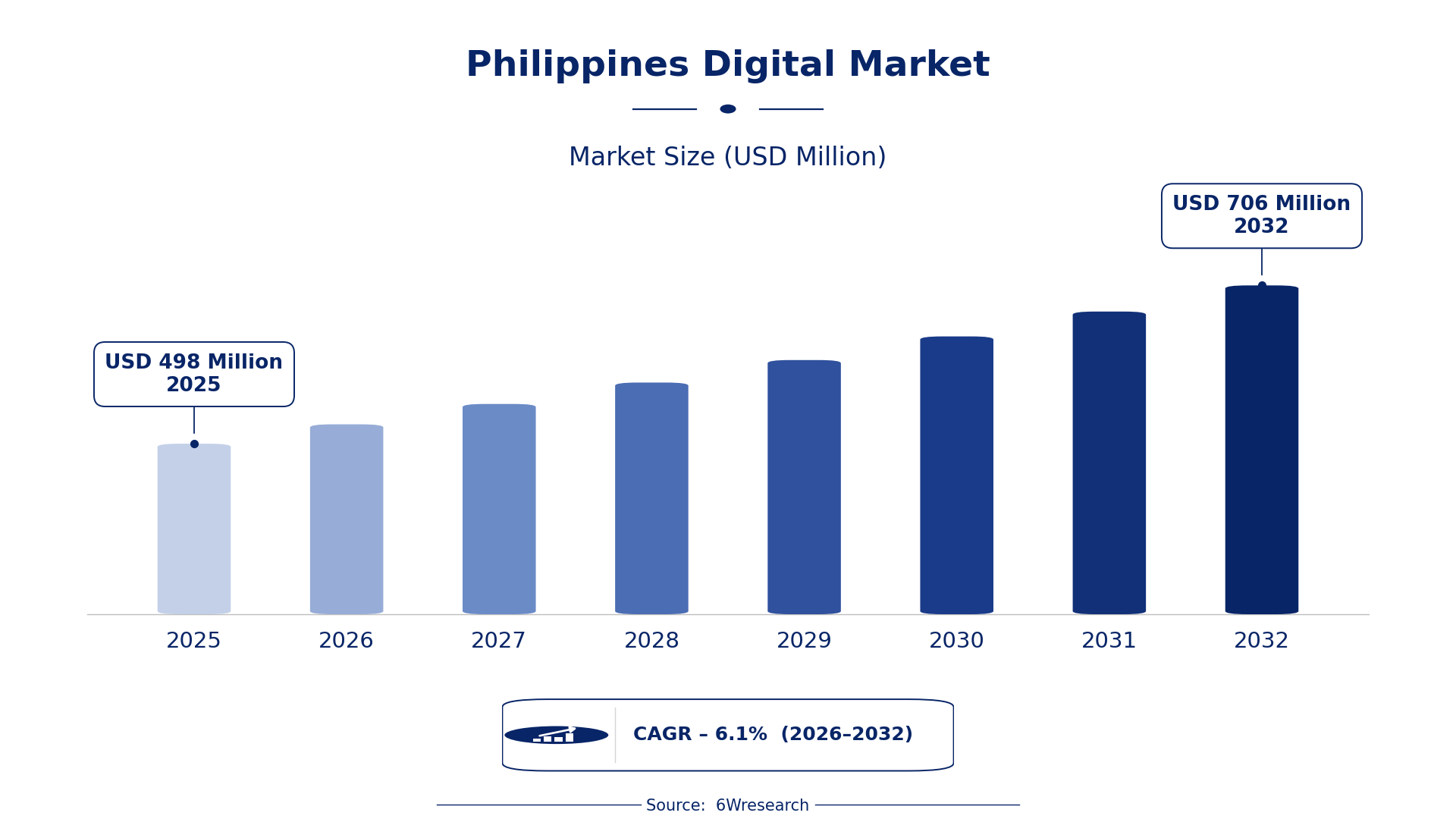
The Philippines Digital Market was estimated at USD 498 Million in 2025 and is projected to reach USD 706 Million by 2032, growing at a CAGR of 6.1% from 2026 to 2032.
Philippines Digital Market Synopsis
The most powerful influence on the Philippines Digital Market is the rapid rise in internet accessibility and smartphone adoption. This surge is transforming consumer behavior, leading to increased engagement with e-commerce platforms and digital services.
The pandemic served as a catalyst for digital transformation, pushing businesses and individuals alike to embrace online solutions. As companies pivot towards digital channels, the market is evolving to meet the growing demand for online services and products.
Philippines Digital Market Year-wise Growth Rate and Key Drivers
This graph illustrates the annual growth rates of the Philippines Digital Market from 2021 to 2032, highlighting a steady upward trajectory and projected expansion over the forecast period.
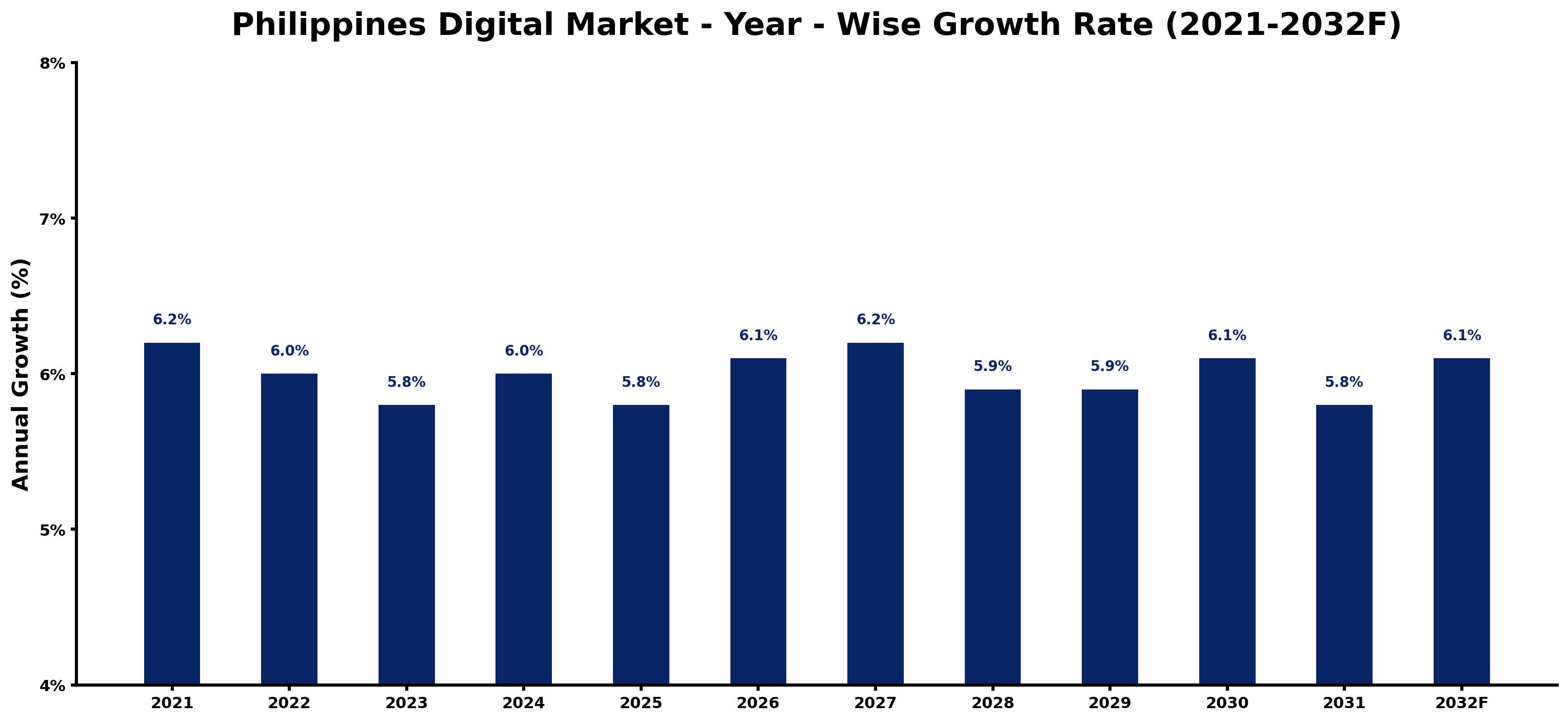
The table below presents the year‑wise growth rates along with the key drivers influencing the market
| Year | Growth Rate | Major Drivers |
| 2021 | 6.2% | Digital payments surge due to BSP initiatives |
| 2022 | 6.0% | E-commerce growth driven by rising online retail adoption |
| 2023 | 5.8% | Government support for tech startups enhances digital innovation |
| 2024 | 6.0% | Mobile internet expansion boosts online service accessibility |
| 2025 | 5.8% | Increased digital literacy programs empower local entrepreneurs |
| 2026 | 6.1% | Social media advertising gains traction among local businesses |
| 2027 | 6.2% | Rise in content creation fuels demand for digital platforms |
| 2028 | 5.9% | Remote work trends accelerate digital service subscriptions |
| 2029 | 5.9% | Local enterprises adopt digital marketing strategies extensively |
| 2030 | 6.1% | Cross-border e-commerce growth expands market opportunities |
| 2031 | 5.8% | Increased focus on cybersecurity drives digital trust |
| 2032 | 6.1% | Sustained UX/UI improvements enhance consumer digital experience |
Note: Market size estimations and growth projections presented in this report are based on 6Wresearch's proprietary forecasting methodology, utilizing the latest available industry data, government publications, and primary research inputs.
Philippines Digital Market Key Takeaways
Below are some of the specific key takeaways from the market, including:
- The digital market is expected to experience steady growth, driven by increasing internet penetration.
- Mobile commerce is becoming increasingly dominant as smartphone usage rises.
- Social media platforms are critical for digital marketing strategies among local businesses.
- Investment in digital infrastructure remains essential for bridging access gaps.
- Emerging technologies like AI and blockchain are starting to find applications in various sectors.
Evaluation of Restraints in Philippines Digital Market
Despite its growth potential, the Philippines Digital Market is hindered by infrastructure challenges. Many remote areas still struggle with limited connectivity, which restricts access to digital services. This urban-rural divide poses a significant challenge for equitable growth. Additionally, the cost of internet services remains high for some segments of the population, further complicating digital adoption efforts.
Philippines Digital Market Trends
A noticeable trend in the Philippines Digital Market is the increasing shift toward mobile-first strategies. Businesses are optimizing their platforms for mobile devices, acknowledging that a large segment of their customers accesses services via smartphones. E-commerce is also adapting to this trend, with more brands developing mobile applications to enhance user experience.
Another trend is the growing importance of data privacy and security. As consumers become more aware of their digital footprints, businesses are implementing stricter data protection measures to build trust. This focus on compliance is reshaping the way companies approach their digital strategies.
Philippines Digital Market Opportunities
Opportunities for growth in the Philippines Digital Market lie in sectors like e-commerce, digital payments, and online education. The local market is ripe for innovative solutions that cater to the specific needs of Filipino consumers, especially in underserved areas. Additionally, partnerships with fintech companies can enhance payment solutions, making transactions easier and more secure.
Government Initiatives in the Philippines Digital Market
The Philippine government is actively shaping the digital market through various initiatives aimed at enhancing digital infrastructure and access. Public policy is focused on improving internet connectivity, which is vital for enabling a more inclusive digital environment. As the government prioritizes digital transformation, businesses are encouraged to align with these efforts to capitalize on emerging opportunities.
- A national digital infrastructure upgrade programme was launched in early 2023, focusing on expanding internet access in rural areas.
- Currently, an initiative is underway to enhance digital literacy through community training programs aimed at promoting e-commerce skills.
- A regulatory framework mandating data privacy compliance was introduced in 2024 to safeguard consumer information.
- Upcoming plans include a public-private initiative expected to enhance broadband connectivity by 2026.
Future Insights of the Philippines Digital Market
Looking ahead to 2026-2032, the Philippines Digital Market is set to continue its upward trajectory. As internet penetration deepens and more Filipinos engage with digital services, the market will evolve to meet new demands. Increased competition among businesses will drive innovation, particularly in sectors like e-commerce and digital finance. Companies that invest in technology and infrastructure will find ample opportunities for growth.
Philippines Digital Market Latest Developments
Recent activity in the Philippines Digital Market indicates a strong push towards modernization and digital engagement. Over the past year, various sectors have seen significant developments aimed at enhancing digital capabilities. Companies are increasingly recognizing the necessity of adapting to the digital age to remain competitive.
- A major technology vendor initiated a digital payments platform rollout in Q2 2023, enhancing transaction capabilities for local businesses.
- A leading regional operator announced an ongoing project to upgrade its network infrastructure, aimed at improving service quality by late 2024.
- In early 2023, a significant partnership was formed between a local e-commerce platform and a logistics company to streamline delivery services.
- A digital marketing service provider launched a new analytics tool in mid-2023 to help businesses better understand consumer behavior.
Philippines Digital Market - Key Attractiveness of the Report
- 10 Years of Market Numbers
- Historical Data Starting from 2022 to 2025
- Base Year: 2025
- Forecast Data until 2032
- Key Performance Indicators Impacting the Market
- Major Upcoming Developments and Projects
Key Highlights of the Report:
- Philippines Digital Market Outlook
- Market Size of Philippines Digital Market, 2025
- Forecast of Philippines Digital Market, 2032
- Historical Data and Forecast of Philippines Digital Revenues & Volume for the Period 2022-2032F
- Philippines Digital Market Trend Evolution
- Philippines Digital Market Drivers and Challenges
- Philippines Digital Price Trends
- Philippines Digital Porter's Five Forces
- Philippines Digital Industry Life Cycle
- Historical Data and Forecast of Philippines Digital Market Revenues & Volume By Software for the Period 2022-2032F
- Historical Data and Forecast of Philippines Digital Market Revenues & Volume By CRM Software for the Period 2022-2032F
- Historical Data and Forecast of Philippines Digital Market Revenues & Volume By Email Marketing Software for the Period 2022-2032F
- Historical Data and Forecast of Philippines Digital Market Revenues & Volume By Social Media Advertising for the Period 2022-2032F
- Philippines Digital Import Export Trade Statistics
- Market Opportunity Assessment By Software
- Philippines Digital Top Companies Market Share
- Philippines Digital Competitive Benchmarking By Technical and Operational Parameters
- Philippines Digital Company Profiles
- Philippines Digital Key Strategic Recommendations






































