Philippines Meat Packaging Market Summary
The philippines meat packaging market was estimated at USD 329 Million in 2025 and is projected to reach USD 443 Million by 2032, growing at a CAGR of 5.2% from 2026 to 2032.
Philippines Meat Packaging Market Year-wise Growth Rate and Key Drivers
This graph highlights how the Philippines Meat Packaging Market has steadily grown over the past five years, supported by major growth factors.
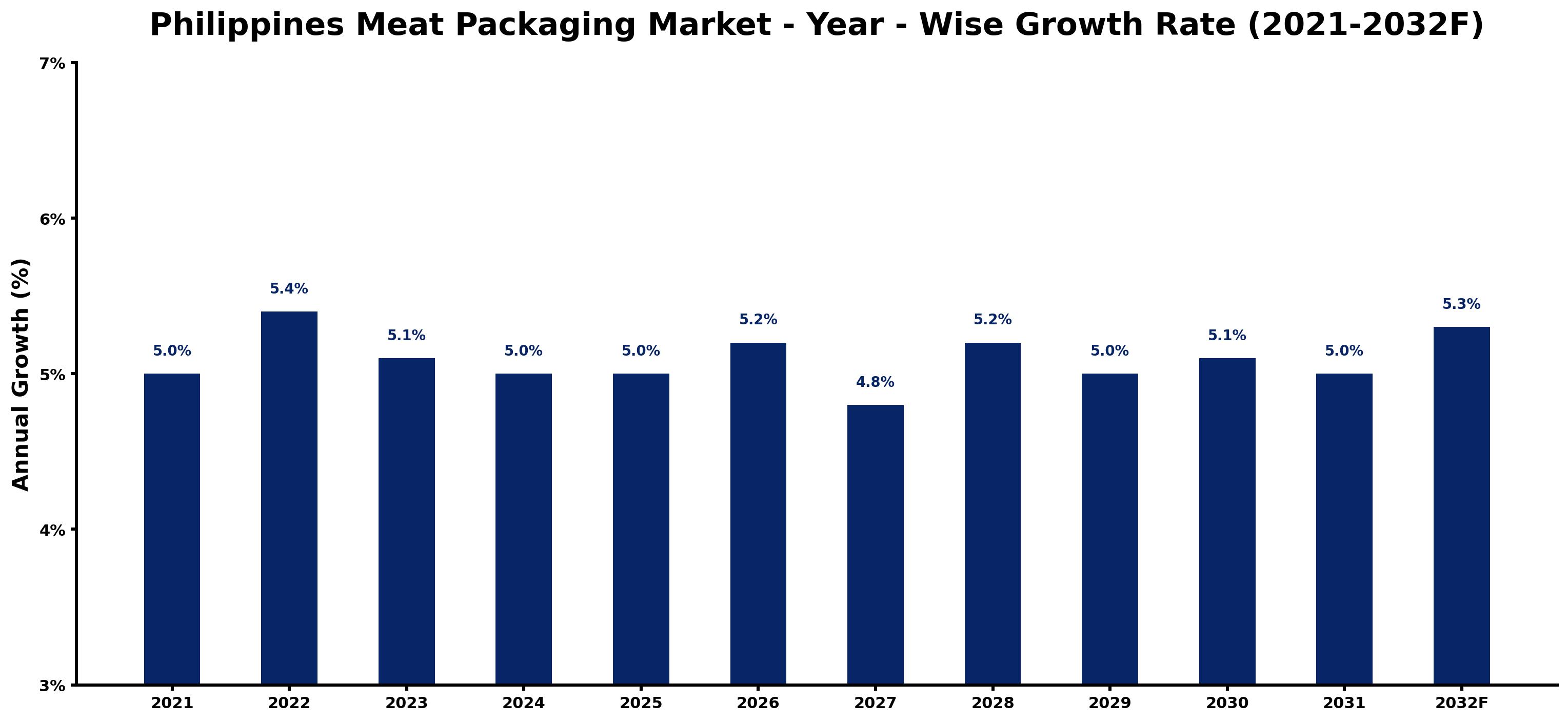
The table below presents the year wise growth rates along with the key drivers influencing the market
| Year | Growth Rate | Major Drivers |
| 2021 | 5.0% | The Philippine meat packaging market rebounded post-lockdown, reflecting consumer confidence. |
| 2022 | 5.4% | Increased investment in food safety technologies boosted packaging quality and consumer trust. |
| 2023 | 5.1% | Local meat producers enhanced supply chains, adapting to rising consumer expectations and preferences. |
| 2024 | 5.0% | Emerging trends in sustainability prompted shifts towards eco-friendly packaging solutions. |
| 2025 | 5.0% | Online grocery platforms expanded, creating new opportunities for meat packaging innovations. |
| 2026 | 5.2% | Consumer awareness around health and hygiene continues to influence packaging design choices. |
| 2027 | 4.8% | Collaboration between local farmers and packaging firms improved product traceability and safety. |
| 2028 | 5.2% | Urbanization trends fueled demand for convenient, ready-to-eat meat products and packaging. |
| 2029 | 5.0% | Technological advancements in packaging machinery enhanced efficiency and reduced operational costs. |
| 2030 | 5.1% | Increased export opportunities prompted local producers to adopt international packaging standards. |
| 2031 | 5.0% | Changing dietary preferences towards protein-rich diets expanded market segments for packaged meat. |
| 2032 | 5.3% | The rise of health-conscious consumers will demand innovative, functional packaging solutions. |
Note - Market size estimations and growth projections presented in this report are based on 6Wresearch's advanced forecasting approach, validated with industry datasets as of June 2026.
Philippines Meat Packaging Market Synopsis
The Philippines Meat Packaging Market is projected to reach 5.2% and witness significant growth during the forecast period (2026-2032). This upward trajectory is attributed to an array of factors, including the increasing demand for convenience foods, a rise in per capita income, and evolving consumer preferences favoring packaged meats over their unpackaged counterparts. Additionally, the growing health consciousness among consumers regarding the nutritional advantages of meat consumption is further propelling sales within the industry. Technological advancements in packaging solutions are also facilitating manufacturers in optimizing production processes and delivering high-quality products that cater to shifting consumer requirements.
Philippines Meat Packaging Market Growth Drivers
The growth of the Philippines Meat Packaging Market is primarily driven by several key factors:
- Rising Consumer Demand: The increasing preference for ready-to-eat and convenience foods has spurred demand for packaged meats, reflecting a broader shift in lifestyle choices among the Filipino population.
- Economic Growth: As the Philippine economy continues to grow, an increase in per capita income is allowing consumers to spend more on quality food products, particularly packaged meats.
- Health Awareness: A surge in health awareness regarding the nutritional benefits of meat consumption has led consumers to opt for packaged options that often include clear labeling of ingredients and nutritional information.
- Innovative Packaging Solutions: Advances in packaging technology, such as vacuum sealing and modified atmosphere packaging, enable longer shelf life and better preservation of meat products, appealing to both retailers and consumers.
- Urbanization: The rapid urbanization in the Philippines has contributed to a lifestyle shift, with consumers increasingly relying on modern retail outlets that offer a variety of packaged meat products.
Philippines Meat Packaging Market Challenges and Restraints
While the Philippines Meat Packaging Market presents significant growth opportunities, it is not without its challenges:
- Regulatory Compliance: Stringent regulations associated with food safety standards and product labeling laws imposed by government authorities can significantly increase operational costs for manufacturers.
- Local Competition: The presence of numerous local producers can create intense competition, impacting pricing strategies and profit margins for larger manufacturing entities.
- Volatile Raw Material Prices: Fluctuations in prices for raw materials can hinder profitability for companies within the sector, as they strive to maintain competitive pricing.
- Supply Chain Disruptions: Events such as natural disasters, as well as unforeseen circumstances like pandemics, can disrupt supply chains, affecting the availability of raw materials and workforce.
- Consumer Price Sensitivity: The current economic landscape may make consumers more price-sensitive, compelling manufacturers to find a balance between quality and affordability in their product offerings.
Philippines Meat Packaging Market Government Investment and Initiatives
The Philippine government has recognized the importance of the meat packaging sector in enhancing food safety and supporting economic growth. Various initiatives and investments target improving infrastructure, regulations, and technology in the meat packaging industry. This includes allocating funds for research and development to innovate packaging technologies, setting up training programs for workforce skills development, and improving food safety compliance measures. Furthermore, the government is focused on establishing partnerships with the private sector to promote sustainable practices and ensure the industry can respond effectively to both local and international market demands.
Philippines Meat Packaging Market Latest Developments (May 2025 - June 2026)
Recent developments in the Philippines Meat Packaging Market have indicated a shift towards sustainable and environmentally friendly packaging solutions. Manufacturers are increasingly adopting biodegradable materials and innovative packaging designs that minimize waste. Additionally, the market is seeing enhanced engagement in digital marketing strategies to reach a broader consumer base, particularly among the younger demographic. As restaurants and food service establishments gradually recover from pandemic-related downturns, there is an observable rebound in demand for processed meat products. Furthermore, advancements in food safety technologies are being prioritized, with a notable focus on traceability and transparency in the supply chain.
Philippines Meat Packaging Market - Key Attractiveness of the Report
- 10 Years of Market Numbers
- Historical Data Starting from 2022 to 2025
- Base Year: 2025
- Forecast Data until 2032
- Key Performance Indicators Impacting the Market
- Major Upcoming Developments and Projects
Key Highlights of the Report:
- Philippines Meat Packaging Market Outlook
- Market Size of Philippines Meat Packaging Market, 2025
- Forecast of Philippines Meat Packaging Market, 2032F
- Historical Data and Forecast of Philippines Meat Packaging Revenues & Volume for the Period 2022-2032F
- Philippines Meat Packaging Market Trend Evolution
- Philippines Meat Packaging Market Drivers and Challenges
- Philippines Meat Packaging Price Trends
- Philippines Meat Packaging Porter's Five Forces
- Philippines Meat Packaging Industry Life Cycle
- Historical Data and Forecast of Philippines Meat Packaging Market Revenues & Volume By Material Type for the Period 2022-2032F
- Historical Data and Forecast of Philippines Meat Packaging Market Revenues & Volume By Plastic for the Period 2022-2032F
- Historical Data and Forecast of Philippines Meat Packaging Market Revenues & Volume By Rigid? for the Period 2022-2032F
- Historical Data and Forecast of Philippines Meat Packaging Market Revenues & Volume By Metal for the Period 2022-2032F
- Historical Data and Forecast of Philippines Meat Packaging Market Revenues & Volume By Meat Type for the Period 2022-2032F
- Historical Data and Forecast of Philippines Meat Packaging Market Revenues & Volume By Fresh and Frozen for the Period 2022-2032F
- Historical Data and Forecast of Philippines Meat Packaging Market Revenues & Volume By Processed for the Period 2022-2032F
- Historical Data and Forecast of Philippines Meat Packaging Market Revenues & Volume By Ready to Eat for the Period 2022-2032F
- Philippines Meat Packaging Import Export Trade Statistics
- Market Opportunity Assessment By Material Type
- Market Opportunity Assessment By Meat Type
- Philippines Meat Packaging Top Companies Market Share
- Philippines Meat Packaging Competitive Benchmarking By Technical and Operational Parameters
- Philippines Meat Packaging Company Profiles
- Philippines Meat Packaging Key Strategic Recommendations






































