Philippines Nylon Market Top 5 Importing Countries and Market Competition (HHI) Analysis
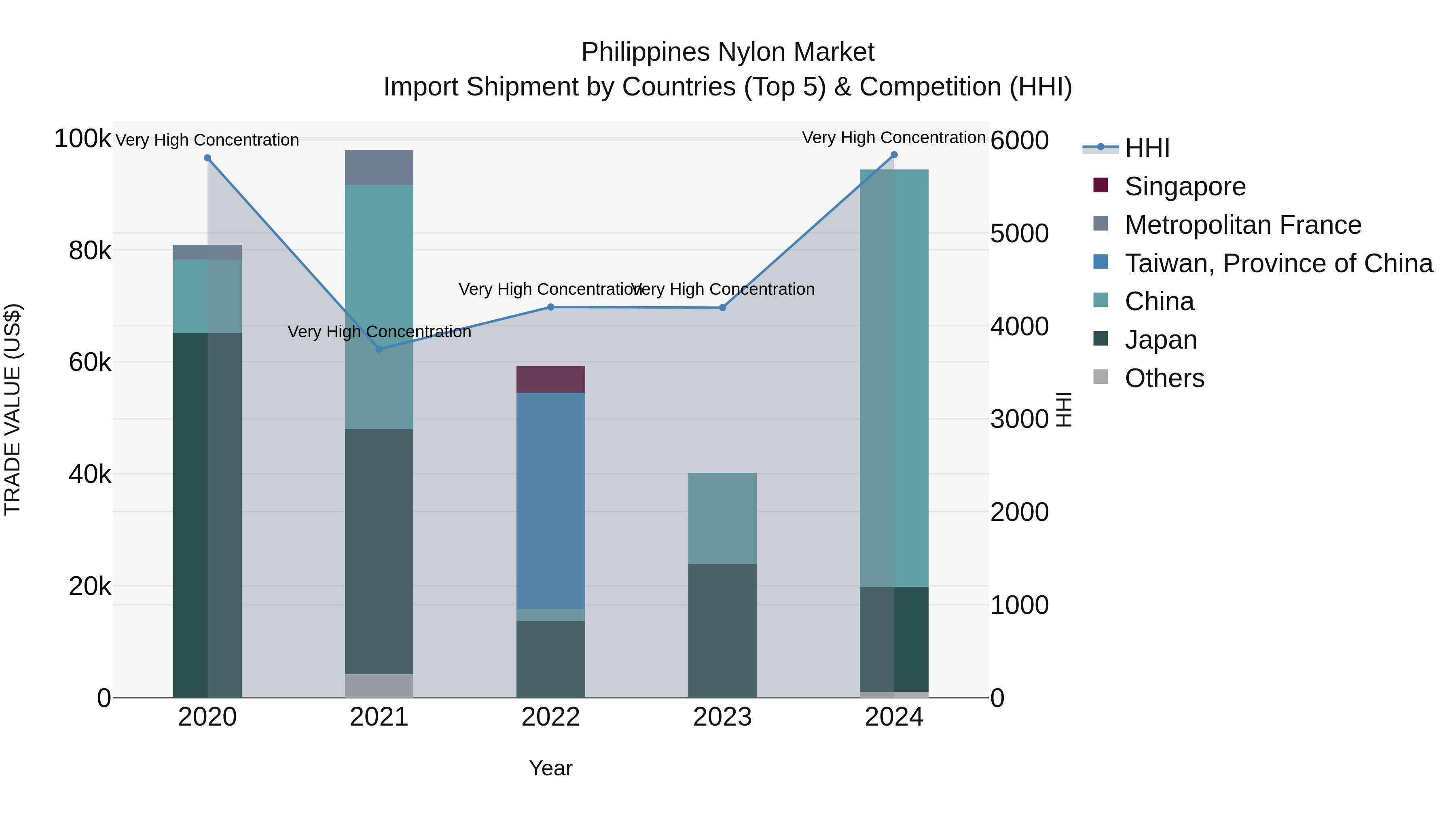
The Philippines` nylon import market in 2024 continued to be dominated by key players such as China, Japan, South Korea, Thailand, and Italy. Despite high concentration with a high Herfindahl-Hirschman Index (HHI), the market saw steady growth with a Compound Annual Growth Rate (CAGR) of 3.9% from 2020 to 2024. The impressive growth rate of 134.9% from 2023 to 2024 indicates a significant surge in demand for nylon imports, highlighting opportunities for both domestic and international suppliers to capitalize on the market`s expansion.
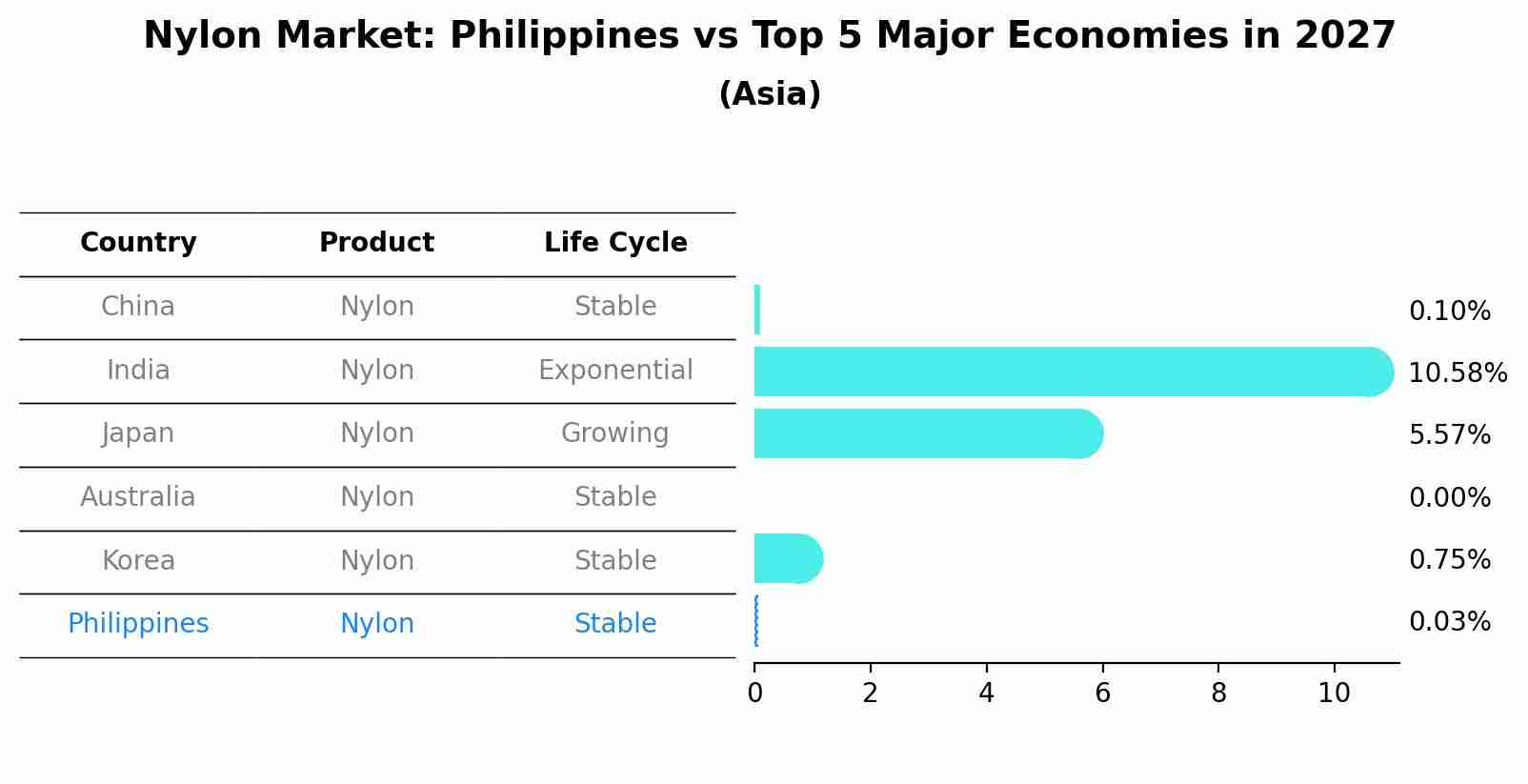
Nylon Market: Philippines vs Top 5 Major Economies in 2027 (Asia)
The Nylon market in Philippines is projected to grow at a stable growth rate of 0.03% by 2027, highlighting the country's increasing focus on advanced technologies within the Asia region, where China holds the dominant position, followed closely by India, Japan, Australia and South Korea, shaping overall regional demand.
philippines nylon yarn market Synopsis
The Philippines nylon yarn market remains a vital component of the textile and apparel industry, showcasing steady growth and adaptability. Recent market insights indicate that the nylon yarn sector has maintained a healthy CAGR of around 6% over the last five years. Nylon yarn`s popularity stems from its ability to blend comfort with durability, making it a preferred choice for various clothing and textile applications. The market`s growth is driven by changing fashion trends, rising disposable incomes, and the continual innovation in textile manufacturing techniques. As consumer preferences evolve, the Philippines nylon yarn market is expected to continue its upward trajectory.
Drivers of the Market
The nylon yarn market in the Philippines is poised for growth due to various drivers. The increasing use of nylon yarn in textile applications, such as apparel, home furnishings, and industrial textiles, contributes to its demand. Nylon yarn`s attributes, including durability, elasticity, and resistance to abrasion, make it a favored choice in producing high-performance fabrics. The growing fashion industry and the demand for functional and versatile textiles further fuel the market`s expansion. Additionally, advancements in spinning and dyeing technologies enhance the quality and variety of nylon yarn available, driving its market outlook.
Challenges of the Market
In the Philippines nylon yarn market outlook, challenges emerge in terms of both supply chain management and consumer expectations. Maintaining a stable supply of quality nylon yarn requires effective sourcing and production strategies. Moreover, meeting the demands for versatile and high-performance nylon yarns while also considering eco-friendly practices presents a complex challenge. Adapting to evolving market needs and ensuring a sustainable supply chain are key areas of concern for the nylon yarn industry.
COVID-19 Impact on the Market
The Philippines nylon yarn market faced a complex scenario due to the pandemic`s impact on various industries. Demand for nylon yarn in textiles and apparel manufacturing dwindled as global supply chains were disrupted and consumer preferences shifted. The recovery of the market is closely linked to the revival of the textiles and fashion sectors. Strategies that focus on product differentiation, quality enhancement, and aligning with emerging fashion trends will be crucial in reinvigorating the nylon yarn market.
Key Players in the Market
The Philippines nylon yarn market holds significance within the broader textiles industry, catering to the production of various fabrics and materials. Nylon yarn is valued for its strength, elasticity, and diverse applications. Key players in this market, such as Century Chemical Corporation and Universal Robina Corporation, play crucial roles in the manufacturing and distribution of nylon yarn. As fashion, textiles, and industrial sectors continue to evolve, these players are expected to play a pivotal role in meeting the demand for high-quality nylon yarn.
Key Highlights of the Report:
- Philippines Nylon Market Outlook
- Market Size of Philippines Nylon Market, 2024
- Forecast of Philippines Nylon Market, 2031
- Historical Data and Forecast of Philippines Nylon Revenues & Volume for the Period 2021-2031
- Philippines Nylon Market Trend Evolution
- Philippines Nylon Market Drivers and Challenges
- Philippines Nylon Price Trends
- Philippines Nylon Porter's Five Forces
- Philippines Nylon Industry Life Cycle
- Historical Data and Forecast of Philippines Nylon Market Revenues & Volume By Product for the Period 2021-2031
- Historical Data and Forecast of Philippines Nylon Market Revenues & Volume By Nylon 6 for the Period 2021-2031
- Historical Data and Forecast of Philippines Nylon Market Revenues & Volume By Nylon 66 for the Period 2021-2031
- Historical Data and Forecast of Philippines Nylon Market Revenues & Volume By Application for the Period 2021-2031
- Historical Data and Forecast of Philippines Nylon Market Revenues & Volume By Automobile for the Period 2021-2031
- Historical Data and Forecast of Philippines Nylon Market Revenues & Volume By Electrical & Electronics for the Period 2021-2031
- Historical Data and Forecast of Philippines Nylon Market Revenues & Volume By Engineering Plastics for the Period 2021-2031
- Historical Data and Forecast of Philippines Nylon Market Revenues & Volume By Textiles for the Period 2021-2031
- Historical Data and Forecast of Philippines Nylon Market Revenues & Volume By Others for the Period 2021-2031
- Philippines Nylon Import Export Trade Statistics
- Market Opportunity Assessment By Product
- Market Opportunity Assessment By Application
- Philippines Nylon Top Companies Market Share
- Philippines Nylon Competitive Benchmarking By Technical and Operational Parameters
- Philippines Nylon Company Profiles
- Philippines Nylon Key Strategic Recommendations






































